









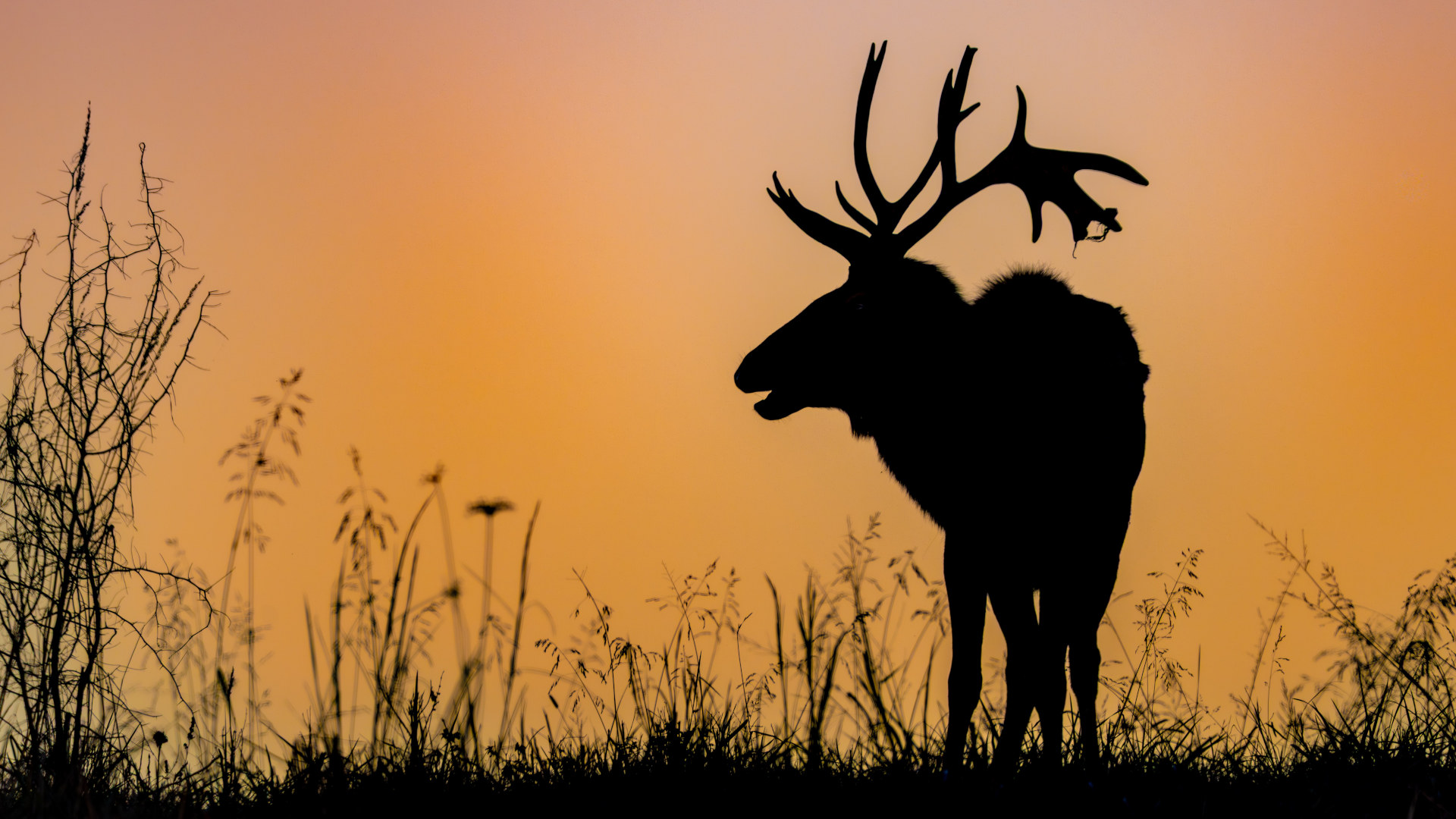


When the first European settlers arrived on the east coast of North America in the 16th century, they found a land filled with astounding natural wonders and biological richness.
Herds of elk and packs of wolves roamed through old-growth forests, and flocks of geese and sandhill cranes filled the air with raucous cries during their seasonal migrations. Salmon in vast numbers swam up the Connecticut River to spawn, the New Jersey Meadowlands were a paradise for beavers, and herds of American bison tramped across the tallgrass prairies of the Midwest and through the open meadows and treeless plains of Kentucky and Tennessee, some venturing as far south as Florida.
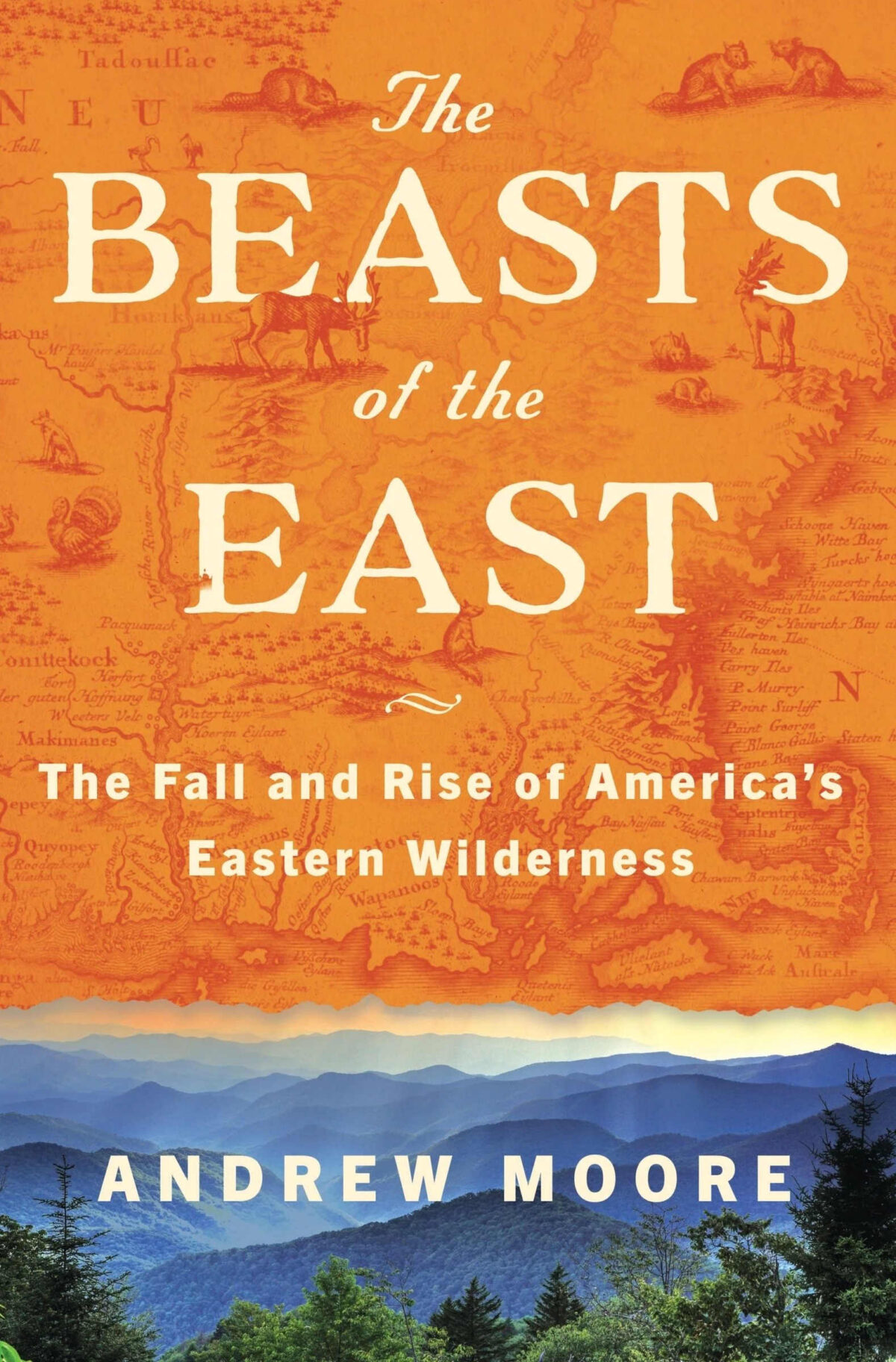
BOOK REVIEW — “The Beasts of the East: The Fall and Rise of America’s Eastern Wilderness,” by Andrew Moore (Mariner Books, 432 pages).
But by the early 20th century, most of the large and charismatic animals that the settlers had encountered were functionally extinct. The wetlands that had supported massive flocks of water-loving birds had been largely drained for agriculture, while forests and grasslands where elk and moose once roamed and cougar prowled were felled and plowed over.
“In the East, our capacity for slaughter was prodigious,” environmental journalist Andrew Moore writes in “The Beasts of the East: The Fall and Rise of America’s Eastern Wilderness.” “The extractive culture that spread over the land after Europeans arrived would leave no stone unturned, and few animals breathing.”
Yet the memory of those wild creatures remained. And that memory eventually sparked a collaborative movement among unlikely allies — environmentalists, federal and state wildlife managers, and hunters — to restore lost landscapes and return megafauna like wolves, bison, and elk to their former ranges east of the Mississippi. This impassioned, if at times seemingly quixotic, effort lies at the heart of Moore’s book, which is both a natural history of the East and an accessible account of the people who have dedicated their careers to restoring long lost species to what remains of their original habitats.
Moore began his investigation in 2017 with a 2,600-mile bike trip from Montana to New York City to scope out the territory. In the years that followed he collected canid scat in Maine, camped out on former strip-mining sites in Appalachia, went to a public bison auction in Kentucky, and attended the release of wild elk in West Virginia.
By the early 20th century, most of the large and charismatic animals that the settlers had encountered were functionally extinct.
He also watched as thousands of sandhill cranes — a species that had been brought to the edge of extinction in the East by commercial hunters and habitat destruction — darkened the skies above Indiana. By the 1930s, there were only an estimated two dozen nesting pairs in the Midwest. But then, Moore writes, something remarkable happened. Hunters joined forces with animal rights groups to push for federal legislation to protect the endangered birds. Today there are an estimated 90,000 eastern sandhill cranes, notes Moore.
And it isn’t just cranes that are returning to their former habitats. There are arguably more whitetail deer and black bear today than ever before, Moore writes. New England, which was substantially cleared for agriculture in the 18th and 19th centuries, is now 80 percent forested, making the Northeast one of the few regions on Earth where forests are increasing.
The bald eagle, the symbol of America, has returned to locales that it had all but disappeared from. And vast flocks of ducks and geese have returned to the upper Midwest. By the turn of the 20th century, there were no elk left east of the Mississippi, but an ambitious reintroduction project took hold in the late 1990s in Kentucky at the behest of sportsmen who wanted a chance to hunt them and conservationists who wanted to extend their range.
Kentucky’s deciduous forests are not an ideal habitat for elk, which are better suited to open country of mixed forests and grasslands where the large herbivores can graze. Moreover, Kentucky’s farmers were not keen on having herds of voracious elk as neighbors. But Kentucky did have one region with plenty of grass, and few farms: the vast area in the eastern part of the state where mountaintop removal coal mining had created open grasslands in place of previously forested hill country. More than a thousand elk were trucked in from the Wasatch Mountains in Utah and several other regions of the West.

The reintroduction was a resounding success. By 2009, there were 10,000 elk grazing on former mine sites in Kentucky, attracting hunters from across the U.S. and pumping millions of dollars from tourism and hunting fees into the state’s economy. “It is not a story of preservation, or ecological stewardship,” Moore writes. “It is one of happenstance, opportunism, and for better or worse, transformation.” The environment was not being returned to its former state, he maintains — it was radically reinvented.
The idea of using former strip mine sites caught on. Inspired by Kentucky’s example, elk have also been reintroduced in Tennessee. But Moore questions whether managing vast tracts of land for elk does the best good for the most species.
In the second half of the book, Moore looks at the effort to restore tallgrass prairies in the northern Midwest where fields of corn and other crops had replaced grasslands starting in the 1800s. In the mid-20th century, ecologists began wondering whether the isolated patches of remaining grasslands found in railway margins and pioneer cemeteries could be replanted with native grasses and bison returned to them.
While bison are mostly associated with the Great Plains, they also roamed in large herds east of the Mississippi. The Nature Conservancy, the global environmental nonprofit organization, in collaboration with local conservationists, wanted to see if the prairie — and the bison that once thronged it — could be brought back, even if in a small way.
Moore’s book is both a natural history of the East and an accessible account of the people who have dedicated their careers to restoring long lost species to what remains of their original habitats.
Beginning in the 1980s, the conservancy purchased plots of agricultural land in north central Illinois, named it the Nachusa Grasslands, and planted it with hundreds of Indigenous grass and wildflower species. Birds that had all but vanished from the area returned, including a stopover by a migrating pair of endangered whooping cranes. A small herd of bison was brought in to complete a tableau that had not been seen there in nearly two centuries. Today, having grown to more than 4,000 acres, Moore calls the Nachusa Grasslands “one of the finest ecological restorations in the world.”
The story is more complicated elsewhere, though. The reintroduction of elk and bison to wildlife preserves in the East was not appreciated by some farmers, and bringing back wolves was even more problematic, Moore writes. While gray wolves had been absent from the East for over a century, remnant populations of red wolves remained in remote areas of Texas and Louisiana. Luckily, when President Richard Nixon signed the Endangered Species Act in 1973, the federal Fish and Wildlife Service was transformed from an agency that trapped and poisoned wolves to one that protected them.
The agency devised a program to return red wolves to the East. But protecting the red wolf, one of the world’s rarest mammals, turned out to be highly controversial. A decision was made to reintroduce the predators to a peninsula on the coast of North Carolina, the haunt of alligators and black bears far from human population centers.
In 1986, eight red wolves were brought into the Carolina swamplands, where they were acclimated in captivity and released the following year. Despite assurances that the wolves were naturally shy creatures that wouldn’t harm people, many residents of nearby communities were unconvinced, especially after the wolves were released. For some “the introduction of these snarling predators was yet another example of federal overreach and endangered species conservation run amok,” Moore writes.
Despite having made “immense progress” in restoring numerous creatures to their former haunts east of the Mississippi, “conservation is work that never ends,” Moore concludes.
The North Carolina red wolf numbers increased steadily for about two decades before a steep decline due to gunshot killings. A small wild population, currently a few dozen animals, still persists. “For now, the wolves are home again,” Moore writes. And so are the prairie bison, the elk, the cranes.
The author is not ready to declare victory. Despite having made “immense progress” in restoring numerous creatures to their former haunts east of the Mississippi, “conservation is work that never ends,” Moore concludes. But, he adds, “this is the work of defining the kind of world we want to live in.”
Richard Schiffman is an environmental reporter based in New York City. His work has appeared in The New York Times, The Atlantic, and National Geographic, among other outlets.