






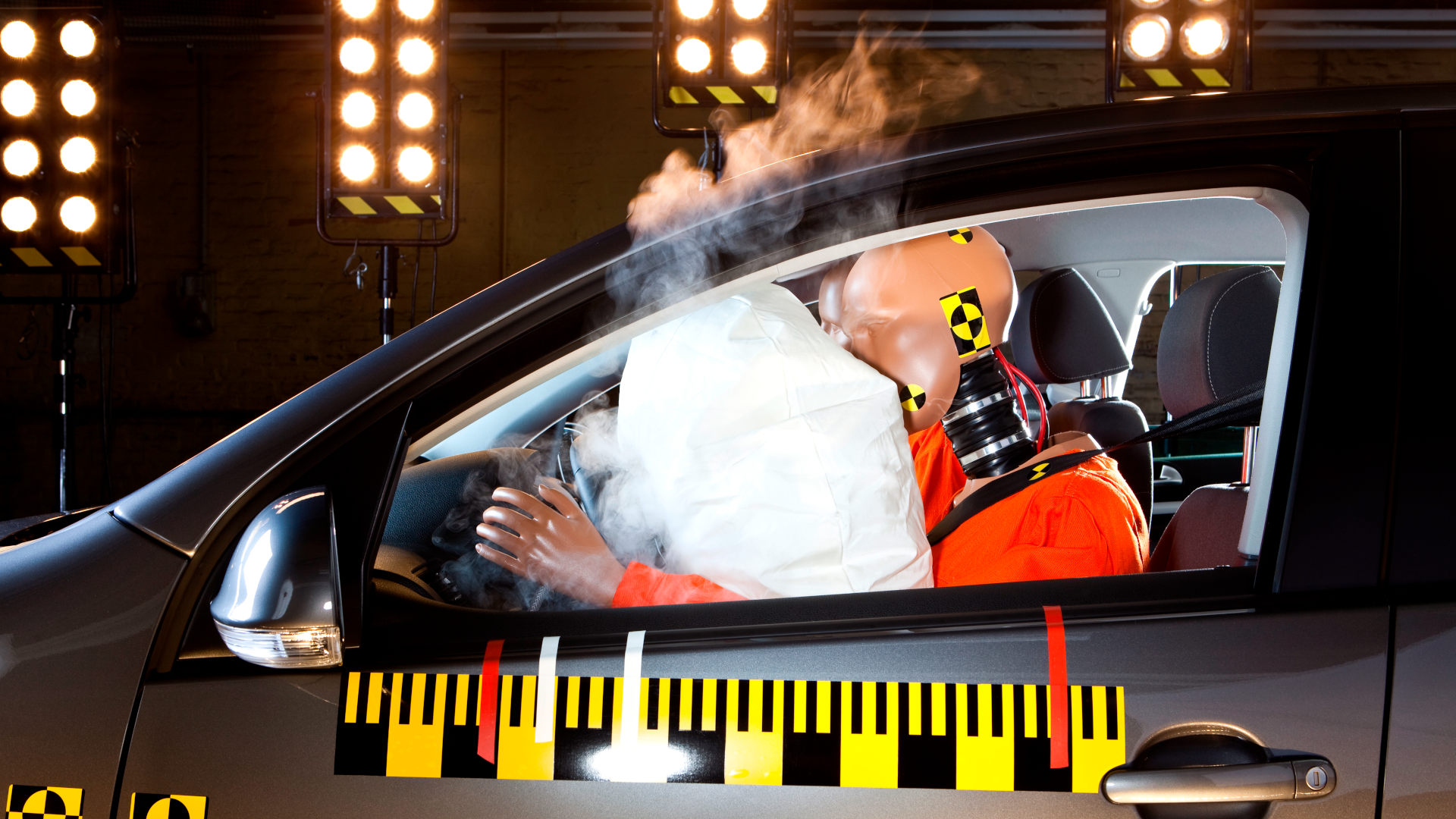


Imagine pulling away from a stop sign on a busy street after looking left and right, but not looking left again. A fast SUV coming from the left T-bones your car. In all likelihood, the car is totaled — but somehow, you are not. You may be covered in pebbles of windshield glass and covered by a deflated airbag, but you have remained solidly on this mortal coil.
Your life was saved by engineering, science, and determined nerdery: that airbag and other safety features designed into the car, as well as decades of testing with crash dummies and with side-impact testing that involved smashing a roughly 3,000-pound block of aluminum on a cart into a car at 33.5 miles per hour. On top of that, there are the regulations and industry standards that required it all.
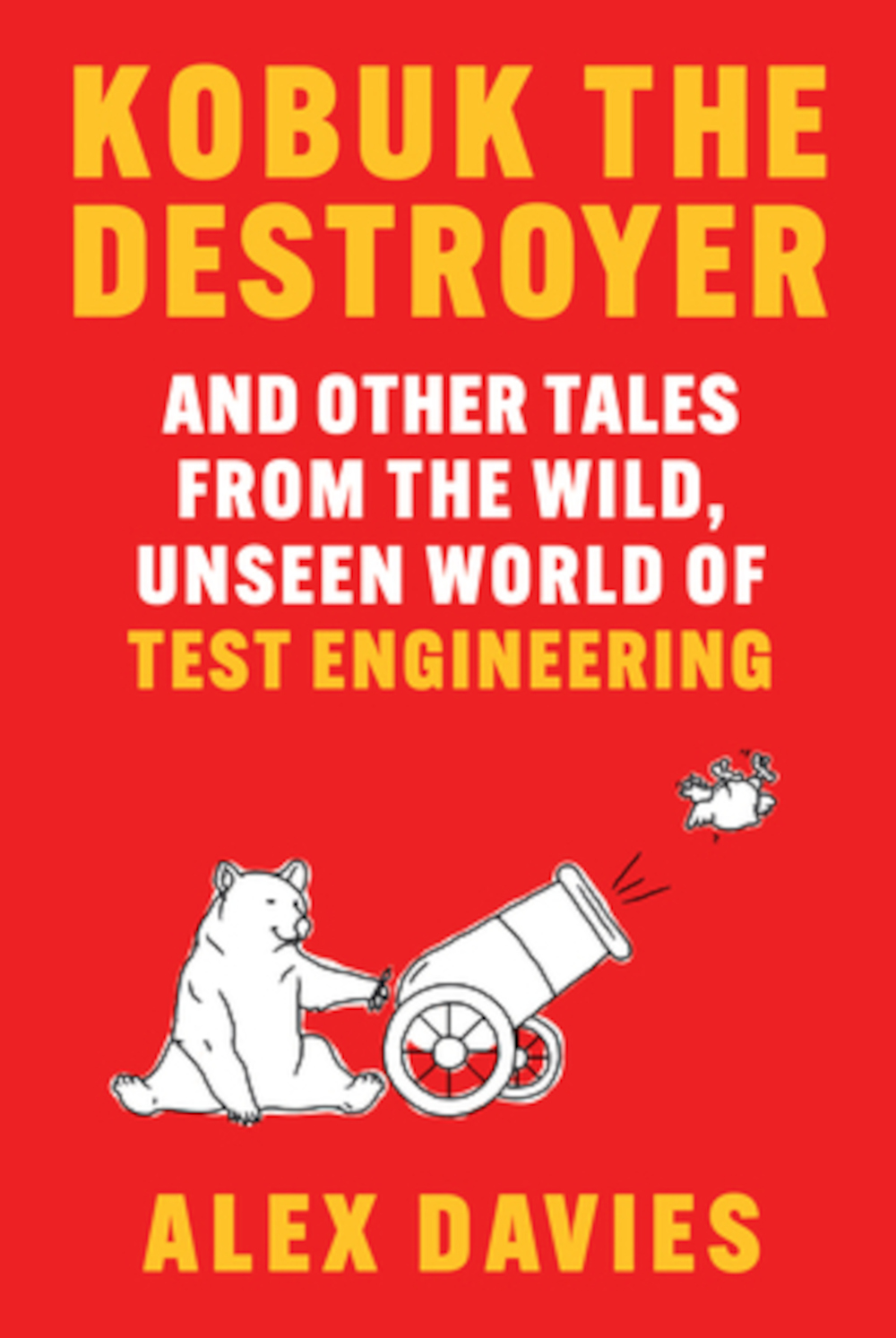
BOOK REVIEW — “Kobuk the Destroyer: And Other Tales from the Wild, Unseen World of Test Engineering,” by Alex Davies (W. W. Norton & Company, 272 pages).
Anyone who has survived such a moment — or, for that matter, has used a toaster or cursed at a child-resistant cap on a pill bottle — will find much to enjoy in “Kobuk the Destroyer: And Other Tales from the Wild, Unseen World of Test Engineering.”
The author, Alex Davies, pulls together the wild derring-do of the field’s pioneers and the methodical development of statistical methods to ensure the safety and quality of just about everything we buy and depend on. Davies, a technology and transportation journalist and the author of the 2021 book “Driven: The Race to Create the Autonomous Car,” is an amiable companion on this journey through what could be a technical slog. (He is currently a senior editor at Salesforce.)
He doesn’t totally skip the slog, however — the book wouldn’t be complete without detailed discussion of regulation, statistical sampling, the factor of safety, and processes like Hazard Analysis Critical Control Point, a system that keeps food from killing us much more often than it already does. So some passages can be dense. But Davies aims for sprightly, and more often than not gets there.
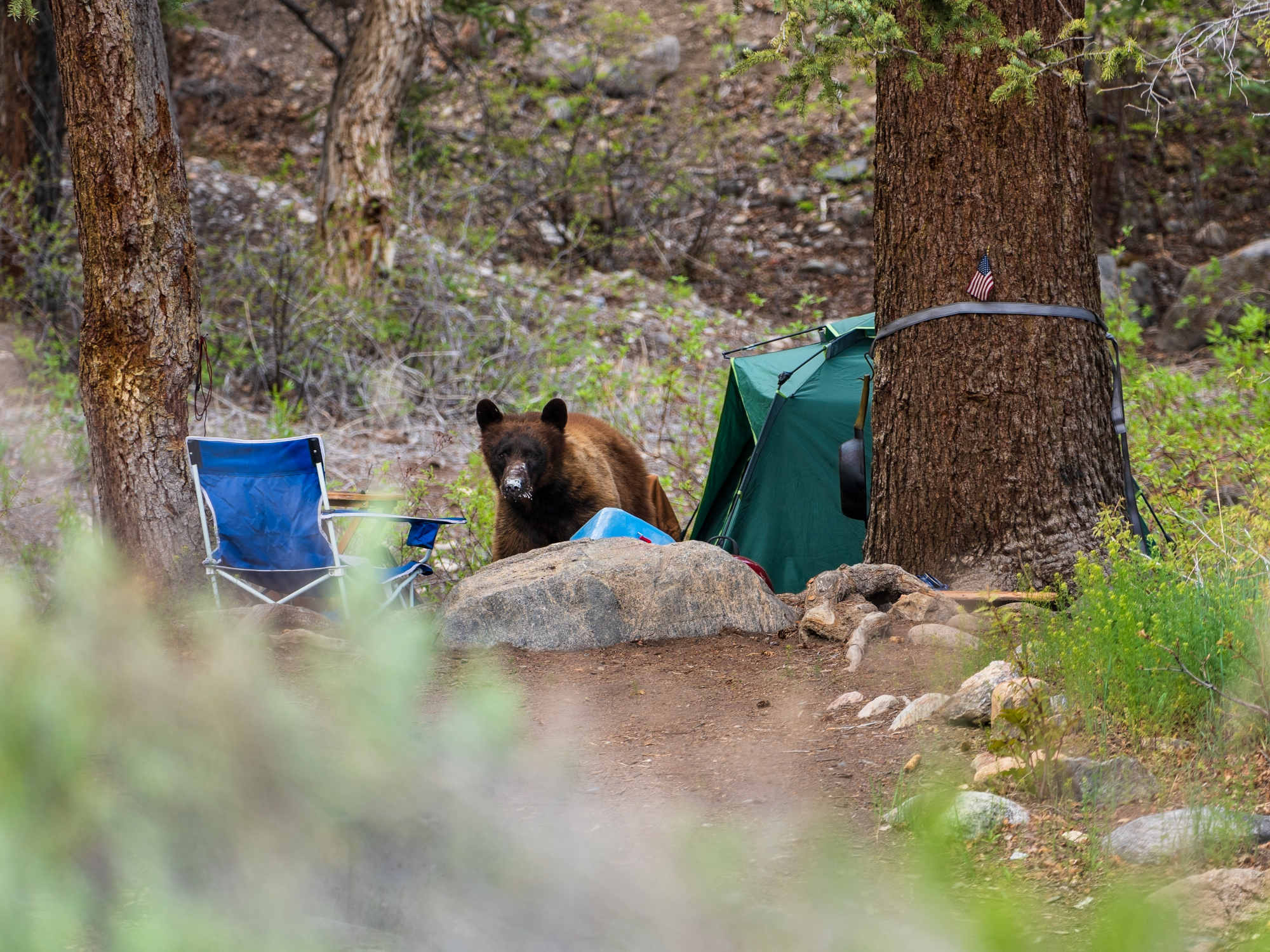
The book opens with the Kobuk of the title. Kobuk, who died in 2017, was a grizzly bear who lived at the Grizzly & Wolf Discovery Center, a sanctuary in Montana, ever since a land owner killed his mother and brother for eating his chickens. During his career at the center, he and other “problem bears” earned their keep by testing products like bear-proof trash cans and camping food canisters under the auspices of something called the “Interagency Grizzly Bear Committee,” a collaboration of state and federal agencies seeking to protect bear populations and habitats.
Davies is trying to right a societal oversight: Not all heroes wear capes. Some of them wear pocket protectors.
The bear program, which began in the 2000s, replaced more conventional efforts: The committee dropped weights on cans and coolers from a set height, some of them bearing spikes that imitated the action of a tooth. But it wasn’t enough. “The weights could mimic a bear’s might or the force of its jaws,” Davies writes, “but they featured none of the animal’s ingenuity.” Nowadays, the committee generally gives the bears an hour with the unlucky merchandise. Mayhem ensues: A cooler or trash can may be flipped, warped or gouged, or get the “CPR technique,” when a bear stands on its hind legs and pumps up and down on the product with its front paws.
It turns out that Kobuk was smarter than the average bear, which is how he earned the name “Kobuk the Destroyer.” Makers of purportedly bear-proof goods find that cunning Kobuk outwits them, Davies describes, even undoing latches under covers big enough for human fingers but too small for a paw. “Kobuk was a destroyer of human ego more than anything,” he writes.
There it is: the question at the heart of product testing. How do you look for something quantifiable and repeatable, while trying to get closer to what might happen in the real world, with all of its unpleasant surprises? Answering that question takes us through some wild stories, including the efforts beginning in the 1940s of John Stapp, an Air Force flight surgeon, to figure out the fastest survivable speed for ejecting from an airplane about to transform itself into a lawn dart. (By the way, remember lawn darts? Davies tells us in a broader discussion of dangerous toys why they were deadly: They could “thwack into the ground, or a chest,” with what researchers have suggested is 23,000 pounds of pressure per square inch.)
Stapp and his team developed a rocket sled that could zoom up to 200 miles per hour and stop in around a second. They also created test dummies, but Stapp strapped himself into the seat on the sled they called the “Gee-Whizz” and subjected himself to forces exceeding 18 times the force of gravity, or 18 G’s. The tests yielded important safety data, but “along the way, he suffered blood blisters from flying sand, broke both wrists, cracked several ribs, and lost six fillings,” Davies writes.
Stapp then, improbably, upped his game with an even faster sled, the Sonic Wind, which took him up to over 600 mph before abruptly stopping, subjecting him to a crushing 40 G’s, with even more alarming results: “His eyes, he reported, felt like they were being drawn from their sockets, a pain he compared to having a molar pulled without anesthetic. His vision ‘became a shimmering salmon colored field with no images.’”
“In the moments after he stopped,” Davies writes, “his face turned red, then blue, then a deep purple. He could manage a gasp every 5 to 8 seconds. He was confused and, for a good 8 minutes, blind.”
Yikes. But again, the data showed that humans could survive far greater G-forces than experts had previously thought — which led the Air Force to demand robust fighter jet seats, according to Davies.
Support Undark Magazine
Undark is a non-profit, editorially independent magazine covering the complicated and often fractious intersection of science and society. If you would like to help support our journalism, please consider making a donation. All proceeds go directly to Undark’s editorial fund.
Davies recounts other brave souls, like the folks NASA selected to test zero-G toilets because they could defecate within the 30-second windows of weightlessness produced by the space agency’s parabolic flights, along with seemingly wacky inventions like the chicken cannons that fire birds at airplanes. But the core of the book is less flashy: how testing organizations like Underwriters Laboratories got their start, how government standards-setting bodies develop rules, and the kind of people who come up with such things.
With “Kobuk,” Davies is trying to right a societal oversight: Not all heroes wear capes. Some of them wear pocket protectors. “The test engineer gets little attention in a world that lionizes inventors, and that’s a shame—not just because their work involves chicken cannons, flamethrowers, and mischievous grizzly bears, and not just because they rely on the same ingenuity, foresight, and creativity that fit the inventor stereotype,” he writes. “It’s a shame because they are the ultimate fixers, the people who turn inventions into products by earning and rewarding the public’s trust.”
Testing, he argues with the kind of sweeping statement that sells books, is crucial to our lives and our world. “It’s about how knowledge is formed, how rules are written and enforced, how good things are made and bad things made good,” he writes. “It’s about how we construct our world, because testing forms the backstory and backbone of every thing in our lives.”
Davies also introduces us to the untested risks of AI, and to some of the most challenging infrastructure projects out there, like the audacious, multi-year effort to essentially cut a hole in the levee of the Mississippi River in a controlled way to let its sediments rebuild coastal Louisiana, which is melting away because of human causes that include sea level rise and subsidence.
“It’s about how we construct our world, because testing forms the backstory and backbone of every thing in our lives.”
Years of research showed that the plan, based on how the Mississippi built up the Delta in the era before levees, could work, and proponents tested the positive and potential negative effects of the fresh water flowing into the targeted Barataria Bay. But the state’s Republican governor killed the roughly $3 billion project last year, to the dismay of much of the environmental and scientific community.
The book is not perfect; hang around with engineers for too long and sometimes their language will infect yours. Did Davies have to use the word “learnings”? Or talk about “trialing” a product? He also repeats an outdated chestnut that Louisiana loses a football field’s worth of land every hour. It’s every 100 minutes.
But those flaws shouldn’t stand in the way of enjoying a lively book about serious issues. “Kobuk the Destroyer” could have you looking at every product in your home in a new way, and devoting a silent moment of thanks to the people who spend their careers figuring out how to protect us, even from ourselves.
John Schwartz, a former climate change reporter for The New York Times, is a professor of journalism at the University of Texas at Austin.