








Could an Amazonian Highway Open a Pandora’s Box of Pathogens?


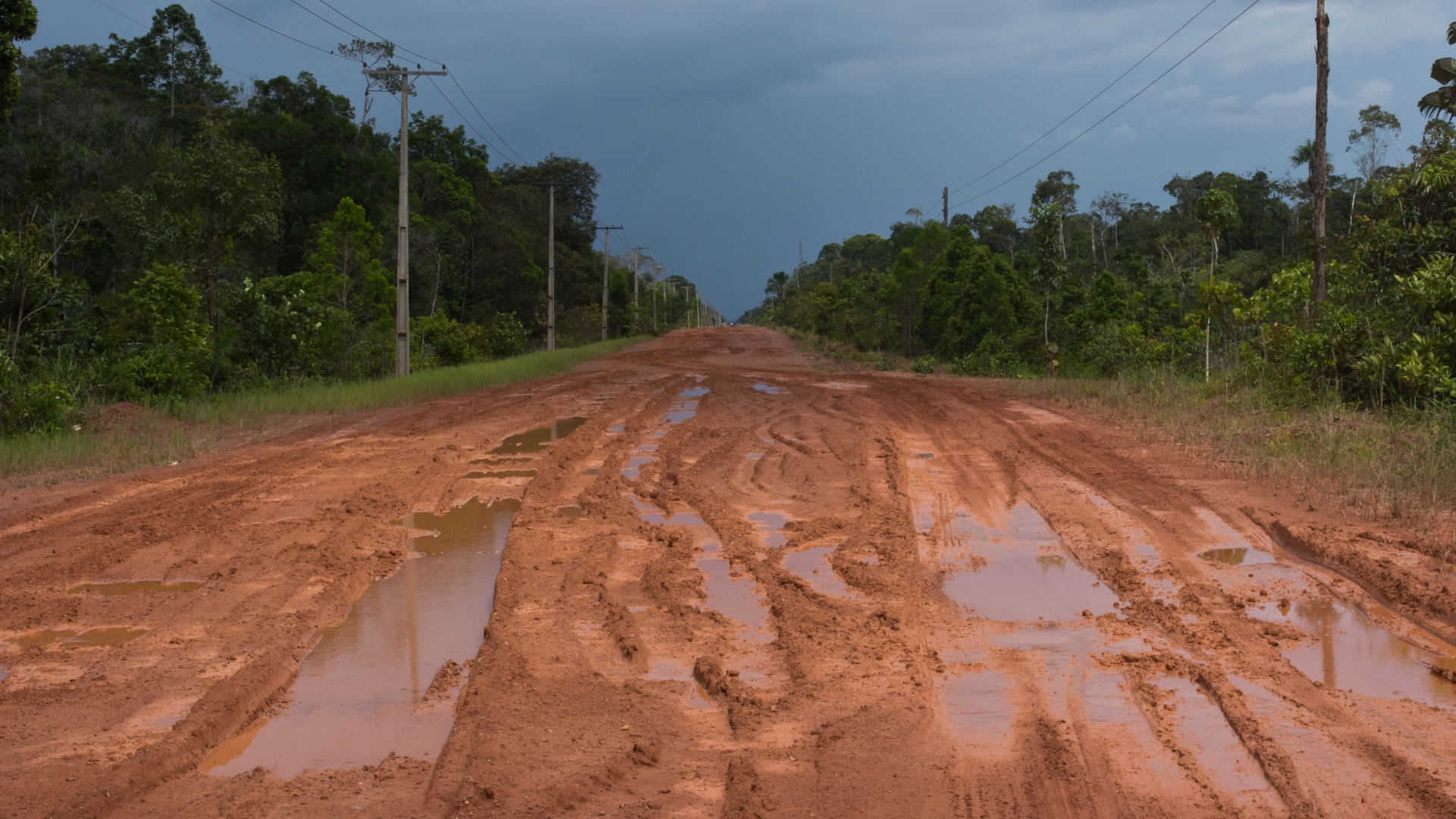
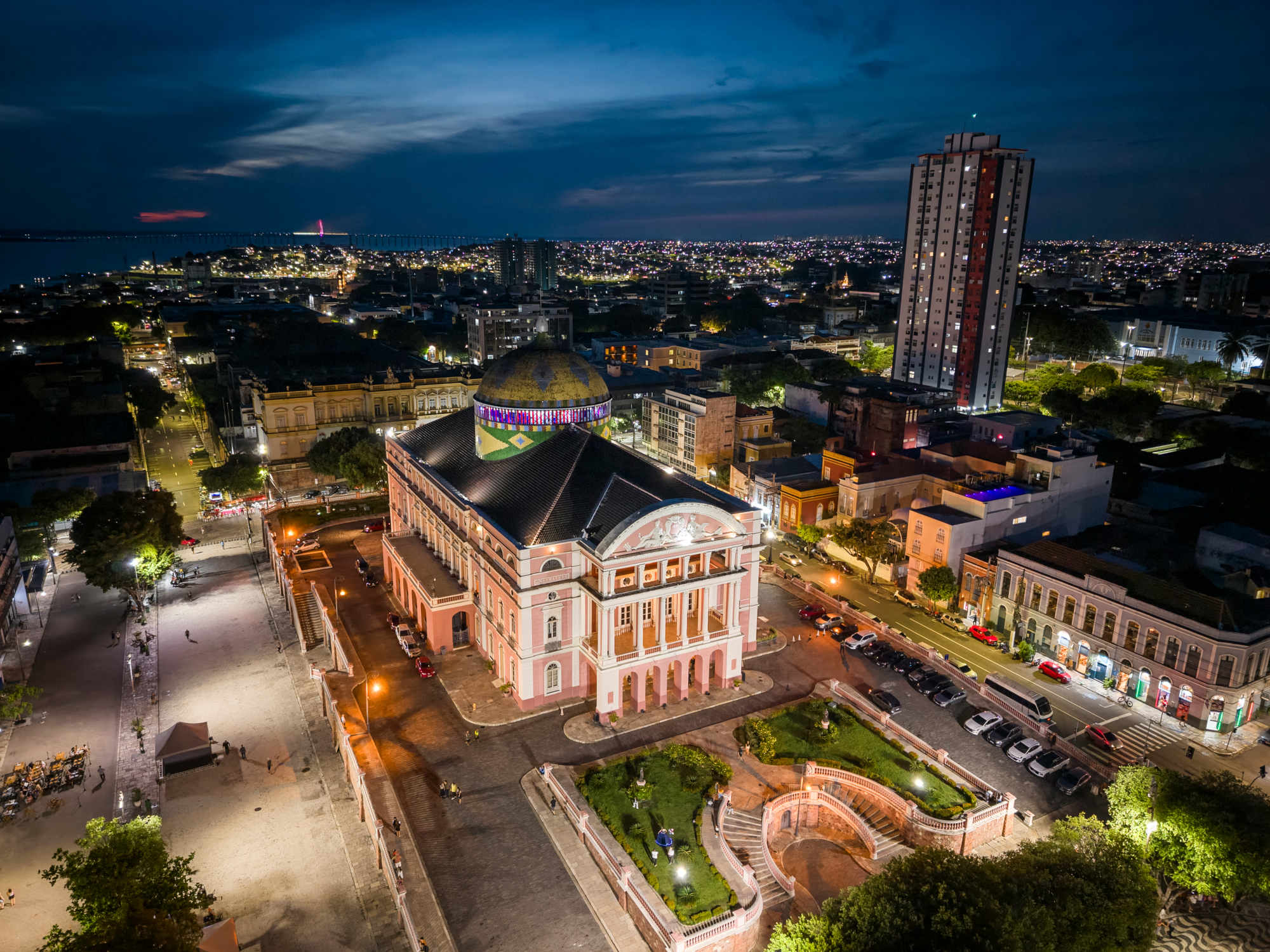
The city of Manaus in Brazil, home to more than 2 million inhabitants, sits in a remote pocket of the Amazon rainforest. Fifty years ago, the BR-319 highway connected Manaus with the rest of the country. But after 15 years of deterioration due to lack of maintenance, BR-319 was abandoned in 1988. Today, it’s largely impassable.
Now, there is renewed interest in reviving the roadway. In September 2024, Brazilian president Luiz Inácio Lula da Silva announced that the government would commit to repaving part of the neglected highway, hoping to boost economic growth in the region and provide alternative routes of transportation when waterways are unnavigable. In May of this year, the government announced $75 million dollars for the project.

These developments have generated an uproar from environmentalists, who say that the reconstruction of BR-319 could increase deforestation in the Amazon by 60 percent by 2100, particularly of protected areas and Indigenous lands, and accelerate climate change. Scientists, too, have raised another concern: potentially devastating pathogens.
The road project and accompanying developments could disrupt forests and water systems, and increase new contacts between previously isolated microbes, livestock, wildlife, and humans, said Lucas Ferrante, a researcher at the University of São Paulo who has published multiple papers and commentaries voicing his concerns, including a letter published in April. These interactions, experts warn, could increase the risk of zoonotic spillover — meaning the transmission of pathogens from animals to humans — and even drive the emergence of new pandemics.
These concerns are particularly acute in the Amazon, which represents one of the most diverse ecosystems on Earth, said Andrew MacDonald, a disease ecologist at the University of California, Santa Barbara, who has studied malaria in the Amazon. The Amazon “has the largest untouched areas of rainforest in the world, and it’s extremely biodiverse,” MacDonald said.
“There’s just a lot that we don’t know that could be there that could pose potential risks,” he added.
Climate activists are disputing the licensing of the BR-319 project in court. But despite these concerns, the Brazilian government is trying to move forward. Officials won a major court victory in April, clearing the way to calling for construction bids. Ferrante is concerned: “In many cases, decision-making has moved faster than the environmental, epidemiological, hydrological, and Indigenous-rights assessments required to understand the risks.”
Across different regions, expansion into the forest, particularly in tropical regions like the Amazon, can facilitate disease transmission. Deforestation associated with interstate roads is no exception. For example, researchers detected the presence of active hantaviruses circulating in regions near another Brazilian highway and warned that deforestation associated with the road’s development could increase the risk of the emergence of new viral lineages. In a 2025 study that has not been peer reviewed, researchers compared dengue cases from healthcare facilities near versus far from the Interoceanic Highway across the Peruvian Amazon and found that paving the highway led to an additional 10,950 cases since 2009 when development began, a five-fold increase over dengue incidence prior. And a 2014 study modeling the impact of deforestation on malaria revealed that the presence of roadways increased malaria risk in the Brazilian Amazon.
Mining projects can also facilitate disease transmission; They bring a wave of people into remote areas, and they disrupt ecosystems in ways that affect disease-carrying animals like mosquitoes. “These hosts and vectors that might have lived sort of deep in the forest before the infrastructure project, they’re now forced to traverse these new boundaries that’s putting them in contact with people more frequently,” said MacDonald.
“There’s just a lot that we don’t know that could be there that could pose potential risks.”
Despite promising trends showing that the incidence of malaria has been decreasing in urban and rural areas overall, evidence shows that, in regions with mining in the Brazilian Amazon, malaria cases have skyrocketed.
Deforestation and land use change that accompanies these projects also creates new breeding sites in which pathogens can thrive, thanks to pooled water and increased temperatures, MacDonald added. For example, close proximity between forest and urban areas can predict spillover events of yellow fever in the Amazon, MacDonald has found in his work. In the territory of the Yanomami Indigenous tribe, another recent study used satellite imagery to show that increases in gold mining, and particularly changes in forest areas, increased the risk of malaria.
Construction and repavement of the BR-319 will likely increase points of contact between humans and wildlife, said Philip Fearnside, an ecologist at the National Institute for Research in Amazonia who has worked in the Amazon for 50 years.
There are already some warning signs that the regions connected by BR-319 may harbor pathogens that can evolve, said Ferrante; the highway could facilitate their spread. According to researchers in Brazil, the Gamma variant of the Covid-19 virus emerged in Manaus around 2020 due to high transmission and the continued circulation of the virus in the region. More recently, a new lineage of Oropouche virus originating from the region was also detected in Central America and showed close similarity to that detected in travelers returning to Europe. In regions near the highway, malaria cases increased by around 250 percent between 2015 and 2019, an increase that correlated with deforestation, Ferrante’s research has found.
And that is only the pathogens familiar to humans. Because of the Amazon’s immense biodiversity, some of the pathogens lurking in wildlife, soils, and water systems are unknown to humans — what Fearnside calls “microbial dark matter.” In response to growing concern about emerging pathogens, the Brazilian government has begun expanding its capacity to respond by planning a biosafety-level-4 laboratory called Orion, which would be the first in Latin America. (Fearnside has published many commentaries and articles highlighting the negative impacts of the BR-319 highway.)
Ferrante has found novel microbes in soil samples that express genes linked to antibiotic resistance, virulence, and toxin production, which could have, he told Undark, the “biological capacity to cause severe outbreaks and, under favorable ecological and epidemiological conditions, contribute to the emergence of new pandemics.”
Researchers outside of Brazil also share these concerns to some extent, including MacDonald and Andrés G. “Willy” Lescano, an epidemiologist at Universidad Peruana Cayetano Heredia in Lima, Peru. When studying pathogens in the Amazon, “you look and you find,” Lescano said.
Although he noted that the probabilities that these pathogens turn into a full-blown pandemic are low, “you have so many viruses, so many pathogens, so many vectors that this can actually turn into a real possibility,” he added. “So, there’s something that you need to take with responsibility and concern, and evaluate.”
Supporters of the BR-319 project argue that it could improve access to healthcare, education, and transportation for isolated communities along the Amazon. Brazil’s National Department of Transport Infrastructure commissioned an environmental impact assessment of the BR-319 project that concluded that it is “feasible” with appropriate environmental monitoring and mitigations. In response, the Brazilian Institute of Environment and Renewable Natural Resources granted a preliminary license for reconstruction. After a lawsuit by the climate network Climate Observatory, a judge issued a preliminary injunction to suspend the environmental license awarded to the project. Bidding for the project had also been suspended momentarily, but was eventually allowed to proceed. In an email to Undark, translated from Portuguese, the National Department of Transport Infrastructure stated that all environmental monitoring activities and studies involving animal life that are related to infrastructure projects under its responsibility “strictly adhere to the environmental laws and regulations currently in force in the country.”
Even scientists agree that road infrastructure is important. “I’m the one in favor of disease prevention and control — that was my doctorate,” said Lescano. “But at the same time, economic development and opportunities are also important for the people who live in vulnerable conditions.”
Current assessments of the BR-319, however, are too limited in scope and undermine indirect impacts, said Fearnside. “You’re only looking at the impact of the roadbed itself.” But mining, deforestation, and other activities will spring up hundreds of miles from the road, he added. “The impact is many times more than what’s actually being considered.”
Alongside the traditional metrics, environmental assessments should also incorporate biosecurity analysis, said Ferrante, the University of São Paulo researcher. Any infrastructure projects that penetrate intact forests should be evaluated for their potential to impact natural habitats that may harbor pathogens and increase the risk of disease transmission, he said. He also argued that projects should be accompanied by measures that put embargoes on deforestation and that surveil populations for pathogens. Ferrante and his team already sent data to Brazil’s Ministry of the Environment, which he noted is legally obligated to review documentation.
“Economic development and opportunities are also important for the people who live in vulnerable conditions.”
Until a proper assessment is done and measures are in place, the BR-319 should not be paved or consolidated, Ferrante wrote. But a law passed by Congress last year provided Lula’s government a regulatory loophole that exempts the project from obtaining the environmental licenses that are usually required. (The law was vetoed by Lula himself, but Congress overturned it.) The paving of the middle section of BR-319 has already begun, according to Brazilian media.
Ultimately, the debate around BR-319 reflects the difficult balance between development and conservation across the Amazon. “At the end, the Amazon is not going to be also something that we’re going to put glass around, and never going to touch,” Lescano said.
“But people should learn it,” he added, “learn about it, see it, appreciate it.”