










Along with the other tourists gathered in a semicircle, I studied the flaking iron cage at my feet encasing a long-forgotten grave in Edinburgh’s most famous cemetery, Greyfriars Kirkyard. When our ghost-tour guide asked the crowd what we thought was the purpose of the cage, we all tilted our heads, puzzled. We laughed when he offered that it could have served as protection against a zombie apocalypse.
But the truth is actually more fearsome than that, and more real.
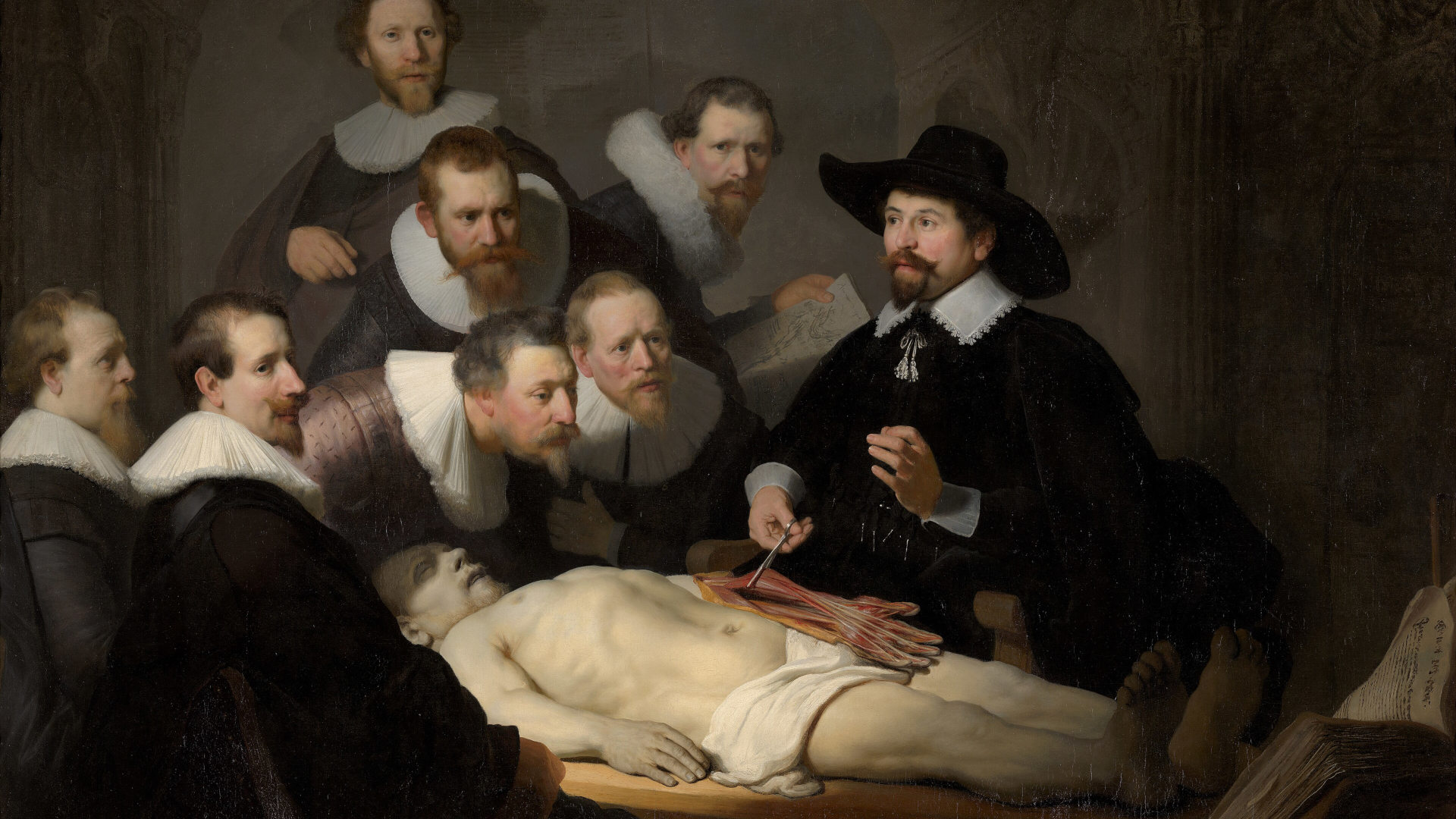
The iron cage (called a mortsafe) was erected not to keep the dead within but to keep the living out. Body snatchers of Edinburgh’s past would have had a hard time extracting a target within such a fortification. In the 18th and 19th centuries, body snatchers — known as “resurrection men” — proliferated as a response to a supply and demand problem. Medical schools needed cadavers for student training, but the legal supply of executed criminals couldn’t keep pace. This was before there were formal pathways through which people could opt in to donate their body to science.
Body snatchers adeptly slipped corpses out from freshly dug graves in the dead of night throughout Scotland, elsewhere in the United Kingdom, and the United States, usually preying upon the poor and marginalized. And in the U.S., the bodies of enslaved people appear to have been among the most frequent targets for the trade.
Over time, body snatching became so prevalent and communities so enraged that U.K. officials passed a law in 1832 addressing the maltreatment of graves and the deceased. The U.S. followed in the 20th century. We have since built complex systems intended to ensure dignity after death, consent, and the authorized use of anatomical gifts.
But the guardrails we’ve put in place following this dark past haven’t kept pace with today’s lightning speed of scientific advancement. Who decides what happens to your body when you generously give it to science and are no longer here to preserve your interests?
The clearest guardrails in the U.S. exist around organ donation and transplantation. Federal law and the Organ Procurement and Transplantation Network, or OPTN, that it created formalized a pretty clear chain of consent and accountability for donated organs, protecting a person’s decision to donate and prohibiting the sale of organs.
Who decides what happens to your body when you generously give it to science and are no longer here to preserve your interests?
The OPTN is an enormous success but is far from perfect. In 2025 and 2026, the U.S. Department of Health and Human Services decertified contracted organ procurement organizations in Florida and Kentucky for unsafe practices and failures regarding patient safety. Among those failures were attempts by the procurement agencies to extract organs from potential donors who “may not have been deceased at the time organ procurement was initiated,” according to HHS. These failures are horrific, but not necessarily systemic, and organ donation writ large is a modern miracle saving tens of thousands of lives in the U.S. each year.
Things become more opaque when the gift is a whole human body. Annually, an estimated 20,000 to 30,000 Americans donate their whole bodies to science. There’s no single federal law or regulatory body overseeing whole-body gifts.
Every state has adopted some version of the Uniform Anatomical Gift Act of 1968, which establishes a legal framework for people to donate their organs, tissues, and bodies after death for transplantation, research, or education, including rules governing consent and authorization. But oversight of the programs actually handling bodies remains fragmented. The U.S. also doesn’t require ethics committees (known as institutional review boards, or IRBs) for deceased donors like it does for living human research participants. That’s because the federal Common Rule governing the protection of living subjects does not extend past the threshold of death. The result is a gray area for deceased donors with patchy, inconsistent, and infrequent oversight.
There is no clearer example of that than the Harvard University morgue scandal. In 2023, federal investigators arrested Cedric Lodge, Harvard Medical School’s morgue manager, who later pleaded guilty to stealing and selling donors’ body parts. Lodge was sentenced to eight years in prison, and the university agreed to pay a $53 million settlement.
Get Our Newsletter

Donors to the medical school had entrusted their bodies to the institution in the name of scientific advancement and medical training. Instead, parts of their bodies entered a private market without their knowledge or consent.
What Lodge and his conspirators did was unspeakable, and the incident was probably an extreme outlier. But the scandal laid bare a big problem: Wthout consistent national oversight, accountability weighs heavily on the very institutions entrusted with our remains.
This problem becomes even more complicated for those who die without family or documented last wishes. Some unclaimed bodies are released to medical schools and anatomy programs after unsuccessful next-of-kin searches. Those bodies enter a scientific ecosystem to which the deceased never explicitly consented. That lack of consent feels eerily reminiscent of the body snatching problems of our past.
But there is another, subtler problem at play. As science and technology advance at breakneck speed, today’s anatomic gift donors may broadly consent to scientific research that they never would have imagined while alive. Those future uses could include military research, tissues could be sold to private companies, and anatomical or genetic material could be transformed by technology that didn’t exist when the consent form was signed.
How broad can consent be before it stops being meaningful?
As science and technology advance at breakneck speed, today’s anatomic gift donors may broadly consent to scientific research that they never would have imagined while alive.
Protection against unlimited consent should include government oversight and the power of the people. One glaring gap ripe for reform is that gray area where formal research oversight stops at death. Just like it exists for living research subjects, lawmakers should establish stronger national oversight of whole-body donation, including standardized consent requirements, transparency about downstream use of human remains, and meaningful accountability for schools and companies handling those remains.
We, the people, have a role too. We must do more to make death and donation less taboo and normalize making our wishes explicit and known while we are alive.
We are a long way from the resurrection men prowling Edinburgh’s kirkyards at night. But the fundamental tension that created them remains: Medicine needs human bodies to advance human health, while the people who provide those bodies deserve dignity and a say in how their final gifts are used. That tension may never be resolved completely, but we can make sure that consent is clearer, safeguards are stronger, and sharing what we want done with our bodies after death is no longer something we leave until it is too late.
Katherine O’Malley is principal policy analyst at the Partnered Evidence-Based Policy Resource Center at the Boston University School of Public Health. She writes most often on aging and health policy, and her writing has appeared in The Boston Globe, WBUR, and The Telegram & Gazette, among other outlets.