








Interview: How the Cold War Brain Drain Upended Soviet Science


December marks the 35th anniversary of the breakup of the Soviet Union and its ensuing economic collapse, which had far-reaching effects. Among them was a dramatic fraying of the U.S.S.R.’s massive state-funded scientific infrastructure. Once thriving research labs could no longer afford electricity or run experiments, recalls Elena Aronova, who was then working as a newly minted chemist at a laboratory in Moscow. “We all talked about what to do,” she said. “What is the future like for us as scientists?”
Thousands of Russian researchers ended up leaving the country. Aronova stayed a bit longer, enrolling in a Ph.D. program to study the history of science.
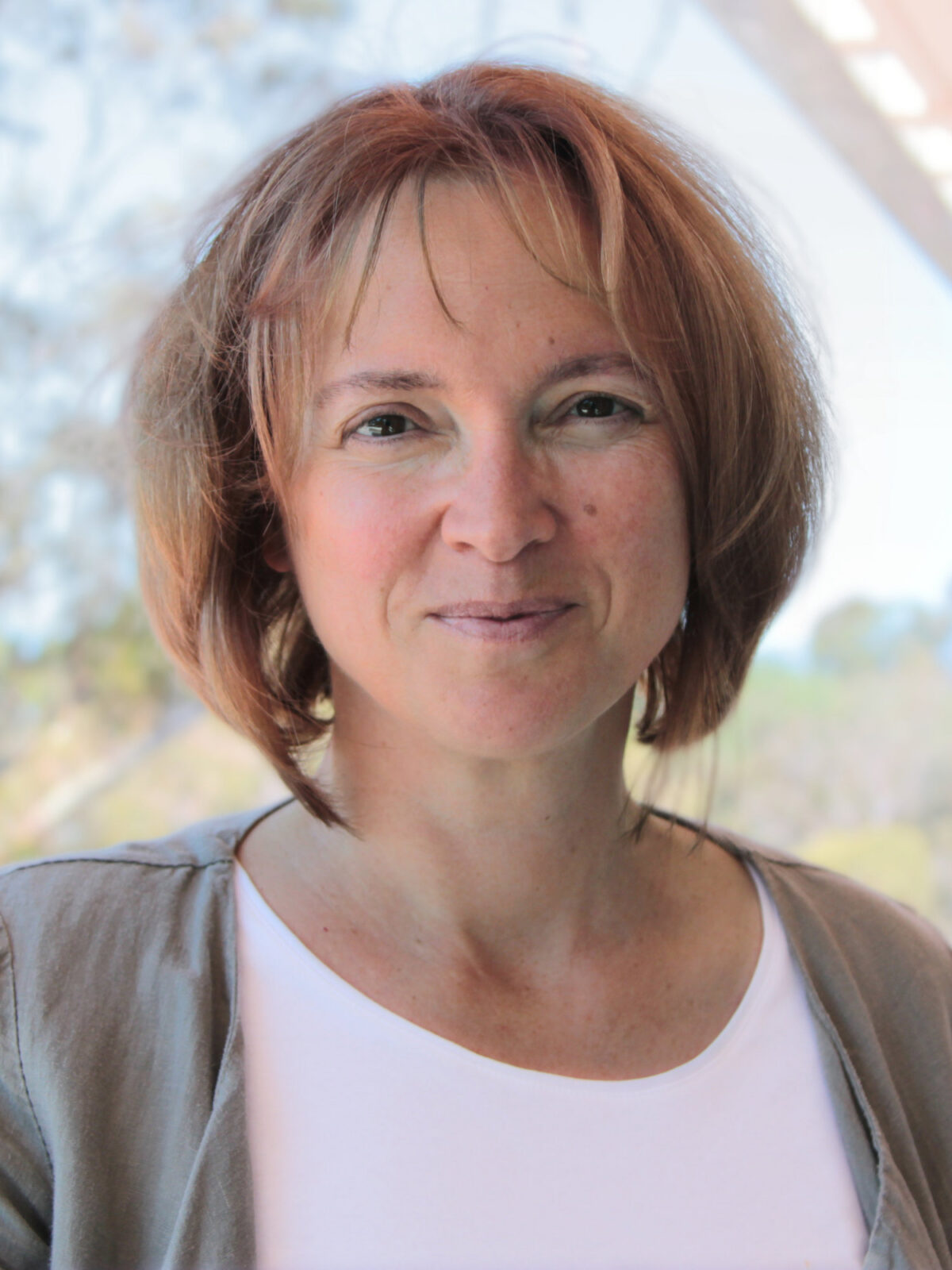
Elena Aronova began her career as a chemist in Moscow, shortly before the breakup of the Soviet Union. Since her move to the U.S. in 2006, she has spent decades studying Cold War science.
Visual: Courtesy of Elena Aronova
But in 2006, she moved with her husband, who studied math and physics, to California, where she has spent decades studying Cold War science. In a wide-ranging interview with Undark, Aronova spoke about how a country that once put ample resources into the scientific enterprise could end with research laboratories struggling to keep the lights on. And how the first nation to launch a man in space could simultaneously elevate the notorious biologist Trofim Lysenko, who won Joseph Stalin’s support while rejecting the burgeoning field of genetics on largely ideological grounds. In a letter to the Soviet dictator, Lysenko reportedly characterized genetics as “bourgeois” and “developed in Western capitalist countries” for “reactionary purposes.” Lysenko has since been labeled one of history’s most brazen charlatans.
More recently, the war in Ukraine has led to a second exodus, this time of historians of science. In an email, Aronova characterized the war and politicization of history as “the final nail in the coffin” of what was once a “major scientific powerhouse.”
Aronova is currently a historian at the University of California, Santa Barbara. We spoke by Zoom and our interview has been edited for length and clarity.
Undark: You received a master’s degree in chemistry from Moscow State University in 1991. In December of that year, the Soviet Union collapsed. What are your memories as a young scientist from that time period?
Elena Aronova: There were two options basically open for us. One option was to go abroad. Another option was to reinvent yourself completely. That was a very fascinating time. The planned Soviet economy collapsed. All these new economic institutions — Soviet economists had not been trained for that.
My husband’s cohort of mathematicians, that was the generation who built up the new novel economic institutions: all sorts of banks. In the 1990s, it was like, yeah, that’s where we can actually apply our skills and analytical reasoning as mathematicians, and do better than economists trained in the Soviet system.
Also, a few friends of mine started to develop what was called “Runet” or Russian internet. They turned to IT and developing internet services in Russia. So that was the second path.
My case is kind of idiosyncratic because this is a third path I found by chance, really. So in my case, it was just a coincidence that I came across this field that I had absolutely no idea about: history of science.
I wanted to be a researcher. I didn’t want to go into business or anything like this. And so this field, history of science, at first, I thought of this as an opportunity to continue to do science, just by other means. I entered the graduate program at the Institute for the History of Science and Technology in Moscow. They offered a stipend.
At that time, my husband didn’t receive any salary, so that was another feature of working in science in the 1990s. Scientists continued to work, but they were not paid.
I received my Ph.D. in 2003. For my next project, I wanted to study the history of bioweapons research during the Cold War — but ultimately decided against pursuing this research path. You probably know about Lysenko. So part of the story of bioweapons research is that to develop bioweapons, you need genetics. You need molecular genetics. For those bioweaponers, this Lysenko bullshit was not really something they were interested in.
My hypothesis was that, in fact, within those institutes and within this system, molecular genetics was not just allowed but promoted. This was [around the time of] the discovery of DNA’s structure, 1953. Watson and Crick received their Nobel Prize in the early 1960s. But in the Soviet Union, it’s still Lysenko. Lysenko is biology.
In practice, you could find many different niches for teaching and practicing genetics, but officially genetics doesn’t exist. Whereas, in the world, we have this flourishing of new molecular biology and molecular genetics.
UD: When I think of Soviet science, on the one hand, I think of the USSR’s groundbreaking role in the Space Race: Cosmonaut Yuri Gagarin was the first person to orbit Earth. On the other hand, I think of Lysenko. How did one system give rise to both of these figures?
EA: That’s a very big question. As shocking as it is, Lysenko might be more of an aberration than a representation of Soviet science.
I think it would be a mistake to think of the Soviet system of science as ideology-driven, or as socialist. The Soviet system was really characterized by this mass scale and massive state funding for fundamental research. A comparison might be what happened to American science during the Cold War, when research that was previously funded largely through industry or philanthropic foundations, such as the Rockefeller Foundation…
After the Second World War, this funding shifted to the Department of Defense. So, 90 percent of funding for science in the U.S. from the 1950s through the ’70s was through the Atomic Energy Commission and the Department of Defense, [the latter of] which included fundamental science, which included fields like anthropology, and history for that matter.
On that scale, you can have some aberrations such as Lysenko. And even though similar ideologically driven campaigns were attempted in other fields — from physics, to geology, to history — only biology was really affected to the point that it did embed some research in genetics.
UD: You have written a fascinating paper about the life of an amateur Soviet seismologist named Vladimir Mannar. Can you tell us a little bit about who he was?
EA: I was researching in the former USSR Communist Party archive. And I came across a big file. It’s all microfilm. It contained a large mass of documents: the correspondence between the Central Committee of the Communist Party and this person who called himself Vladimir Mannar. This correspondence just was so fascinating that I made copies and I started to look into this.
So it starts in the aftermath of one of the greatest earthquakes in Ashgabat, the capital of Turkmenistan, in 1948. The earthquake destroyed the city almost completely. Lots of casualties, a tragic event. Mannar sent this telegram to the Central Committee, saying, “Look, we had this tragedy, and I have a proposal to make.” He started to lay out his proposal for using animals as earthquake predictors and how you could develop better disaster control, all the while criticizing academic seismology for not doing a great job at preventing or predicting earthquakes.
UD: How were animals helping to predict earthquakes?
EA: It was well known that before earthquakes, different animals would start to behave weirdly. And there were anecdotal accounts. If you lived in an earthquake-prone region, you may have observed your cat freaking out, or your dog starting to howl all of a sudden. And then, a few hours later, there is this small earthquake.
The villagers knew the signs. Mannar suggested collecting this knowledge, this vernacular knowledge, and taking it seriously. Because seismology didn’t really provide many resources to actually predict, in a strict sense, when an earthquake will happen.
I gave Mannar’s approach a name, “citizen seismology.” It would rely on amateurs and local observants. And it would be based on surveys and the collection of observations of animals that didn’t require specific scientific training.
I think this case may demonstrate a couple of features of what might be called a socialist version of seismology. I’m using Mannar’s framing because he was a critic of academic seismology — and also of capitalist seismology. So that was his wording, juxtaposing socialist and capitalist approaches to seismology. One of those features is participation.
So this case of Mannar, because he ended up actually being employed as a head of a seismological station, paid by the leading institute in geophysics in the Soviet Union, it can demonstrate this participation and relative openness of the Soviet system to the entrance of people with a background such as Mannar’s.
UD: These stations were located all across the USSR.
EA: Right, exactly at remote areas. Those stations needed to be manned. They needed to be staffed. Not many professional scientists would be willing to go and to live there.
Seismology at the time was strategically important since it was one of the tools allowing detection of underground nuclear explosions.
UD: Is there anything else that you would like to add?
EA: In the 1990s, the brain drain was mostly of natural scientists. But after Russia’s invasion of Ukraine, all of my friends and colleagues in the history of science who were still in the country for various reasons — elderly parents or whatever — they left.
UD: Is that because they were censored, or was it because they couldn’t do international collaborations?
EA: They could not do international collaborations because, especially immediately after Russia’s invasion, many international organizations, or even societies, felt compelled to discourage collaboration with someone affiliated with a state-funded Russian institution.
Also, there was a transformation of some leading centers for history of science, such as the [A. V. Poletayev Institute for Theoretical and Historical Studies in the Humanities, part of the National Research University Higher School of Economics].
What was a relatively autonomous intellectual space became highly controlled. And of course, Putin’s personal forays into history. History has become really a political weapon, and as a field, highly controlled and politicized.