





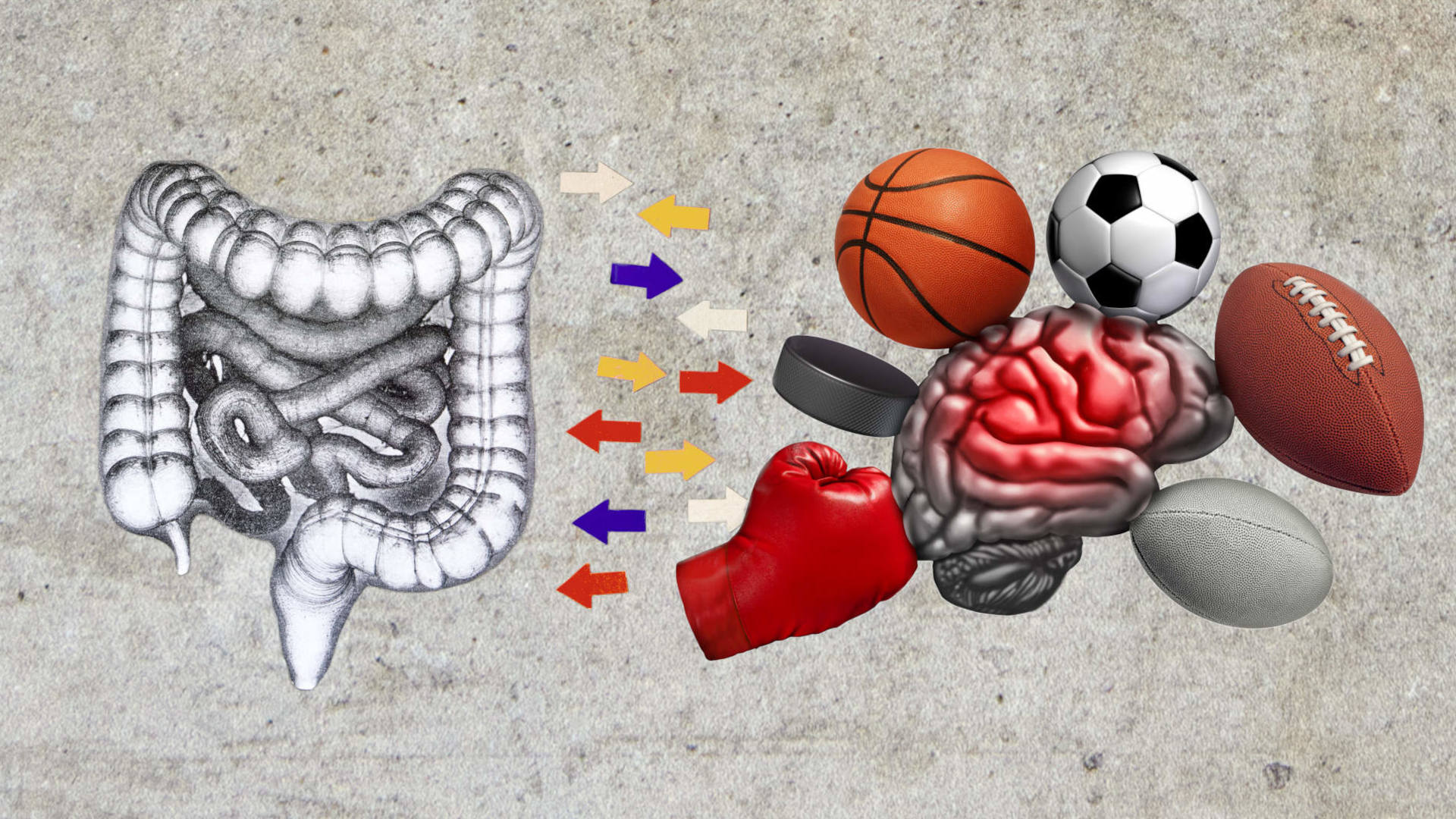
Could a Blow to the Head Appear in the Gut?


In 2019, 33 football players at Rice University in Houston, Texas, signed up for a study that came with an unusual request: Throughout the season, researchers wanted samples of their poop.
The players, a mix of freshmen and upperclassmen, were accustomed to having their bodies scrutinized. Coaches tracked their performance. Trainers monitored their injuries. But Sonia Villapol, an associate professor at the Houston Methodist Research Institute, wasn’t focused on their muscles or bones. She wanted to know what was happening in their guts to better understand what was happening in their brains.
A couple of times during the season, hours spent colliding with opposing colleges on the gridiron were followed by stool collection. The players sealed roughly 2 grams of fecal matter into collection tubes, which were shipped to Villapol’s lab for analysis. Additional samples were collected during the offseason in February 2020.
What Villapol and her team hoped to find buried among the trillions of microbes sampled was evidence that trauma to the brain may leave detectable fingerprints in the gut microbiome, ones potentially tipping the microbial ecosystem out of balance.
Villapol’s research is part of a growing field recognizing that brain disorders may reverberate throughout the body; such connections have emerged in other neurological conditions, such as Alzheimer’s disease and stroke. Exactly what those ripple effects mean for head trauma — and whether they can be harnessed for diagnosis or treatment — remains an open question.
When it comes to traumatic brain injuries, or TBIs, for decades, the brain has understandably been the center of attention. Researchers studied what happens inside the skull after repeated head impacts, even as the science became the subject of fierce debate, with the National Football League widely criticized for downplaying the link and pulling research funding. In 2012, more than 4,500 former players — some suffering from dementia, depression, or Alzheimer’s disease that they blamed on repeated head impacts — sued the league. A judge approved a settlement in the case in 2015.
Since then, the NFL has invested millions in head injury research; it also recently expanded the use of soft-shelled Guardian Caps worn over helmets — although the research is mixed on the cap’s reduction of concussion risk. Both the NFL and the National Collegiate Athletic Association have repeatedly updated their concussion management and return-to-play protocols in an effort to protect athletes. But translating those policies into practice has not been straightforward: A 2014 study found that about a fifth of colleges had yet to implement the NCAA’s guidelines, and results indicated that improved concussion education was needed.
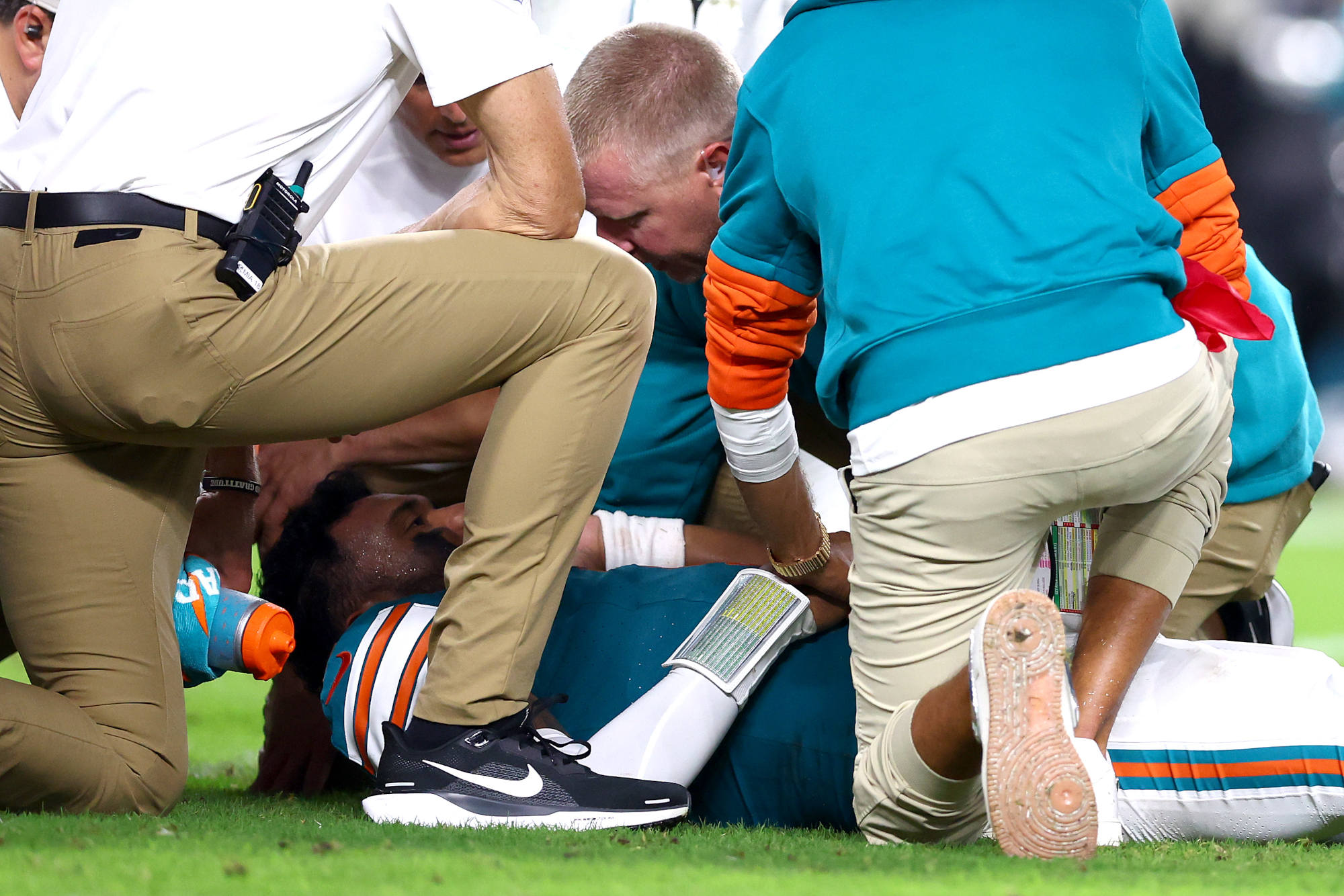
An estimated 3.8 million sports- and recreation-related concussions occur in the United States each year, according to a 2023 review. Female athletes generally experience concussions at higher rates than their male athletic counterparts, according to a separate 2017 review. A 2017 study in the Journal of Athletic Training found that men’s football, men’s and women’s ice hockey, and men’s wrestling had some of the highest concussion rates among athletes. Yet despite ongoing research into these connections, as many as 50 percent of all concussions go unreported or undiagnosed, according to the American Brain Foundation.
Part of the challenge is that concussions remain difficult to diagnose. Unlike a broken bone that can be seen on an X-ray or a disease that can be confirmed with a blood test, clinicians largely rely on athletes self-reporting and clinical observations, rather than objective biological markers of TBI, said C. Munro Cullum, a clinical neuropsychologist at the University of Texas Southwestern Medical Center in Dallas, who studies concussions.
Sonia Villapol wanted to know what was happening in their guts to better understand what was happening in their brains.
That challenge also extends to recovery. If an athlete behaves normally to clinicians or trainers familiar with them, they are generally deemed recovered, Cullum said. “There is some research suggesting that clinical recovery might occur earlier than the physiologic recovery of the brain, so there might be still some physiological disruptions that occur beyond that clinical recovery stage.”
To move beyond symptom-based assessments, researchers have spent years searching for biological markers of brain injury. The leading candidates are proteins released into the bloodstream after brain damage, including GFAP, a protein that makes up the structure of astrocytes, a type of brain cell. Theoretically, these materials could be picked up with a blood test.
Another possibility is a brain scan. “There are some experimental MRI techniques now that look promising,” Cullum said. “But they’re much like the blood test, they’re not ready for prime time, they’re not ready for diagnosis.”
Houston Methodist Research Institute sits southwest of the city’s downtown, near the serpentine Brays Bayou and the sprawling Texas Medical Center. Inside one of its laboratories, Villapol has spent years investigating the biological aftershocks of brain injury and the body’s efforts to repair the damage.
Her interest in the gut microbiome emerged from observations in other neurological conditions. Studies in human and animal models of stroke have found that injuries to the brain can be accompanied by shifts in the gut’s commensal microbiota, the community of beneficial bacteria inhabiting the digestive tract, or imbalances in gut bacteria diversity. Some researchers have posited that the brain is communicating with the gut and its microbiome through the gut-brain axis, a two-way network involving the nervous system, immune system, and other chemical messengers.
Because TBIs and stroke share similar underlying pathology, Villapol wondered whether changes in the gut microbiome could serve as a marker of concussion, she said.
To move beyond symptom-based assessments, researchers have spent years searching for biological markers of brain injury.
To test the idea, Villapol and collaborators at the University of Maryland, Georgetown University, and neighboring Rice University simulated TBIs in mice through a technique called controlled cortical impact, first developed in the 1980s. Within 24 hours, the balance of microbes living in the animals’ guts changed. Some common gut bacteria, like those belonging to the Lactobacillus family, dwindled, while others swelled in number. The findings were published in 2018 in the journal Frontiers in Immunology.
The observations are in line with other animal studies that found overall gut microbiome changes following a TBI. But an important question remained: Were similar shifts occurring in football players as they crashed into their opponents week after week?
Among the 33 football players from Rice University whose stool Villapol’s lab collected, four sustained concussions during the season. The gut microbiomes of the concussed athletes contained lower levels of two bacterial species, Eubacterium rectale and Anaerostipes hadrus, both members of a family of bacteria often associated with gut health.
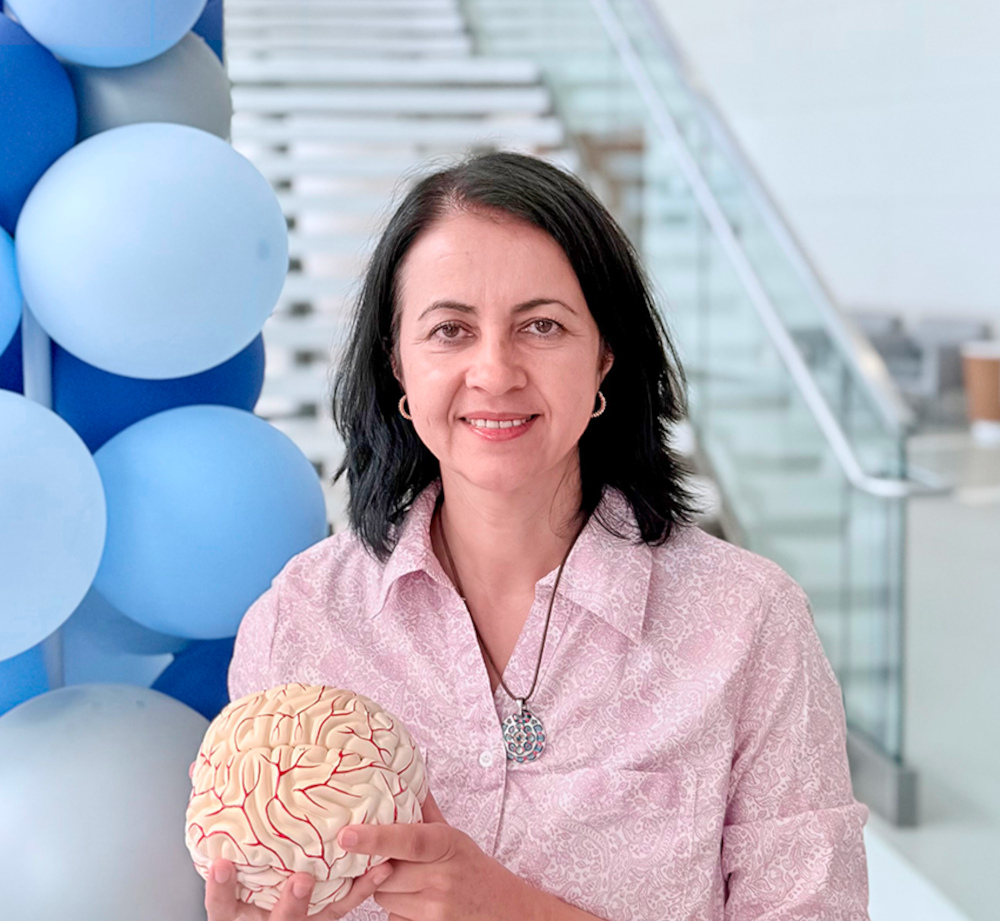
Sonia Villapol’s research is part of a growing field recognizing that brain disorders may reverberate throughout the body.
Visual: Courtesy of Sonia Villapol
Villapol is now expanding the original concussion study to include 120 Division I athletes from Rice University, 80 involved in contact sports and 40 competing in non-contact sports for comparison. The follow-up study is partially funded by the NFL Players’ Association, the labor union representing National Football League players.
“At the same time,” Villapol said, “we have another hypothesis that the impact of concussions in females, in women, is different than men.” To explore that, her team has enrolled Rice University’s women’s soccer, volleyball, and basketball teams.
Assessing the broader field of research to which Villapol’s work belongs, Derek Monroe, a TBI researcher at the University of North Carolina at Chapel Hill, cautioned that much of the evidence tying the gut microbiome to traumatic brain injury remains observational, particularly findings from animal studies because they are translationally limited. Not only are rodent brains anatomically different from human brains, but the way TBIs are produced in laboratory animals — by surgically opening the skull and directly bruising the brain — differs substantially from what a tackled wide receiver incurs on the playing field.
“These rodent models, where a lot of the microbiome literature has lived,” Monroe said, “are a pretty far cry, I would argue, from a mild TBI or like what our athletes are sustaining. So that’s where that translational piece from rodent literature to humans, I think, is going to be a hurdle.”
Research into the gut microbiome has also raised questions about the hits that don’t result in a clinically diagnosed concussion. Over the course of a season, athletes can sustain hundreds of non-concussive head impacts — head traumas that don’t cause severe enough symptoms to warrant a concussion diagnosis, but can still cause brain injury and may put athletes at a higher risk for concussion.
At Colgate University in central New York, Ken Belanger, a professor of biology, led a small observational study examining the effects of non-concussive head impacts on the gut microbiome among Division I football players.
The researchers asked two questions, Belanger said. “One is: Are there changes in the short-term after a very significant head impact? And the second question was: Are there changes across a season as head impacts accumulate?”
Get Our Newsletter

The six participants, all between the ages of 21 and 22, were largely recruited by Zack Pelland, a then-defensive lineman and Colgate undergraduate. Over the course of the season, the players wore helmets equipped with impact-monitoring sensors. Following a stool sample, they completed questionnaires about factors such as mood, sleep, and substance use.
The six participants sustained an average of 261 head impacts over the course of the season. Belanger and his team collected a total of 226 stool samples. They found that, within 72 hours of a head impact, there appeared to be changes in microbial diversity. The researchers also observed long-term changes over the course of the season.
“It’s a small data set,” Belanger said. And because the researchers identified gut bacteria by matching genetic sequences to known microbes in a database, the results are further limited in the species of microbes uncovered. “I don’t want it to sound also like we’re indicating cause and effect from this study,” he added.
Like Villapol, Belanger is planning for a second study of Colgate football players to determine whether the microbiome changes observed after non-concussive head impacts hold up in a bigger cohort. In a parallel study, he and his lab are asking the same questions in female ice hockey players.
Given how much the gut microbiome varies from person to person, identifying sex-specific patterns between these two groups may prove challenging, Belanger said. “We’ll see what we find out.”
Factoring in the gut microbiome reflects a broader shift some concussion researchers have been advocating for years — viewing TBI through a systems lens rather than a condition confined to the brain.
“I consider myself to take this kind of brain-body approach to concussion, so that’s where I think the microbiome fits in and that’s where I can get on board with it,” Monroe said.
“I think it’s a canary in the coal mine, if you will, of broader dysfunction,” he added. “But where I’ve kind of drawn the line, as I’ve gone through the literature, is what that means for intervention. Just because we have a change in the microbiome doesn’t mean intervening on the microbiome will change the brain or change clinical outcomes.”
Belanger expressed similar caution: “We don’t even know if those changes are good or bad. They could be something that has developed evolutionarily over time, where a blow to the head causes some physiological response that leads to the proliferation of some good bacteria that help recovery.”
“Just because we have a change in the microbiome doesn’t mean intervening on the microbiome will change the brain or change clinical outcomes.”
That uncertainty points to a fundamental challenge in translating microbiome research into personalized medicine — as the Russian microbiologist Élie Metchnikoff noted more than a century ago in his 1907 book “The Prolongation of Life”: “Our actual knowledge of the intestinal flora is still very imperfect.”
What scientists know about the gut microbiome has expanded enormously in recent decades, propelled by advances in culturing methods and genetic sequencing. Yet interactions among countless known microbes — and their effects on human health — remain poorly understood. Many other microbes have yet to be identified, a frontier often called “microbial dark matter.” As a result, the shifts scientists detect in the gut after a brain injury may only be a partial glimpse of a far more vast and intricate ecosystem, Villapol and Belanger said.
Still, there is hope that a better understanding of the gut microbiome in the context of TBIs could one day help fill longstanding gaps in concussion care, from diagnosing injuries and monitoring recovery to speeding the healing process or improving resiliency against concussions.
To that end, Villapol has conducted animal studies suggesting that probiotics, and perhaps even antibiotics, may influence recovery after a TBI. In the case of the antibiotics, Villapol said the treatment appears to eliminate “all of the bad bacteria” that bloom after a brain injury disrupts the gut microbiome, essentially resetting microbial harmony.
Other researchers, including Cole Vonder Haar and Kris Martens at the department of neuroscience at The Ohio State University College of Medicine, are exploring whether altering the gut microbiome through diet can improve behavioral changes after TBI. In research presented last year at the annual meeting of the Society for Neuroscience, they found that feeding rats with TBIs galacto-oligosaccharide, a prebiotic, reduced impulsivity, a common and often debilitating consequence of brain injury.
“We’re not curing TBI with this, but having moderate but meaningful effects within the animal model,” said Vonder Haar.
When it comes to diagnosing, stool tests may be an awkward ask, but Villapol’s research indicates the potential of offering athletes and sports teams a relatively quick way to assess concussions, particularly given the current lack of reliable biomarkers. The technology to sequence bacterial DNA from stool samples already exists and is widely used in clinical labs. But again, the challenge for such a gut microbiome-based test is determining whether specific microbial signatures can be linked to TBIs with enough consistency and accuracy to serve as a diagnostic tool.
There is hope that a better understanding of the gut microbiome in the context of TBIs could one day help fill longstanding gaps in concussion care.
Practical applications of the gut microbiome in sports may be some time away. Nevertheless, its study in the context of TBI merits further investigation and investment, Vonder Haar said.
TBI research receives less funding than one might expect given the number of people affected, he said. In addition to less federal funding support, TBI research lacks large advocacy and fundraising groups to champion its cause, he added. “This is something that the field really is in dire need of, is people to invest in this at the public and the private sector.”
Despite what he notes is a developing field still grounded in observational evidence, Monroe sees research on the gut microbiome and TBI as an opportunity to show that the effects of such injuries are not confined to the brain. “All of this is to make sports safer, not to cast it out,” said Monroe. “That with risks, sport presents great benefit, especially for youth.”
Miriam Fauzia is a freelance science and health journalist based in northern Virginia. She has written for The Dallas Morning News, The New York Times, USA Today and The Daily Beast, among other publications. She tried to be a scientist in a previous life and holds a master’s degree in immunology.