




In the mid-20th century, many nuclear-weapons scientists spent a lot of time in the Nevada desert, blowing up devices to make sure they exploded as expected and to determine how the environment and infrastructure, as well as biological beings, would respond to such detonations.
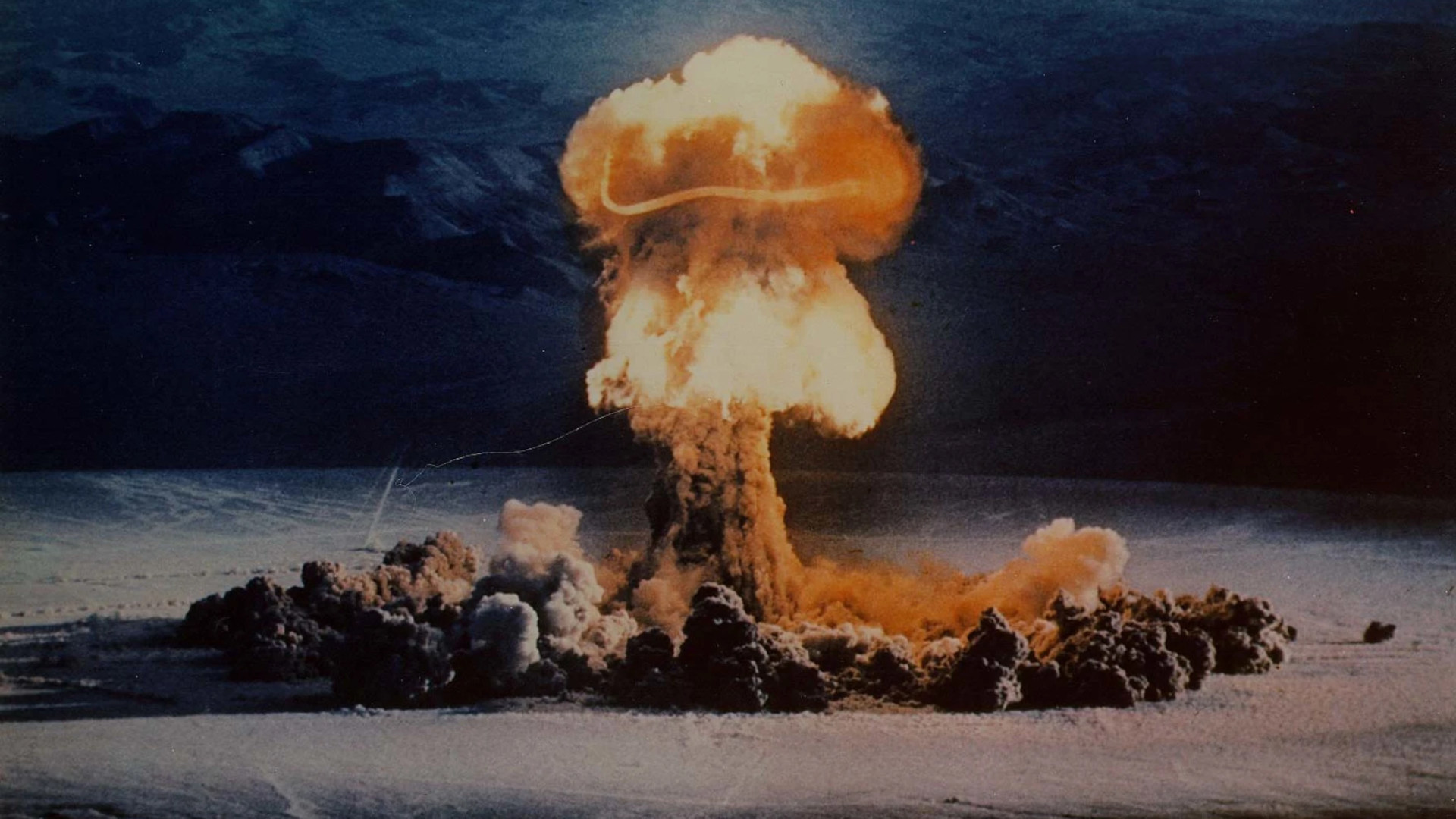
One memorable test was called Priscilla. On June 24, 1957, scientists hung a 37-kiloton bomb from a helium balloon and floated it above a fake, uncanny city, equipped with, among other things, an overpass to nowhere and a bank vault full of blank papers.
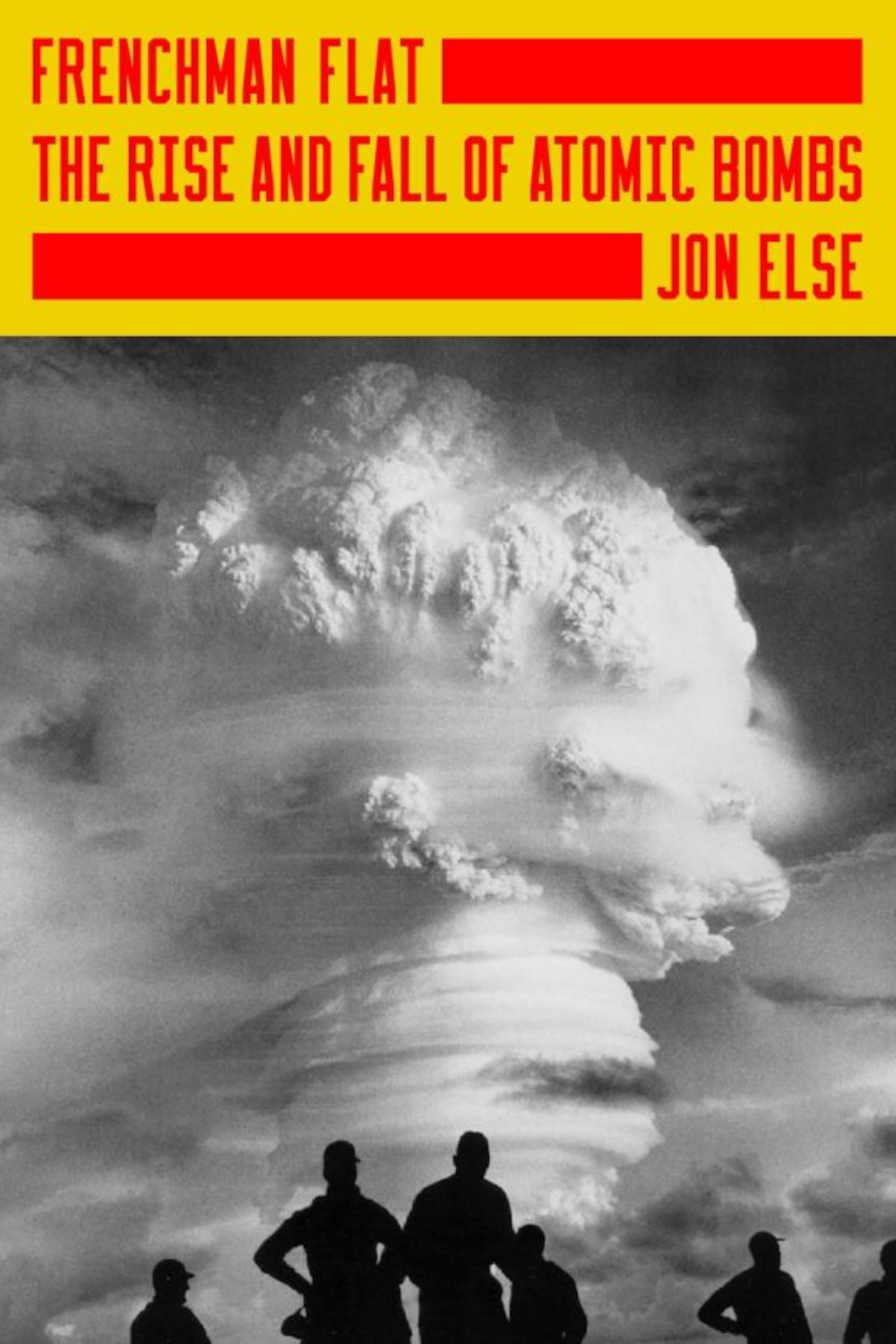
BOOK REVIEW — “Frenchman Flat: The Rise and Fall of Atomic Bombs,” by Jon Else (Belknap Press, 464 pages).
With a bang, Priscilla went off. “Its flash, far brighter than the sun, reflected off the moon, and soldiers covering their eyes in trenches two miles away saw the bones in their hands,” writes Jon Else in “Frenchman Flat: The Rise and Fall of Atomic Bombs,” so named for the part of the Nevada desert where many atomic tests took place.
The bank vault survived — a rare bulwark against apocalypse. But so, too, did something more sinister: fallout, residual material made radioactive by the test, lofted into the air. “In the months to come it mingled with residual radioactive products from the twenty-four other American atomic shots that year, eventually circling the globe three times, joined by debris from sixteen Soviet and three British atomic tests, until minute traces landed back in Nevada, where it had started,” writes Else, a documentary filmmaker and emeritus University of California journalism professor who has covered nuclear weapons for decades.
This is what “Frenchman Flat” does best: provide concrete reminders that the negative effects of nuclear weapons aren’t limited to their use in wars, and that their consequences extend everywhere — from the ranch next-door to countries across oceans.
The book tells the chronological story of nuclear weapons — birth to continued very-aliveness — through the history of nuclear tests. Many more bombs have exploded in the name of experimentation (more than 2,000) than conflict (two). With rare narrative and human detail, “Frenchman Flat” drives home the contradictions and consequences of the atomic age.
Like many other nuclear-weapons books, Else begins with the physics that resulted in the Manhattan Project and the development of the atomic bomb, two versions of which the U.S. dropped on Japan.
“Its flash, far brighter than the sun, reflected off the moon, and soldiers covering their eyes in trenches two miles away saw the bones in their hands.”
After that, some project scientists — including J. Robert Oppenheimer — began to have doubts about their creation’s long-term effects on the world, and tried to influence nuclear policy, largely futilely.
Although “Frenchman Flat” uses this familiar period as its windup, the heart of the book isn’t about nuclear weapons’ creation and initial test in New Mexico, nor is it primarily about the Pacific islands where the country did some of its most spectacular nuclear experiments —although those explosions, Else writes, “were especially hypnotic, what Oppenheimer’s friend Francis Ferguson called ‘the nuclear sublime.’”
Instead, it is fundamentally a story of a different place: the Nevada Test Site and a dry lakebed called Frenchman Flat, where Priscilla and more than a dozen other explosive, above-ground tests took place. Today, the remnants of those tests remain, in the form of radioactivity and physical detritus. “With its smashed aircraft hangars, rusting blast doors, and pigpens, it resembles a silent, sun-bleached boneyard from the movie Planet of the Apes,” Else writes with characteristic sharpness.
Else’s descriptions of the desert site bring this part of Nye County, not far from Las Vegas, into vivid focus. Of the area, one resident told Else, “You don’t die here; you just dry up and blow away.”
Get Our Newsletter

The desolation is exactly why the Atomic Energy Commission (AEC) decided to set up shop there. The agency and its follow-on there detonated 100 atomic bombs above-ground and 828 underground; in two separate treaties, for the two different kinds of testing, world leaders agreed to stop with the radioactivity-spreading public spectacle. And the above-ground tests were spectacle: “Word quickly got around about a new entertainment sixty miles up the road from Las Vegas,” Else writes. “A festive atmosphere—even by Vegas standards—blossomed, with locals lining the highway at dawn to see the sky grow orange.”
But it wasn’t just the locals who got a taste of the bombs. After one test, for instance, radioactive snow fell around Lake Ontario and messed with X-rays being developed at the nearby Kodak film factory. Kodak threatened to sue for damages related to the tests, but “the AEC secretly agreed to provide the company with classified schedules and maps of potentially heavy fallout,” Else writes, providing the kind of detail that would only be declassified decades later.
Kodak, though, wasn’t the only recipient of fallout, and officials were curiously interested in gathering data about it. Else, for instance, turns to the published diary of Nevada’s Jeanne Sharp Howerton, who grew up in Nye County. “A bomb went off … The men come and take samples of milk from our milk cows and vegetables from the garden,” she wrote.
Some of those who went on to develop illnesses like cancer after presumed exposure to testing-based radiation are now eligible, in a governmental mea culpa, for compensation.
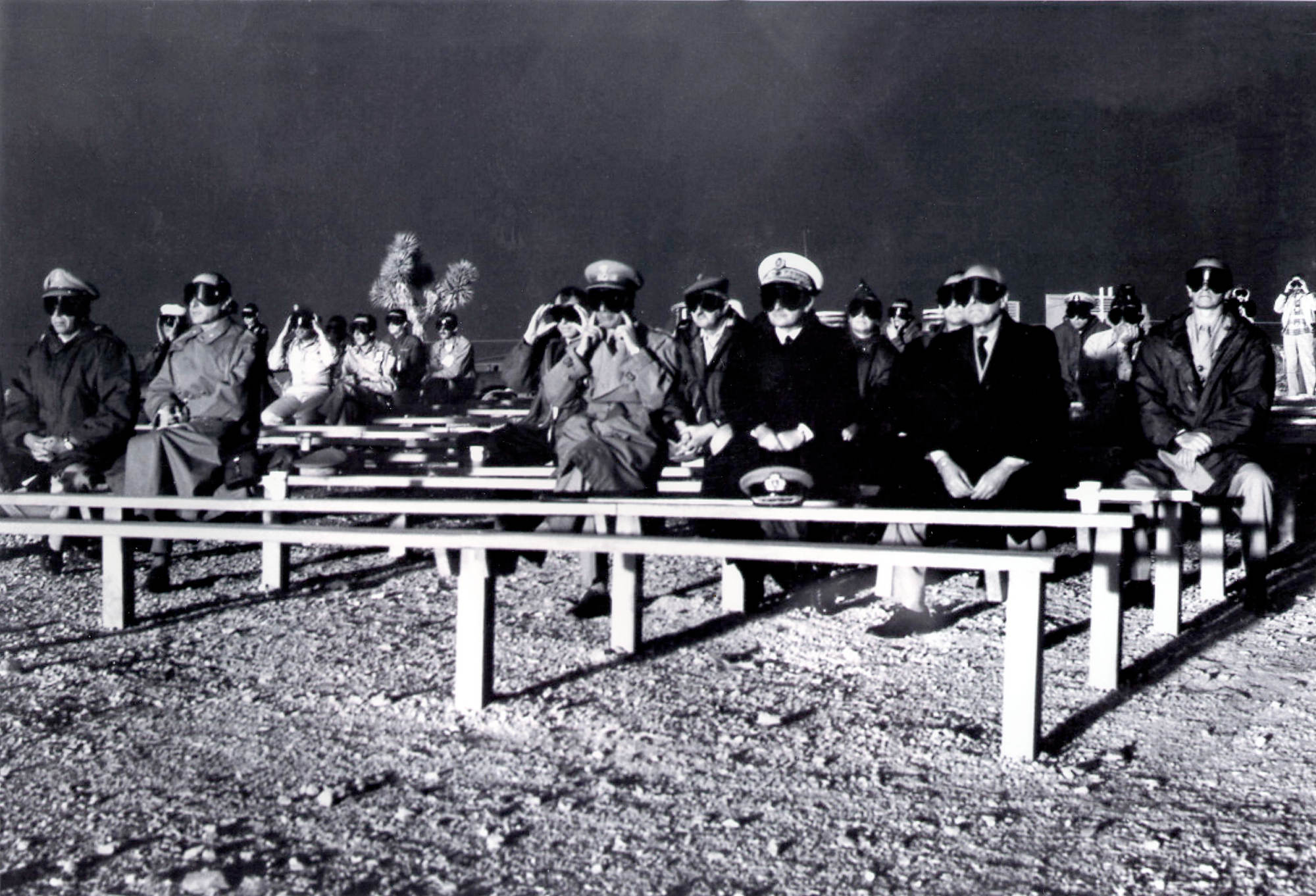
Near the middle of the book, Else returns to Priscilla, the event he tries to center the book around, with allusions to it throughout that can feel pat and forced. The day of the test, there were 2,600 people and many instruments at the Nevada Test Site. Some detectors were “hooked to the back of a pickup truck after the detonation by a man in a hazmat suit and respirator. He would then race back to the truck and drag away the instrument at breakneck speed.”
To see what the Priscilla bomb might destroy or spare, according to the book, the team had built the overpass “from nowhere to nowhere,” an underground parking garage, a railroad bridge, walls of various materials, and a house with “too many windows of too many different types—the mid-century modern American Dream writ small across acres of desert.” There were ponds and stretches of asphalt, soil and grass, European shelters, NATO command structures, bunkers, and more.
Many pigs, tragically, served as test subjects. And, of course, there was the bank vault. “A nuclear piggy bank filled with blank papers may now seem absurd,” Else writes with gallows humor, “but in that era, before we kept our insurance policies in the Cloud, it was world-class records archiving.”
The blast devastated most of the infrastructure, of course, and based on the pigs’ data, radioactivity and G-force readings would have left humans in bad shape — giving the lie to some of the “civil defense” protocols the government said would protect people. The drifting cloud “dumped heavy fallout on Louisiana, and took a left up the East Coast,” Else writes.
After one test, radioactive snow fell around Lake Ontario and messed with X-rays being developed at the nearby Kodak film factory.
Perhaps it’s not surprising that an opposition movement, which Else’s text gives life to, formed to protest testing, with protestors even camping out just outside of the highly secure Nevada facility. The Princesses Against Plutonium, for instance, made a stand wearing “white hazmat suits and silver death masks.”
Alongside the activist opposition, “Frenchman Flat” charts the attempts, successes, and failures to make treaties and agreements limiting the proliferation and testing of nuclear weapons. Today, the U.S. abides by a moratorium on all experimental explosions, although Else details the country’s ongoing atomic activity at what is now known as the Nevada National Security Site.
In modern times, Else points out, the people making nuclear policy haven’t themselves witnessed an explosion. But maybe they need an implanted memory of it. “The bank vault should be a national monument,” he writes, “and a visit to Frenchman Flat should be a requirement for holding public office in America. To stand amid the rusty junk, amid the coming attractions of a vile fate from which rational humans deliberately turned back, is to reach an understanding of what is possible.”