









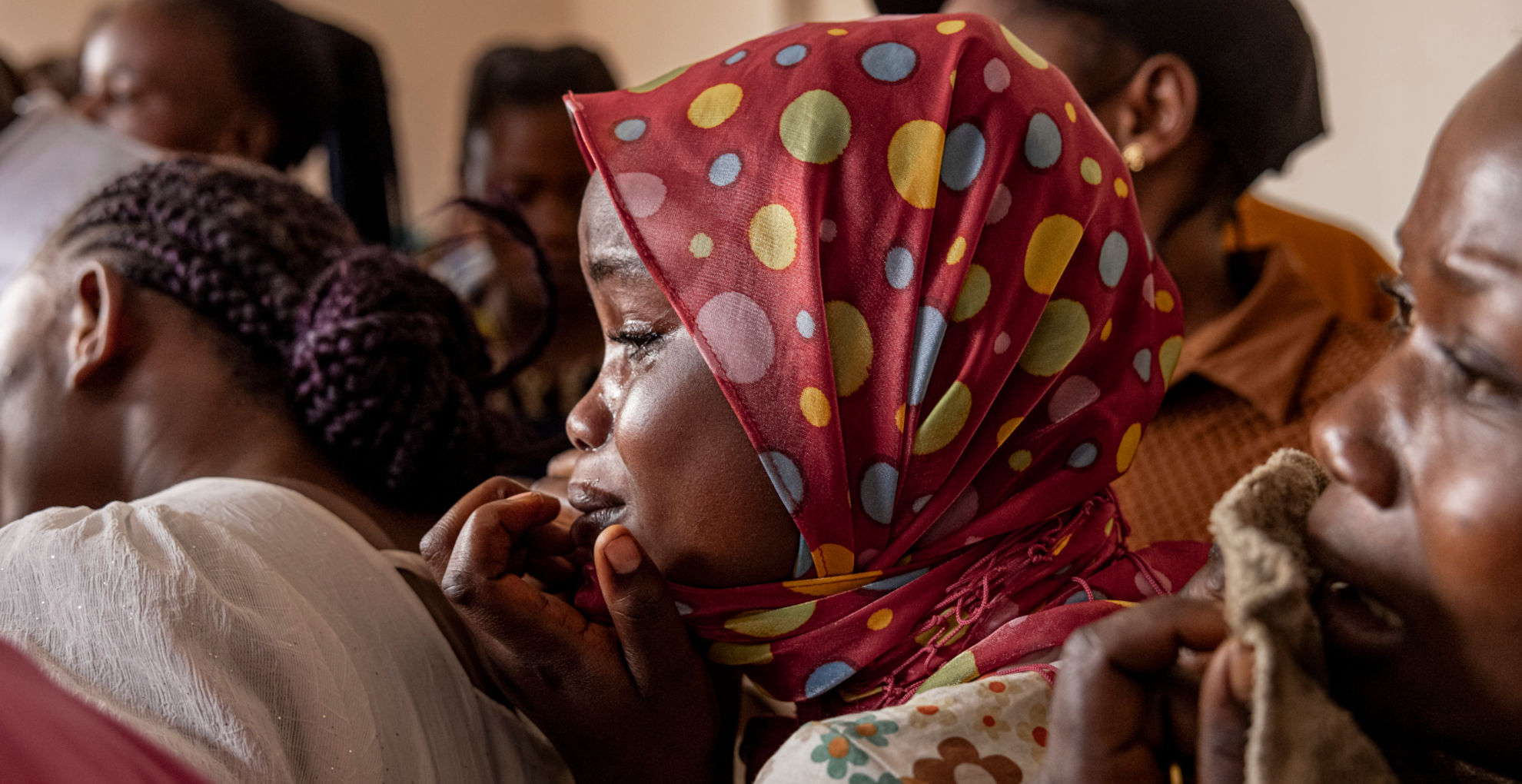


The 2026 Ebola outbreak in the Democratic Republic of the Congo, caused by the Bundibugyo species of the virus, has expanded into the fastest-growing Ebola epidemic ever, having sickened nearly 11,000 people and killed about 5,300 as of Nov. 7. The increasing severity and frequency of Ebola outbreaks reveal holes in how global health officials, medical personnel, and researchers handle viral epidemics. In 2014, Ebola suddenly expanded from a disease affecting dozens or a few hundred people per outbreak to one that killed more than 11,000 people. That outbreak was quickly followed by another beginning in 2018, which killed more than 2,000.

On average, Ebola kills 50 percent of those infected. (The mortality rate has ranged from 25 to 90 percent in some past outbreaks.) But, like many severe viruses, Ebola holds bigger horrors for pregnant women. In the first documented outbreak in 1976, 46 percent of female Ebola patients were pregnant, and about 90 percent of them died. Although more recent studies quibble about whether Ebola is more severe in pregnancy, research into Ebola and pregnancy has been inconsistent. And fetal or infant survival when mothers are infected with Ebola remains all but unheard of.
These outbreaks (including the current one) illustrate how pregnancies compound the virulence and spread of Ebola — a story that illuminates why we must test, trace, and study immune responses to Ebola in pregnancy, not just for the benefit of pregnant women, but for all of us.
As a graduate student, I remember watching my colleagues in Harvard University’s Sabeti Lab design a diagnostic test optimized for the 2014 Ebola outbreak and seeing them stuff 12 duffel bags with personal protective equipment to take to Sierra Leone. As this unfolded, the research I was reviewing for my Ph.D. (into the ways pregnancies mediate how humans adapt and evolve) circled back eerily to Ebola. This wasn’t coincidental: Evolutionary perspectives direct focus toward the severest threats facing us as humans.
According to the World Health Organization, females account for 60 percent of patients in the current outbreak, and most patients are of reproductive age — telling trends.
Pregnant women are critical to the spread of Ebola to vulnerable community members: They care for young children and, during the messy business of labor, expose medical teams to infectious bodily fluids. As a result, pregnant cases have occurred near the start of many Ebola outbreaks. In early April, a pregnant woman, among this outbreak’s earliest likely cases, died at the epicenter’s hospital after a late-stage miscarriage. A month later, two people on the medical team that treated her also died. According to the World Health Organization, females account for 60 percent of patients in the current outbreak, and most patients are of reproductive age — telling trends.
Yet none of this is surprising: The proclivity of Ebola to infect pregnant women has deep biological roots. The placenta is the heir to an ancient experiment that incorporated retroviral genes into our mammalian genomes. Retroviruses copy their genes into host genomes, exploiting the host’s cellular machinery to replicate themselves, while the host’s cells try to fend off such genetic parasitism. But placental cells lack some of these defenses, permitting some retroviral genes to remain active and repeatedly evolve new functions in the placenta.
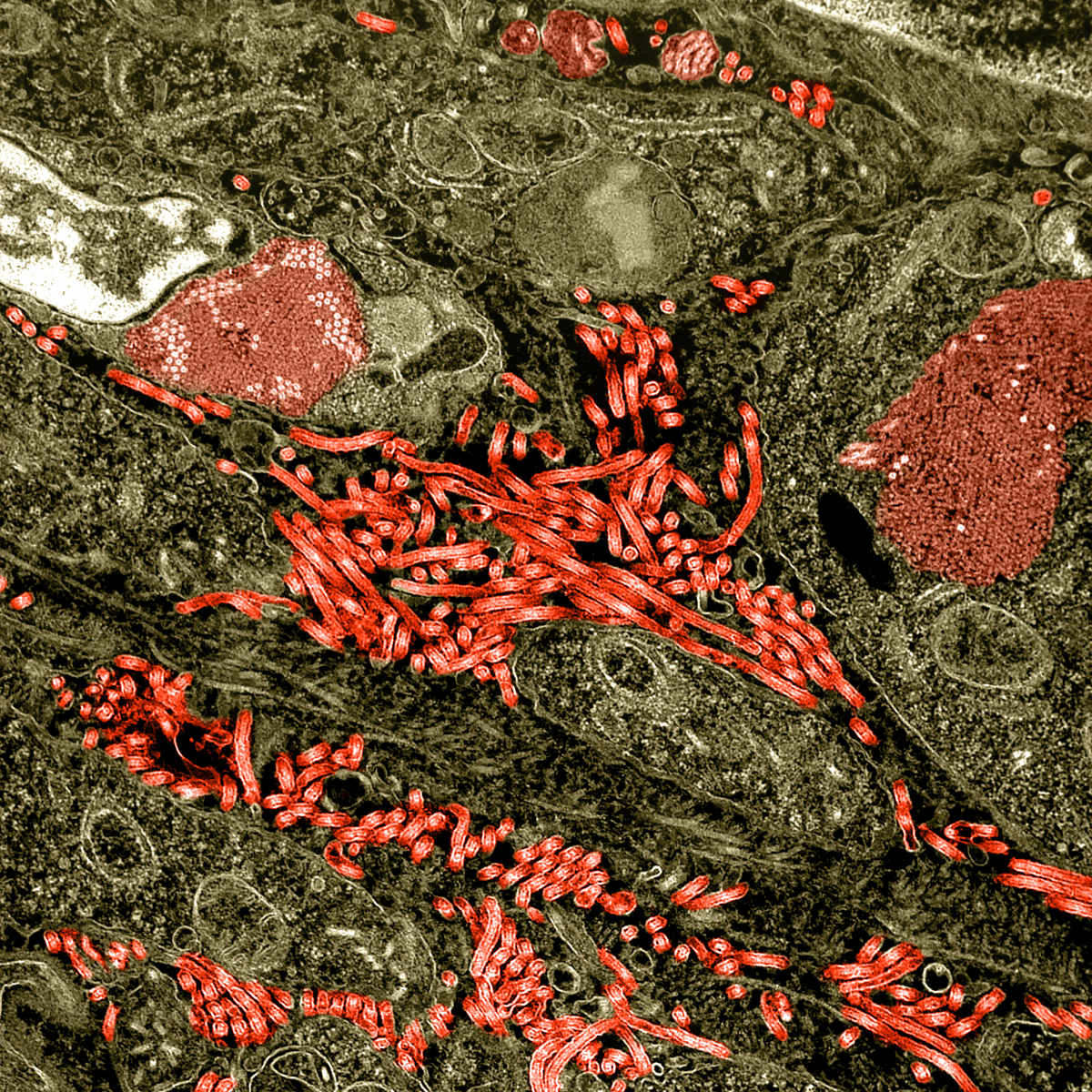
A colorized electron microscope image of the Ebola virus (bright red) infecting the ovary of a monkey.
Visual: NIAID/NIH/Flickr
In particular, genes that enable retroviruses to invade cells have lingered and have been co-opted multiple times (including by our own genome) to enable the development and implantation of the placenta into the mother’s blood supply and uterus. The adoption of such retroviral genes reveals and abets a tolerance for viral invasion of the placenta that continues to this day. As a result, many diverse types of viruses, including filoviruses such as Marburg and Ebola, sequester themselves and replicate to high loads inside the placenta. The placenta’s deep implantation also demands that the mother dampen certain antiviral responses, including inflammation. Inflammation, which limits viral replication early in disease, has been co-opted by evolution as a trigger for labor, so the uterus must keep it to a minimum mid-gestation.
In addition to these ancient immune compromises, pregnancy is also central to the story of how our bodies evolved to fight viruses like Ebola. This is because immune cells called natural killer cells (early responders against viruses) also help the placenta to implant in the uterus. The proteins that coat natural killer cells (called killer-cell immunoglobulin-like receptors, or KIRs) modulate the aggressiveness of the cells when they contact either infected host cells during viral illness or placental cells during early pregnancy. Certain genetic variants of KIRs correlate with increased fatality in Ebola cases but also with greater protection from preeclampsia (high blood pressure) in pregnancy. This is because such KIRs not only activate immune activity by natural killer cells (which can be deadly strong during Ebola, similar to the overactive “cytokine storm” that occurs during severe Covid), but also activate the cells to help uterine arteries to widen for oxygen and nutrient transfer. When this is diminished, growth of the placenta and fetus also diminishes, and preeclampsia, with its risk of early birth and hemorrhage, becomes more likely.
This serious genetic trade-off — survival of severe viruses balanced against preeclampsia — may well be why KIRs that decrease people’s survival of Ebola, but protect against preeclampsia, are found at lower frequency in people in sub-Saharan Africa compared to most other populations in the world. In populations at highest risk of severe viral illness, natural selection may have acted against the KIRs, as such peoples have endured the emergence of many serious viral threats, including Lassa fever, yellow fever, and HIV over time. We also find higher genetic diversity of KIRs among people from sub-Saharan Africa, suggesting that natural selection is balancing protection against viruses with the need to survive in the womb.
Get Our Newsletter

Such evolutionary trade-offs are profoundly important because they provide windows into the causes of our ancestors’ suffering, many of which continue to plague us today. Preeclampsia remains among the leading causes of maternal mortality. And, despite the centrality of pregnancy to the spread of Ebola and other pathogens, the immune system in pregnancy is understudied, hindering our care of pregnant women. Until 2019, pregnant women were excluded from getting Ebola vaccines and most treatments. Thankfully, change may be on the horizon. In July, scientists began testing two new drugs to treat the Bundibugyo virus, which currently lacks proven treatments. In a first for Ebola therapeutics, pregnant women are being included from the start of the trial in recognition of their severe vulnerability.
However, rectifying our ignorance requires something even more basic than drug trial inclusion: information. First, we need to more rigorously quantify the severity of Ebola in pregnancy. We must give pregnancy tests to all women with suspected Ebola and follow them prospectively, rather than contend with the limitations of looking back at small, retrospective cohorts of women. Second, we must use pregnancy status to trace pregnancy’s impact on Ebola’s spread. Finally, we must collect biological samples from patients, pregnant and otherwise, to characterize immune response to Ebola and be strategic about appropriate treatments in pregnancy.
The chaotic emergency response to outbreaks, which has been particularly fraught in this one, makes the systematic testing, tracing, and cataloging of samples from pregnant women challenging. But the stories of evolution, ancient and ongoing, written into our bodies, tell us that we ignore pregnancy in Ebola at our peril.
Elizabeth Brown has a Ph.D. from Harvard University’s Department of Human Evolutionary Biology, where she studied how recent human genetic adaptations interact with pregnancy, and worked as a research scientist at Bristol Myers Squibb studying treatments for fibrotic and immunological illnesses. She is currently writing a book about the evolutionary trade-offs that make human pregnancy so challenging today.