










Aftershock: Untangling the Risks of Electroconvulsive Therapy


In 2005, as Karren Johnson later recounted, she ended up in a psychiatric hospital in Denver, Colorado, more than 400 miles from where she lives in Albuquerque, New Mexico. She had recently undergone a session of electroconvulsive therapy, or ECT, she said, a last resort to manage an extreme depressive episode with catatonia, a condition in which people become unresponsive. The day after the session, she said, she had driven in a fugue state until she ran out of gas.
Other drivers had noticed her on the side of the road and called emergency services, who brought her to the emergency room. The doctors determined it was a psychological issue, so she was transferred to a psychiatric hospital. She asked a doctor why she was there. “Well, you had electroconvulsive therapy. You now have brain damage, and this is where you ended up,” Johnson said the doctor told her.
Johnson said her husband looked familiar, but she wasn’t sure who he was. When she got home, she couldn’t recognize her clothes. Eventually, she said, she had to leave her job as a teacher and drop out of the doctorate program that she was pursuing in psychological research. In 2014, doctors determined that she should go on disability because of the cognitive impairment caused by the ECT and her psychiatric conditions, which include schizoaffective disorder, bipolar type; obsessive compulsive disorder; generalized anxiety disorder; and PTSD.
Get Our Newsletter

Psychiatrists and other experts, backed by scientific studies, state that ECT, used to treat more than 1 million patients worldwide annually for conditions including severe depression, schizophrenia, catatonia, and bipolar disorder, does not cause long-term brain injury and can help patients. But some patients say they have long-lasting cognitive impairments from the therapy. And Facebook groups and Reddit forums are riddled with accounts from people who say they have lost years of memories.
While some clinical studies suggest that cognitive impairments resolve after a few weeks, others show that deficits, particularly in autobiographical memory, can sometimes last at least up to six months. Research beyond that timepoint is limited and the impacts continue to be debated. In a recent joint statement criticizing the World Health Organization, which has called for strict guidelines for ECT, major psychiatric associations including the American Psychiatric Association warned against portraying ECT as inherently dangerous.
Johnson said her husband looked familiar, but she wasn’t sure who he was.
While researchers are working to reduce the side effects associated with modern ECT — and many experts say it is already safe and effective — the exact underlying biological mechanism of ECT’s effectiveness has not yet been deciphered. (There are many models and hypotheses.) The devices used to provide ECT also still lack signoff from the Food and Drug Administration to be marketed for some of the conditions that they are being used to treat, and critics say the therapy lacks appropriate oversight. Patients report that doctors can fail to inform them of potential long-term consequences of the treatment before providing it, while experts maintain that there’s no evidence that ECT causes injury to the brain.
After she began experiencing cognitive issues after undergoing ECT, Johnson recalled, she was told she might recover. But, she said, “the opposite happened.”
For a fraction of psychiatric patients, the typical standard of care, which can include talk therapy as well as psychiatric medication, fails to make a dent in their symptoms. Around one third of patients with depression and schizophrenia, and one quarter of those with bipolar disorder don’t respond to two or more treatments.
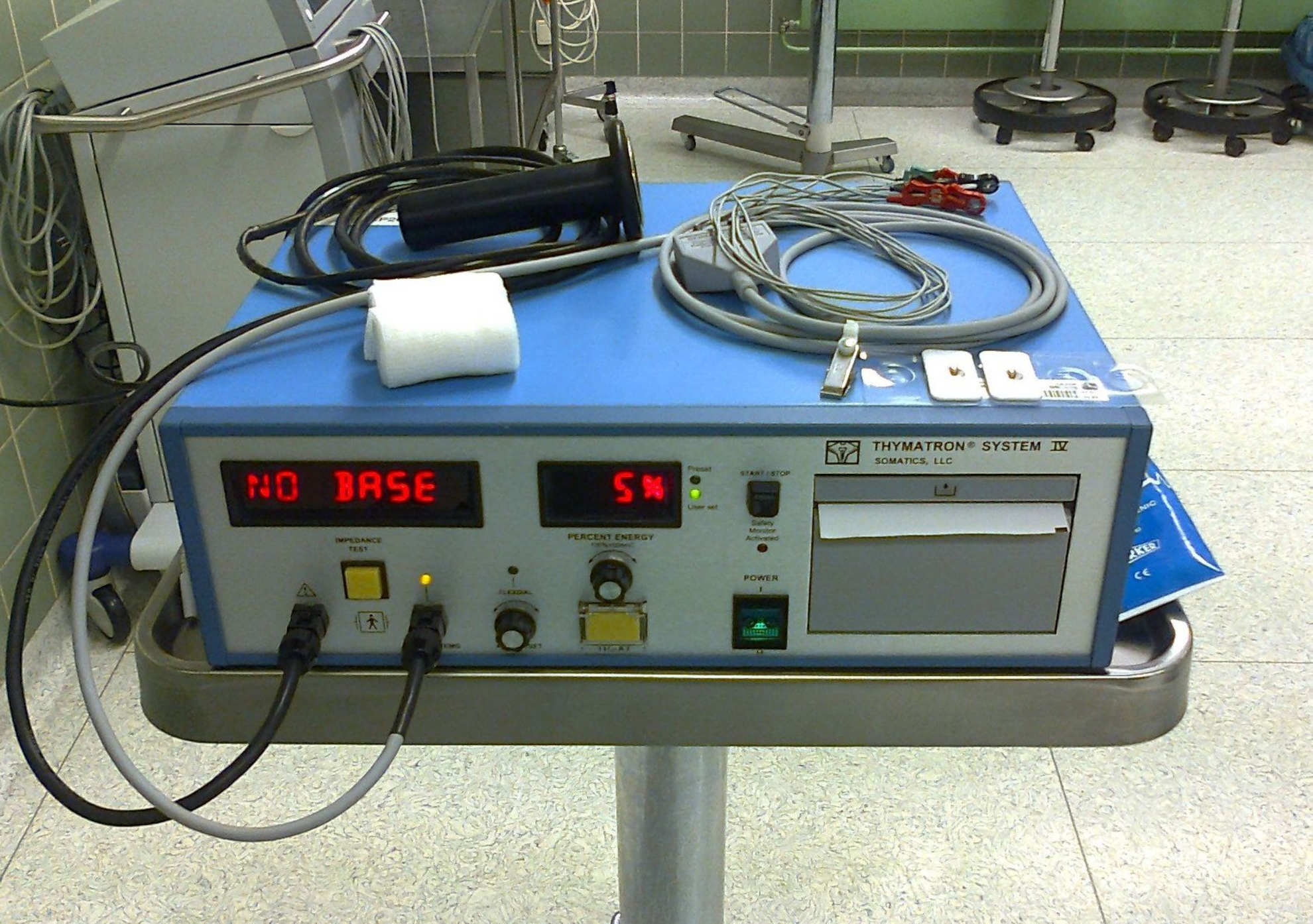
Sometimes, in rare cases, psychiatrists turn to electricity. A jolt of current, supplied by one or two electrodes placed onto the scalp delivered by an ECT device, induces a seizure that typically lasts between 30 seconds and a minute. While exactly how the electric current, or related seizure, might dampen psychiatric symptoms isn’t fully resolved, studies suggest ECT can help relieve moderate to severe depression — one 2024 analysis suggested around 75 percent of the more than 2,000 people in the study responded to ECT — and sometimes can work more effectively than other alternatives such as ketamine. (Studies on its effectiveness as a first-line treatment are limited.)
ECT can also provide a speedy intervention in acute cases, such as in patients suffering from suicidal ideations, manic episodes, or catatonia. In some cases, “there’s risks to not getting treatment, especially when you’re at the stage where there are not effective alternatives,” said Sarah “Holly” Hollingsworth Lisanby, a psychiatrist who studies ECT and recently began a research program at Arizona State University. (She spoke on her personal opinions, which do not represent the views of her employer.)

In a Facebook group for questions about the therapy, many patients recount their success stories. “I’m alive because of my treatments,” wrote one poster, adding that “ECT along with my meds has given me my life back.” Other patients have echoed the positive sentiments.
In light of studies showing ECT’s effectiveness in treating catatonia or a severe major depressive episode associated with depression or bipolar disorder in patients 13 and older, in 2018, the FDA reclassified ECT devices from Class III to Class II, which mean that they provide a clinical benefit for those conditions, though pose a moderate to high risk to patients. However, for other conditions, including schizophrenia, bipolar manic states, and schizoaffective and schizophreniform disorder, the evidence for ECT’s effectiveness is more limited. For these conditions, the devices remain classified as Class III, meaning they are considered to be life-sustaining, to help prevent impairment of human health, or to present a possible unreasonable risk of illness or injury. Those devices require a rigorous premarket approval process in which manufacturers must submit data showing safety and effectiveness before marketing the device.
The FDA gave manufacturers six months to submit paperwork showing compliance with the new order. Otherwise, the devices can’t be legally marketed for these other conditions. No firms have submitted an application to market ECT devices for these Class III indications to consumers, the agency confirmed in an email to Undark. Still, physicians can prescribe it off-label for those conditions.
“There’s risks to not getting treatment, especially when you’re at the stage where there are not effective alternatives.”
Currently, there is a lack of oversight in the United States, said Sarah Price Hancock, a certified rehabilitation counselor who moderates a Facebook support group of ECT patients. Price Hancock is also the co-founder of the Ionic Injury Foundation, which she said aims to support, educate, and advocate “for people with a history of electrical injury.”
“You’ll see spinal implants; they all have registries. Hip implants, they all have registries,” Price Hancock said. But ECT devices have no national registry.
The absence of such systems makes it hard to keep track of how often complications happen. Despite the self-reported side effects, there have only been 33 adverse events reported to the FDA, about a dozen of which are self-reports of problems with brain injury, memory loss, confusion, or cognitive changes.
Studies suggest that ECT is relatively safe; fatal events are exceedingly rare. But side effects like memory loss and cognitive impairment are reported by patients — and for some patients, those effects can be severe and persistent, according to self-reports. Johnson, for example, said she lost years of memories following her treatments.
Johnson is not alone. In an international survey of patients and family members and friends of patients who underwent ECT conducted by John Read, a professor of clinical psychology at the University of East London, and colleagues, most of the 858 patients surveyed reported negative effects like memory problems. Of the patients who responded to the survey, more than two-thirds reported that ECT made their ability to form or retain new memories worse and 80 percent reported that ECT worsened their ability to remember past memories.
Many reported that the effects lasted more than three years. Of the friends and relatives who responded to Read’s survey, more than half reported that it had made patients’ lives worse. About a third described worse moods, and one fifth reported increased suicidality. (One caveat of the study is that individuals were recruited via social media, so “this sample is far, far from representative of family and friends of patients receiving ECT internationally, tipped strongly towards those ready to express negative opinions on the treatment,” said Rich Braithwaite, a psychiatrist and an honorary assistant professor at Brighton & Sussex Medical School, in an interview with Science Media Centre, a U.K.-based science communication organization.
Price Hancock, the Facebook group moderator, said that she has lost the first 36 years of her memory, damage which she said she and her doctors blame on the therapy. Other side effects, as reported by patients, include difficulty concentrating, fatigue, and loss of vocabulary. Johnson said she suffers from speech impairment and is prone to getting lost even driving to familiar places if she doesn’t have a map.
Some of these effects may be linked to changes in the brain, research suggests. One study using neuroimaging found that patients who underwent ECT had developed larger hippocampi and amygdala, brain regions respectively involved in memory and emotion regulation, and that larger hippocampi correlated with the degree of cognitive impairment. Enlargement of the hippocampus in particular was associated with poorer verbal fluency scores, another study from 2025 found. However, some research suggests that changes in memory could also be a result of the disorder that prompted the ECT, as some patients have cognitive deficits before treatment. Disentangling which factors contribute to the side effects can depend on many things, including which cognitive test is used to track impairments and the patients’ subjective negative expectations.
By and large, researchers have not found evidence of brain injury such as white matter changes, atrophy, or microbleeds beyond anecdotal reports.
Some of the studies that do report negative side effects could be a reflection of outdated ECT. The modern version of the therapy is much different from the one given to patients decades ago, Lisanby noted. Today, electrodes are typically placed on just one side, and current is much more controlled, changes that reduce side effects. Researchers are also working to identify how to induce seizures with less electricity with other strategies like magnetic seizure therapy, since some research, including by Lisanby, suggests that the seizure itself drives the antidepressant effect. For example, keeping the current pulses to a shorter time window of 0.15 milliseconds can be more effective in inducing seizures than longer time frames, according to one 2025 study.
Such research is likely little consolation to the patients who feel they have been harmed. In their recent joint statement, psychiatric associations acknowledged that, while cognitive function can improve with ECT, “a minority of patients experience long-term memory impairment.”
Lisanby said magnetic seizure therapy is safer and comparably effective to ECT, offering an alternative to patients who are deterred by the latter. “If we could make it safer, then we might make it more acceptable to people who need it,” Lisanby said. “You should not have to choose between your mood and your memories.”
Back in Albuquerque after being discharged from the psychiatric hospital, Johnson said she spoke to her psychiatrist, who insisted that the fugue incident and her memory problems were not due to the ECT. “He was so cavalier about it,” she said. Twenty years after receiving ECT, Johnson said she still has not recovered many of her memories.
Part of the problem with ECT, critics say, is that long-term harms are not always communicated appropriately, so patients don’t have the entire picture before agreeing to treatment. For example, Read’s survey found that nearly 60 percent of ECT recipients reported that they had not been given “adequate information” regarding the treatment, with only 17 percent being told that “ECT can cause long-term or permanent memory problems.” An audit by Read and a co-author of patient information leaflets given by providers of ECT in England found that 23 of the 36 National Health Service Trusts minimized the risk of memory problems.
This minimization of risk has led to lawsuits against manufacturers of ECT devices by patients who claim that the company failed to adequately warn about risks such as memory loss. In 2023, for example, a jury found that the company Somatics failed to adequately warn about risks associated with its ECT machine in a lawsuit brought on by a patient who reported suffering from memory loss after 95 sessions with a Somatics device. However, the jury also found that the absence of adequate warnings was not the cause of injury.

Without a clear communication of the therapy’s risks, “the ethical principle of informed consent is being breached,” said Read, who served as an expert witness for that patient’s legal team. In an email to Undark, Somatics’ operations manager Erick Vasquez noted that the company “continuously reviews and updates our device documentation,” adding that “updates to our instructions for use in 2024 reflect our ongoing commitment to aligning with clinical guidelines and regulatory directives.”
“We stand by the safety of our systems when used as intended by trained medical professionals,” Vasquez wrote.
But concerns surrounding ECT go beyond providing appropriate information to patients. In some U.S. states, the therapy can be administered without the patient’s consent with a court approval, usually in cases where the patient lacks the capacity to make medical decisions. For example, in 2024, Connecticut approved nearly 200 petitions from psychiatric hospitals to administer ECT to patients who had refused treatment, according to reporting from Inside Investigator, a nonprofit newsroom and project of the think tank Yankee Institute.
“I would hate for someone to not have the benefit of it.”
This involuntary use has raised concerns with international health bodies. In 2023 guidance, the World Health Organization and the Office of the United Nations High Commissioner for Human Rights opposed the use of ECT on individuals who have not given their consent for the procedure and called for the procedure to be prohibited for children. (In the United States, ECT can be prescribed to children from 13 years of age on.)
“I would hate for someone to not have the benefit of it,” said Johnson. But, as she experienced the lack of oversight in her own treatment, if ECT is going to stay in practice “there needs to be oversight on the physicians who are administering it and also with that oversight, some way to check that they are following some standards of how they are administering it.” While the FDA regulates ECT devices, state-level regulation on the therapy’s use varies widely.
In the muddiness of informed consent, oversight, and FDA approval, patients who assert they suffered long-lasting harms from ECT say that the risks are still not fully acknowledged. And some say they never received the clinical benefits that it offers others. Within a month of getting home from Denver, Johnson was hospitalized for depression and suicidal thoughts. “Obviously at that moment, it didn’t help. And I still struggle,” she said. “As recently as two years ago, I was hospitalized. So, I still really struggle.”