







In Denmark, Sick Cows and a Lot of Questions
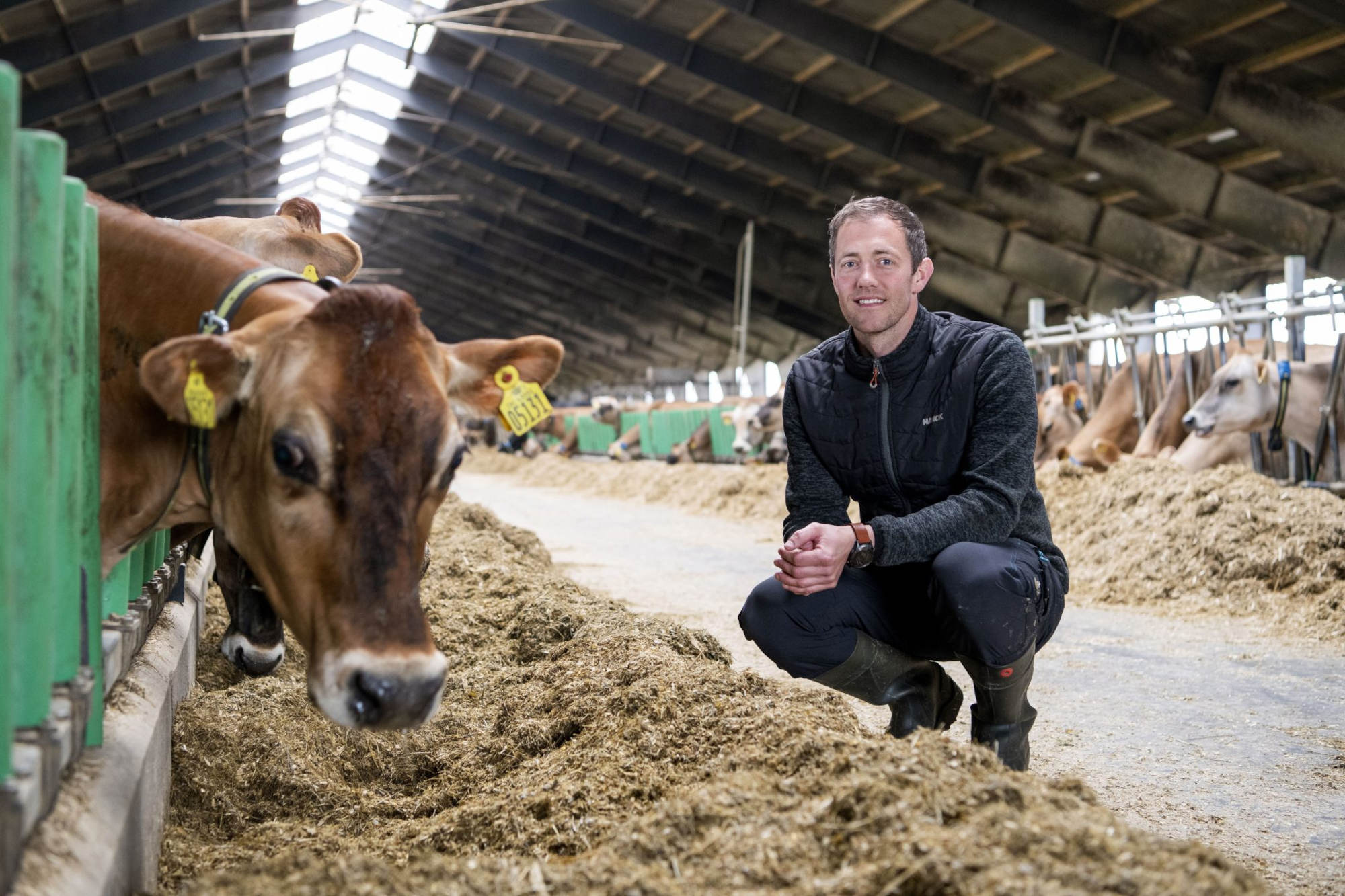
On a gray December day, Kent Davidsen left his dairy farm in rural Jutland, Denmark, for the neo-Baroque palace in Copenhagen that houses the Danish parliament. Unlike many of his fellow farmers, Davidsen had welcomed an initiative by the government that went into effect last year, to reduce the agricultural sector’s greenhouse gas emissions. But now, as he would testify to a small group of parliamentarians, he was convinced that one of those measures had produced terrible effects.
In January 2025, Denmark became the first country in the world to require that dairy farmers give their herds an additive called Bovaer or, alternatively, feed them a high-fat diet. The additive is meant to cut the animals’ production of methane — a potent greenhouse gas. Davidsen began adding Bovaer to his herd’s feed in October, but not long after the cows fell ill. “It’s not normal for a full herd of a thousand cows to have diarrhea, all of them,” he said in an interview. Within three days, he added, “they dropped in milk production with almost three kilos per cow.”
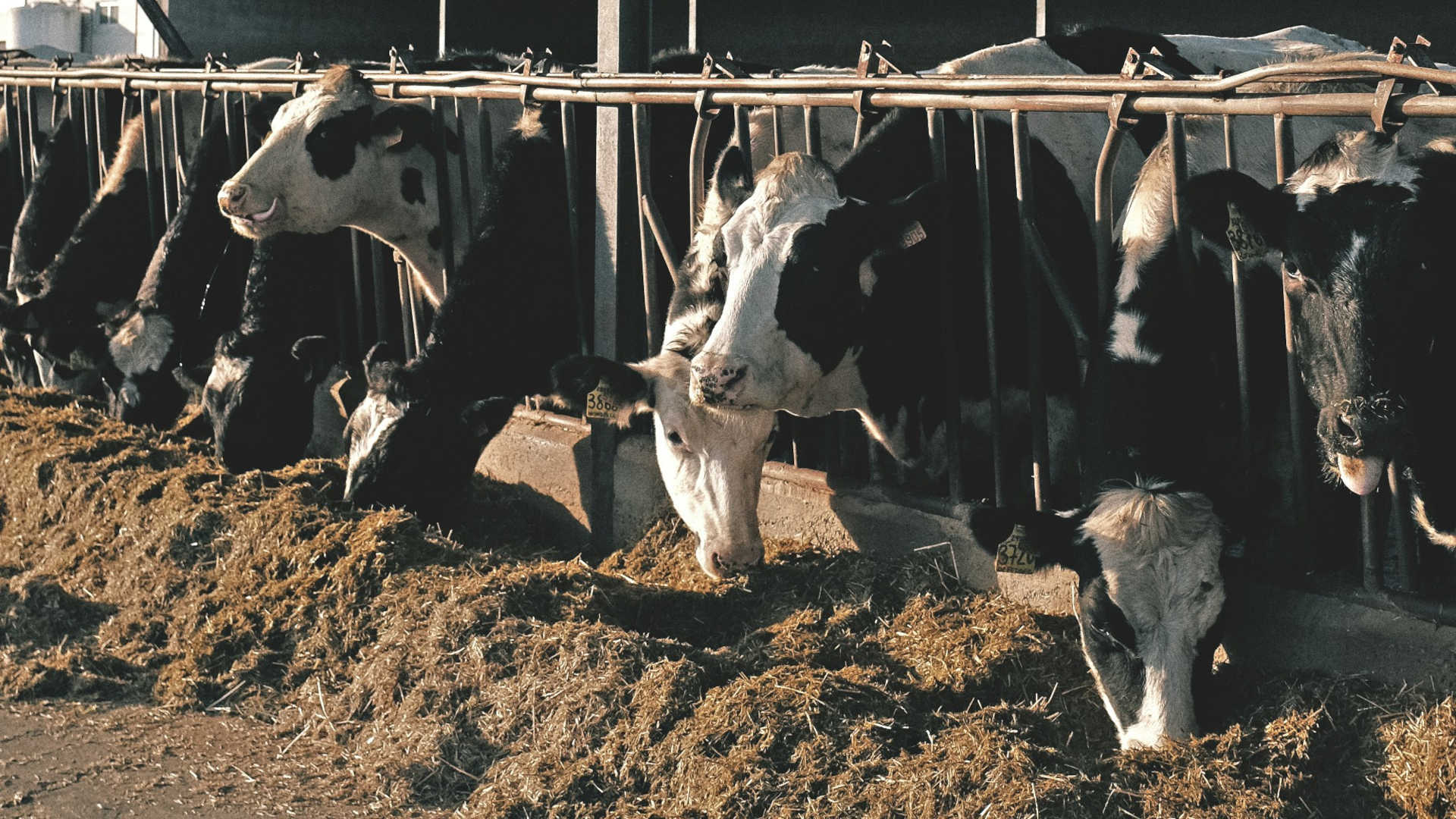
After 10 or 12 days, he said, some of the cows couldn’t stand up. Within a month, 10 were dead.
Hundreds of other Danish dairy farmers have now reported similar effects. Yet Bovaer, which its manufacturer says has been administered to an estimated 500,000 dairy cows in more than 25 countries, has never before been associated with bovine health problems. As the effects of the case ripple through Denmark’s barns and milk processing plants, the questions behind that conundrum are multiplying. Can more than a hundred peer-reviewed studies on Bovaer’s safety and efficacy be wrong? And if not, are there other ways of understanding what is happening on Danish farms?
“This is an important societal discussion, where climate considerations, animal welfare, and food production must be balanced and integrated,” Charlotte Lauridsen, head of the Department of Animal and Veterinary Sciences at Aarhus University, said in a press release. “The question is not whether the climate should take precedence over animal welfare or vice versa, but how we can find solutions that accommodate both.”
Cows digest food in a four-chamber stomach, and during this process, an enzyme in one of the chambers, called the rumen, produces methane.
Bovaer, created by a Dutch-Swiss company called dsm-firmenich, contains an active ingredient which suppresses the enzyme that produces methane in the cow’s rumen. According to the company, more than 110 peer-reviewed studies — many of which received funding from dsm or were co-authored by members of its staff —have confirmed the additive’s safety and efficacy in reducing methane emissions from dairy cows by as much as 33 percent. Although some researchers have found that Bovaer reduces feed intake and milk production in cows, none have reported negative health impacts. A statement from Aarhus University, which conducted several studies, summarizes the findings succinctly: The results consistently “showed the desired methane-reducing effect without any signs of disease in the animals.”
For Denmark, which has long positioned itself at the forefront of the green transition and has committed to reducing its overall emissions by 70 percent of 1990 levels by 2030, Bovaer seemed a valuable addition to the toolkit. In a 2025 inventory for the United Nations, Denmark reported that 29 percent of its greenhouse gas emissions came from agriculture, and — thanks to the importance of its pork and dairy sectors — 80 percent of its methane emissions derive from livestock.
“The pattern of disease now being described in the media — with fever, diarrhea and, in some cases, dead cows — has never been observed in our extensive studies.”
In 2024, the government negotiated the Agreement on a Green Denmark, which among other measures, imposes the world’s first tax on carbon emissions from livestock: Beginning in 2030, farmers will be fined 300 krone (a little under $50) per metric ton of emissions for their animals, an amount that will rise to almost $120 in 2035. And beginning in 2025, the agreement required conventional dairy farms to feed their cows Bovaer for a minimum of 80 days per year or give their animals a high-fat diet. (Organic farmers are exempt from using Bovaer.)
Although some farmers began administering the additive earlier in 2025, most waited until the cutoff date of Oct. 1. Within a couple of weeks, reports of problems had begun coming in: Cows were eating less and producing less milk; some suffered fever, diarrhea, and weakness.
Kjartan Poulsen, president of the Danish Dairy Farmers’ Association, became aware of the problem during an October board meeting. As an organic farmer, Poulsen was exempt from using Bovaer, but four of his board members were not. “They are all feeding very differently, and they all have the same problems,” Poulsen said. “The only thing that is in common is that they started feeding Bovaer.”
In the wake of the complaints, an independent Danish agricultural research and development company called SEGES Innovation conducted a survey among the country’s roughly 1,640 conventional dairy farms that have more than 50 cows. By Nov. 17, 644 farmers had responded. Of those, 434 reported a decline in milk yield. Digestive and metabolic disorders were reported by 410.
Although some previous studies had observed a decline in milk production, the illness reports surprised scientists. “The pattern of disease now being described in the media — with fever, diarrhea and, in some cases, dead cows — has never been observed in our extensive studies,” Lauridsen told the BBC.
For the moment, just about everyone, including producers, authorities, and scientists, is stumped as to the causes. “It’s a mystery,” said Jan Dijkstra, an associate professor in ruminant nutrition at Wageningen University & Research in the Netherlands. “Some papers, some experiments, do show a reduction in feed intake that’s possible, and in particular at a dairy farm, it’s more difficult, for example, to mix in in a proper way, or to ensure that every cow gets the proper amount. There’s more variation, obviously, than in an experimental setting. But even though you still need to have huge overdoses of the compounds to get into possible such type of problems, although I still can’t see any mechanism related, for example, to infection; it’s simply not there.”
One possible explanation is that the problems stem from something besides the Bovaer itself. The SEGES report has found that many farmers started their Bovaer use when they made their annual switch to new corn silage. According to Dijkstra, if unstabilized, the silage is at risk of developing unwanted bacteria like clostridia. “I’m not saying that that’s a true problem,” he said. “But we need to distinguish a possible effect of Bovaer as such, with possible other things that happen on the farm.”
Or it might have to do with how Bovaer combines with the exact feed Danish farmers are providing, noted Lauridsen, whose research team at Aarhus University is currently leading a study into Bovaer’s animal welfare impacts. “We have in several experiments investigated the potential interaction between Bovaer and forage type,” she wrote in an email to Undark, adding that there are other combinations that haven’t been tested. “We believe that there exist dietary interactions that may help to explain the mechanism behind the observed negative effects.”
Get Our Newsletter

She also points out that there are always discrepancies between the controlled environment of an experiment and real life. “In praxis we see a variety of procedures and machinery which may result in mixing of Bovaer into the feed compositions that is different from ours,” she wrote in an email to Undark. “No hard facts on this, but so far a qualified guess.”
Yet another possible explanation has nothing to do with chemistry or physiology. Last year, a Bovaer controversy broke out in the United Kingdom, after the international dairy conglomerate Arla Foods announced it was trialing the additive there. That controversy, however, was about Bovaer’s purported impact on human — not bovine — health. Extrapolating from the U.K. Food Standards Agency’s warning that the substance could cause skin and eye irritation and prove harmful if inhaled, online commentators, far-right bloggers, and at least one Reform party member of parliament fanned the interpretation into a full-blown conspiracy theory that had TikTok users filming themselves as they dumped Arla milk down the toilet.
Multiple studies confirm that Bovaer is almost entirely metabolized in the cow’s rumen and does not show up in milk or meat. (The irritation warning, the FSA later clarified, only applies to people who handle Bovaer in its pure form at the manufacturing stage.) But like so much other misinformation, the case spread easily through social media.
“There is a background of growing skepticism and mistrust in the West toward feed additives and chemicals,” said Dijkstra. “As a scientist you can show that some of the things that are mentioned in these theories are scientifically incorrect or a misinterpretation of the safety warning label. But there’s a limit to what you can do, and to what people accept from science.”

There is also a limit to what they will accept from politicians. In Denmark, both the Bovaer requirement and the problems allegedly linked to its use have increased resentment among some farmers who already feel they are being unfairly held responsible for climate change and its remediation.
“We do not recognize cows as polluters,” said the Dairy Farmers’ Association chairman, Kjartan Poulsen. “The cows are eating something that grows on top of the earth, and then they release it again, and then they eat it again — so this is just a circle. But this fight we lost years ago.”
In November, the government allowed the farmers whose cows were negatively affected the temporary right to opt out of the Bovaer requirement, although unlike a major dairy in neighboring Norway, it has not halted its use altogether. (“Many farmers do not experience problems, and those farmers who experience challenges can exempt the sick animals from feeding Bovaer,” wrote Erik Jepsen, a spokesman for the Ministry of Food, Agriculture, and Fisheries, via email. “Therefore, there is no reason to lift the requirement.”)
Politics may well play a role in the decision to continue to mandate Bovaer even while the negative reports are under investigation. The Danish public broadly supports ambitious climate action, and Denmark’s center-left Social Democrat-led government recently lost ground in regional and municipal elections to parties on its right and left. For Poulsen, the refusal to retract the mandate reflects the government’s precarious position. “If they did that, the left wing would be stumbling over their own legs to try to get into the media, telling that this government will not do anything for climate,” he said.
For its part, dsm-firmenich said it is continuing to roll out Bovaer in the 70 countries where it has been approved, including the United States. In an emailed statement, Elanco Animal Health Inc., which distributes the additive there, noted: “Through the end of 2025, our farmer retention rate was over 90%. Elanco has not seen the types of issues that are being reported in Denmark in the more than 150,000 U.S. lactating dairy cows being fed Bovaer since its launch.” And while dsm-firmenich said it is working with Danish authorities to ascertain the origins of the incidents, it also asserted in a written statement to Undark that “there remains absolutely no evidence that Bovaer is a cause of any problems.”
Politics may well play a role in the decision to continue to mandate Bovaer even while the negative reports are under investigation.
But Davidsen, the farmer who testified against the additive before parliament last year, has a hard time understanding how that could be true. As someone who had already paid to install solar panels on his barn roofs, and had voluntarily taken other steps to reduce his carbon footprint, he welcomed the Bovaer requirement when it first rolled out. “I thought myself that this would be a good way to reduce the climate impact of producing milk,” he said.
When his cows began falling sick, Davidsen’s first response was to question himself. “We had been warned that the feed intake might drop a bit, but not that the milk yield should drop that much and that the wellbeing of the cows should be affected in that way,” he said. “And when things like that happen, we always see, ‘Oops. Did we do anything wrong? Did we measure it wrong? Are other things wrong on the farm?’”
After watching some of his herd grow weaker and weaker, Davidsen stopped the supplement abruptly on Nov. 4. His cows recovered almost immediately, he said. A month later, their milk production had returned to pre-Bovaer levels.
But Davidsen’s confidence in the authorities has not. “I have a great trust to the authorities, and also to the test results that we see before we start a product like this, but of course I start to question how this could happen,” he said. “I don’t know what to believe anymore.” The doubt is bad enough that, for the first time, the conventional dairy farmer has switched to buying organic milk for his family. “It’s a pity,” he said, “when you’re a farmer and you can’t even buy your own product.”
UPDATE: This piece has been updated to include a comment from Elanco Animal Health Inc.
Lisa Abend is a journalist based in Copenhagen. Her work has been published in Time Magazine, The New York Times, The Atlantic, Wired, and Afar Magazine, among other outlets.