








Interview: How Tragedy Changed the FDA


For decades, the U.S. Food and Drug Administration has served as a gatekeeper, tasked with preventing dangerous, ineffective, and under-studied pharmaceuticals from being placed on the market. If you take Wegovy to help treat obesity, Lipitor to manage high cholesterol, or Xanax to quell anxiety, you’re taking a medication that the agency has decided provides more benefits, on net, than harms. Where does its authority come from — and why was it granted?
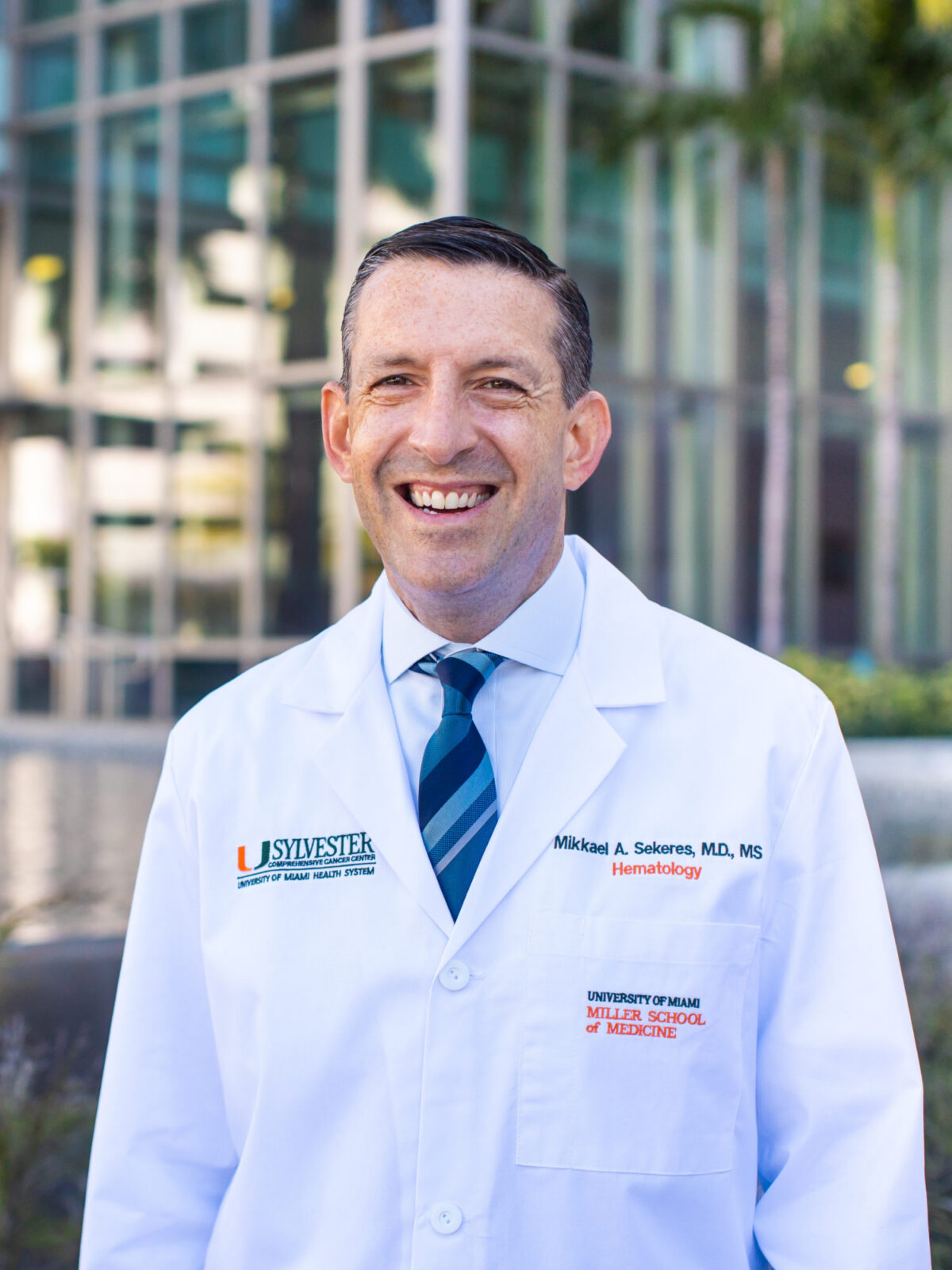
Mikkael A. Sekeres, a clinical scientist and author, explored these questions in his 2022 book, “Drugs and the FDA: Safety, Efficacy, and the Public’s Trust.” Although Sekeres drew on his experiences as a member of a government advisory committee in 2011, the themes in his book continue to be timely today, particularly the question of how much evidence — and what kind — the government should require for a medicine to be prescribed to patients.
Clinical scientist and author Mikkael A. Sekeres’ 2022 book on the FDA and drug safety continues to be timely today.
Visual: Courtesy of Mikkael A. Sekeres
Over the next two days, an FDA advisory committee will meet to weigh whether specialized pharmacies should be allowed to dispense seven unapproved peptides. These substances, with robot-like names such as MOTs-C and BPC-157, have not completed the rigorous testing required for drug approval. Still, they are relatively easy to obtain on the gray market, and they’re popular among the public and key figures in the Make America Healthy Again movement.
Against that backdrop, Sekeres, who is chief of the Division of Hematology at the Sylvester Comprehensive Cancer Center at the University of Miami Miller School of Medicine, spoke with Undark about the history and nuances of FDA oversight, including its process for screening advisory committee members for conflicts of interest. The interview was conducted by Zoom and edited for length and clarity.
Undark: Today’s FDA is required by law to ensure that the benefits of a drug outweigh the risk. But it hasn’t always been this way. How did we get here?
Mikkael A. Sekeres: The tragedy that led to the requirement that drugs first be safe was the sulfanilamide disaster in the 1930s. Sulfanilamide was an antibiotic that was put into an elixir so it would be more palatable to people, so it didn’t taste bitter like a lot of medicines did.
It turns out that the company that manufactured it, the S.E. Massengill Company in Tennessee, decided to improve the flavor by adding diethylene glycol, which we commonly refer to as antifreeze. They were able to do that because nobody controlled what you could add to contents. Drugs weren’t required to be safe, and testing for safety wasn’t required at the time.
Seventy-one adults and 34 children died from taking the antibiotic. This led very quickly to the Food, Drug, and Cosmetic Act of 1938, where for the very first time drugs were required to be safe and safety testing had to be submitted to the FDA before a drug was approved.
Efficacy only became a requirement in 1962. This, again, was born from tragedy. In this case, it was the thalidomide disaster that occurred mainly in other countries. We were largely protected from it here because of the heroic efforts of a brand-new FDA employee, Frances Oldham Kelsey. One of her first assignments was to review thalidomide.
The theory was that it was a safe alternative to narcotics, particularly for pregnant women, as a sedative hypnotic and for morning sickness. As it was prescribed, babies started being born with birth defects.
On the U.S. side of things, Frances Oldham Kelsey keeps getting this material from the manufacturer, the distributor in the U.S., and she keeps saying: “This doesn’t make any sense. They’re saying there are no side effects to this drug. No drug has no side effects.”
So she kept saying, “No, I’m not going to approve it. I need more data.” So then they give her what amount to doctor testimonials about how great the drug is. And she looks at it and says, “Nope, anecdote ain’t going to cut it. I need more data.”
She keeps saying no — and finally the story about the birth defects comes out.
Well, Sen. [Estes] Kefauver from Tennessee picks up on this. Kefauver was one of the people who ran the anti-mob hearings that were televised in the 1950s. Remember — you’ve seen these before — these black and white hearings with these mobsters from New York who have to go and answer to this senator from Tennessee. That was Kefauver.
He really wants more regulatory control over drug distribution in the U.S., so he uses this story about thalidomide and the heroic efforts of Kelsey to put forth an update to the Food, Drug, and Cosmetic Act, which was referred to as the Kefauver-Harris Amendments. They passed in 1962 under Kennedy, where for the very first time, drugs had to be shown to be effective.
That brought into play the fact that you had to have a method of showing they’re effective.
UD: Can you describe why randomized controlled trials are required, and not other kinds of data?
MS: If you’re the FDA, the ideal trial that’s going to lead to a drug’s approval is a randomized blinded placebo-controlled trial, where half the subjects — or some percentage of the subjects — are assigned to receive a placebo and half are assigned to receive an experimental drug. Nobody knows what they’re getting. And the doctors don’t know what they’re getting, so it’s double-blinded: patients blind; doctors blind.
It’s important to put it in context, so think about it this way: If I have a drug that treats warts, and I do a randomized placebo-controlled study, and sure enough, this drug treats warts better than placebo does, you want that drug to have very minimal side effects. You’re not willing to accept that a certain percentage of people die from the wart medicine because warts isn’t a life-threatening condition.
But if it’s a drug to treat cancer, then you are willing to accept a certain percentage of deaths on the treatment arm because the number of deaths that will occur with the cancer if it’s untreated are so much higher than that. That’s why we always talk about the relative balance of safety and efficacy. It’s safety relative to the condition you’re treating and the efficacy of the drug.
So now circling back to what you said before. The FDA is willing to accept non-randomized studies for certain conditions. That’s for rare conditions that are more life-threatening and a drug that’s shown relatively early activity that’s very promising.
UD: You sat on an advisory committee that voted to recommend that the FDA revoke its approval of such a drug. It was Avastin for the treatment of breast cancer. Many patients felt they had been helped by it and were upset with the vote — you described them in your book. What was the voting experience like? And how did you think about that criticism that came along with it?
MS: This was probably one of the most difficult decisions that I’ve made in my career, to be honest. You had a drug in Avastin that in earlier phase studies had shown a modicum of efficacy in women with metastatic breast cancer. The endpoint for those studies was what’s referred to as progression-free survival.
Progression-free survival means you have a cancer, you have a tumor, and you go a period of time without that tumor worsening. So you live without the tumor getting worse — but it doesn’t necessarily mean that you live longer. The initial studies that led to Avastin’s approval demonstrated a progression-free survival advantage for women who received Avastin in addition to chemotherapy versus those who received the chemotherapy alone.
It was approved under accelerated approval, which requires that you have follow-up studies demonstrating at least the same degree of efficacy and safety, and hopefully more. Hopefully, those follow-up studies show that you live longer.
There were two follow-up studies. Both of those studies showed not only a progression-free survival that wasn’t longer, but it was actually shorter than what was seen initially.
In addition, there were a number of women who died on one of the studies. Women with cancer, people with cancer, sometimes die from their cancer — but they died from complications that had initially been suspected to be associated with Avastin.
That was a really hard decision. And certainly there were women who were present at that, who afterwards, I distinctly remember, held up photo albums of the things that they had done since receiving Avastin, since receiving treatment for their metastatic breast cancer.
Now, what you couldn’t tell is, did those women receive benefit because they received the chemotherapy along with the Avastin? Or was the benefit specifically from the Avastin? You don’t know.
UD: My understanding is that advisory committee members are considered special government employees who have to follow federal ethics rules related to conflicts of interest. Could you talk about what this entails?
MS: The FDA, when you’re on an advisory committee, will send a very detailed questionnaire about any potential conflict that you have. Maybe it’s that you sat on an advisory board for a company that manufactures the drug. Maybe you sat on an advisory board for a company that makes a similar drug, but not that exact drug. Maybe it’s an advisory committee for a company that competes against a drug being under consideration.
Certainly, they’re going to ask if you’re employed by a company. They’re going to ask if you’ve done research in an area with this drug or a similar drug. Then they’re going to ask about family members and if they’re involved with any of these sorts of companies, or if they’ve been on advisory boards, or steering committees, or have done research with these drugs.
They’re going to ask if you’ve testified in any cases that could involve similar treatments. They’re going to ask if you’ve written opinion pieces about the drug in question. So it’s a pretty extensive conflict list.
So you could then make the case, “Well, how do you have any experts on these panels if you’re eliminating anyone who’s had anything to do with the drug?’’ The FDA receives these sheets, and then they make a determination about whether you should serve on a panel. Sometimes they’ll allow some minor conflicts because they want those experts in the room. Sometimes they don’t want any conflict whatsoever.
UD: Some of the new PCAC — pharmacy compounding advisory committee — members work for companies that offer peptide therapy and stand to benefit financially from the loosening of restrictions on experimental peptides. Is this a minor conflict, a major conflict, no conflict?
MS: Are they voting members?
UD: Yes.
MS: So, conflicts are determined by the FDA. They’re determined by the government. It seems to me that if somebody works for a manufacturer of a drug under consideration, that’s a direct conflict. Or if they work for a manufacturer of a drug similar to the one under consideration, that would be a direct conflict.
But not up to me to determine. It’s up to the FDA. And I don’t know what standards they’re using for that these days.
UD: Is there anything else that you’d like to add?
MS: The other aspect of this that I think is important is the FDA is also responsible for monitoring the manufacturing process and making sure that it’s pure and that it’s standardized. And that is a danger in drugs that are compounded. You don’t necessarily know that they’re manufactured in exactly the same way at every pharmacy across the country. And you don’t know where those pharmacies are getting their supplies and the reliability of those supplies.