








The Embryos That Don’t Come From Eggs and Sperm


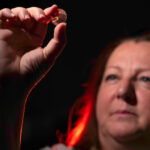
Nicolas Rivron, a biologist now based in Austria, spent close to a decade trying to build a model mouse embryo in the lab from scratch. After years of incremental progress and occasional false leads, he and his research team landed on their approach: They would carefully defrost 500,000 embryonic mouse stem cells, mix them with stem cells that could form the placenta, then separate the resulting blend into tiny containers.

Eventually, those tiny cells began to attach to one another in the dish, creating aggregates the width of a fine strand of hair. The researchers implanted the cells into the wombs of female mice, where they took hold and began to grow.
Although the structures did not survive for long — a couple days, more or less — the experiment, Rivron said, appeared to mark the first time an embryo model made from stem cells had successfully implanted in an animal’s uterus.
Any potential repercussions of the technique, like its application in humans, seemed far off in a theoretical future. But when the paper came out in Nature, Rivron — who works at the Institute of Molecular Biotechnology of the Austrian Academy of Sciences — began to seriously consider how to develop better ethical oversight of the field. “We need to do something right now,” he recalled thinking, “because now people are going to try to do the human version of it.”
Embryo models mimic the earliest developmental stages of humans and other mammals. They could greatly improve researchers’ knowledge of fertility — offering a glimpse of the first weeks of pregnancy, a mysterious period for which natural embryos are seldom available — and potentially shed light on miscarriage, congenital anomalies, and other health issues. And because scientists can grow them in a lab from stem cells, they are easier to obtain and less ethically sensitive than real human embryos.
Right now, they don’t last long. But the technology is getting better, and some people are wondering about a future where it becomes possible for scientists to create human offspring in a lab without any involvement of sperm and egg. Long before then, though, serious ethical questions are already on the table. How long should researchers develop these models in a lab? Should it be until a heart starts to beat, or when the buds of limbs begin to form? What if they develop rudimentary facial structures? And what about their ability to feel pain, or prospects that appear further in the distant future, like the development of a brain?
Scientists in the field are mindful of the public skittishness around fabricating humans, alongside religious concerns that the research crosses a moral line. As studies advance, the International Society for Stem Cell Research, or ISSCR, has raced to update ethical guidelines to keep pace with research, but most countries have not developed legal oversight specifically focused on human stem-cell based embryo model research, though some existing laws cover aspects of the field.
How long should researchers develop these models in a lab? Should it be until a heart starts to beat, or when the buds of limbs begin to form?
The stem cells used to develop embryo models come from either donated adult cells, or from excess embryos created during IVF, which have slightly different capabilities. The administration of President Donald Trump has signaled disapproval of developing models from human embryonic stem cells. And activities of private companies have triggered concerns about sensationalist reporting and claims.
All this has left developmental biologists worrying about a backlash and weighing questions of philosophy and regulation.
“It’s obvious that we’re going to bump into ethical problems,” Rivron said.
Research on these embryo models draws on an array of earlier discoveries. In the late 19th century, scientists began conducting experiments with the eggs of frogs and other creatures. In 1952, American researchers announced that they could hatch tadpoles by transferring the nucleus of early embryonic cells into modified frog eggs.
Later, researchers in the U.K. were exploring how cancer cells functioned in mice. As they probed how the cells multiplied, they noticed that the cells resembled the stem cells in embryos, with the capacity to splinter into different cell types. In 1981, Martin Evans and Matthew Kaufman, working in Cambridge, and a U.S. scientist, Gail R. Martin, would independently derive embryonic stem cells from mouse embryos.
By the late ’90s, scientists had begun studying which factors allowed a cell to self-renew and differentiate. Kazutoshi Takahashi and Shinya Yamanaka became the first to demonstrate that ordinary adult cells can be reprogrammed to be pluripotent — that is, with the potential to become any cell in the body. Gene targeting and later gene editing technologies, such as CRISPR, allowed researchers to genetically tweak cells in a lab.
Scientists in the field are mindful of the public skittishness around fabricating humans, alongside religious concerns that the research crosses a moral line.
Together, these strands of research provided the tools to modify and cultivate stem cells in a lab. In humans, cells from discarded embryos or donated adult tissue can self-organize into forms that resemble their natural counterparts, even though they do not come from a sperm and an egg. “There is not a normal fertilization pattern,” said Carlos Pinzón Arteaga, a postdoctoral fellow in the department of cell biology at Harvard who has studied the history of the field. “But it still looks like an embryo.”
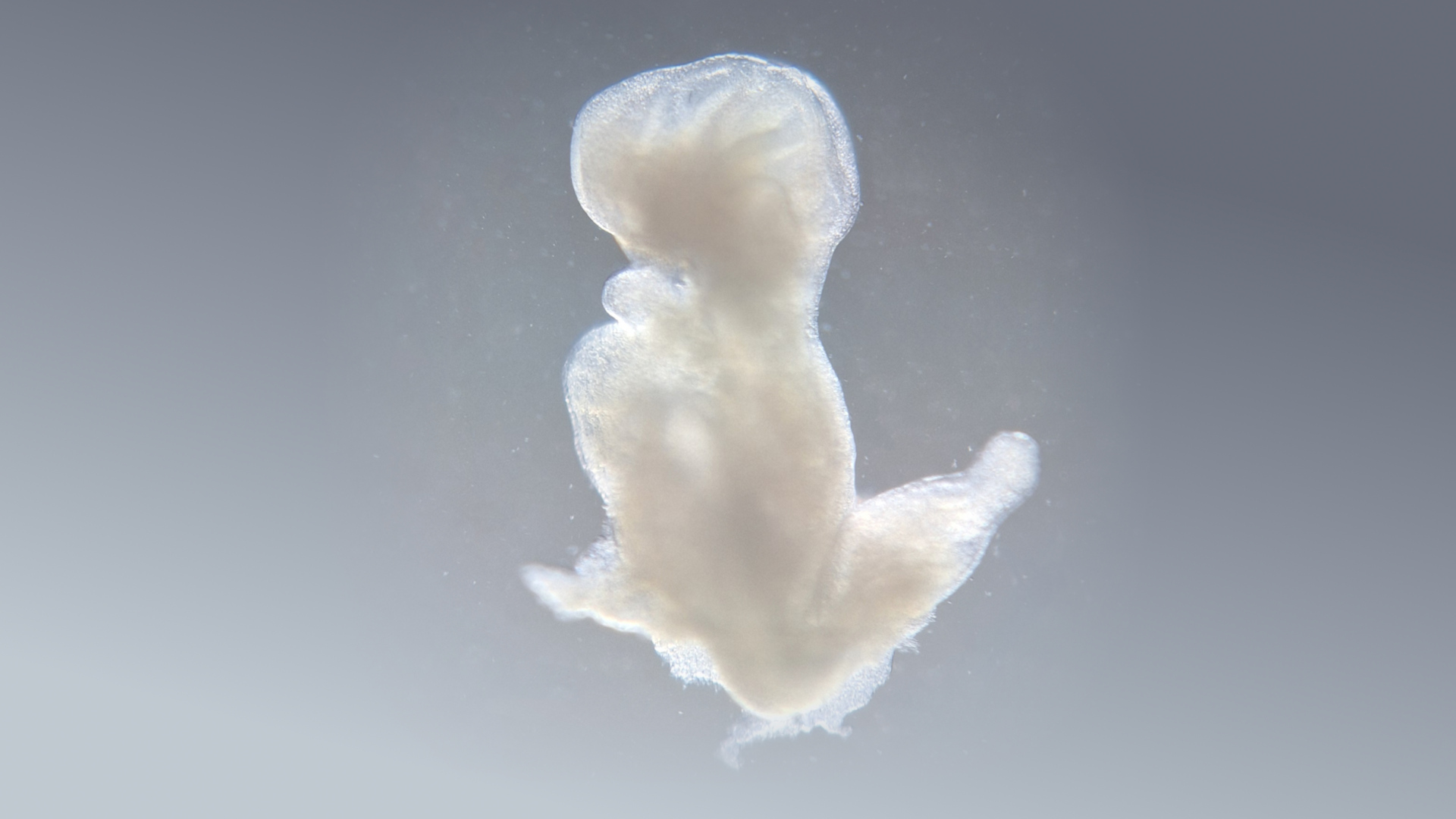
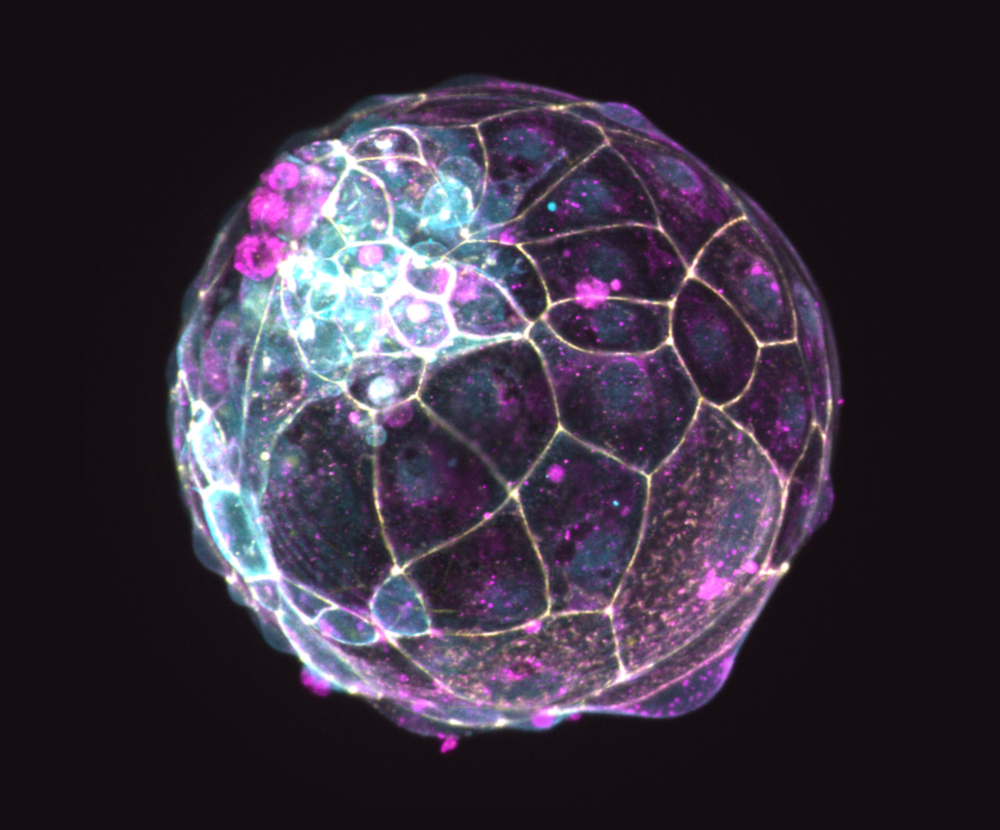
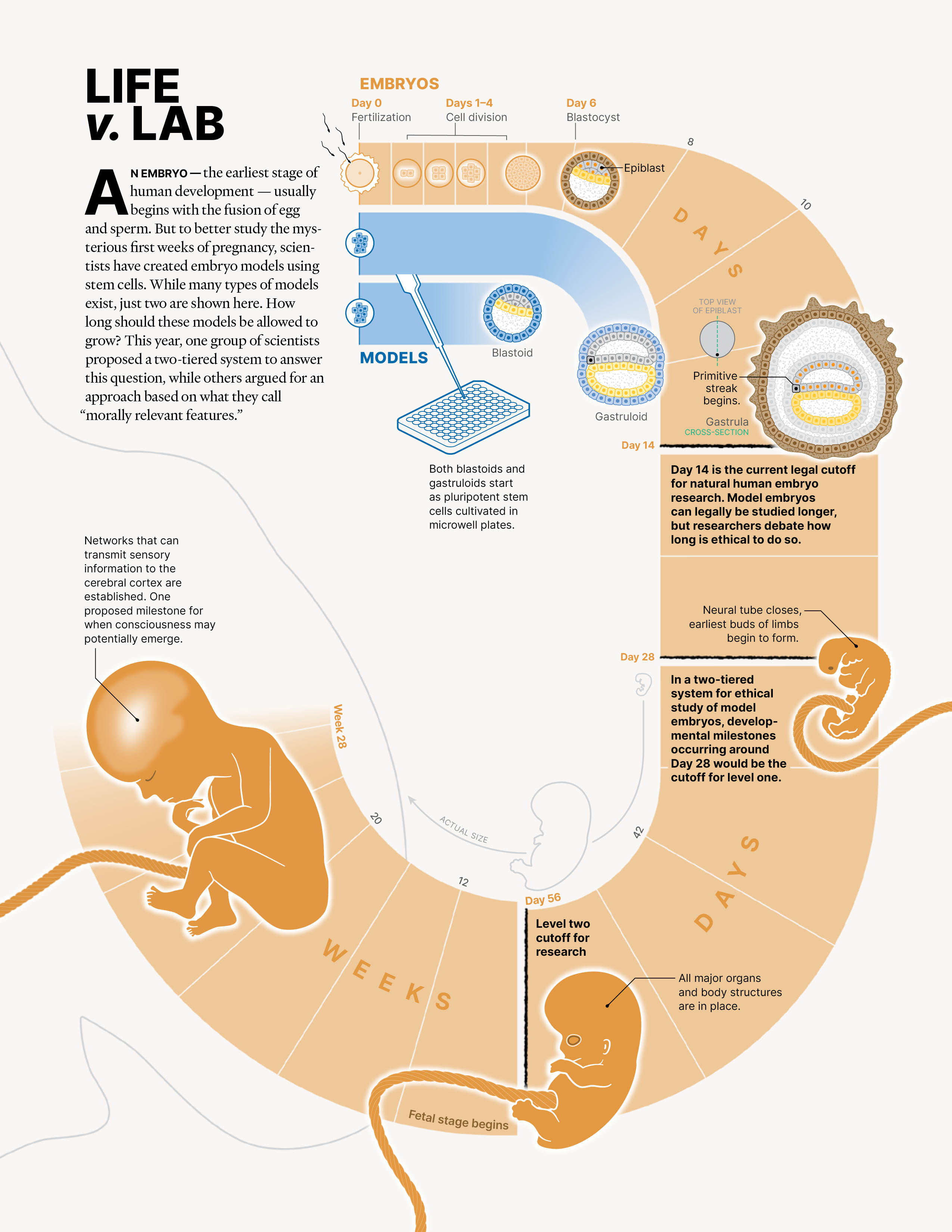
The technical term, stem cell-based embryo model, or SCBEM, describes a wide range of entities that can resemble different stages of development. Some match an early stage that occurs at about six days after fertilization called a blastocyst; the model equivalent is called a blastoid. Others, which some researchers call gastruloids, model human embryos at around day 14, when a phase called gastrulation begins, and the embryo starts to develop into a multidimensional form.
The work is painstaking. Each stage is fraught with the possibility of contamination, poor timing, or bad luck.
After Rivron’s team published their mouse embryo model paper in 2018, a flurry of breakthroughs followed. In 2021, independent research groups cultivated human stem cells to form the first human blastoids. And in 2023, two separate scientific groups working with human embryo models published studies showing they reached the equivalent of 14 days after fertilization.
In addition to furthering scientists’ knowledge of miscarriage and maternal health, embryo models could also shed light on life-long health, Rivron said. Tiny changes in early gestation may affect perinatal outcomes and contribute to heart disease or metabolic issues decades later. “By understanding all this, we can actually, potentially, prevent the appearance of or limit the appearance of many problems during adult life,” he said.
These models resemble natural embryos, but not exactly: As they grow, their development can mirror some human features while lacking others, or skip entire stages of development. Scientists generally agree that at this stage they should not have the same status as their human counterparts but how to manage, oversee, and even refer to them is a subject of debate.
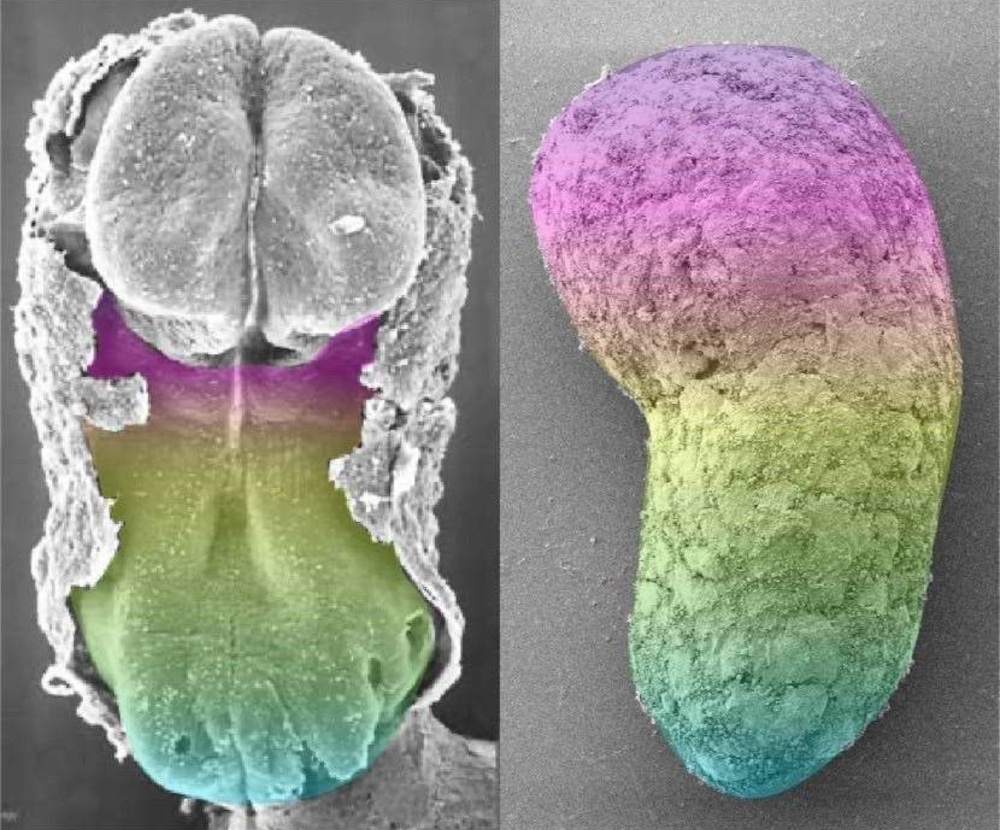
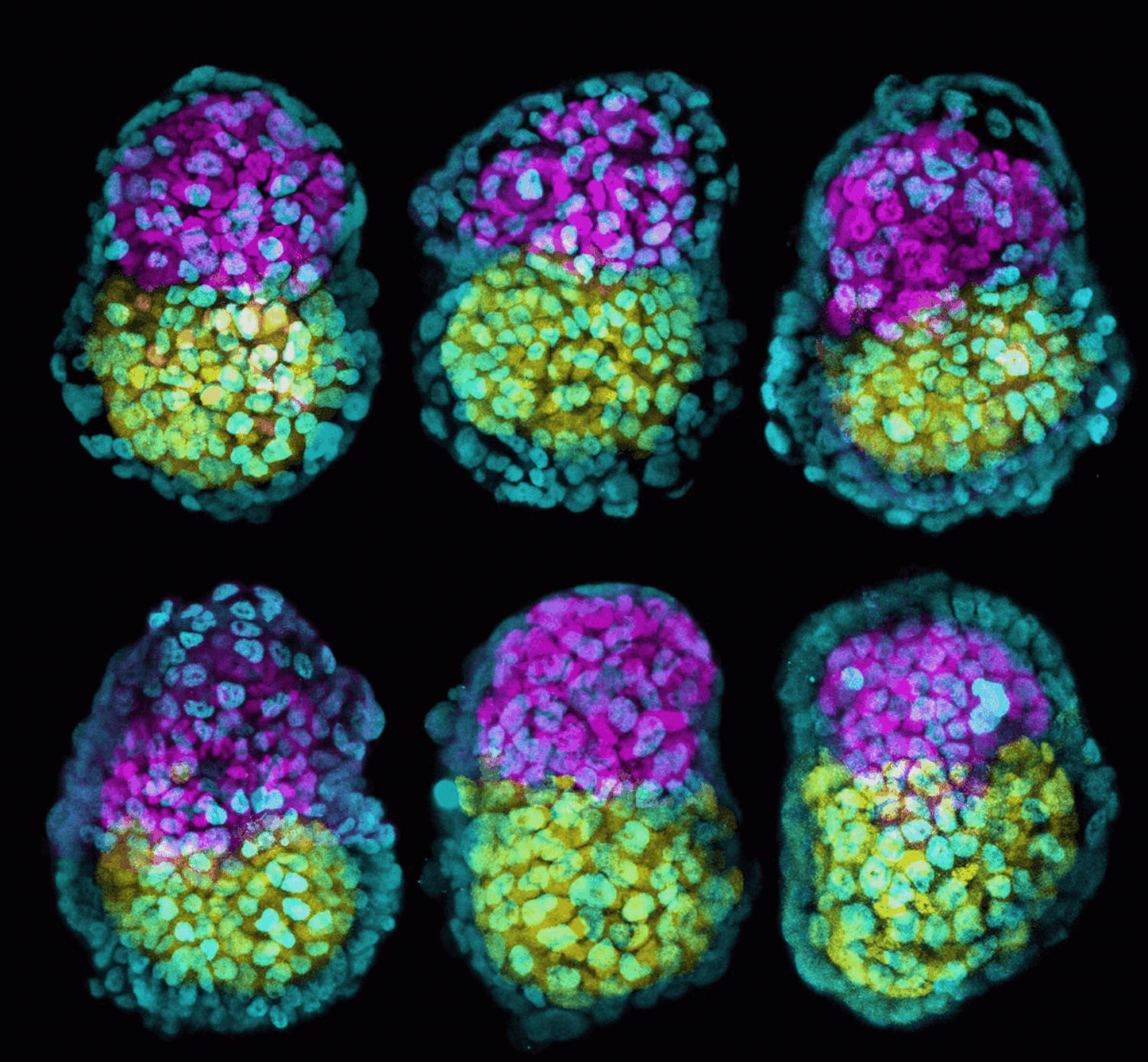
Scientists and the media have used the descriptor “synthetic embryos” but the International Society for Stem Cell Research has cautioned against its use, preferring the term “embryo models” since the models are neither synthetic — they come from real stem cells — nor are they actual embryos in the traditional sense, created by the union of an egg and sperm. “It can send two very wrong messages,” said Jan Żylicz, an associate professor at the University of Copenhagen.
But there are still leading scientists who favor “synthetic embryo.” Ali Brivanlou, a stem cell biologist who heads a research lab at Rockefeller University, wrote in an email that the phrase is clear about the field’s aims, which are to reproduce the development of an early embryo as faithfully as possible — to play out their development — rather than just crafting a model. “It is more honest about what these systems are attempting to model,” he wrote. If scientists use language that is too narrow or reassuring, he wrote, they are depriving regulators and the public of the opportunity to engage with the real stakes.
Those stakes may be getting higher as the models grow more realistic.
“Even the newest human embryo models have a lot that’s different from real human embryos, but I expect the gap will continue to shrink,” wrote Paul Knoepfler, a professor of cell biology at University of California, Davis, by email. Mouse and primate embryo models, he noted, are already progressing to their natural counterparts.
“As human embryo models continue to get relatively more similar to embryos, that will raise many issues,” Knoepfler wrote.
Ethical questions have long hovered around this field. One big advantage that human embryos models hold for researchers is that they are not subject to the same legal restrictions as natural human embryos, which can only be studied for 14 days in the U.S., U.K., and elsewhere.
That deadline has been called somewhat arbitrary. But it roughly coincides with the appearance of a line called the primitive streak on the embryo when it begins to organize itself into two halves. And for scientists in many countries hoping to study embryonic development past day 14, embryo models are a clear alternative — that is, if the science can advance that far.
So far, according to published work, scientists have grown human embryo models just up until the phase called gastrulation, which begins around two weeks post-fertilization and is the point at which cells that will become the gut, muscle, and neurons should start to develop in natural human gestation. A recent article in New Scientist reported that Jacob Hanna, a biologist at the Weizmann Institute of Science in Israel, had developed human embryo models to the equivalent of 21 days after fertilization. That work is unpublished and some experts remain skeptical since the study has not yet been peer-reviewed. When asked for comment, Hanna said he agreed that unpublished results should be regarded with caution and that he hopes to publish his results by the end of the year, but did not wish to comment beyond that.
Scientists have gone further with other animal models. Alfonso Martinez Arias, an honorary professor at Pompeu Fabra University in Spain, recently conducted work with colleagues that cultured monkey embryo models through late gastrulation. Equivalent work in humans is proving, he said, to be “very, very recalcitrant.”
In August 2025, the ISSCR issued updated guidelines for stem cell-based embryo models. A working group formed to provide recommendations to the ISSCR noted that the models could eventually grow far along enough to feature rudimentary organs, including a heart or a brain. The update laid out new levels of review for research on embryo models. And it advised that certain experiments be banned, including developing a human embryo model to the point of viability, meaning that it could result in a baby’s birth.
The ISSCR guidelines are voluntary and leave many open questions. But they wield a form of soft power across the research community, said Żylicz at the University of Copenhagen, who was part of the working group: “If you want to publish your work in an impactful journal, journals will require that your work complies with ISSCR guidelines.”
As different groups of scientists puzzle out the details, two suggestions for oversight emerged earlier this year: One that bases limits on the embryo models’ characteristics, the other that proposes a framework based on chronological landmarks that correspond to specific points in a pregnancy.
“Even the newest human embryo models have a lot that’s different from real human embryos, but I expect the gap will continue to shrink.”
Rivron and colleagues outlined the former approach in the journal Nature Cell Biology in April, focusing on features that might raise ethical concerns. They say that models with a more complete set of organs should trigger greater oversight than those that replicate only disconnected parts of a human embryo. Researchers, they say, should also take active measures to ensure their experiments end before a model may experience consciousness or pain; but here things get blurry. To many scientists, the capacity to experience pain may emerge around weeks 22 to 24 after fertilization, when the cortex — the brain’s outer layer — develops, and the peripheral nervous system connects with the spinal cord and thalamus. But Rivron and his colleagues note that some scientists think the ability to feel pain may come earlier.
Religious scholars have also pondered whether embryo models are morally equivalent to real embryos with similar claims to dignity and rights. Even among scientists, there is little certainty on the thorny question of when consciousness could emerge. Although there is no clear biological cue to determine that timing, one proposed milestone is when networks are established that can transmit sensory information to the cerebral cortex — the equivalent of weeks 24 to 28.
On this basis, earlier this year, another group of scientists proposed taking another approach, based on models’ developmental milestones. Twenty-five leading researchers argued for a version of this approach in a commentary in Cell, proposing a two-tiered system. Level one would allow cultivation of models with some oversight by expert groups up to the moment when the neural tube — the structure that becomes the central nervous system including the brain and spinal cord — has closed or the earliest buds of limbs or other early elements of the body begin to form, at around 28 days. Level two would permit further research under more intense scrutiny up to 56 days, at around eight weeks. Both timepoints, the authors said, occur before the models had the capacity to experience any kind of pain or sentience — a moment they define as having its “earliest debated milestone” at around weeks 10 to 12.
Knoepfler, the professor of cell biology at UC Davis, wrote in a column in STAT that an eight-week limit could be appropriate “in very limited cases.” Others thought the approach was inadequate. Martinez Arias said the focus should be on what the structures look like, not how long they survive. And he argued such a limit was irrelevant. In the case of human models, “nobody has gotten an embryo to day 15,” he said. “So what is the point of saying you can grow these things until day 56 if you cannot grow them to day 16?”
As academic scientists continue to advance basic research on the models, they have also expressed concerns about commercial ventures that may push the boundaries of this work and trigger a backlash. In their updated guidelines, the ISSCR prohibits the transfer of human embryo models into an animal or human uterus to bring it to viability, known as ectogenesis. “This restriction would apply to all research for any purpose: reproductive, research, or commercial,” the guidelines note.
Still, the ISSCR guidelines are professional norms with no legal authority. For private enterprises, there is no requirement to follow them. “Commercialization of SCBEM” — stem cell-based embryo model — “technology is real and accelerating, and some of it operates at, or beyond, the edge of current ethical consensus,” wrote Brivanlou, the Rockefeller University researcher, in an email to Undark. “This is a systemic gap that urgently requires legislative attention.” Startups are pursuing aims that range from the plausible to the sensational, he wrote, including synthetic embryos and artificial wombs.
Get Our Newsletter

For example, an AI-based company called Becoming in San Francisco has developed mouse embryos that advanced towards early stages of placental formation, which it described as “a meaningful step toward a platform capable of supporting the full trajectory of mammalian development ex vivo.”
Another company, e184, which is based in Portland, Oregon, has expressed interest in creating eggs and sperm from human stem cells, and it has set up a program for artificial wombs. (Becoming did not reply to multiple requests for comments. Joseph Owen, director of e184’s program for artificial wombs, declined an interview via LinkedIn, saying the company was not currently speaking with media.)
Several scientists told Undark they were aware of such projects but remained skeptical. Pinzón Arteaga, the Harvard postdoc, said ectogenesis was a bizarre area for scientific study: “I think the reality of the science — I don’t think it’s going to be possible.”
And Rivron noted that the work is time-consuming. Private companies are short-lived, he suggested, while this field of research is “not that easy.”
In addition to furthering scientists’ knowledge of miscarriage and maternal health, embryo models could also shed light on life-long health, said Nicolas Rivron, a biologist who spent close to a decade trying to build a model mouse embryo in the lab from scratch.
Visual: Anna Stöcher/IMBA
But private businesses are attempting to poach researchers from academic settings. A venture capital firm offered generous funding to Rivron’s lab in exchange for intellectual property and development rights, “with the long-term goal of supporting applications related to ectogenesis,” he wrote. He turned them down: Their proposals weren’t compatible with his funding obligations, nor with his and his colleagues’ ethics.
Some countries, like France, the Netherlands, Germany, and the U.K., have set up expert committees to advise on guidelines for the field or have already advanced towards preliminary legislation.
Scientists have welcomed this approach. In contrast, drops in U.S. science funding, and other announcements, have triggered angst.
Magdalena Żernicka-Goetz, a professor at the California Institute of Technology, said that recent reductions in broad support from the National Institutes of Health are a concern: “This research is very well-funded in Europe and other countries, so there is a worry that we here in the U.S., scientists in U.S., wouldn’t be able to make the same level of progress.”
Brivanlou, the stem cell biologist at Rockefeller University, wrote via email that 2026 posed one of the most challenging environments in recent memory, citing a deteriorating political and funding environment.
Project 2025, the conservative set of policy proposals produced by the Heritage Foundation in 2023, urged that the NIH end its human embryonic stem cell registry and associated projects because the work “involves the destruction of human life.” The NIH, the document reads, “was responsible for paying for research in aborted baby body parts, human animal chimera experiments, and gain-of-function viral research that may have been responsible for COVID-19.”
In January, the NIH proposed a shift towards favoring adult pluripotent cells over embryonic stem cells. In a press release, Robert F. Kennedy, Jr., the Health and Human Services Secretary, stated that the agency “is leading with gold-standard science that delivers better results for patients,” and that, “As new technologies prove more effective, we have a responsibility to move beyond practices becoming obsolete and invest in more promising alternatives.”
But according to Brivanlou, embryonic stem cells can faithfully mirror the dynamics of human embryo development in ways that reprogrammed adult cells do not. The idea that reprogrammed adult cells can simply replace embryo stem cells is “scientifically incorrect,” he wrote by email. The two types of cells, “serve complementary, not interchangeable, research functions.”
“The greatest barrier, in my view, is not the technical difficulty of the science itself — though that remains formidable — but the uncertainty created by ideologically driven funding policy,” Brivanlou noted in an earlier email.
Still, it can take at least five years to develop legislation, said Emma Cave, a professor of healthcare law at Durham University who chaired a working group on stem cell-based embryo models in the U.K.
“The greatest barrier, in my view, is not the technical difficulty of the science itself — though that remains formidable — but the uncertainty created by ideologically driven funding policy.”
The difficulty of the basic science may also impose barriers, particularly taking human embryo models past the gastrulation stage. Building those embryo models, Martinez Arias said, is “more difficult than people thought a few years ago.”
The pace of research can be unpredictable too. “Somebody makes a breakthrough and it moves fast,” said Cave. “Somebody makes a breakthrough in another area, and this area becomes muted, and that area becomes a thing.”
If a researcher created an embryo model that looked like a natural human embryo and cultivated it for more than two weeks, the unexpected development could trigger a kneejerk over-reaction, she said. Even if such a possibility is far off, said Cave, “certainly we need to be getting ready for it.”