









Why Insect Farming Startups Are Going Bankrupt


The proclamation came from, of all people, an insect researcher: “We have to get used to the idea of eating insects.”
Dutch entomologist Marcel Dicke pitched eating bugs in his 2010 TED talk as critical to sustainably feeding a growing human population, because insects have a much smaller carbon footprint than beef, pork, and chicken.
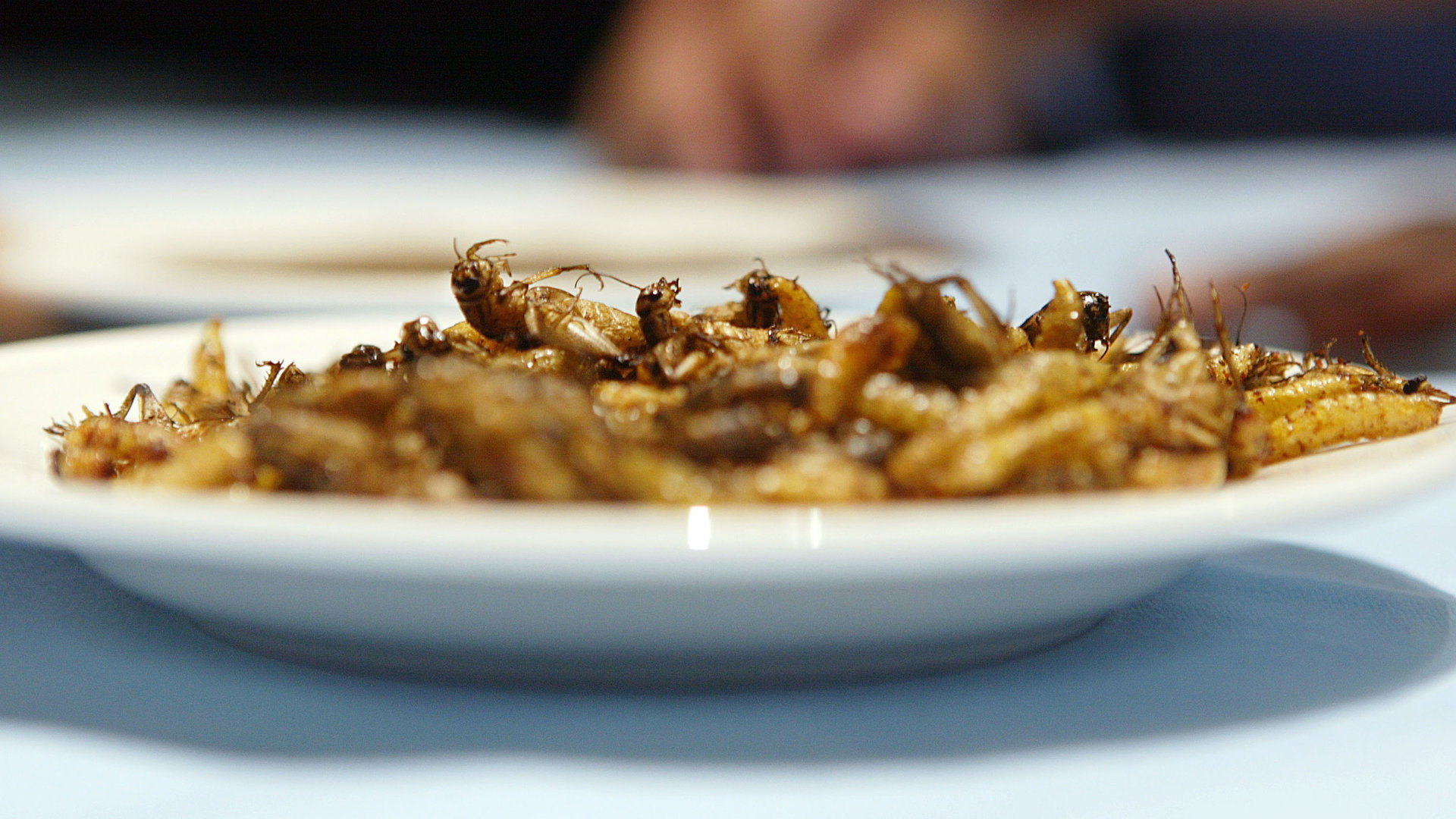
To make his point, he even featured photographs of what might be a common meal in this bold new future: A stir fry with mealworm larvae, mushrooms, and snap peas, finished with a chocolate dessert topped with a large fried cricket.
This story was originally published by Vox and is reproduced here as part of the Climate Desk collaboration.
Three years later, the United Nations published a comprehensive report that echoed many of Dicke’s ideas and argued that insects could be a more eco-friendly food source not just for humans, but also for livestock. The report received widespread media coverage and helped to trigger a wave of investment from venture capital firms and governments alike into insect farming startups across Europe, the U.S., Canada, and beyond, totaling some $2 billion.
There’s a ring of truth, it turns out, to the conspiracy theory that the globalist elites want us to eat bugs.
This money was pouring into insect agriculture at a time when investors and policymakers were hungry for new models to fix the conventional meat industry’s massive carbon footprint. And what’s more disruptive and novel than farming and eating bugs?
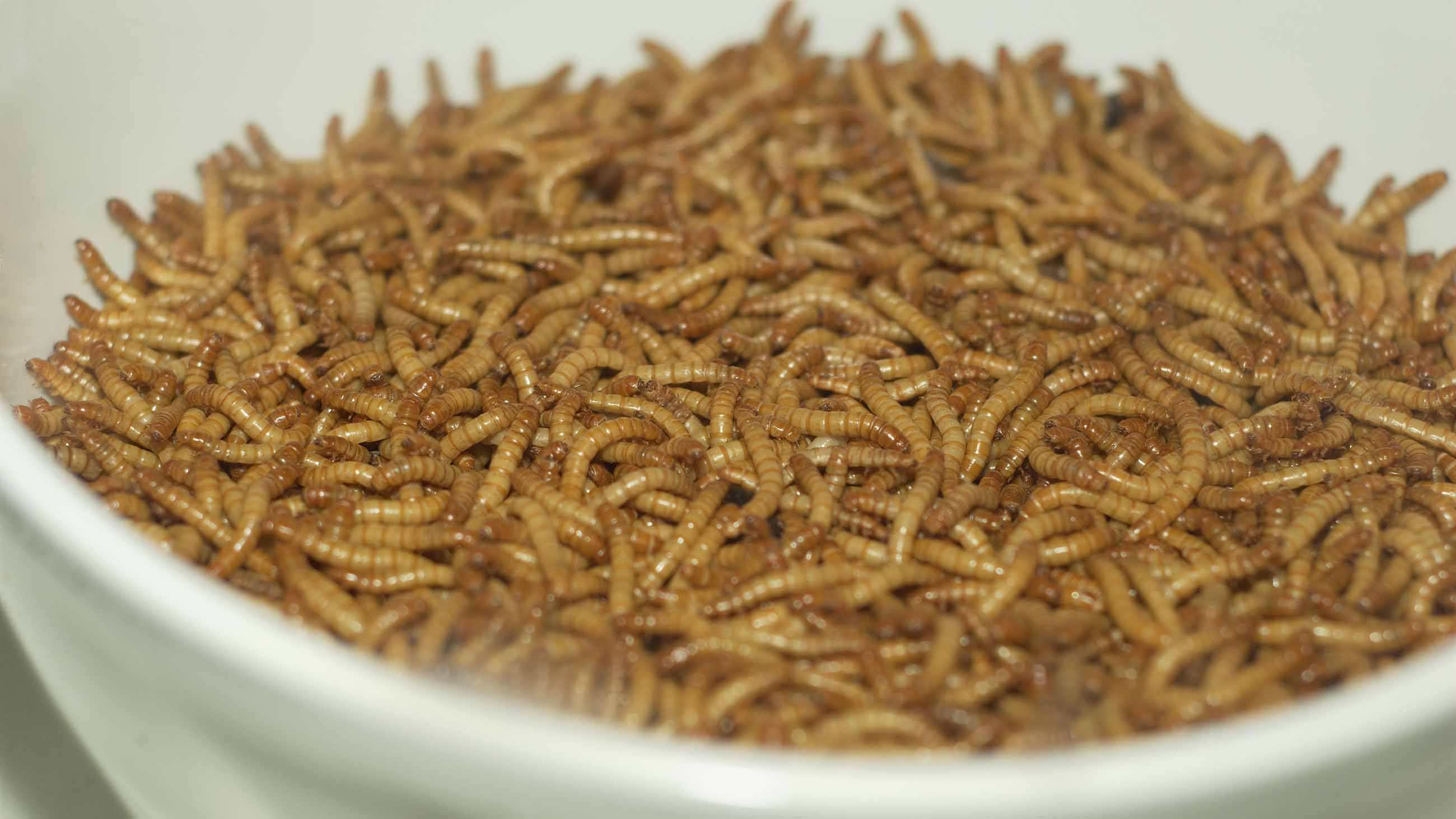
You personally might recoil at the thought of eating fried crickets or roasted mealworms, but many cultures around the world consume insects, either caught from the wild or farmed on a small scale. And while grubs don’t feature prominently in current paleo cookbooks, our paleolithic ancestors most certainly ate plenty of bugs.
But the past decade has shown that even if you build an insect farm, the global market may not come. Of the 20 or so largest insect farming startups, almost a quarter have gone belly up in recent years, including the very largest, Ÿnsect, which ceased operations in December.
All told, shuttered insect farming startups account for almost half of all investment into the industry.
“Things have gone from bad to worse for the big insect factory business model,” one insect farming CEO said late last year in a YouTube video.
And Vox can exclusively report that plans to build a large insect farm in Nebraska — a joint project between Tyson Foods, America’s largest meat company, and Protix, now the world’s second largest insect farming company — are indefinitely on hold.
“The human food market, basically, has not materialized.”
Beyond the financial woes of the insect farming industry, some philosophers worry about the ethical implications of potentially farming tens of trillions of bugs for food, as emerging research suggests insects may well have some form of consciousness and hold the capacity to feel pain and suffer.
“Evidence is building that there’s a form of sentience there in insects,” Jonathan Birch, a philosopher at the London School of Economics who leads the Foundations of Animal Sentience project at the university, told Vox last year.
But it looks like they may not have too much to worry about. In spite of the initial hype surrounding the bug farming boom, the insect agriculture industry has learned just how difficult it is to compete with the incumbent, larger animal-based meat industry — and that, perhaps, it never really made sense to try doing so with bugs.
Insect farming is similar to other types of animal farming. The insects reproduce, and the offspring are raised in large numbers in factory-style buildings. Many of the same welfare concerns for farmed chickens and pigs are present on insect farms, like disease, cannibalism, and painful slaughter. In the case of insects, the creatures are killed by a variety of means. They might be frozen, baked, roasted, shredded, grinded, microwaved, boiled, or suffocated.
In 2020, insect companies farmed an estimated one trillion bugs, and the most commonly farmed species today are black soldier fly larvae, mealworms, and crickets.
While some people might tell researchers they’re open to adding bugs to their diet, these smallest of animals remain a novelty food in the U.S. and Europe, as opposed to a commodity capable of displacing wings or burgers.
“The human food market, basically, has not materialized,” Dustin Crummett, a philosopher and executive director of The Insect Institute — a nonprofit that researches the environmental and animal welfare implications of large-scale insect agriculture — said in an interview. “Only a tiny fraction of farmed insects are used for human food.”
Some philosophers worry about the ethical implications of potentially farming tens of trillions of bugs for food, as emerging research suggests insects may well have some form of consciousness.
But insect farming startups haven’t only sought to put insects on our plates or grind them into protein bars; many want to sell insect meal (ground up insects) as feed for other farmed animals. It’s a sustainable alternative, they argue, to the soy fed to factory-farmed chickens and cattle, much of which is grown on deforested land. Insect meal could also replace fishmeal (largely composed of small, wild-caught species, like anchovies and sardines), which is fed to farmed fish and heavily contributes to overfishing.
This approach of farming insects for livestock feed, however, isn’t materializing either, and much of it comes down to cost.
According to a 2024 analysis published in the journal “Food and Humanity” and co-authored by Crummett, one ton of insect meal costs about 10 times that of soybean meal and 3.5 times that of fishmeal, a major cost gap that is unlikely to narrow anytime soon.
Insect meal is so expensive, in part, because feeding insects is expensive.
Get Our Newsletter

Farmed insects are typically fed agricultural “co-products” — like wheat bran and corn gluten — most of which is already fed to livestock, and so insect farmers have wound up in competition with big meat companies to buy up these ingredients. This simple fact weakens the narrative often driven by insect farming startups that they are putting food scraps that otherwise would’ve been thrown away to good use.
“Organic waste from the industry becomes feed for insects,” Protix’s website reads. “This circular food production mirrors nature’s circle of life.” But this is misleading; Protix feeds its insects ingredients like oat husk and starch, which are typically used in traditional livestock feed anyway.
“It doesn’t really make sense to buy chicken feed to feed insects to feed to chicken,” as one insect farming startup founder told AgriTech Insights a couple of years ago.
And it’s not guaranteed that insect meal will be more sustainable than soy or fishmeal. According to a UK government report, the environmental impact of insect farming depends on a number of factors, including what insects are fed and whether startups power their farms with fossil fuels or renewable energy.
“It doesn’t really make sense to buy chicken feed to feed insects to feed to chicken.”
Energy usage explains a lot of the industry’s cost challenge. Farmed insects require warm temperatures, and in Europe, where so many of the startups are based, energy prices have sharply risen in recent years.
To lower costs and develop new revenue streams, some insect farming startups have pivoted to become “waste management” companies, too. Rotting food waste in landfills is a huge source of global greenhouse gas emissions, and insect farming companies can earn money by taking it off other companies’ hands and letting bugs eat it.
But here, too, the industry has run into obstacles, including strict EU regulations around what can be fed to insects and an inconsistent product. When insects are fed food waste, their final nutritional profile can vary widely depending on what they’re fed, but livestock feed companies need nutritional consistency.
And it turns out that even the largest and most powerful companies in the space can run into hard, economic realities when trying to rear bugs on waste en masse.
In late 2023, America’s biggest meat company, Tyson Foods, announced it had invested an undisclosed sum of money in Protix, a large Dutch insect farming startup. That Tyson was putting its weight behind it seemed like much-needed proof that insects could be the future of food, as so many startups, investors, and researchers had claimed.
The two companies planned to build a massive insect farm together near Tyson’s cattle slaughterhouse in Dakota City, Nebraska. At the insect farm, Protix would raise and kill around 70,000 tons of larvae annually — approximately 300 billion individual insects. The bugs would feed on cattle paunch, partially digested plant matter removed from the stomachs of cattle slaughtered at Tyson’s plant. After a few weeks of feeding on the animal waste, the larvae would be slaughtered and ground up into insect meal, destined to become food for pets and livestock.
It was a way for Tyson to “derive value” from its waste, as it told CNN.
Even the largest and most powerful companies in the space can run into hard, economic realities when trying to rear bugs on waste en masse.
Now, Vox can exclusively report that Tyson Foods has withdrawn its air permit application to build the plant, and the plant itself is “on hold indefinitely.” That’s according to email exchanges last December between Tyson Foods and the Nebraska Department of Water, Energy, and Environment, which were obtained through public records requests by the nonprofit Society for the Protection of Insects.
Tyson and Protix did not respond to questions for this story.
The companies’ stalled plans aren’t unique in the insect farming space.
In early 2024, Innovafeed — currently the largest insect farming startup — opened a pilot plant in Decatur, Illinois, in partnership with ADM, the massive food and livestock feed manufacturing company. The U.S. Department of Agriculture awarded Innovafeed a $11.7 million grant to turn insect waste into fertilizer at the plant, but a year and a half after it opened, it suspended operations, citing funding challenges.

Through a public records request, Society for the Protection of Insects obtained over 600 pages of documents pertaining to the grant, though about half of it is redacted, including much of the environmental review and Innovafeed’s commercial records. Earlier this month, the organization sued the USDA over the heavy redactions, arguing it’s in the public’s interest to fully disclose the details of the deal.
The USDA declined to comment on pending litigation, and Innovafeed did not respond to questions for this story.
The biggest blow to the industry yet came late last year when the largest startup of them all — France-based Ÿnsect, which had raised over $600 million, representing nearly a full third of the sector’s funding — ran out of money. And a quarter of that backing had come from the French government. A recent whistleblower investigation alleged severe mismanagement at Ÿnsect’s production facility that led to filthy conditions and health problems for workers. The company didn’t respond to a request for comment.
As insect farming startups struggle to stay afloat, their main trade group — the International Platform of Insects for Food and Feed, or IPIFF — is going so far as to call on the European Union to mandate publicly funded food services, like school cafeterias, to buy insect meat and publicly owned farms to buy insect meal to feed to their animals. IPIFF didn’t respond to an interview request for this story, nor did the North American Coalition for Insect Agriculture.
As for the outlook of the insect farming sector, more startups will probably go under in the years ahead, and for the survivors to continue on, they may need to leave Europe and North America for warmer climates and lower operating costs.
“It is not at all unusual that some new thing gets hyped as the silver bullet that’s going to solve such and such environmental problem.”
But the rise, fall, and resettling of the industry isn’t uncommon in the agricultural technology field, Crummett says. Vertical farming, for example, seemed like a great idea on paper, but it’s been an economic failure.
“It is not at all unusual that some new thing gets hyped as the silver bullet that’s going to solve such and such environmental problem,” Crummett said, especially when it’s a striking idea — eating insects — and is backed by influential institutional actors, like the United Nations and university researchers.
But it’s undeniable that the insect agriculture sector’s ambitions have fallen far from disrupting the meat and livestock feed supply to a future in smaller niche markets, like pet food, novelty human foods, waste management, and livestock feed additives.

It all amounts to a massive retrenchment from its ambitious goals of revolutionizing the food system to now merely tinkering at its edges.
But in another way, it was never truly ambitious enough. Decades of environmental and food systems research has concluded that what we ultimately need is fewer animals — be them chickens; pigs; birds; fishes; or, yes, bugs — in farms and on our plates.
Kenny Torrella is a senior reporter for Vox’s Future Perfect section, with a focus on animal welfare and the future of meat.