





In June, a community of mostly mathematicians released the Leiden Declaration on Artificial Intelligence and Mathematics, an articulation of the values they hope to preserve as automated systems are integrated into the practice of developing mathematical proofs. This is necessary because some frontier AI systems have shown striking capabilities for solving certain advanced mathematics problems, though independent tests show that AI still has important limits.
Although I’m not a member of the pure mathematics community in any strict sense, much of the declaration’s message resonated with me and was relevant to my own research interests as a computational biologist.
I’m encouraged that the mathematics community decided to take a stand on the issue and that it has been successful in organizing a large number of eminent mathematicians to sign the document. The Leiden Declaration, which originated at a conference held at Leiden University in the Netherlands, should spawn proper copycats, because what is true for mathematics is true for virtually every field that calls itself as a science. The inventions of mathematics percolate into the algorithms and statistical methods that help scientists design experiments, build simulations, and analyze data, from sociology to statistical physics and beyond.
I argue that biological fields should consider something of the sort, because the kinds of knowledge that biology generates and predicts are uniquely vulnerable to subversion and mischaracterization by artificial intelligence.
The conversation in the mathematics community has been illuminating, in that the declaration is a coordinated response to the powers and risks of AI, whose acceleration has felt like a Thanos snap, changing the universe in an instant. And part of the reason that mathematicians felt the effects so immediately is tied to the manner in which their research is conducted: A mathematical proof, in principle, is transparent and independently verifiable, and no proprietary equipment is (generally) required to check it.
The Leiden Declaration should spawn proper copycats, because what is true for mathematics is true for virtually every field that calls itself as a science.
As the Leiden Declaration notes, automated techniques now present mathematics with a new forgery problem: Because mathematical truths are fixed and verifiable, one can identify a counterfeit formalism by comparing it to the genuine proof. Biology, however, offers no such guarantee; our so-called “truths” are often noisy and context-dependent, making it nearly impossible to define what an authentic version should even look like. Some of the most widely appreciated biological principles (such as Mendel’s laws of genetic inheritance) are better described as powerful but limited in scope, and with well-characterized exceptions that don’t undermine the laws but refine their application. This is true for many biological theories. Boundary conditions, edge cases, and noise are not bugs but features of how the natural world works.
For example, a mutation that confers drug resistance to a virus with one genetic background may have a much weaker, neutral, or even harmful effect in another, because its impact depends strongly on the surrounding genetic context. This phenomenon, which biologists call epistasis, is not an exotic edge case but a powerful force across the biosphere in shaping the relationship between an organism’s genes and its expressed characteristics. And epistasis is just one of many examples of context dependence in biological systems, in which a finding that holds true in a dish falls apart in a body or has an effect in a mouse model but not in a primate.
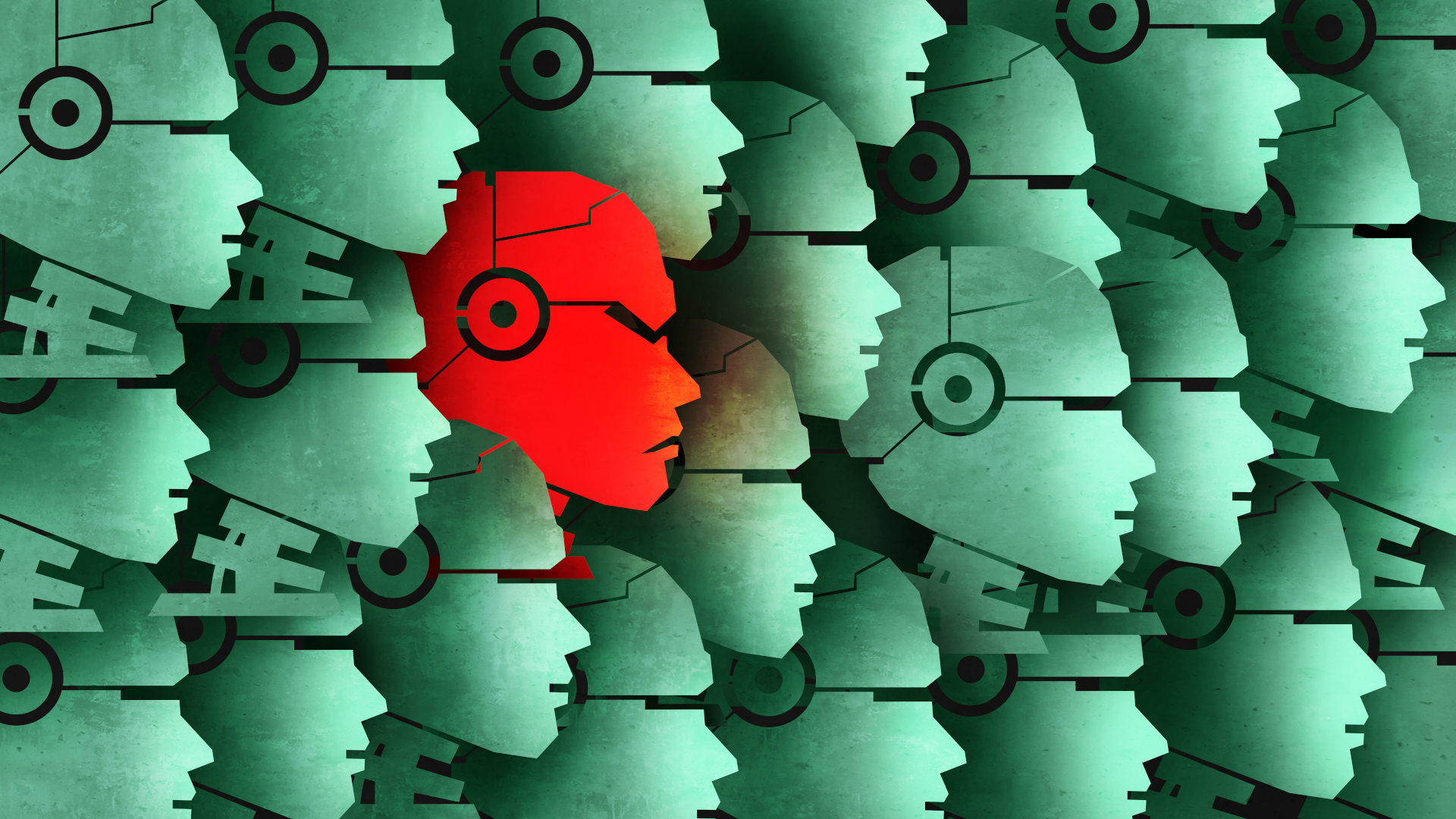
When it comes to AI, the mathematician fears producing a counterfeit solution. But the biologist often cannot say, even acting in the fullest good faith, what the authentic version is supposed to look like.
Despite the differences between mathematics and biology, the life sciences should consider embarking on an exercise that is at least analogous to the Leiden Declaration. If nothing else, a biology version could borrow its structure and ambition. We should insist that researchers disclose their use of automated tools, that they are responsible for the veracity of their findings, that credit and accountability belong to people rather than to systems, and that early-career scientists be protected from incentives that prioritize high-volume output over genuine scientific insight.
A biology declaration should adopt these ideas and others, and emphasize additional provisions that are important to the field: the validation of AI-generated hypotheses against results from the wet lab, the management of training data drawn from the biological commons, and the heightened scrutiny owed to any model whose outputs will eventually touch a patient or an ecosystem. The last point is crucial: In the biomedical realm, AI’s missteps and triumphs will manifest in living bodies, with all of the associated corporeal, emotional, ethical, and legal consequences.
We should insist that researchers disclose their use of automated tools, that they are responsible for the veracity of their findings, that credit and accountability belong to people rather than to systems.
A biological Leiden Declaration must appreciate the nature of the data and observation in biology, and other particulars of the field. But the most important feature for responsibly managing the relationship between AI and living systems involves the durability of what is produced.
A mathematical declaration can aspire for permanence because verified proofs can remain valid across centuries. Biological understandings, on the other hand, tend to shift over time, sometimes rapidly. A policy hastily calibrated to the models of this summer might already be miscalibrated by winter. A declaration written in the hope of lasting a decade could risk spending much of that decade catching up.
If we are to orchestrate a responsible treatise for artificial intelligence in the life sciences, it should be adaptive: versioned, dated, revisited on a published schedule, and amended in the open by the very community it claims to represent. And because different subfields of biology have unique challenges — cardiology versus forest ecology, for instance — perhaps we need multiple declarations (but not too many).
The Leiden Declaration incorporates some of these elements, clarifying that its content reflects AI technologies and mathematical practice as of May 2026 and that updates on the document will be shared. Biology should make that feature part of the central architecture, wiring the process of revision into the document, so that updating it becomes a positive action rather than a confession of failure.
Fortunately, life scientists are well equipped for this task. We have long understood that structures unable to change with their environments rarely endure. It would therefore be a strange betrayal of our discipline to write a declaration that forgets this basic principle. Our policies for technological change must keep the dynamism of living systems at the center of how we imagine the future of biology.
This is an important stance. The Leiden Declaration’s push toward transparency and reproducibility feels even more urgent as AI-generated content floods research communications. I’ve been thinking about how researchers can quickly produce figures and illustrations to support their arguments – tools like https://www.nanobananaimages.com/ make it easy to generate clean visuals that can be labeled and credited properly. Thanks for raising this.
Thank you 🌟 for making internet better place with content like this. Your authenticity shines through