








Popular culture is full of stories about devoted animal parents who’ll do anything for their young. Consider Disney classics like “Dumbo,” in which Mrs. Jumbo, a circus elephant, is labeled as dangerous and locked up when she defends her young son from bullies. Or “One Hundred and One Dalmatians,” the story of Pongo and Perdita rescuing their pups from evil Cruella De Vil before she can skin them for a fur coat. Single dads get the spotlight in “Finding Nemo” as Marlin, a harried clownfish, races to save his son Nemo, who’s been captured by scuba divers.
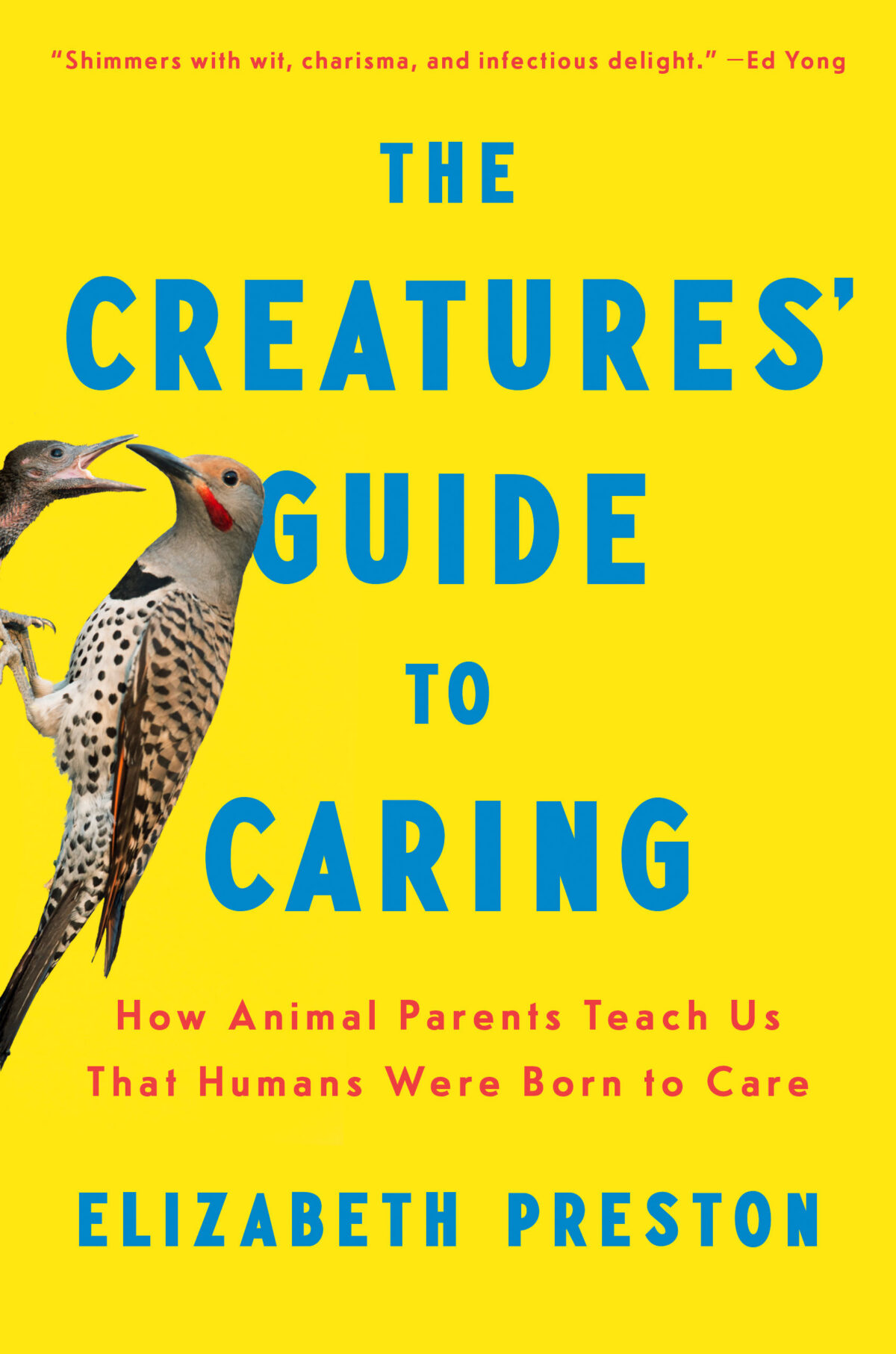
BOOK REVIEW — “The Creatures’ Guide to Caring: How Animal Parents Teach Us That Humans Were Born to Care,” by Elizabeth Preston (Viking, 416 pages).
Human parenting is rarely so dramatic, but it can feel just as challenging. It’s especially daunting with a first child: Every event, good or bad, is a new experience, and may not match the descriptions or timelines in parenting handbooks. Many new parents feel overwhelmed, especially mothers recovering from the physical transformations of pregnancy and childbirth. As science journalist Elizabeth Preston puts it, “To me it felt sort of like my husband and I had reached a destination we’d heard a lot about, only to find it so wild and inhospitable that we couldn’t believe people came here voluntarily, never mind repeatedly.”
For insights, Preston looks to the animal kingdom, where “so many animals are doing it without books or apps or advice to heed.” The result is “The Creatures’ Guide to Caring: How Animal Parents Teach Us That Humans Were Born to Care.”
Through extensive interviews and lab visits with scientists studying species from seahorses to birds to burying beetles, Preston finds some stark differences between human and animal parenting, but also a lot of common ground. “When we look at how different creatures take care of their young, the wall between humans and the rest of the animals reveals itself to be flimsy at best, constructed of little more than words,” she writes.
Animals have a dizzying array of strategies for feeding and protecting offspring, but Preston finds some key themes, including knowledge and sacrifice. Bodily substances also play a big role. Some birds, including pigeons, penguins, and flamingos, feed their chicks a liquid called crop milk that they cough up from their lower esophagus. Poisonous frogs on Madagascar feed their tadpoles unfertilized eggs. In a few species, including caecilians (a legless amphibian) and black lace-weaver spiders, babies actually consume parts of their mother’s body, Preston writes, a process called matriphagy.
“To me it felt sort of like my husband and I had reached a destination we’d heard a lot about, only to find it so wild and inhospitable that we couldn’t believe people came here voluntarily, never mind repeatedly.”
One major theme is that caring activates specific areas in both human and many animal brains. In humans, it’s a network of neural centers that handle either emotions or empathy — understanding what someone else is thinking. For mothers, the activity is centered in the amygdala, which studies have shown plays a key role in guiding mammalian mothers. For fathers, the effect is centered in the cerebral cortex, producing more of a reasoning response than the mother’s, which is activated by hormones during pregnancy. Interestingly, gay men who are primary caregivers show a lot of activity in both areas. The takeaway is that all human brains are primed to support caregiving, and this capacity is activated when a baby needs attention.
But what about animal brains? Studies of several types of poisonous frogs, found in Latin America and Africa, have found that during certain parenting tasks, activity increases in a brain region called the medial preoptic area, or MPOA. When tadpoles hatch, one of the parents — the male in some species, the female in others — carries them on its back from the leaf litter, where the frogs lay eggs, to the water. Performing this task, but not simply watching it, increases MPOA activity. If the lead parent disappears, the other frog typically steps in and carries the tadpoles. This suggests that for the poisonous frogs, “there’s no such thing as a female or male parenting brain,” Preston writes. “Mom and dad frogs share the same cerebral equipment, which gives them the flexibility to hop into new roles — just like we do — when their kids need them.”
In humans, while activity patterns in parenting brains can look similar across genders, there are also physical changes that are more evident in mothers. Studies show that pregnant women’s brains appear to become extra-vigilant and attuned to potential threats. Then, after birth, spikes of dopamine and oxytocin prime the brain to perceive reward when the mother hears, sees or smells a baby, especially her own child. There’s also more interaction between the mother’s prefrontal cortex — the reasoning center — and other regions that produce emotional responses. “At the same time that our brains become more alert to a baby, they get better at regulating the reactive fear or anger we might feel when, say, that baby won’t stop screaming,” Preston observes.
One major theme is that caring activates specific areas in both human and many animal brains.
Then, in the months after childbirth, the mother’s brain grows, making up for thinning in the cerebral cortex during pregnancy. One researcher tells Preston that a mother’s brain “seems to ‘wax and wane,’ like the moon.” Studies of older women show that overall, those who have given birth have somewhat younger-looking brains, and the effect scales with the number of children a woman has produced. Scientists speculate that the constant learning process of parenting may create new connections in the brain.
In the animal world, rodent mothers have been found to have better learning and memory in midlife, and less memory loss in old age, than non-mothers. And in some species, mature females play prominent roles in social hierarchies. For example, elephants live in groups that typically are headed by an older female who leads the group to food and water, and decides whether to go through potentially dangerous zones or detour around them.
“The powerful brain of the elephant mother keeps her children safe — and her children’s children, and other relatives, and even unrelated elephants that she may adopt into her family,” Preston writes. “Elephants, like us, work together to raise their children. Unlike the lonely python mother wrapping her babies in her sun-warmed scales, elephants and humans have expanded their families into communities.”
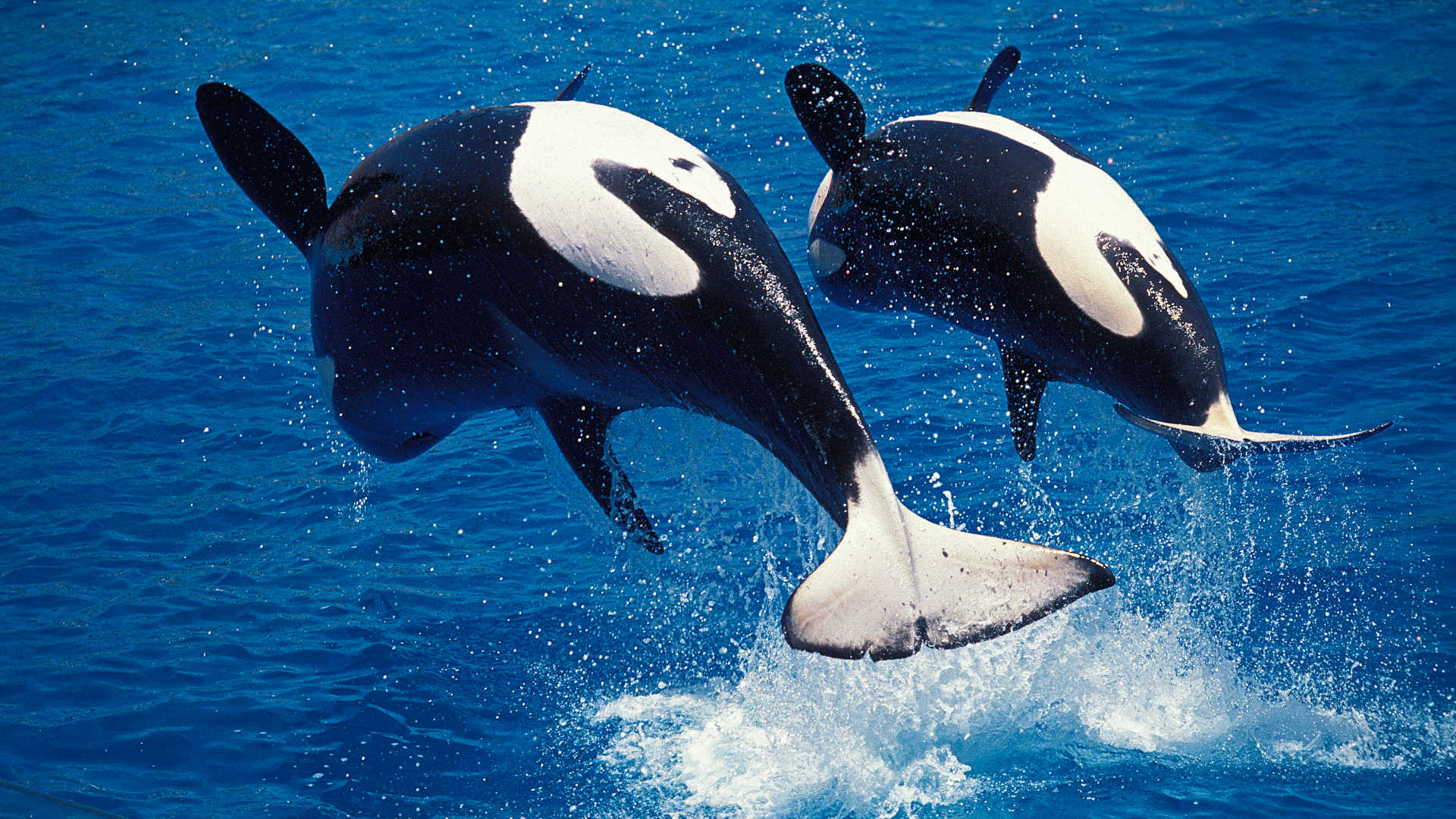
Orcas, or killer whales, also live in groups organized around older females. And there’s an unusual parallel to humans, Preston notes: The female orcas go through menopause, becoming infertile in midlife. Across the animal kingdom, this is only known to happen in a few species of toothed whales, some chimpanzees, and humans. Scientists trying to explain it have proposed a “grandmother hypothesis” for whales: by shifting from producing offspring to feeding other orcas and leading the group, these older females support extended families, which helps the species thrive.

As Preston acknowledges, much of the neuroscience research on parenting focuses on cisgender, straight women who have birthed children. This leaves out many other parents, including those from the LGBTQ+ community and, to a lesser extent, dads in general. But she offers plenty of non-human examples, from voles to clownfish, to show that males can also be effective caretakers. And she makes a bigger point: In humans and many other species, caring is communal. Alloparents — individuals who care for young that aren’t their direct offspring — show up throughout the book, often in key roles. Everyone can play a part. Think back to children’s stories: Charlotte, the spider in “Charlotte’s Web,” spends most of the book parenting Wilbur the pig, protecting him from becoming bacon by writing mysterious tributes to him in her web.
Sharing the burden of parenting has been critical to human success on Earth, Preston explains. In contrast to other primates, who may nurse their young for four or five years or longer, humans can wean their children much earlier because other humans will help feed and hold the kids. This means the mother can get pregnant again sooner and have children closer together. Eventually, Preston writes, “humans were able to take advantage of this extra fertility and grow our populations.”
“Even before that, researchers argue, the evolutionary shift to caring for children as a group — instead of leaving mothers to cope on their own — shaped the course of human evolution and made us the animals we are today,” she adds.
While humans in the developed world live much less communally today, there’s still shared parenting. Grandparents, babysitters, teachers, coaches and many others all contribute to the caregiving mission. “We’re not alone,” Preston writes. “We’re built to care and be cared for by other humans. And we’re surrounded on Earth by creatures in their own webs of caring.”
Jennifer Weeks (@jenniferweeks83.bsky.social) is a Boston-based journalist and former senior editor at The Conversation U.S. Her articles have appeared in Audubon, Slate, The Boston Globe Magazine, and many other outlets.