










From the Editor: Beyond the Ballot
Americans tend to express discontent during midterm congressional elections. In 1974, voters punished Republicans over the Watergate scandal, and they did so again in 2006 over the Iraq War and the Bush administration’s handling of it. Democrats were slapped four years later, during the 2010 midterms, as voters reacted to a weak economy, high unemployment, and soaring deficits, among other issues.
The November 2026 midterm cycle faced no shortage of similarly divisive issues: immigration, inflation, the cost of healthcare, the limits of presidential power, and even the integrity of elections themselves. And in the din of negative campaign advertising and amplified social media bickering, the stakes can start to feel abstract — an angry, epic tug-of-war over competing visions of America.
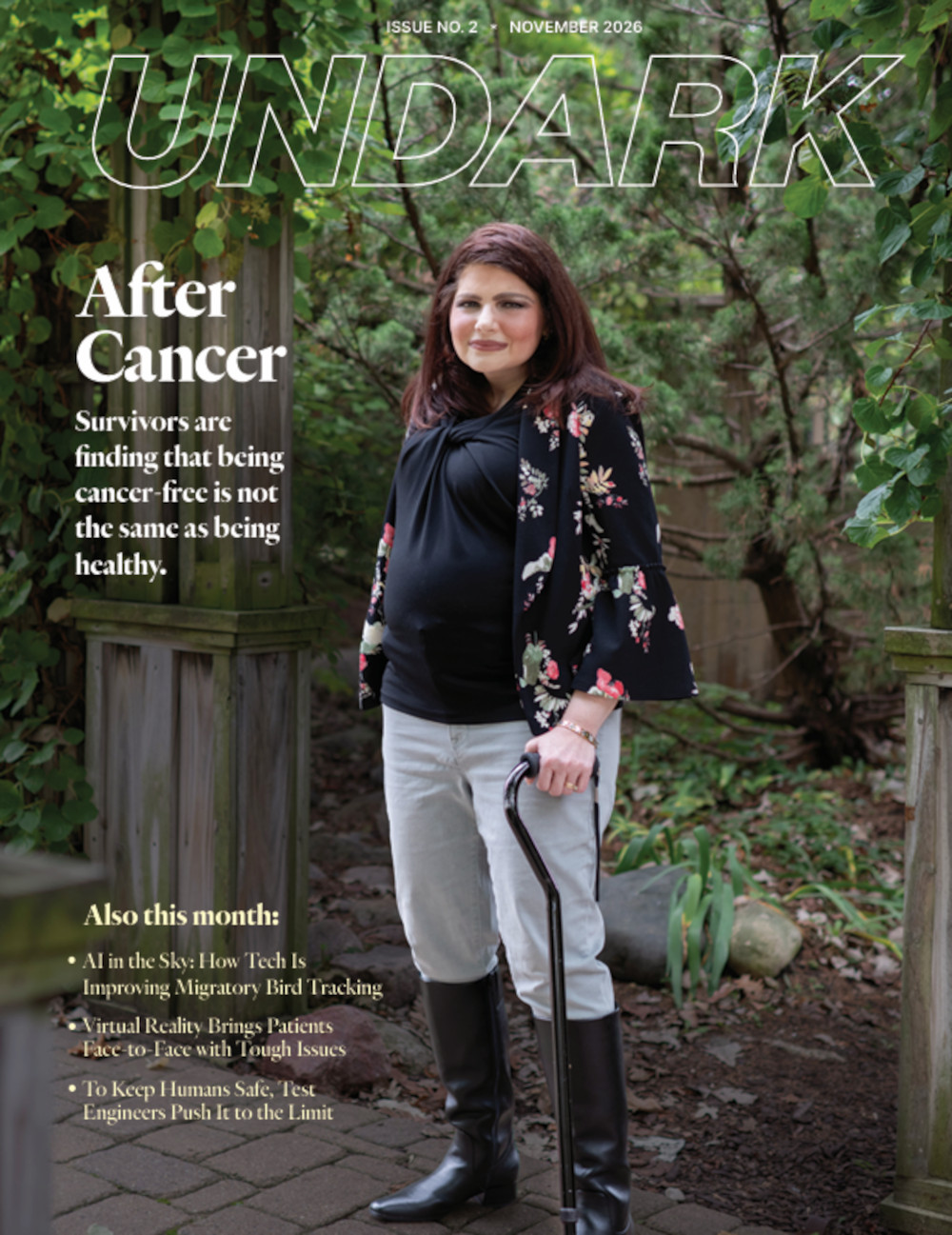
We’re exploring the feasibility of a print version of Undark. If you have thoughts on that, send an email to [email protected].
On the ground, though, the downstream questions that flow from any outcome remain deeply personal, as Undark contributor Jyoti Madhusoodanan makes clear with her cover story this month on the many obstacles faced by cancer survivors long after they’ve officially finished treatment. “Being declared in remission or cancer-free is not the same thing as being healthy or feeling well,” Samantha Siegel, a physician in California who was diagnosed with Hodgkin lymphoma in her late 30s, shared with Madhusoodanan.
Cancer survivors have a heightened risk of developing other types of cancer, as well as heart disease, mental health disorders, and chronic pain, among other issues. And as Siegel and other clinicians note, healthcare systems are frequently ill-equipped to provide these patients — whose needs are often different from the typical patient — with proper long-term support.
Whether improvements in that long-term care can be expected to flow from this month’s midterm elections remains to be seen. But Madhusoodanan’s conscientious portrayal is precisely the sort of incisive reporting that has given Undark its staying power, and we’re proud to bring you her story this month — alongside a fresh collection of other features, essays, and reviews at the messy intersection of science, economics, and politics.
If you have thoughts on our coverage, we’d love to hear about it; you can email me directly at [email protected]. And as always, thanks for your support of Undark.