










AI and Virtual Reality Enter the Therapist’s Office


Louise Birkedal Glenthøj has worked with patients with serious psychiatric disorders for more than a decade. She knew that anorexia was a tough condition to treat, and that even after traditional therapies, half of patients relapse. So, in her latest study, she decided to take a slightly different approach: Rather than targeting eating behaviors or the fears a person may have when confronted with food, her team invited patients to imagine the internal voice that fueled their food-restrictive behavior.
That voice was then, through virtual reality technology, rendered on a screen as an avatar.
Some participants created “a very like mean-looking avatar,” said Birkedal Glenthøj, whose research group, VIRTU, collaborates on many of these projects with Heka VR, a public-private VR therapy software startup based in Denmark. For example, some created a figure with a thin face, or looking gray and hostile. Others, she said, made the image of someone they knew. “And some,” she said, “would, of course, make themselves.”
Over a series of sessions, a therapist would articulate the patient’s internal monologue: “You’re fat,” “You should never have been born,” and even, “You should kill yourself.”
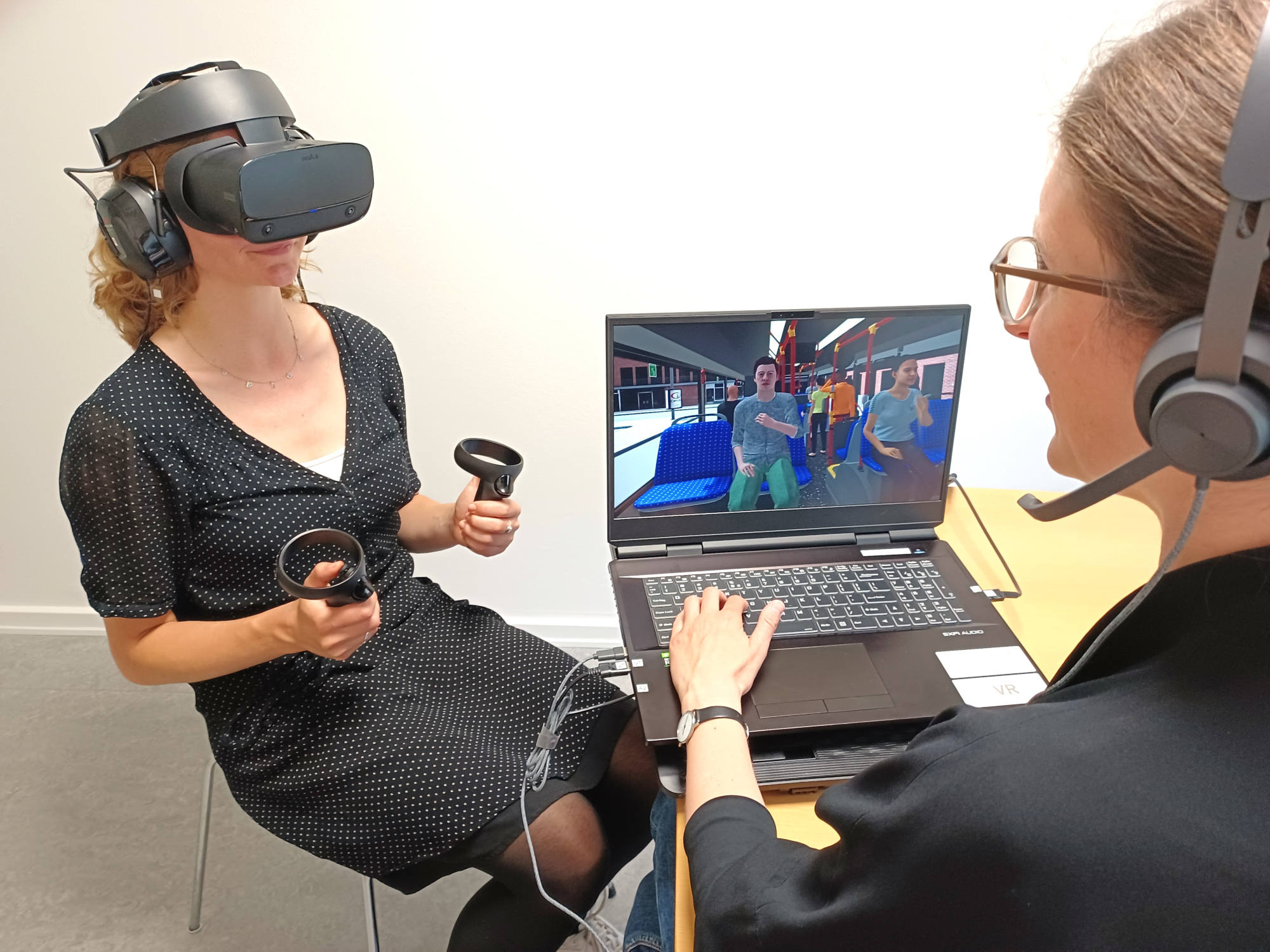
Voicing these violent statements may seem an odd task for clinicians, Birkedal Glenthøj, an associate professor of psychology at the University of Copenhagen, acknowledged. But, she said, the patient and therapist have outlined the script in advance. And therapists can move from the avatar’s voice to their own if they want to comfort the patient or advise how to respond to their critic.
Her work joins a growing number of studies that are testing the potential of virtual reality or AI-driven depictions in therapeutic treatment. In the U.K., Denmark, and Germany, such tools have, similar to the Copenhagen study, depicted the inner voice of patients with psychosis or eating disorders, repeating their most critical thoughts and encouraging them to confront it, injecting novel technologies into traditional therapeutic approaches. In the Netherlands, psychologists have developed what they call “deepfake therapy” in which an AI-generated video, voiced by their therapist, depicts someone’s deceased loved one, for example, or the perpetrator of a crime. Although relatively untested, they are already available to small numbers of patients, or slated to roll out soon in several European countries.
The idea is that talking to — or confronting — the deepfake can help bring the patient closure. (Avatars and deepfakes can appear similarly onscreen, but avatar therapy typically represents a person’s self or elements of an illness, while deepfake therapy involves audiovisual representations of real people. Katarzyna Nowaczyk-Basińska, a researcher at the Leverhulme Centre for the Future of Intelligence at the University of Cambridge, noted that definitions are still fluid though.)
Proponents of these approaches say they are more realistic and immersive — and thus potentially more impactful — than routine care alone, like counseling. And, they add, the therapies allow the clinician to play a role that would be hard to assume in traditional therapy without fracturing their relationship with the patient.
Get Our Newsletter

Plenty of questions remain, however, including whether there could be damaging side effects and whether the therapy is even effective. A recent British study that looked at long- and short-term versions of avatar therapy with patients who experienced psychosis found that neither version had a substantial impact on measures of health or quality of life. Meanwhile, a 2024 British trial involving participants with psychosis found that avatar treatment, administered alongside antipsychotic medication and counseling, was better than medication and counseling alone after 16 weeks, but by 28 weeks the effects, although still present, “were no longer statistically significant.” Smaller studies and short-term interventions have shown more promise.
In a comment piece for The Lancet, Mark Hayward, a clinical psychologist and researcher with the Sussex Partnership NHS Foundation Trust and the University of Sussex, mulled whether an audiovisual dimension was needed or if therapists could deploy other ways of depicting the patient’s inner voice — like role-play. He noted avatar therapy’s short-term impact in studies to date, although, in an interview with Undark he suggested it could work in combination with other approaches.
“What that means is that, as a standalone intervention, it doesn’t work because it doesn’t have enduring benefits,” said Hayward, who specializes in treating people with distressing voice-hearing experiences, like psychosis.
Proponents of these approaches say they are more realistic and immersive — and thus potentially more impactful — than routine care alone.
Experts like Birkedal Glenthøj see potential for the intervention to boost patients’ motivation and response to traditional treatment. She published the preprint of a randomized clinical trial in June, which found the approach had some positive outcomes for patients grappling with anorexia and bulimia. Although it did not significantly reduce eating disorder symptom severity, it appeared to address some of the underlying psychological processes and improved patients’ motivation and cognitive flexibility, Birkedal Glenthøj and her co-authors wrote. That improvement, Birkedal Glenthøj told Undark, could make patients more motivated to change certain behaviors. More than half of those who completed the therapy using virtual reality registered improvement on an eating disorder questionnaire compared with just 39 percent in the control group: “We saw some remarkable responses.”
Her team, she said, also has 14 studies under way or completed looking at other hard-to-treat conditions like psychosis, self-harm, and treatment-resistant depression. She and her colleagues plan to probe the data further to better understand what kind of delivery and patient characteristics predict positive outcomes.
“It is something really new and powerful, and a strong potential to change the way we work with psychotherapy,” she said. “We could see it applying to many different disorders and symptoms.”
The idea of representing an interior voice, or the voice of a person from a patient’s life, is not entirely new. Classic psychotherapy, for example, has long used the concept of the empty chair — a technique that emerged in Vienna during the early 20th century and continues to be a recognized therapeutic approach. In that method, a patient sits across from an empty chair and a practitioner will “essentially facilitate imaginary conversation between the bereaved person and their deceased loved one,” for example, said Joshua Hatherley, a philosopher and bioethicist who has written about the ethics of avatars in grief therapy. “What the patient will do in this case is speak to the empty chair as if they were the deceased person that they are grieving.”
Over the years, therapists have applied the chair approach across many conditions, Birkedal Glenthøj said, using it to depict the patient’s symptoms as if they were a third party in the room. But avatar therapy gives it a much more visual dimension, she noted. In psychosis and other severe disorders, this “chair work” asks a lot of patients cognitively, she said, “whereas in this intervention it’s right there visually, it’s created and you see it and you talk to it in real time.”
Earlier this year, in advance of the bigger study, Birkedal Glenthøj and some colleagues published a trial involving 10 patients with eating disorders which found that avatar therapy using VR was safe and acceptable, and reduced eating disorder symptoms, according to early analysis. The more recent study followed patients between April 2024 and December 2025, with 48 receiving a standard program of dietary, psychiatric, and psychological support, and 48 receiving the same treatment plus avatar therapy.

According to the preprint, when assessed when treatment ended, at 12 weeks, patients in the avatar group had better measures of quality of life, cognitive flexibility, and engagement in treatment, although their eating disorder symptoms did not change to a statistically significant degree. “Despite the absence of an effect on the primary clinical outcome, the intervention produced consistent changes in its targeted psychological processes,” the authors wrote. In addition to quelling the mechanisms underlying eating disorders, the approach can help patients share their experience with their therapist or even their families, Birkedal Glenthøj said. “Now we have this insight into what is actually going on inside your head — how mean it is, how horrible it is to be inside your head, what the eating disorder voice is saying to you,” patients’ relatives would say to her, she said. “It makes this invisible symptom visible.”
Mikala, a 31-year-old who had struggled with bulimia for a decade, was one of those 48 participants. Her symptoms worsened during the Covid-19 pandemic, she said, and reached a point where she was binge-eating and vomiting 10 times a day, leading to hospitalization. When she spotted an ad for the avatar study on Facebook, she decided to give it a go.
In 2025, Mikala — who asked that her last name be withheld due to professional concern over public disclosure — attended 10 sessions at the University of Copenhagen over the course of a couple of months. The VR sessions with the goggles felt strange and like being in a video game, she said. But, to her surprise, the critical eating-disorder voice disappeared after session six: “I was like, ‘Oh my God, it’s been gone all week,’” she said. “It’s just been taking up so much ridiculous space in my head, and there was so much else that needed to be there.”
“It is something really new and powerful, and a strong potential to change the way we work with psychotherapy.”
Researchers think that similar techniques could open new avenues for treating other conditions. In 2024, Brenda Wiederhold, a psychologist who runs the Virtual Reality Medical Center in California, wrote that in grief therapy, such tools could help people say the things they never got to express, “in hopes of achieving closure and moving the grieving process forward.”
Avatars powered by AI that portray deceased loved ones are already available on the consumer market. Known as griefbots or postmortem avatars, they allow people to communicate with representations of people who have died. Ethicists worry they could create an unhealthy dependency on tech-driven images or somehow infringe on the rights of the deceased. But using representations of departed loved ones in a therapeutic setting, in which a trained professional is present who can monitor patients and intervene, if necessary, bypasses some of these ethical issues, wrote Hatherley, the philosopher and bioethicist, and colleagues in a preprint paper about avatars in grief therapy.
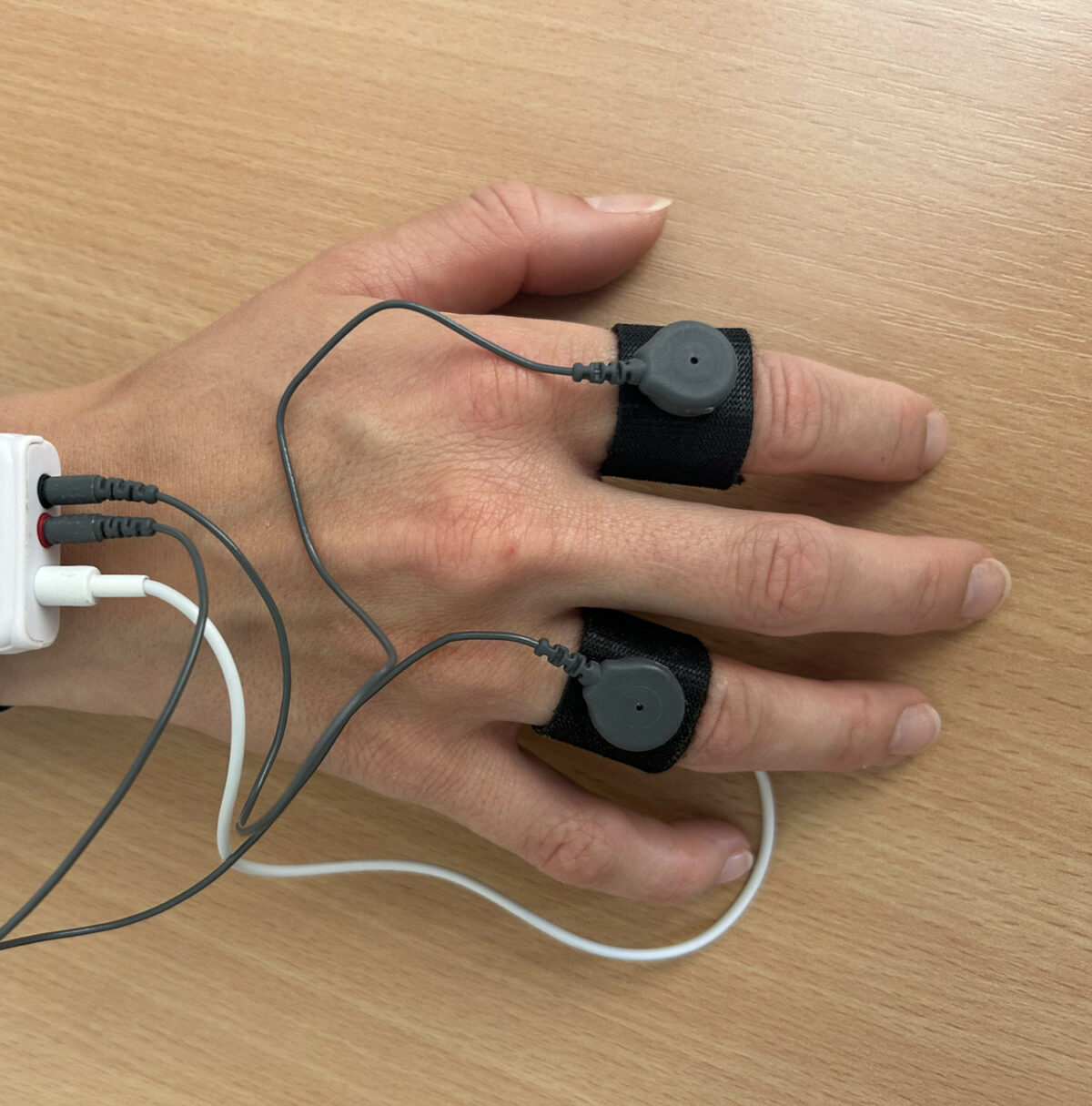
In a study Birkedal Glenthøj and her team published earlier this year, which focused on patients who experience hallucinated voices, participants wear a biofeedback device while exposed to the avatar in VR.
Visual: Habla and Soleim et al., PLOS One 2026
Another potential application in therapy is PTSD: Jackie June ter Heide, a clinical psychologist and senior researcher at a national trauma center in the Netherlands, co-authored an exploratory feasibility study in which two sexual abuse survivors confronted deepfakes of their perpetrators, whose images, manipulated by a therapist, appeared to speak to them by Zoom. (Some of her research collaborators co-founded a company that markets the technology to psychologists and therapists for a fee.) The two patients reported less self-blame and fewer PTSD symptoms after the intervention, which was just a single session, measured a week later. The next phase involved developing a clinical protocol for a study of 10 patients. A paper published in May concluded their approach was “feasible, acceptable and potentially effective.” Ter Heide and her colleagues have completed their study, but have not yet published the results.
A patient in the initial study, who had been assaulted as a young child and teen, told the perpetrator: “Do you know what you caused? I struggled with this my whole life, for 40 years now.” As described by ter Heide’s paper, he responded, “I am sorry to hear that. I want you to know that it was not your fault, it was my fault, I am the guilty one. It was disgusting what I did. I feel very bad about it, every day.”
One question is whether deepfake perpetrators should apologize if they were unlikely to do so in reality. For some patients, an apology could help bring closure, but for others it’s simply not convincing, ter Heide said: “Some people very explicitly say, ‘I don’t want you to apologize, because he would never say that.’”
Ter Heide said the approach is particularly useful in tackling guilt and shame. When a sexual assault survivor remembers the incident, she said, they may feel they’re dirty or like they should have acted differently. “You want a therapy to help people to realize it’s not actually the case,” she said. To tell the patient, “‘You have power now,’ or ‘You’re a different person now,’ or ‘This was long time ago.’ So it’s all about how it is represented in your head.”
She stressed that subject expertise is crucial. “What’s very important,” said ter Heide, “is that you actually understand the dynamics of the disorder that you’re trying to treat.”
Support Undark Magazine
Undark is a non-profit, editorially independent magazine covering the complicated and often fractious intersection of science and society. If you would like to help support our journalism, please consider making a donation. All proceeds go directly to Undark’s editorial fund.
Working with vulnerable patients means the stakes can be high. During the 2024 British-based trial of avatar therapy for patients who heard distressing voices in psychosis, two patients died, one by suicide, the other through an undetermined cause. An independent committee concluded that neither death related to the treatment the patients were undergoing. And an expert committee at the U.K.’s National Institute for Health and Care Excellence conducting an early assessment of the technology noted that “adverse events may occur with any treatment when managing severe mental illnesses such as psychosis, regardless of the delivery method.” (Two experts told Undark that this assessment was reasonable. “I’m satisfied that avatar therapy is safe enough,” Hayward said.)
Birkedal Glenthøj, the Danish psychologist, said that patient safety was a significant consideration in her own research. She and her colleagues work closely with relatives of the patients, or if they are in supportive housing, with those who live with them. They hold safety calls the day after the intervention and, in the case of psychosis, discuss whether a participant might need to be hospitalized. The therapy is paradoxical, she said, because in its pursuit of patient improvement, it requires triggering emotional arousal and a degree of distress.
Asked whether the treatment might exacerbate psychosis symptoms in patients with schizophrenia, Birkedal Glenthøj said this had been a concern among experts but that multiple studies – including her experiments, totaling roughly 700 patients – had not triggered that reaction. “It’s safe, and that’s what the literature shows internationally,” she said. Any techniques that used augmented reality, which could alter the patient’s real environment, would be more problematic, she suggested. “I would be more worried about that, because then you’re actually tampering with the real reality.”
Bringing AI or virtual reality into therapy has led some ethicists and philosophers to voice concerns about these interventions, even if some are also intrigued. Last December, Steven R. Kraaijeveld, a philosopher at Amsterdam University Medical Center, co-authored a paper about the use of deepfakes in psychotherapy and noted that the approach “raises a number of ethical issues. However, this does not necessarily mean that it is always unethical.”
The novelty of these approaches means there is a risk of unexpected harms, Kraaijeveld wrote to Undark by email. “We do not yet know enough about the emotional and psychological impacts of interacting with vivid technological representations of people — whether they be others or ourselves, through images or voices,” he wrote.
“More research is needed to evaluate deepfake therapy’s efficacy before it can be used at all.”
One philosophical concern was how the use of such technologies in grieving could change how people view their late relative, even if it brings closure. Memories are “such a fundamental part of human existence,” Kraaijeveld said. If someone spoke to a deepfake of a dead loved one, he continued, “you’re creating new memories, right?” It could also alter or erode existing memories, he added.
A 2025 paper on the ethical and legal aspects of deepfake therapy noted that therapists should take care to ensure patients do not become dependent on it. The authors were also concerned that collecting videos, photographs, or other material to create deepfakes could inflame old wounds. “More research is needed to evaluate deepfake therapy’s efficacy before it can be used at all,” they wrote.

Clinical psychologist and researcher Mark Hayward thinks avatar therapy does show some promise, especially as a part of a broader package of treatments. “I’m kind of less skeptical, more cautious,” he told Undark.
Visual: James Pike/Sussex Partnership Foundation Trust
Marieke Bak, that paper’s corresponding author and a bioethicist working on a European AI ethics project, told Undark that in addition to technical know-how, the therapists’ expertise and knowledge of the patient are core to the approach. “I think that connection is really important, because one of the worries that we had in the paper is, what if this becomes disconnected from the therapeutic context? What if there is no psychotherapist’s voice in this deepfake anymore?”
For some patients, avatar therapy may also be too emotionally intense, Hayward suggested. He noted that the psychosis trials had quite a high dropout rate, perhaps due to the emotional difficulty of this visual exposure to their voice.
Marlynn Wei, a psychiatrist and psychotherapist in New York, works with patients who have anxiety — not psychosis. She has written about the impact of AI on mental health, and worries about the impact a therapist’s articulation of violent emotions towards the patient could have on that relationship.
“As a psychodynamic and experiential therapist, I myself would not feel comfortable with playing a deepfake,” she wrote by email. There are already many treatments for trauma-informed PTSD that don’t require this type of intervention, she added, “and there are major ethical and professional issues with engaging in that manner.”
These approaches appear, she wrote, “very tricky to navigate.”
Despite questions persisting about deepfake and avatar treatments, they are inching towards the therapist’s office, at least for some conditions. In Denmark, avatar therapy is part of the mental health services available in some regions, Birkedal Glenthøj said.
The U.K. has also provisionally introduced avatar therapy in parts of its National Health Service and researchers have begun a project trialing its relevance in Ethiopia and India, which could lead to what the Wellcome Trust, a U.K.-based charity funding the study, has called a “global roll-out” and widespread adoption in the NHS within the next five years. But Hayward said that the digital infrastructure required to make avatar treatment widely available does not exist, even in the U.K.
“We do not yet know enough about the emotional and psychological impacts of interacting with vivid technological representations of people .”
Ethicists and psychologists also told Undark that more empirical work was needed to demonstrate the effectiveness of these novel techniques. To Hayward, avatar therapy does show some promise, particularly if it could be part of a broader package for patients with treatment-resistant conditions.
“I’m kind of less skeptical, more cautious,” he said. In clinical trials, some patients will always report benefits while others will not, he noted. “That’s why we need to keep developing this range of relationally based therapies, so relating therapy, avatar therapy, talking-with-voices therapy,” he said.
“There’s a place for each of them. Each of them should continue to be evaluated.”
If you or someone you know needs help, you can call or text 988 to speak with a trained counselor 24 hours a day, seven days a week. You can also chat online with a counselor at 988lifeline.org.