







As you’re reading this, your cells are mutating. Moreover, they are mutating in maddening numbers. Your body replaces some 330 billion of your cells daily, or about one percent, so there are numerous opportunities for DNA copying errors to take hold. “Those typos in the human genome, which consists of more than three billion letters, accumulate with each progressive cell generation,” science journalist Roxanne Khamsi writes in “Beyond Inheritance: Our Ever-Mutating Cells and a New Understanding of Health.” “The mistakes add up over time.”
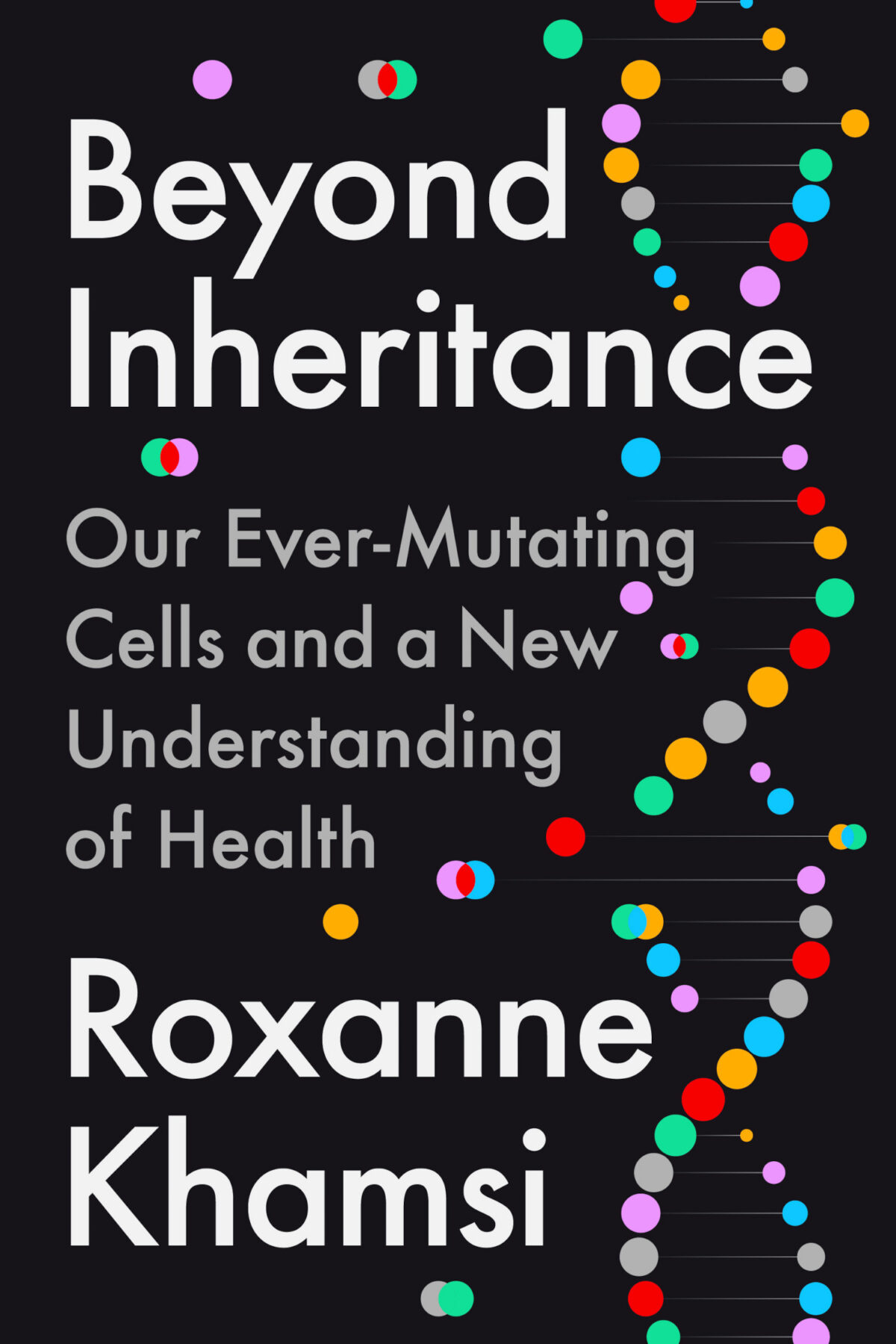
BOOK REVIEW — “Beyond Inheritance: Our Ever-Mutating Cells and a New Understanding of Health,” by Roxanne Khamsi (Riverhead Books, 304 pages).
These mutations are different from those we inherit from our parents — hence the book’s name. They are somatic, which means they occur in non-reproductive cells, starting as soon as the egg and sperm fuse together and continuing throughout our lifetime. “Of the DNA errors that crop up inside us, the vast majority are somatic mutations, which happen from the earliest hours of embryonic development until a person’s final breath,” Khamsi writes. That also goes against the long-favored genetic paradigm that every cell in the same body has the same exact DNA.
Many of these mutations are harmless. Some happen in genes that aren’t crucial for an organism and others can lead to non-functioning cells that die without any impact on our health. Yet certain mutations can imbue cells with specific advantages over their non-mutant cousins so that the former may outcompete the normal cells of the same tissue, leading to cancers, rare diseases, and beyond. The high-turnover cells that replenish their population more often — such as blood cells or the cells of the uterine lining — are more prone to such mutations because they go through a greater number of divisions.
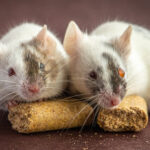
Khamsi lists clever examples of such cellular deviants. If hematopoietic stem cells — which dwell within the bone marrow and give rise to blood cells — develop a mutation in a gene called TET2, their progeny can increase a person’s risk of heart disease. To understand the underlying mechanism for this, researchers have turned to studying mice and found that when blood cells made by such mutants encounter cholesterol molecules, they launch an immune reaction similar to how they would act upon detecting a bacterial toxin. “Inside the human body, this kind of unusual response may result in increased inflammation, which is known to harden blood vessels and cause heart damage,” Khamsi explains.
Certain mutations can imbue cells with specific advantages over their non-mutant cousins so that the former may outcompete the normal cells of the same tissue, leading to cancers, rare diseases, and beyond.
Recent research suggests that endometriosis, a chronic painful disease affecting 1 in 10 women of reproductive age in which tissue resembling endometrium — the lining of the uterus — grows on other abdominal organs, may be a result of the mutated cells that acquired an evolutionary advantage over their tamer brethren. That might allow them to leave their biological home and venture places where they have no business being. One study found that some women with endometriosis had somatic mutations in a number of genes, some of which are linked to cancer. “None of these women had that disease,” Khamsi clarifies, referring to cancer, but the way endometrial cells had invaded their bladder, appendix, and abdominal wall, had an uncanny resemblance of how cancer can take over the body because its cells are usually more competitive than the body’s native ones.
Even more surprising is that our microbial mates, whether friends or foes, can mutate within us. One research effort found that the commensal intestinal bacteria Bacteroides fragilis mutated at least 16 of its genes within the guts of the study participants over two years. Another research effort studied biopsies, taken six years apart, from a patient who refused antibiotic treatment for the gastrointestinal pathogen Helicobacter pylori, citing prior negative experiences with such medicines. During that time, not only did H. pylori acquire genes that promote inflammation, but the pathogen started to change its shape. Some H. pylori bugs switched from the typically helical form to rod-like and others developed more tightly wound helices. Researchers later found that this shapeshifting enabled the germ to better latch onto tissues.
But there’s a silver lining to this cellular gloom. Khamsi cites a few fascinating cases when human bodies manage to self-correct. One includes a young patient with Duchenne muscular dystrophy, a progressive genetic disorder that causes muscle degeneration everywhere in the body, and which had killed three of his uncles. But in this patient’s case, the diseases mostly affected only his left side because “about a quarter of the cells on his right side had overcome the offending genetic error,” Khamsi writes.

Some patients with epidermolysis bullosa, a disease that triggers severe skin blistering, managed to grow patches of healthy skin because the cells in those patches corrected themselves. Two patients with the bubble boy disease, a severe immune system malfunction, managed to repair mutated genes in many of their cells as they grew older. And about 20 percent of individuals with Fanconi anemia, in which bone marrow fails to generate enough blood cells, show signs of self-correction. Khamsi sums up these astounding cases when describing a peculiar finding in liver cells from patients with a disorder called tyrosinemia: The mutated cells “had found a way to mutate again, back to normal.” These findings position mutation in an unexpectedly positive light. “Mutations can have miraculous effects. They can help an organism thrive beyond its initial genetic destiny,” Khamsi writes.
Some researchers studying these diseases attributed these surprising developments to the fact that the healthy cells had developed some sort of Darwinian “selective growth advantage,” Khamsi observes. Indeed, this biological competitiveness seems to be in perfect concordance with Charles Darwin’s principle of natural selection — survival of the fittest, whether at the species level or at the cellular level, within us. Khamsi notes that for over 150 years some scientists have postulated that our cells “operate under the skin the same way that they operate at the species level,” commonly competing with each other, but their “message hasn’t always been heard. She adds that “scientists reporting on the cases of self-healed patients began speaking of them as examples of ‘natural gene therapy.’” Unfortunately, the healthy cells may not always win.
Written in engaging, easily digestible language, the book takes readers on a page-turning journey of pioneering research and the personalities behind it. It also takes you on an emotional rollercoaster. Reading through these examples of cellular battles makes you realize how little control we have over what happens in our own body at the biological level. Aside from the typical wellness directives of eating healthfully, getting enough sleep, exercising, managing stress, and avoiding too much sun exposure, there’s little we can do to fix mutant cells that may wreak havoc in our body at just about any time. It’s a very uncomfortable, sometimes downright distressing thought that makes you pause and think of what may be going awry inside you right now. One can’t help but wonder, how — with all the incessant cellular chaos happening within us — we manage to live as long as we do.
“Studying spontaneous mutations is more than an academic exercise,” Khamsi concludes. “It’s essential to the future of medicine.”
It’s only when you read the chapter titled “When Our Bodies Autocorrect” that you begin to recognize that our bodies have been straightening themselves out for generations, and aren’t that helpless after all. It’s nice to know that we do come equipped with at least some cellular defenses. That ushers in a newfound appreciation of the body’s natural abilities to self-correct. Now you wonder, what is that your body is so skillfully fixing right now.
Scientists are wondering that too. For most of the time in modern medicine, research has focused on understanding what goes wrong in the body and how to fight it to save lives. Perhaps in the next iteration, scientists — equipped with new tools that can sequence the DNA of individual cells and compare the differences — will dig deeper into how to steer the sickly cells into beneficial mutations to reverse diseases. “If scientists could figure out how the body healed itself, perhaps it could inspire new therapies for tough-to-treat rare conditions,” Khamsi writes.
Some such work is already underway. In one promising example in the book, scientists managed to silence the SMYD2 gene, implicated in liver disease, with a novel therapeutic compound. “This molecule was imitating the healing genetic change, and it was working on a scale big enough to actually stop the illness,” Khamsi observes.
Although used only in mouse models so far, this method could pave the way to a whole new generation of medicines, which, instead of killing diseased cells, would coax them back to health. “All of this goes to show that studying spontaneous mutations is more than an academic exercise,” Khamsi concludes. “It’s essential to the future of medicine.”
Fantastic! I plan to have my high school AP/IB Biology seniors read this book review at the beginning of our cell biology unit next year. Perhaps a few will even pick up the book!