






USDA Researchers Instructed to Investigate Foreign Colleagues
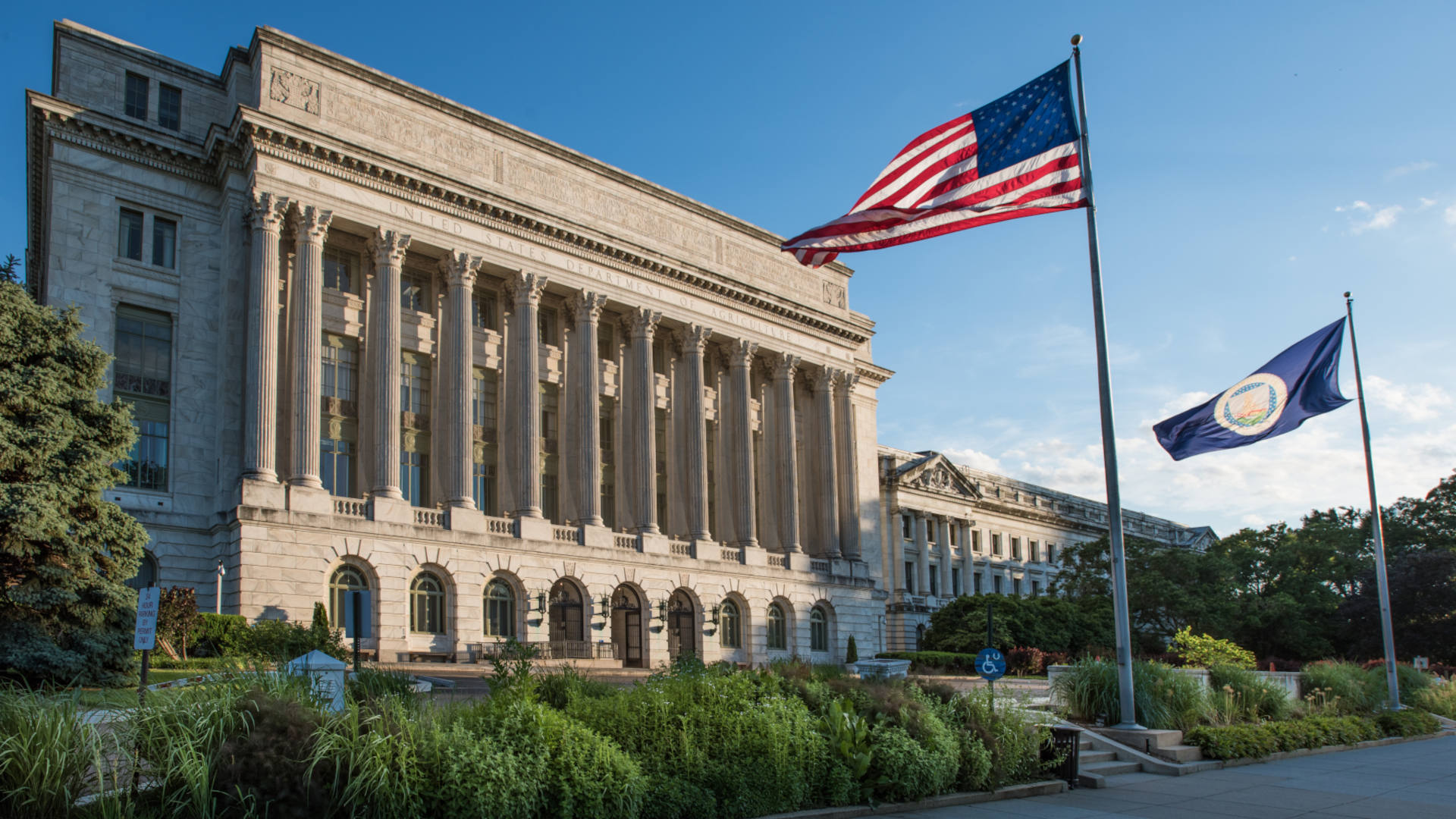
President Donald Trump’s administration is directing employees at the U.S. Department of Agriculture to investigate foreign scientists who collaborate with the agency on research papers for evidence of “subversive or criminal activity.”
This story was originally published by ProPublica. Sign up for ProPublica’s The Big Story newsletter to receive stories like this one in your inbox.
The new directive, part of a broader effort to increase scrutiny of research done with foreign partners, asks workers in the agency’s research arm to use Google to check the backgrounds of all foreign nationals collaborating with its scientists. The names of flagged scientists are being sent to national security experts at the agency, according to records reviewed by ProPublica.
At a meeting last month, USDA supervisors pushed back against the instructions, with one calling it “dystopic” and others expressing shock and confusion, according to an audio recording reviewed by ProPublica.
The USDA frequently collaborates with scientists based at universities in the U.S. and abroad. Some agency workers told ProPublica they were uncomfortable with the new requirement because they felt it could put those scientists in the crosshairs of the administration. Students and postdocs are particularly vulnerable as many are in the U.S. on temporary visas and green cards, the employees said.
Jennifer Jones, director for the Center for Science and Democracy at the Union of Concerned Scientists, called the directive a “throwback to McCarthyism” that could encourage scientists to avoid working with the “best and brightest” researchers from around the world.
“Asking scientists to spy on and report on their fellow co-authors” is a “classic hallmark of authoritarianism,” Jones said. The Union of Concerned Scientists is an organization that advocates for scientific integrity.
Jones, who hadn’t heard of the instructions until contacted by ProPublica, said she had never witnessed policies so extreme during prior administrations or in her former career as an academic scientist.
The new policy applies to pending scientific publications co-authored by employees in the USDA’s Agricultural Research Service, which conducts research on crop yields, invasive species, plant genetics, and other agricultural issues.
USDA supervisors pushed back against the instructions, with one calling it “dystopic” and others expressing shock and confusion.
The USDA instructed employees to stop agency researchers from collaborating on or publishing papers with scientists from “countries of concern,” including China, Cuba, Iran, North Korea, Russia, and Venezuela.
But the agency is also vetting scientists from nations not considered “countries of concern” before deciding whether USDA researchers can publish papers with them. Employees are including the names of foreign co-authors from nations such as Canada and Germany on lists shared with the department’s Office of Homeland Security, according to records reviewed by ProPublica. That office leads the USDA’s security initiatives and includes a division that works with federal intelligence agencies. The records don’t say what the office plans to do with the lists of names.
Asked about the changes, the USDA sent a statement noting that in his first term, President Donald Trump signed a memorandum designed to strengthen protections of U.S.-funded research across the federal government against foreign government interference. “USDA under the Biden Administration spent four years failing to implement this directive,” the statement said. The agency said Agriculture Secretary Brooke Rollins last year rolled out “long-needed changes within USDA’s research enterprise, including a prohibition on authoring a publication with a foreign national from a country of concern.”
International research has been essential to the Agricultural Research Service’s work, according to a page of the USDA website last updated in 2024: “From learning how to mitigate diseases before they reach the United States, to testing models and crops in diverse growing conditions, to accessing resources not available in the United States, cooperation with international partners provides solutions to current and future agricultural challenges.”
Still, the U.S. government has long been worried about agricultural researchers acting as spies, sometimes with good reason. In 2016, the Chinese scientist Mo Hailong was sentenced to three years in prison for conspiring to steal patented corn seeds. And in 2022, Xiang Haitao, admitted to stealing a trade secret from Monsanto.
National security questions have also been raised about recent increases in foreign ownership of agricultural land. In 2022, Congress allocated money for a center to educate U.S. researchers about how to safeguard their data in international collaborations.
Since Trump took office last year, foreign researchers have faced increased obstacles. In March last year, a French researcher traveling to a conference was denied entry to the U.S. after a search of his phone at the airport turned up messages critical of Trump. The National Institutes of Health blocked researchers from China, Russia, and other “countries of concern” from accessing various biomedical databases last spring. And in August, the Department of Homeland Security proposed shortening the length of time foreign students could remain in the country.
But the latest USDA instructions represent a significant escalation, casting suspicion on all researchers from outside the U.S. and asking agency staff to vet the foreign nationals they collaborate with. It’s unclear if employees at other federal agencies have been given similar directions.
Employees are including the names of foreign co-authors from nations such as Canada and Germany on lists shared with the department’s Office of Homeland Security.
The new USDA policy was announced internally in November and followed a July memo from Rollins that highlighted the national security risks of working with scientists who are not U.S. citizens.
“Foreign competitors benefit from USDA-funded projects, receiving loans that support overseas businesses, and grants that enable foreign competitors to undermine U.S. economic and strategic interests,” Rollins wrote in the memo. “Preventing this is the responsibility of every USDA employee.” The memo called for the department to “place America First” by taking a number of steps, including scrutinizing and making lists of the agency’s arrangements to work with foreign researchers and prohibiting USDA employees from participating in foreign programs to recruit scientists, “malign or otherwise.”
Rollins, a lawyer who studied agricultural development, co-founded the pro-Trump America First Policy Institute before being tapped to head the agency.
There have long been restrictions on collaborating with researchers from certain countries, such as Iran and China. But these new instructions create blanket bans on working with scientists from “countries of concern.”
In a late November email to staff members of the Agricultural Research Service at one area office, a research leader instructed managers to immediately stop all research with scientists who come from — or collaborate with institutions in — “countries of concern.”
The email also instructed employees to reject papers with foreign authors if they deal with “sensitive subjects” such as “diversity” or “climate change.” National security concerns were listed as another cause for rejection, with USDA research service employees instructed to ask if a foreigner could use the research against American farmers.
Get Our Newsletter

In the audio recording of the December meeting, some employees expressed alarm about the instructions to investigate their fellow scientists. The “part of figuring out if they are foreign … by Googling is very dystopic,” said one person at the meeting, which involved leadership from the Agricultural Research Service.
Faced with questions about how to ascertain the citizenship of a co-author, another person at the meeting said researchers should do their best with a Google search, then put the name on the list “and let Homeland Security do their behind the scenes search.”
Rollins’ July memo specifies that, within 60 days of receiving a list of “current arrangements” that involve foreign people or entities, the USDA’s Office of Homeland Security along with its offices of Chief Scientist and General Counsel should decide which arrangements to terminate. The USDA laid off 70 employees from “countries of concern” last summer as a result of the policy change laid out in the memo, NPR reported.
The USDA and Department of Homeland Security declined to answer questions about what happens to the foreign researchers flagged by the staff beyond potentially having their research papers rejected.
The new instructions create blanket bans on working with scientists from “countries of concern.”
The documents also suggested new guidance would be issued on Jan. 1, but the USDA employees ProPublica interviewed said that the vetting work was continuing and that they had not received any written updates. The staff spoke on the condition of anonymity because they weren’t authorized to talk publicly.
Scientists are often evaluated based on their output of new scientific research. Delaying or denying publication of pending papers could derail a researcher’s career. Over the past 40 years, the number of international collaborations among scientists has increased across the board, according to Caroline Wagner, an emeritus professor of public policy at the Ohio State University. “The more elite the researcher, the more likely they’re working at the international level,” said Wagner, who has spent more than 25 years researching international collaboration in science and technology.
The changes in how the USDA is approaching collaboration with foreign researchers, she said, “will certainly reduce the novelty, the innovative nature of science and decrease these flows of knowledge that have been extremely productive for science over the last years.”
Lisa Song reports on the EPA and related agencies that oversee the environment, climate change, and science for ProPublica.
Sharon Lerner covers health and the environment and the agencies that govern them for ProPublica.
Mica Rosenberg contributed reporting. Adriana Pera contributed research.