








Tracing Bird Flu’s Ground Zero on Texas Dairy Farms
In early February, dairy farmers in the Texas Panhandle began to notice sick cattle. The buzz soon reached Darren Turley, executive director of the Texas Association of Dairymen: “They said there is something moving from herd to herd.”
Nearly 60 days passed before veterinarians identified the culprit: a highly pathogenic strain of the bird flu virus, H5N1. Had it been detected sooner, the outbreak might have been swiftly contained. Now it has spread to at least eight other states, and it will be hard to eliminate.
At the moment, the bird flu hasn’t adapted to spread from person to person through the air like the seasonal flu. That’s what it would take to give liftoff to another pandemic. This lucky fact could change, however, as the virus mutates within each cow it infects. Those mutations are random, but more cows provide more chances of stumbling on ones that pose a grave risk to humans.
Why did it take so long to recognize the virus on high-tech farms in the world’s richest country? Because even though H5N1 has circulated for nearly three decades, its arrival in dairy cattle was most unexpected. “People tend to think that an outbreak starts at Monday at 9 a.m. with a sign saying, ‘Outbreak has started,’” said Jeremy Farrar, chief scientist at the World Health Organization. “It’s rarely like that.”
By investigating the origins of outbreaks, researchers garner clues about how they start and spread. That information can curb the toll of an epidemic and, ideally, stop the next one. On-the-ground observations and genomic analyses point to Texas as ground zero for this outbreak in cattle. To backtrack events in Texas, KFF Health News spoke with more than a dozen people, including veterinarians, farmers, and state officials.
An early indication that something had gone awry on farms in northwestern Texas came from devices hitched to collars on dairy cows. Turley describes them as “an advanced fitness tracker.” They collect a stream of data, such as a cow’s temperature, its milk quality, and the progress of its digestion — or, rather, rumination — within its four-chambered stomach.
What farmers saw when they downloaded the data in February stopped them in their tracks. One moment a cow seemed perfectly fine, and then four hours later, rumination had halted. “Shortly after the stomach stops, you’d see a huge falloff in milk,” Turley said. “That is not normal.”
Even though H5N1 has circulated for nearly three decades, its arrival in dairy cattle was most unexpected.
Tests for contagious diseases known to whip through herds came up negative. Some farmers wondered if the illness was related to ash from wildfires devastating land to the east.
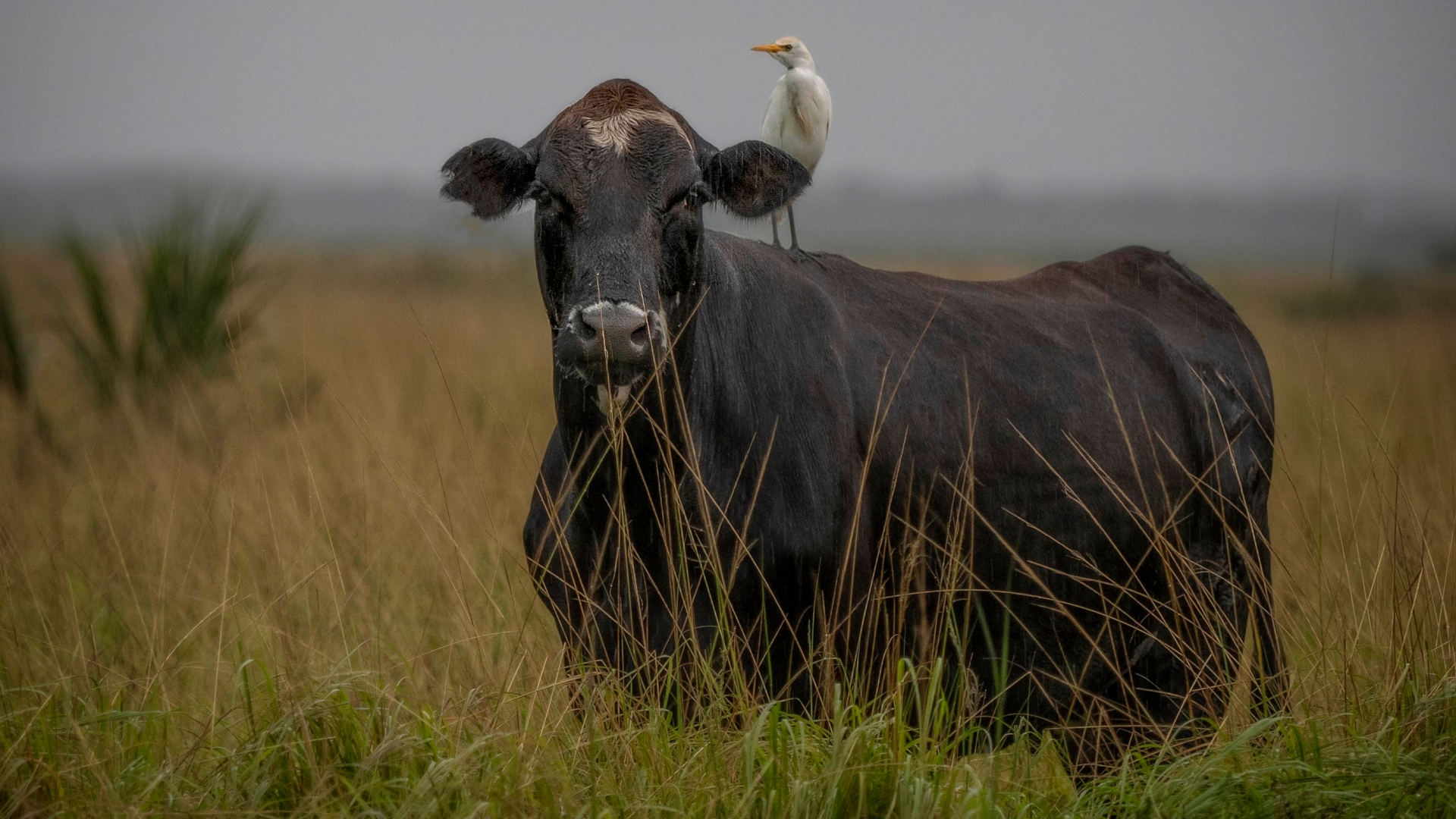
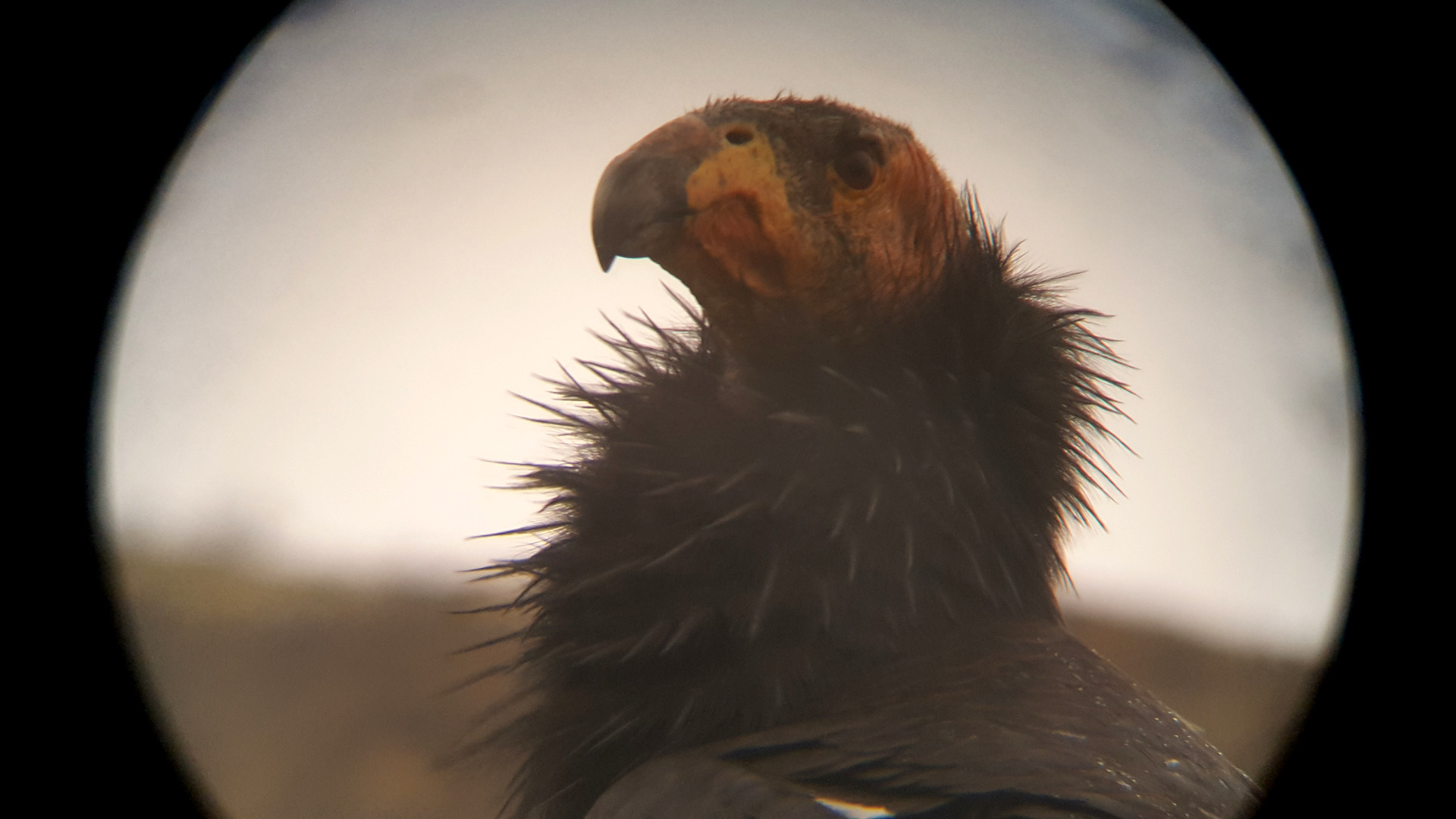
In hindsight, Turley wished he had made more of the migrating geese that congregate in the panhandle each winter and spring. Geese and other waterfowl have carried H5N1 around the globe. They withstand enormous loads of the virus without getting sick, passing it on to local species, like blackbirds, cowbirds, and grackles, that mix with migrating flocks.
But with so many other issues facing dairy farmers, geese didn’t register. “One thing you learn in agriculture is that Mother Nature is unpredictable and can be devastating,” Turley said. “Just when you think you have figured it out, Mother Nature tells you you do not.”
One dairy tried to wall itself off, careful not to share equipment with or employ the same workers as other farms, Turley recalled. Its cattle still became ill. Turley noted that the farm was downwind of another with an outbreak, “so you almost think it has to have an airborne factor.”
On March 7, Turley called the Texas Animal Health Commission. They convened a One Health group with experts in animal health, human health, and agriculture to ponder what they called the “mystery syndrome.” State veterinarians probed cow tissue for parasites, examined the animals’ blood, and tested for viruses and bacteria. But nothing explained the sickness.
They didn’t probe for H5N1. While it has jumped into mammals dozens of times, it rarely has spread between species. Most cases have been in carnivores, which likely ate infected birds. Cows are mainly vegetarian.
“If someone told me about a milk drop in cows, I wouldn’t think to test for H5N1 because, no, cattle don’t get that,” said Thomas Peacock, a virologist at the Pirbright Institute of England who studies avian influenza.
“One thing you learn in agriculture is that Mother Nature is unpredictable and can be devastating. Just when you think you have figured it out, Mother Nature tells you you do not.”
Postmortem tests of grackles, blackbirds, and other birds found dead on dairy farms detected H5N1, but that didn’t turn the tide. “We didn’t think much of it since we have seen H5N1-positive birds everywhere in the country,” said Amy Swinford, director of the Texas A&M Veterinary Medical Diagnostic Laboratory.
In the meantime, rumors swirled about a rash of illness among workers at dairy farms in the panhandle. It was flu season, however, and hospitals weren’t reporting anything out of the ordinary.
Bethany Boggess Alcauter, director of research at the National Center for Farmworker Health, has worked in the panhandle and suspected farmworkers were unlikely to see a doctor even if they needed one. Clinics are far from where they live, she said, and many don’t speak English or Spanish — for instance, they may speak Indigenous languages such as Mixtec, which is common in parts of Mexico. The cost of medical care is another deterrent, along with losing pay by missing work — or losing their jobs — if they don’t show up. “Even when medical care is there,” she said, “it’s a challenge.”
What finally tipped off veterinarians? A few farm cats died suddenly and tested positive for H5N1. Swinford’s group — collaborating with veterinary labs at Iowa State and Cornell universities — searched for the virus in samples drawn from sick cows.
“On a Friday night at 9 p.m., March 22, I got a call from Iowa State,” Swinford said. Researchers had discovered antibodies against H5N1 in a slice of a mammary gland. By Monday, her team and Cornell researchers identified genetic fragments of the virus. They alerted authorities. With that, the U.S. Department of Agriculture announced that H5N1 had hit dairy cattle.
Get Our Newsletter

Recalling rumors of sick farmworkers, Texas health officials asked farmers, veterinarians, and local health departments to encourage testing. About 20 people with coughs, aches, irritated eyes, or other flu-like symptoms stepped forward to be swabbed. Those samples were shipped to the Centers for Disease Control and Prevention. All but one were negative for H5N1. On April 1, the CDC announced this year’s first case: a farmworker with an inflamed eye that cleared up within days.
Thirteen dairy farms in the panhandle had been affected, said Brian Bohl, director of field operations at the Texas Animal Health Commission. Farmers report that outbreaks among the herds last 30 to 45 days and most cows return to milking at their usual pace.
The observation hints that herds gain immunity, if temporarily. Indeed, early evidence shows that H5N1 triggers a protective antibody response in cattle, said Marie Culhane, a professor of veterinary population medicine at the University of Minnesota. Nonetheless, she and others remain uneasy because no one knows how the virus spreads, or what risk it poses to people working with cattle.
Although most cows recover, farmers said the outbreaks have disrupted their careful timing around when cattle milk, breed, and birth calves.
About 20 people with coughs, aches, irritated eyes, or other flu-like symptoms stepped forward to be swabbed. All but one were negative for H5N1.
Farmers want answers that would come with further research, but the spirit of collaboration that existed in the first months of the Texas outbreak has fractured. Federal restrictions have triggered a backlash from farmers who find them unduly punishing, given that pasteurized milk and cooked beef from dairy cattle appear to pose no risk to consumers.
The rules, such as prohibiting infected cattle from interstate travel for 30 days, pose a problem for farmers who move pregnant cattle to farms that specialize in calving, to graze in states with gentler winters, and to return home for milking. “When the federal order came out, some producers said, ‘I’m going to quit testing,’” Bohl said.
In May, the USDA offered aid, such as up to $10,000 to test and treat infected cattle. “The financial incentives will help,” Turley said. But how much remains to be seen.
Federal authorities have pressed states to extract more intel from farms and farmworkers. Several veterinarians warn such pressure could fracture their relationships with farmers, stifling lines of communication.
“When the federal order came out, some producers said, ‘I’m going to quit testing.’”
Having fought epidemics around the world, Farrar cited examples of when strong-arm surveillance pushed outbreaks underground. During an early 2000s bird flu outbreak in Vietnam, farmers circumvented regulations by moving poultry at night, bribing inspection workers, and selling their goods through back channels. “Learning what drivers and fears exist among people is crucial,” Farrar said. “But we always seem to realize that at a later date.”
A powerful driver in the U.S.: Milk is a $60 billion industry. Public health is also bound to bump up against politics in Texas, a state so aggrieved by pandemic restrictions that lawmakers passed a bill last year barring health officials from recommending covid-19 vaccines.
Texas Agriculture Commissioner Sid Miller said that when he heard that federal agents with the CDC and USDA were considering visits to farms — including those where farmers reported the cattle had recovered — he advised against it. “Send federal agents to dairy that’s not sick?” he said. “That doesn’t pass the smell test.”
Peacock said genomic analyses of H5N1 viruses point to Texas as ground zero for the cattle epidemic, emerging late last year.
“All of these little jigsaw puzzle pieces corroborate undetected circulation in Texas for some time,” said Peacock, an author on one report about the outbreak.
Evidence suggests that either a single cow was infected by viruses shed from birds — perhaps those geese, grackles, or blackbirds, he said. Or the virus spilled over from birds into cattle several times, with only a fraction of those moving from cow to cow.
Sometime in March, viruses appear to have hitched a ride to other states as cows were moved between farms. The limited genomic data available links the outbreak in Texas directly to others in New Mexico, Kansas, Ohio, North Carolina, and South Dakota. However, the routes are imprecise because the USDA hasn’t attached dates and locations to data it releases.
For all of Undark’s coverage of the global Covid-19 pandemic, please visit our extensive coronavirus archive.
Researchers don’t want to be caught off guard again by the shape-shifting H5N1 virus, and that will require keeping tabs on humans. Most, if not all, of about 900 people diagnosed with H5N1 infections worldwide since 2003 acquired it from animals, rather than from humans, Farrar said. About half of those people died.
Occasional tests of sick farmworkers aren’t sufficient, he said. Ideally, a system is set up to encourage farmworkers, their communities, and health care workers to be tested whenever the virus hits farms nearby.
“Health care worker infections are always a sign of human-to-human transmission,” Farrar said. “That’s the approach you want to take — I am not saying it’s easy.”
Amy Maxmen is a public health local editor and correspondent for KFF Health News.
This story was originally published by KFF Health News, a national newsroom that produces in-depth journalism about health issues and is one of the core operating programs at KFF — an independent source of health policy research, polling, and journalism.