










What Would a Trump Takeover Mean for Greenland’s Resources?
Even before U.S. forces seized Venezuela’s president, Nicolás Maduro, President Donald Trump reiterated his long-stated desire to take control of Greenland, the autonomous Danish territory.
“We need Greenland for national security,” Trump said publicly last month.
This story was originally published by Inside Climate News and is reproduced here as part of the Climate Desk collaboration.
Those comments took on new urgency after the military intervention in Venezuela. Within a day, Trump was again speaking of seizing control of Greenland. Now European leaders appear to be taking the president’s comments seriously.
Last week, the leaders of Denmark, France, Germany, Italy, Poland, Spain, and the United Kingdom issued a joint statement saying that security in the Arctic should be achieved through cooperation by NATO allies, and reiterating the territory’s sovereignty.
“Greenland belongs to its people,” the statement said. “It is for Denmark and Greenland, and them only, to decide on matters concerning Denmark and Greenland.”
Despite that statement, White House Press Secretary Karoline Leavitt said last Wednesday that the administration was discussing how it might buy Greenland. In response to a question about military involvement, Leavitt said, “all options are always on the table.”
While Trump last month stressed that his interest in the Arctic island was driven by security, “not minerals,” members of his administration had previously listed Greenland’s mineral wealth as a reason to gain control.
Trump has put Venezuela’s oil wealth at the center of his administration’s intervention in that country. Now, the prospect of U.S. action in Greenland raises the question of what that could mean for the island’s substantial mineral deposits and for its environment.
According to the U.S. Geological Survey, Greenland holds significant undiscovered oil and gas reserves and the world’s eighth-largest stores of rare earth minerals, a group of metals with a wide range of applications, from renewable energy development and batteries to military hardware. The Trump administration has made securing access to those minerals a top priority, given China’s dominance of the supply chain for many key metals.
But Greenland’s harsh climate, remote location, and environmental laws and regulations make it difficult or impossible to extract most of the island’s resources.
In 2021, Greenland prohibited new offshore oil and gas exploration, with officials citing climate change as a key reason for the ban. There are a few active leases in one offshore area held by a British company that were issued before the ban. That company has said it is working with U.S.-based firms to drill, though there is no active production.
Greenland holds significant undiscovered oil and gas reserves and the world’s eighth-largest stores of rare earth minerals.
The island’s mineral deposits have attracted more interest from foreign firms, yet those companies face substantial obstacles, said Jørgen Hammeken-Holm, Greenland’s permanent secretary of the Ministry of Business, Mineral Resources, Energy, Justice and Gender Equality.
One large deposit is currently off-limits due to restrictions on mining of uranium, which is mixed together with the rare earth minerals. One company had secured a permit to explore the area more than a decade ago, and successfully lobbied to overturn a ban on uranium mining to open access to the reserves. But local opponents grew alarmed at the prospect of radioactive pollution, and they launched a campaign that helped prompt new limits on uranium mining in 2021.
That company, now called Energy Transition Minerals, is currently pursuing an arbitration claim against Greenland seeking access to the minerals or billions of dollars in compensation.
Get Our Newsletter

A second rare-earth deposit is licensed to a U.S.-owned company. But that project, too, has faced hurdles and is not in production, Hammeken-Holm said, because of the difficulty of processing the minerals once they are extracted.
Hammeken-Holm said he is confident that the territory’s environmental regulations would prevent adverse impacts from any mining, but that so far most projects have failed to advance due to a lack of funding.
While Hammeken-Holm declined to comment on the Trump administration’s efforts to gain control of Greenland, he said the country has not engaged with his government over access to minerals.
“We haven’t heard anything from the United States,” Hammeken-Holm said, adding that European countries have been more vocal about their interest to support mining in Greenland. “The United States has had a distance to us the last year since Trump came on board.”
In 2021, Greenland prohibited new offshore oil and gas exploration, with officials citing climate change as a key reason for the ban.
A White House spokesperson declined to answer questions for this article, referring instead to Leavitt’s press briefing.
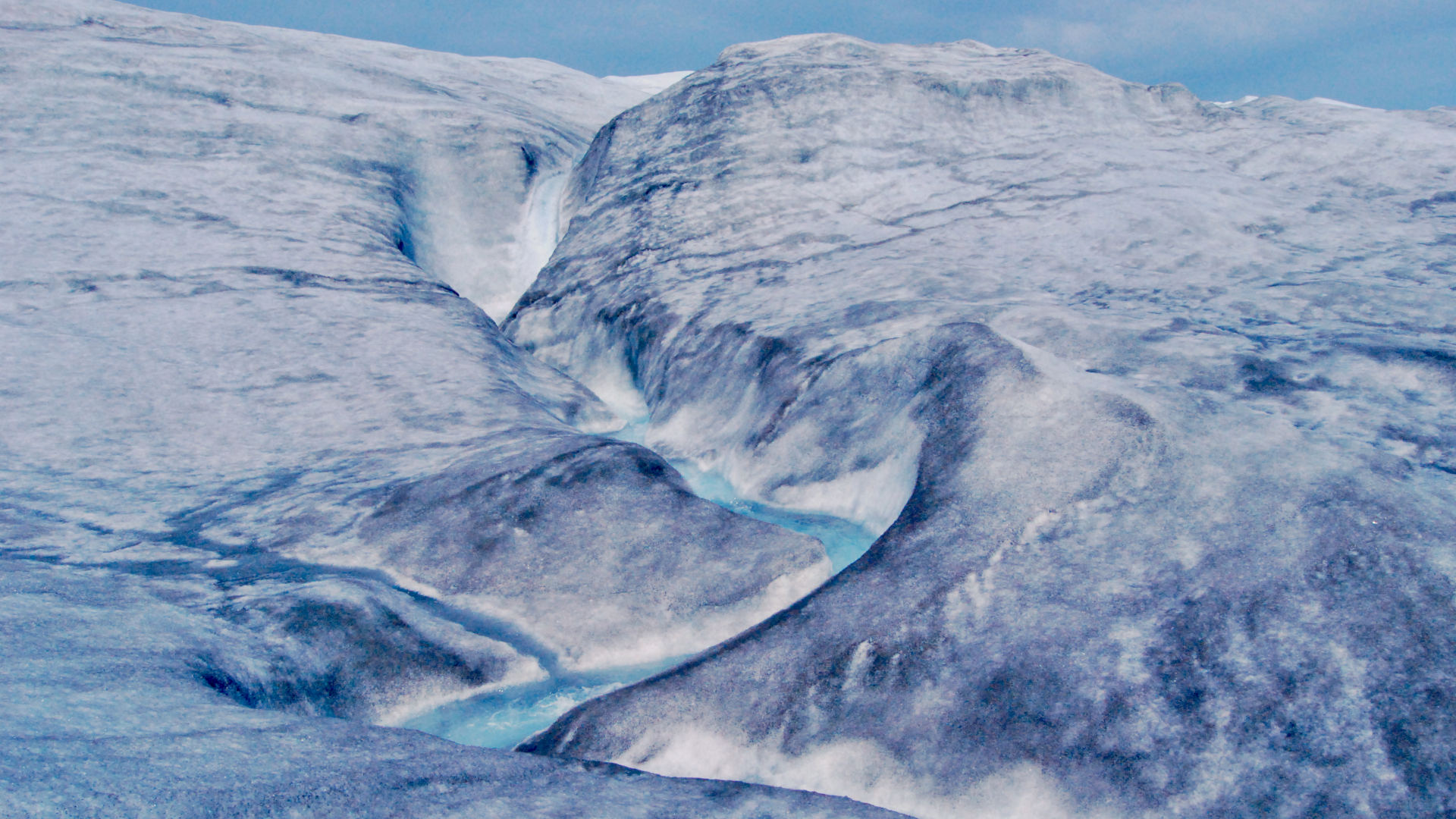
The most far-reaching environmental impacts of any actions in Greenland are likely tied to the ice sheet that covers most of its surface. That ice, nearly two miles thick at the center, holds enough water to raise global sea levels by more than 20 feet if it all melted. The frozen mass has been melting rapidly in recent years as one of the clearest, gravest signs of a warming climate.
That melting will continue, no matter who controls the territory, so long as the world continues to burn fossil fuels and send their carbon pollution into the air.
Nicholas Kusnetz is a reporter for Inside Climate News.