

Who isn’t obsessed with metamorphosis? From the children’s classic “The Very Hungry Caterpillar,” who gorges himself to fuel his dramatic shape-shift, to legless tadpoles that grow to hop over 20 times their body length, we’re transfixed by creatures that appear in one guise, then transform overnight into something else. It’s the closest thing to magic that hard-and-fast biology can conjure.
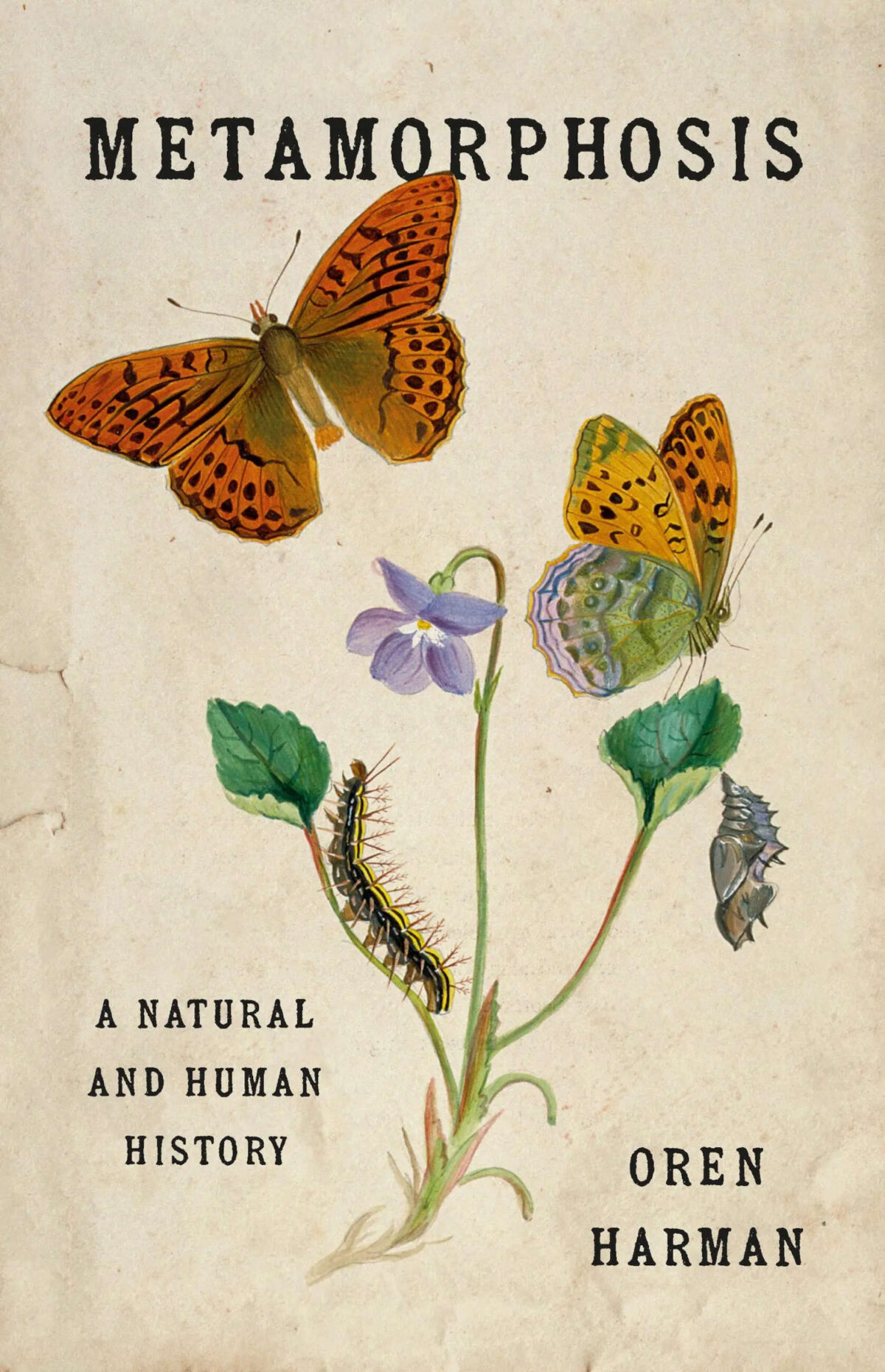
BOOK REVIEW — “Metamorphosis: A Natural and Human History,’’ by Oren Harman (Basic Books, 384 pages).
In “Metamorphosis: A Natural and Human History,” science historian Oren Harman indulges our collective obsession and expands its frontiers in startling ways. Inspired by the impending birth of his own third child, Harman explores the striking minutiae of biological change, mining his research to reflect more broadly on personal and social transformation. “Moons sliver, seeds sprout, empires rise and crumble,” he writes. “Everything in the world around us, including our bodies, is in flux.”
Flux and its accompanying drama are natural territory for Harman, whose 2010 book “The Price of Altruism” profiles geneticist George Price — a renegade who staged his own metamorphosis from deadbeat father to protector of the destitute. In his newest book, Harman gets even more granular. Not only does he dissect the mechanics of how living things shift from one form to another, he probes the lives of lesser-known scientists who were bent on figuring out how it happens.
Among the figures Harman brings to light is 17th century German naturalist and painter Maria Sibylla Merian, who was so driven to record the stages of insect metamorphosis that she roamed far-flung fields at all hours of the day and night to collect her quarry: caterpillars that would one day become peppered moths, gypsy moths, or peacock butterflies. Then she housed them in the attic and waited — sometimes weeks, sometimes months — for their development to proceed.
When an insect finally began to transform, Merian “dropped all else,” Harman writes. “Then she would rush for her pigments, her brushes and vellum. Sometimes in the dead of night.” Like the creatures she studied, Merian herself went through a series of radical changes: from sectarian to independent thinker, devout wife to divorcee, city dweller to jungle explorer.
Thanks to the foundation Merian and other pioneers laid, scientists began to decipher genetic and chemical signals that directed sweeping transformation. Pupating caterpillars might appear to dissolve temporarily into slime, but as British entomologist Vincent Wigglesworth discovered, their journey is far more ordered — and more continuous — than it appears. What seems like slime actually contains hidden “discs” of cells, ready to morph into wings and eyes and sex organs when activated by the right chemical signals. “The pupa was not, in fact, a bunch of goo and mush,” Harman writes. “Instead, everything inside had its place.”
In some of the book’s most mind-bending sections, Harman describes examples of living transformation that overturn all our preconceived ideas.
For the most part, Harman argues, the crux of metamorphosis is commitment. A well-timed dose of the right hormone determines whether a caterpillar’s outer skin hardens into a pupa case or remains soft and pliant. Some of these points of commitment close off other possible paths: Once the pupa’s hard chrysalis has formed, it cannot be unmade. The caterpillar is on an irreversible flume ride to maturity, for better or worse.
In some of the book’s most mind-bending sections, however, Harman describes examples of living transformation that overturn all our preconceived ideas. We tend to assume metamorphosis proceeds in linear fashion from simple forms like larva to more mature ones like butterflies, much as early evolutionists theorized that creatures became more perfect with each generation.
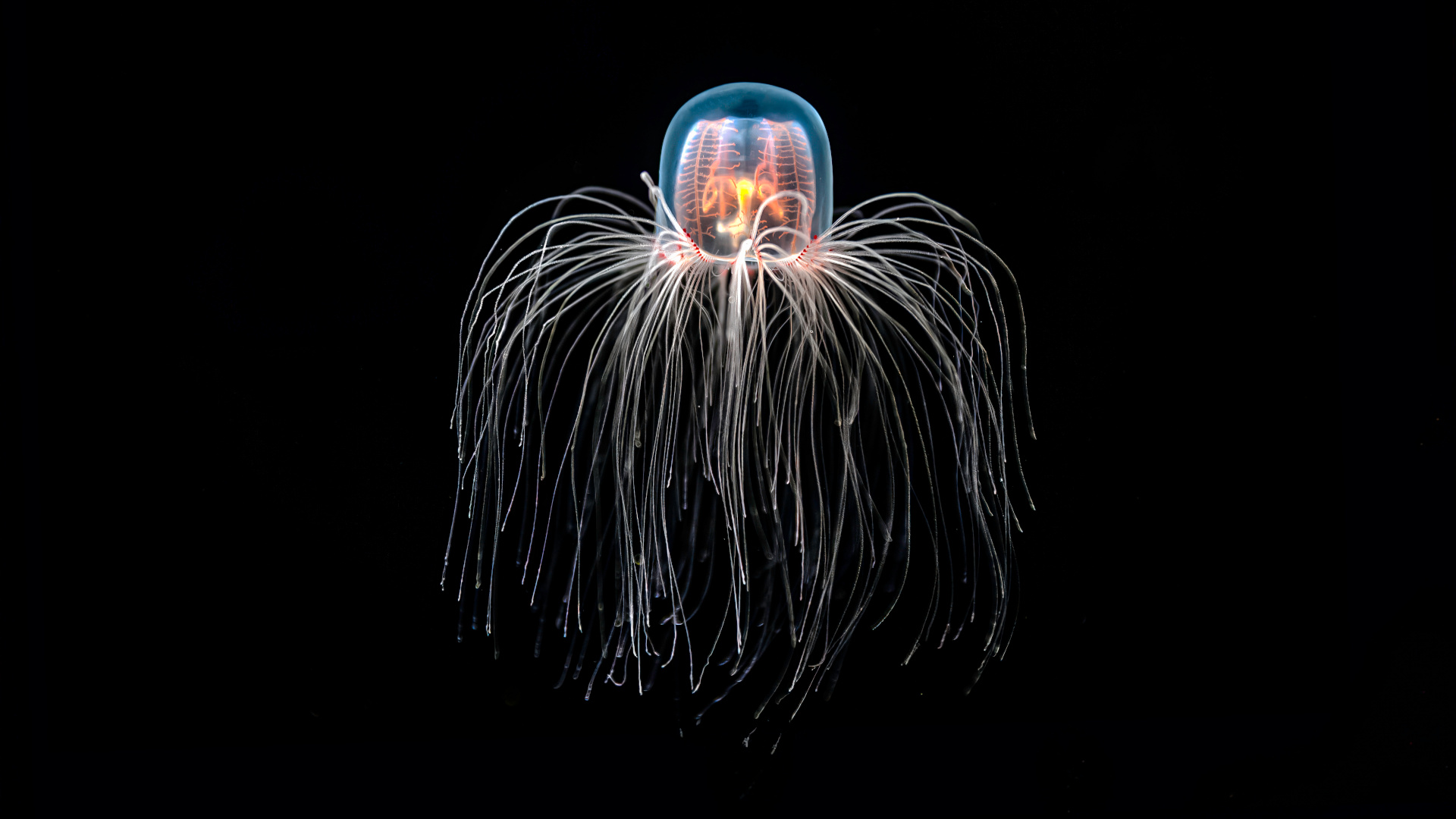
But creatures like the so-called immortal jellyfish, Turritopsis dohrnii, can revert to earlier stages of development when doing so ensures their survival. When stress or starvation loom, Turritopsis stages its own metamorphic regression. “Sacrificing its ability to move, and its sexual organs, it flips upside down, folds into itself, forms an outer shell, and latches to the ground as a polyp,” Harman writes. “Spectacularly, the adult is a baby once again.”
Harman takes full advantage of his subject’s poetic richness. Animated by wonder, his descriptions reveal the true scope of processes often siloed off in scientific journals. “Why in the world all this wasted energy and time?” he muses. “Prick a pupa with a pin and watch an oozing sludge trickle down; the entombed caterpillar has dissolved into goo in order to rebuild itself virtually from scratch.”

His references unspool the rich history of our human obsession with metamorphosis, from Daphne, the Greek mythical nymph who turned into a tree, to the Persian mystic Rumi, who held that transformation was always a return to the self. Harman also waxes philosophical: Amid all of this change, he asks — some of it gradual, some monumental — can a core self ever be said to remain constant?
Given the boundless nature of his topic, Harman brought what he calls a “spirit of loose-jointedness” to writing “Metamorphosis” — a reflection, he says, of the openness and uncertainty with which he approached the project. This loose-jointedness sometimes turns vertiginous. Some of the book’s braided narratives are hard to follow, ranging forward and backward in time; we learn about Maria Sibylla Merian’s late-in-life research trip to Suriname before we learn that a messy split from her husband preceded it.
Yet in other ways, Harman’s open and loose approach seems fitting, encouraging readers to draw their own endless parallels between biological and social transformation. At the heart of his inquiry is the idea that humans are one of the few species that can direct our own metamorphosis, at least to some extent.
Unlike caterpillars, we are not simply a hidden jumble of primordial wings and mouthparts destined to appear at an appointed time. We can choose what to evolve toward and why — and, in existential matters if not physical ones, how dramatically we want to transform (or, like the immortal jellyfish, revert to an earlier stage).
At the heart of his inquiry is the idea that humans are one of the few species that can direct our own metamorphosis, at least to some extent.
As metamorphosis experiments show, apparent overnight transformations are often highly choreographed and months or years in the making — mapped out, in some cases, from the very beginning of development. But much of this transformation happens out of view; it is seamless and invisible until it can no longer be denied. That is how what looks like a goo-filled chrysalis cracks open to reveal a butterfly, and how states and regimes that appear deathless shrivel suddenly from within. “If science teaches us anything,” Harman writes, “it’s that the certainties we hold are destined to be overturned.”
What’s astounding about “Metamorphosis” is the audacity of its scope: its hunger to understand not just the transitions in plain sight, but those that build beneath the surface, waiting for the right moment to burst forth.
what a rich subject, so excited to read, thank you
sounds like a great book. thanks for the great review. just ordered!