









How to Euthanize a Whale


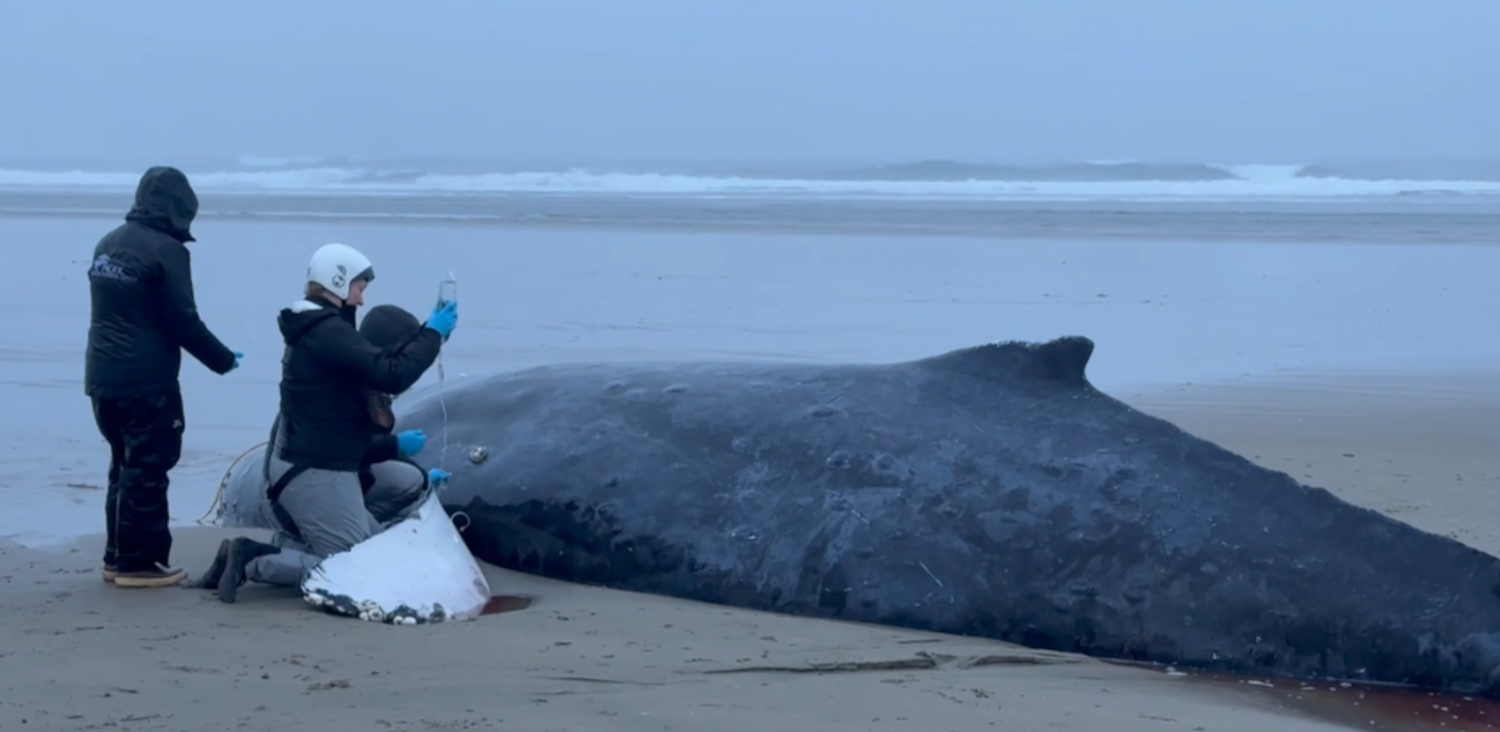
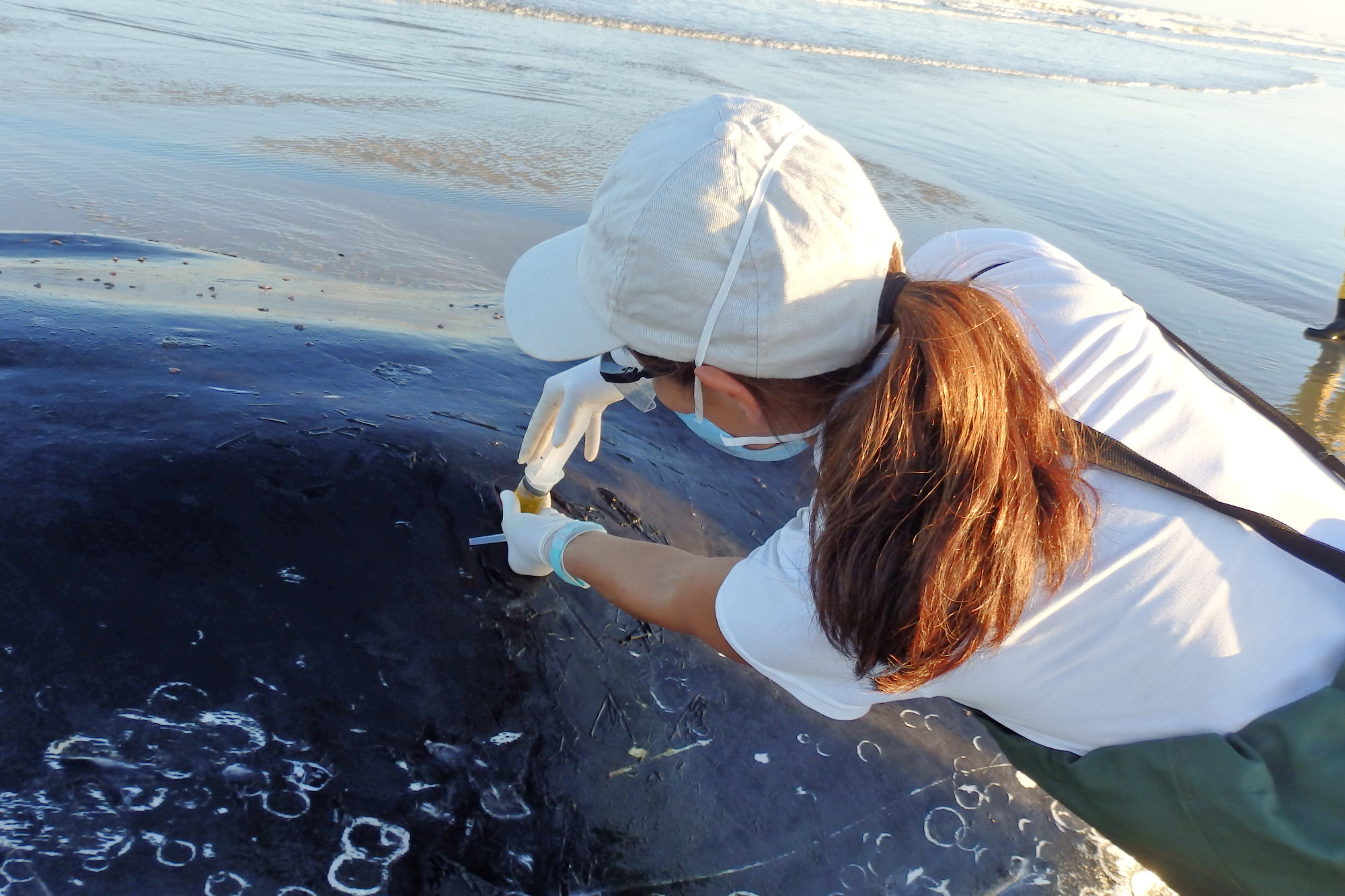
Alissa Deming pierced the whale’s heart on her first try. Bright arterial blood shot up the needle as she started pumping potassium chloride, a medication used to euthanize animals, into the unconscious juvenile’s heart.
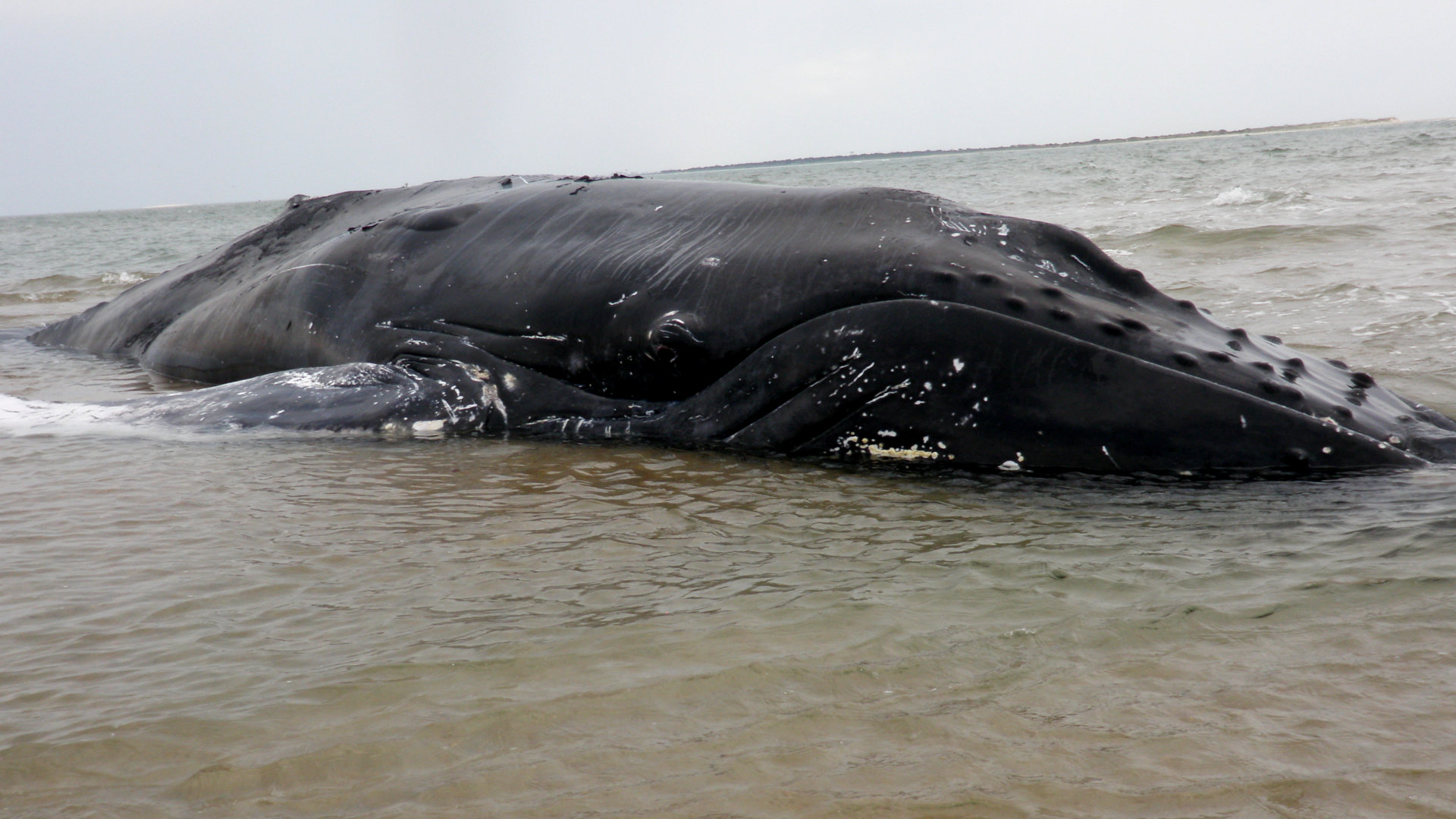
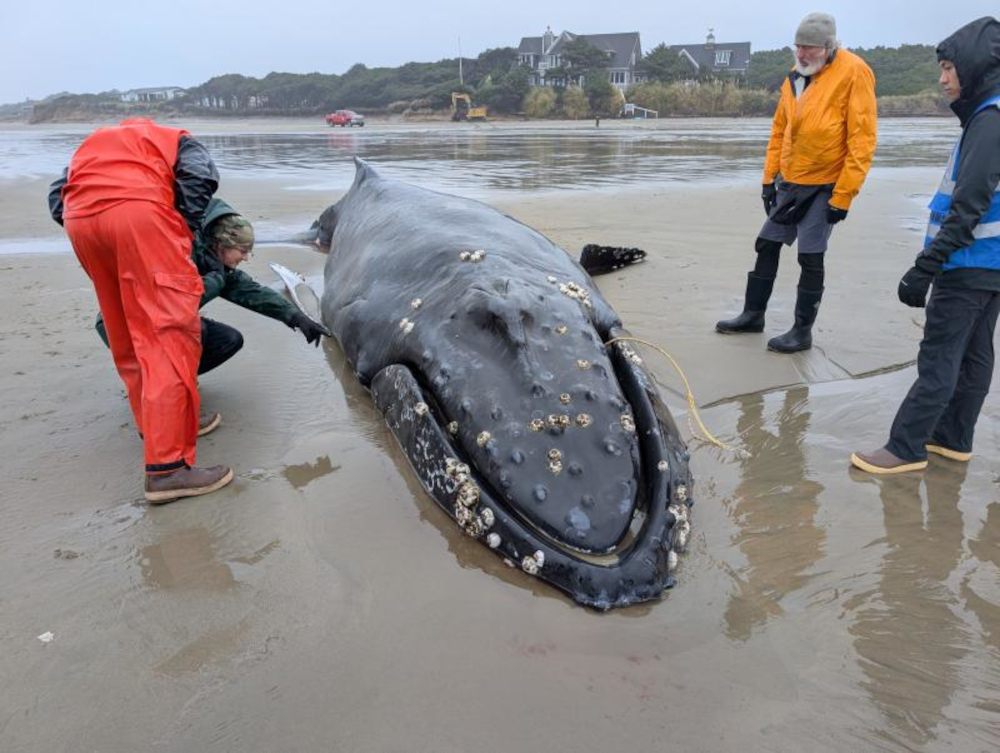
The young humpback whale — nicknamed “Hope” on social media — had landed on a beach near Yachats, Oregon two nights earlier after becoming entangled in crabbing gear. An earlier rescue effort had failed in the face of 10-foot swells, and the whale’s health was rapidly declining as it struggled to breathe. Deming, a veterinarian from Laguna Beach, California, had made the difficult decision to end its suffering in consultation with a veterinarian at the National Oceanic and Atmospheric Administration. Now, the whale lay still as Deming finished pumping the solution into its heart. Minutes later, Hope was dead.
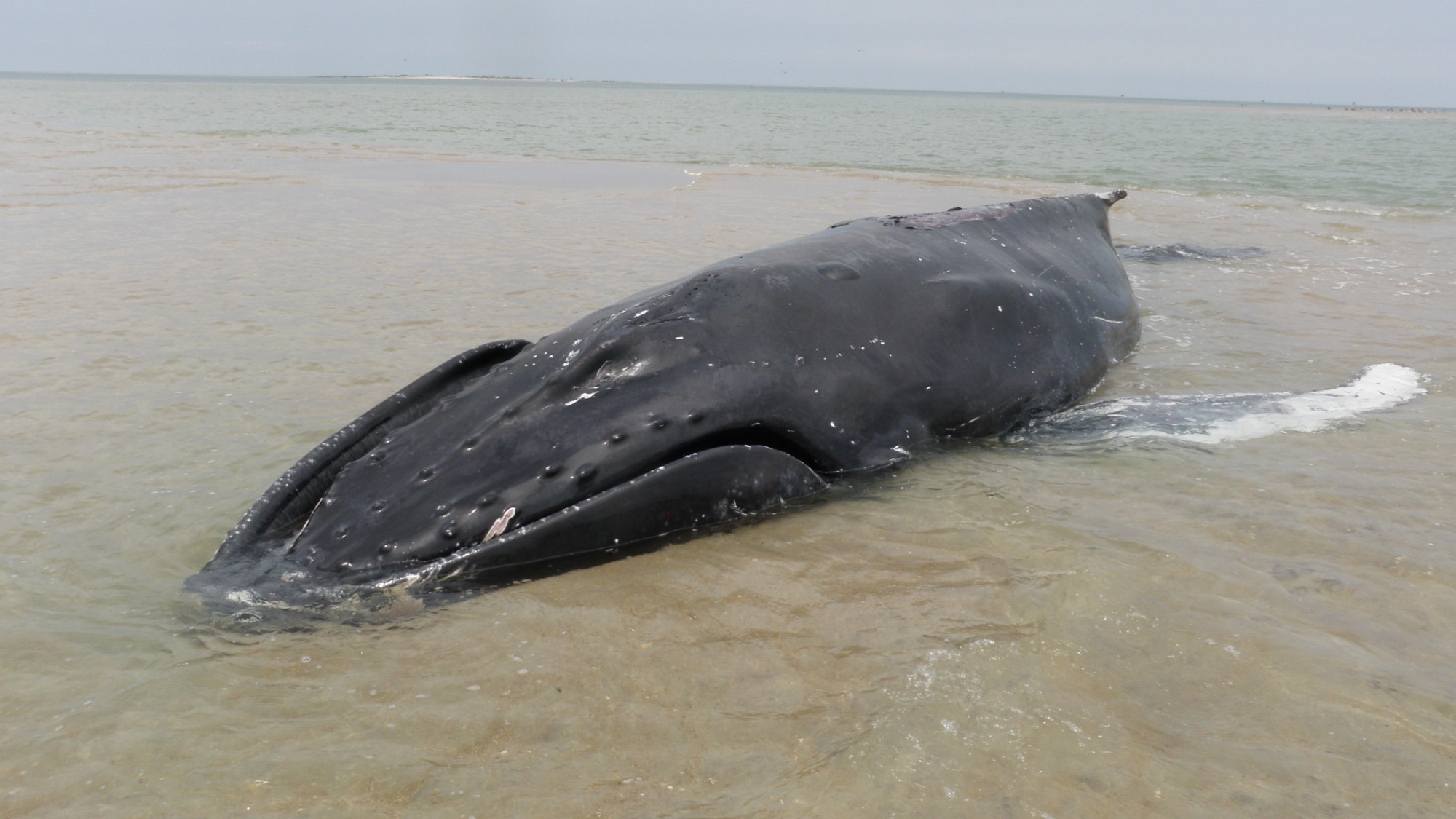
Beached whales rarely survive their encounter with land. Whales are so heavy that without the support of the sea, they go into shock and slowly suffocate under the weight of their own bodies. It can take days for these giants to die.
For decades, experts have longed for a way to ease their pain. But whale euthanasia comes with unique challenges. Whales are so big, their biology so bizarre, and the risk of environmental contamination so present, that the typical means of euthanizing animals — such as shooting them through the brain or injecting them with lethal chemicals like pentobarbital — haven’t always been available.
Now, researchers like Craig Harms, a veterinarian from North Carolina State University in Raleigh, have developed ways to address the mammoth challenge of whale euthanasia.
Euthanizing whales isn’t always popular. But for Deming, being able to provide a humane death was “a little bit of a beacon of hope.”
There’s nothing new about killing whales. Archaeological evidence suggests that people have been hunting them for at least 5,000 years, and some global whale populations declined starting in the 1600s amid a boom in demand for whale oil, meat, and other products.
Nowadays, people in the Western world tend to think of whales as highly intelligent creatures in need of protection. Under federal law, all marine mammal strandings must be reported to NOAA, and any animal in distress must receive an emergency response.
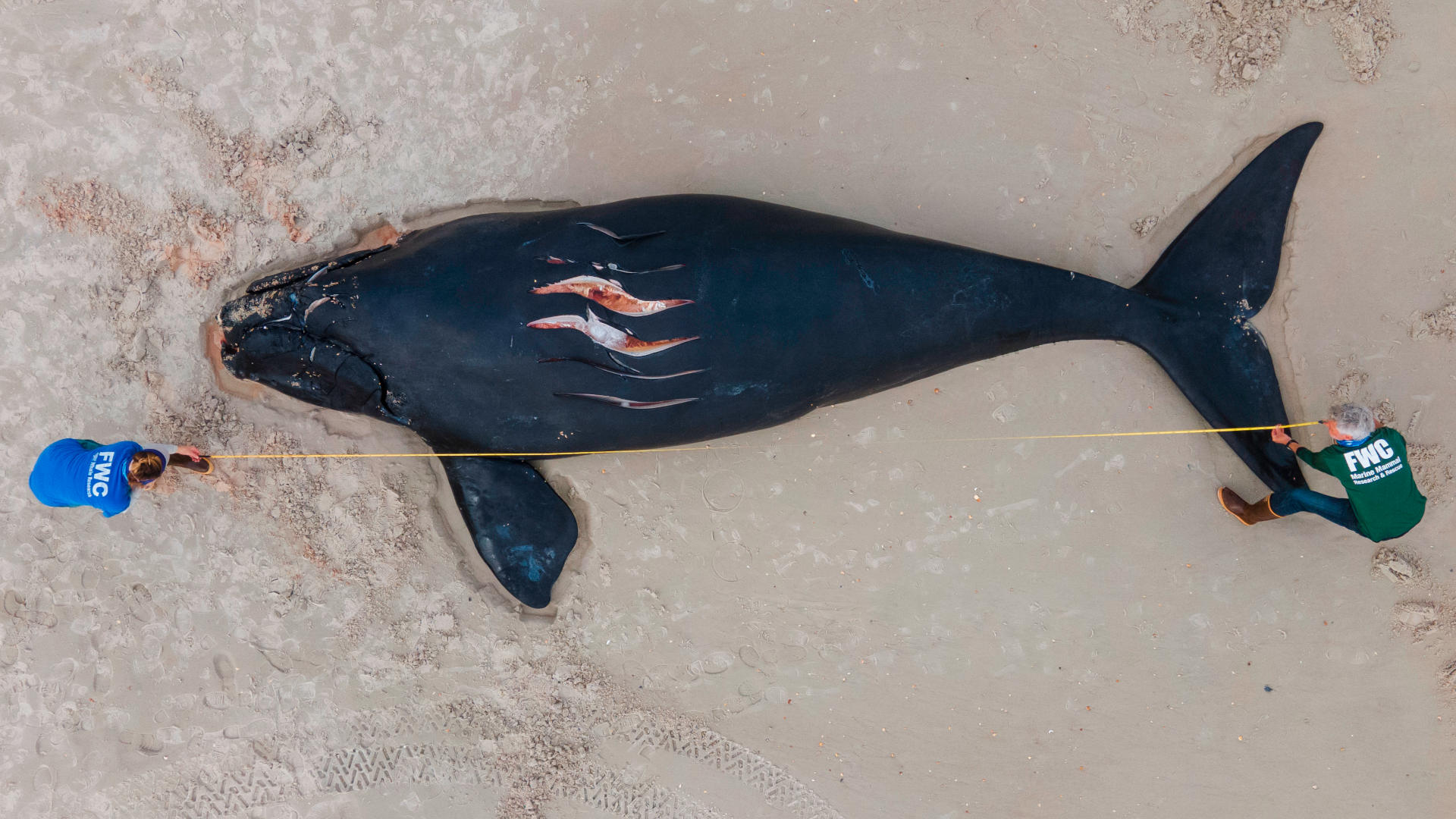
Live whale strandings are rare. In 2024, the latest year with data, 178 large whales washed up on United States shores, and many of them were already dead. But when live whales do make landfall, the experience is akin to “a very bad car crash,” explained Lauren Brandkamp, stranding coordinator at Whale and Dolphin Conservation – North America in Plymouth, Massachusetts.
Many of these whales are already sick or injured, and some whales die within minutes or hours of stranding. But others can spend over a week on a beach — during which time the weight of gravity breaks their ribs, crushes internal organs, and causes them to slowly suffocate.
Some whales can save themselves. In 2023, a gray whale and her calf that washed ashore on the Oregon coast managed to ride the rising tide back into the ocean. Humans can also sometimes lend a helping hand. In 2024, conservation workers and residents in New Zealand helped refloat 30 stranded pilot whales by carrying the several-thousand-pound animals back into the water on large sheets.
The whale lay still as Deming finished pumping the solution into its heart. Minutes later, Hope was dead.
But for the most part, rescue by human means is impossible, and most live whales that end up on land die. Larger whales — say, a 110,000-pound North Atlantic right whale — can’t easily be lifted without causing additional injury. Trying to save a whale can also be dangerous for the would-be-rescuers. In Yachats, when members of the public tried to dig trenches to help push Hope back into the ocean, a large wave rolled Hope over, nearly crushing some of the volunteers. “Frankly, the people who were involved with that are quite lucky nobody got hurt or killed,” said Jim Rice, stranding program manager at Oregon State University’s Marine Mammal Institute in Newport.
Responders are left with a choice: leave whales to a slow and excruciating death, or find a way to hurry them along.
Exsanguination — the process of bleeding an animal to death — has been used to kill whales both on land and at sea for millennia. However, few veterinarians consider bleeding to death, which can take long, painful hours, as meeting the definition of euthanasia, which aims to kill an animal painlessly.
Support Undark Magazine
Undark is a non-profit, editorially independent magazine covering the complicated and often fractious intersection of science and society. If you would like to help support our journalism, please consider making a donation. All proceeds go directly to Undark’s editorial fund.
Other options include shooting whales or injecting them with lethal chemicals. But these methods are “often virtually impossible in large whales,” said Natalie Arrow, a veterinarian at British Divers Marine Life Rescue in Uckfield, England. For instance, normal bullets simply don’t penetrate some whale species’ thick skulls.
Some countries, including Australia, have developed ways of using targeted explosives placed near the brains of whales to quickly kill them. People in New Zealand use a repurposed World War Two-era anti-tank weapon to pierce through the thick skulls of sperm whales. These techniques can allow Māori and other Indigenous communities to use whale carcasses for cultural practices without fear of chemical contamination.
Few veterinarians consider bleeding to death, which can take long, painful hours, as meeting the definition of euthanasia, which aims to kill an animal painlessly.
But other parts of the world, such as the United States, have struggled to follow their lead, likely due to concerns around public perception. As for using lethal chemicals, finding a pharmaceutical company that can quickly make whale-sized doses of euthanasia chemicals — and figuring out what size dose to dispense —can be a challenge.
Those chemicals can also leach into the environment. Moving a whale carcass ranges from challenging to essentially impossible depending on how big it is and where it lands. That means that sometimes, whatever chemicals are injected into a whale can be eaten by scavengers. A 2011 study concluded that a dog became sick after eating the remains of a humpback whale euthanized with pentobarbital, commonly used to euthanize pets. Bald eagles have also become ill or died from eating pentobarbital-infused cattle.
How, then, can veterinarians end the suffering of a multi-dozen-ton animal without causing harm to other wildlife?
Craig Harms didn’t set out to invent a new way to euthanize whales. But in 2009, the Raleigh veterinarian and researcher reached a breaking point.
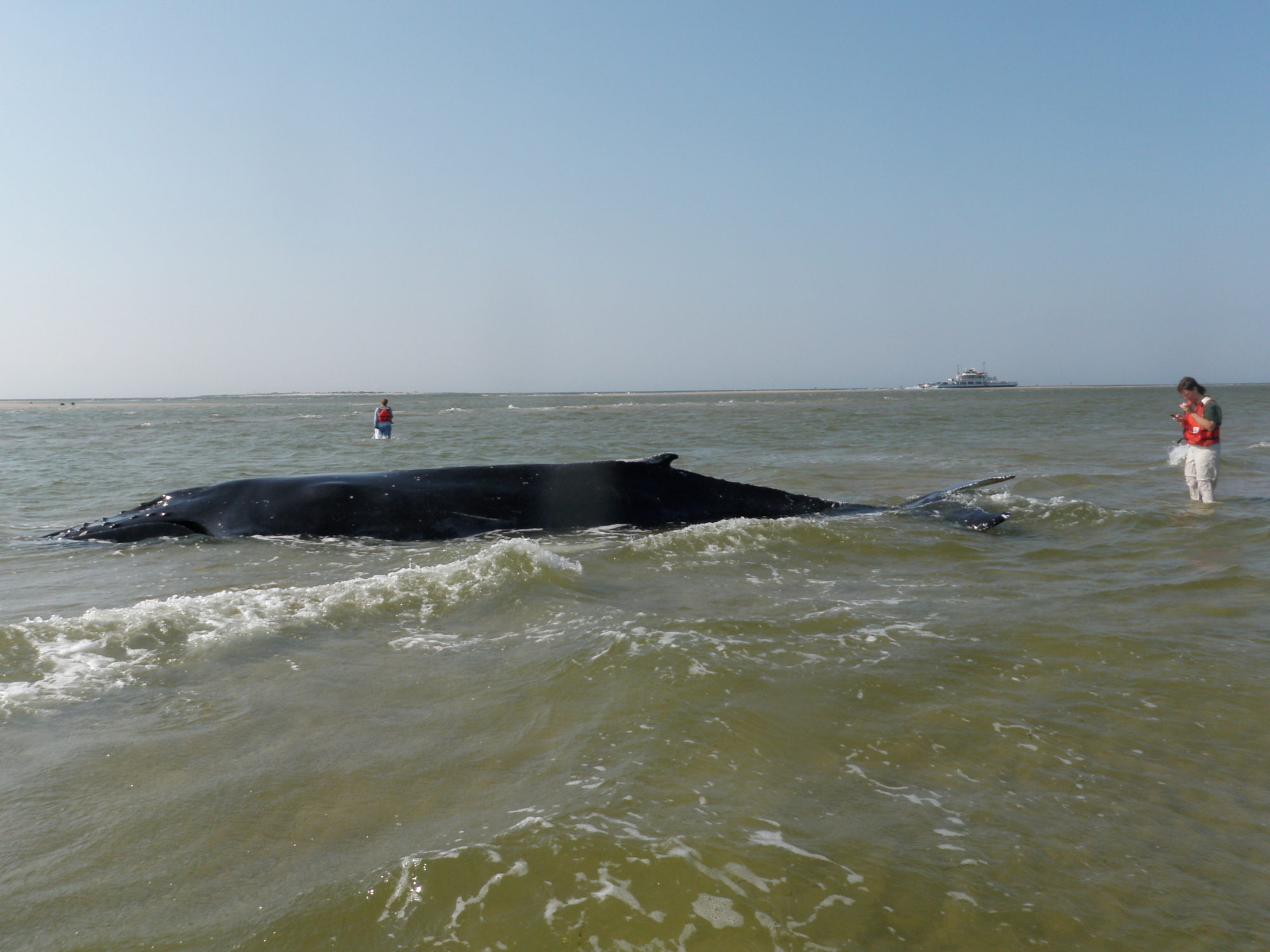
That January, Harms was called to the southern Outer Banks to ease the suffering of a beached whale. When he arrived, Harms found a 2-year-old North Atlantic right whale lying in inches of water at low tide. Resignation rippled through its 32-foot-long body as it struggled to breathe. Its spine was deformed, likely from where it had become entangled in fishing gear, and its skin was blistering in the sun. The whale was going to die. The only question was when.
Harms had plenty of experience euthanizing pets and other kinds of wildlife. But he was at a loss as to what to do with a whale. For two days, “I basically threw everything and the kitchen sink at it,” Harms recalled. Eventually, he cut a major artery near the whale’s tail and waited for it to bleed out. It took a little over an hour for the whale to die. Later, Harms would write that the euthanasia had proved “unsatisfactory.”
“That was a serious understatement,” he said in an interview with Undark.
Harms had plenty of experience euthanizing pets and other kinds of wildlife. But he was at a loss as to what to do with a whale. “I basically threw everything and the kitchen sink at it.”
After his failed euthanasia in 2009, Harms spoke about his experience with colleagues at conferences. They, too, were struggling with similar experiences. They’d heard stories of people shoving plastic down the blowholes of beached whales to try and suffocate the animals, using misplaced explosives, and trying other methods that were well intentioned but “maybe not great,” said Harms.
Over the next few months, Harms and his colleagues discussed how to humanely kill a whale without causing any lingering environmental issues. One idea they floated was to inject a large dose of potassium chloride straight into a whale’s heart. Potassium chloride is cheap, widely available, and, unless injected, is unlikely to harm scavengers.
It also had precedent. In 1999, Canadian provincial and federal workers used potassium chloride to euthanize a fin whale on Prince Edward Island. But there was still a major issue: injecting anything straight into a heart is far from painless.
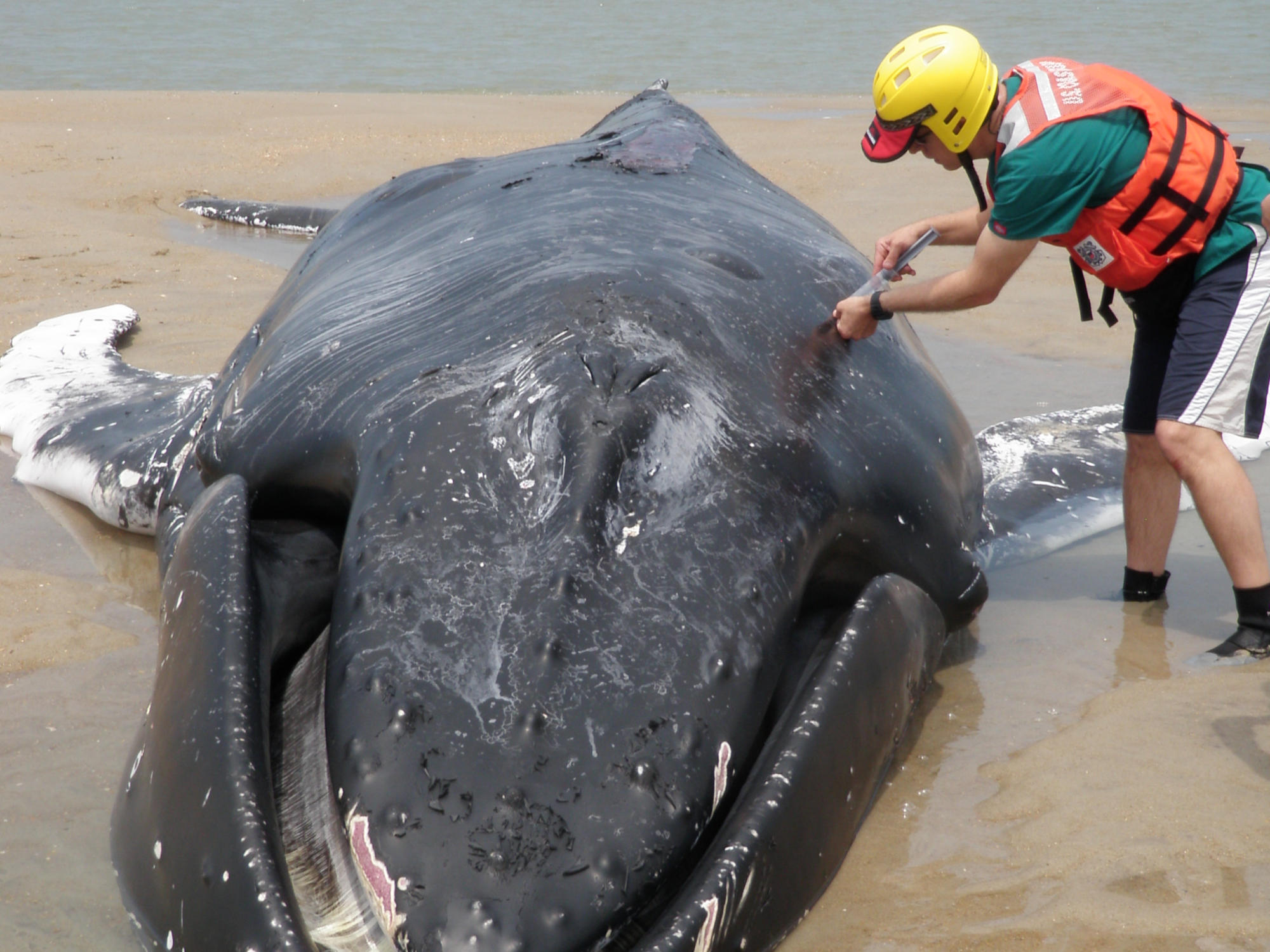
To deal with this, Harms and his colleagues decided they would need to use a cocktail of sedatives to render a whale completely insensible before injecting potassium chloride. But the challenge wasn’t over yet. Veterinarians need to use 12 to 18-inch needles just to get through a whale’s blubber and get deep into the muscle. Reaching the heart would be a whole other issue. In the end, Bill McLellan, the recently retired stranding coordinator at University of North Carolina Wilmington, designed the potassium chloride injector: a bore needle up to four feet long, attached to a gallon-size container of potassium chloride solution.
Now, they just needed to see if it worked.
Four living, large whales — three humpbacks and a minke — happened to land along North Carolina’s coast between 2010 and 2013. Harms was called out to tend to each of these animals, and the results were immediate. The first humpback Harms had exsanguinated had taken an hour to die. His second case, a 29-foot humpback whale, passed within seven minutes of the injection.
Since Harms and his team published the method in 2014, potassium chloride has been used to euthanize over 30 large whales in the United States. It’s now considered best practice by NOAA Fisheries for animals left on the beach, and has been adopted abroad, including in Brazil, where veterinarian Cristiane Kolesnikovas of the R3 Animal Association in Florianopolis has used it to euthanize four beached whales since 2015.
Like other veterinarians who specialize in marine mammals, Kolesnikovas has been called to tend to more beached whales in recent years. Kolesnikovas, who has worked at R3 for 24 years, saw her first dying whale just 15 years ago. Since then, eight live whales have run aground in her state alone.
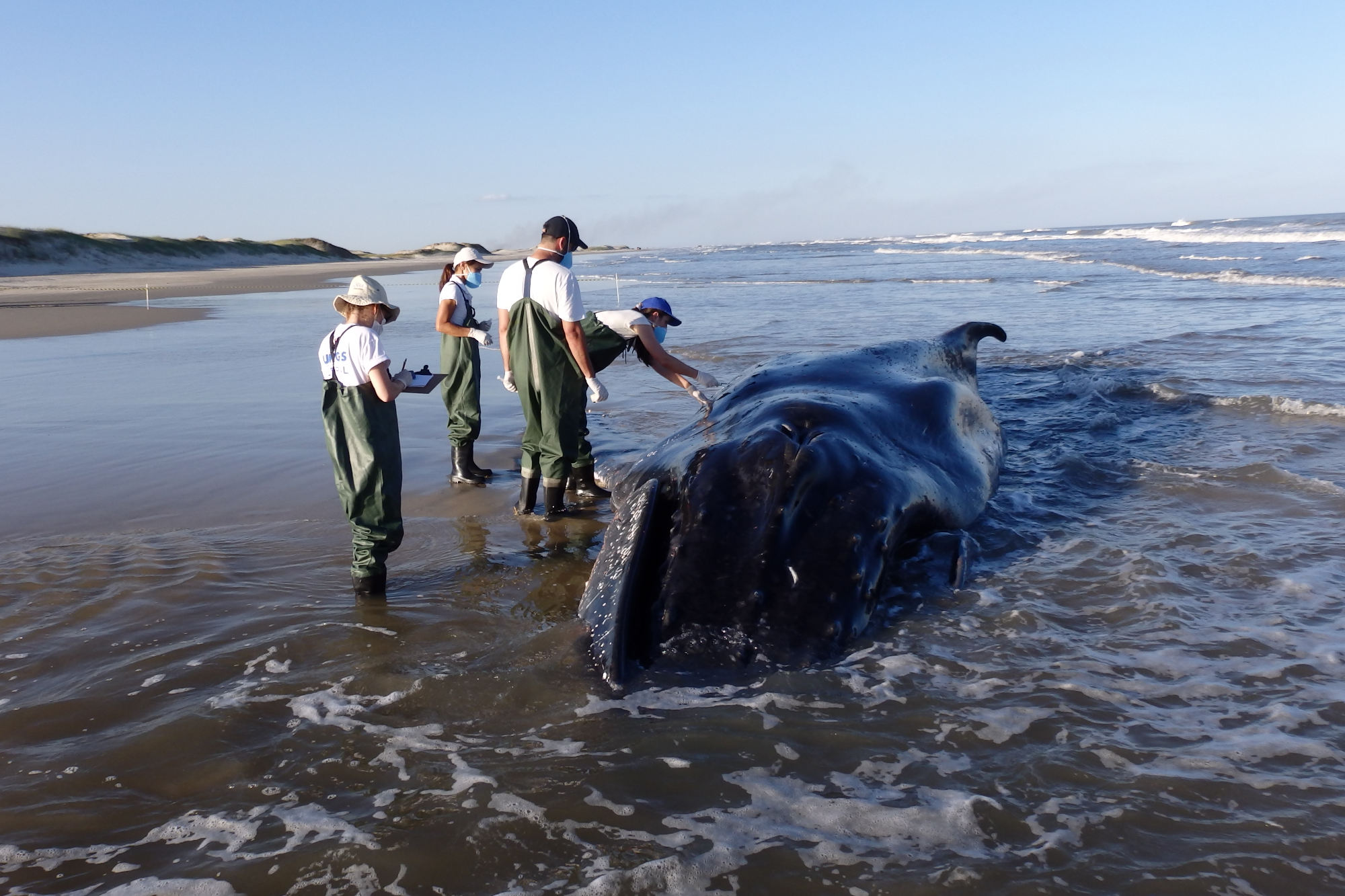
Brazil isn’t the only place that has seen a rise in whale strandings. In April 2017, NOAA declared an Unusual Mortality Event after 42 humpback whales washed ashore, some with signs of blunt-force trauma. In Scotland, scientists have noted a threefold increase in whales making landfall between 1992 and 2022. These events may be on the rise because some whale populations are recovering, so there are simply more opportunities for whales to wash ashore. Necropsies from whales that do wash up suggest that humans also play a role — with many whales either entangled in fishing gear or showing signs of running afoul of ships.
As demand grows, veterinarians continue to work on ways to improve the potassium chloride method. For instance, Harms and his colleagues have developed an app called “Whale Scale,” which, among other things, is intended to help people in the field quickly estimate what dosage they need to treat whales based on species and length.
Still, whale euthanasia continues to be controversial. When Hope was euthanized in November, some people on social media accused the team of preemptively killing the whale so they could study it.
“Euthanizing whales is not always very popular,” said Harms. But as a veterinarian, having a technique that works is “just a huge relief.”
UPDATE: On second reference, Craig Harms was erroneously referred to as Chris Harms. The name has been corrected.
Freda Kreier is a freelance journalist based out of Washington, D.C. Her work focuses on science and the natural world.