










Interview: Christopher Borgert on an Infamous Glyphosate Paper


In 2000, three researchers published a peer-reviewed paper concluding that, “under present and expected conditions of use,” Roundup, a formulation of the herbicide glyphosate, “does not pose a health risk to humans.” In the acknowledgments, the authors thanked scientists at Monsanto, the manufacturer of Roundup, for their “significant contributions” to the paper.
The paper went on to be cited hundreds of times in the scientific literature, including in influential government assessments of glyphosate safety. More recently, it’s become a flashpoint in debates over the herbicide.
Herbicide manufacturers — and some regulatory agencies — say glyphosate is safe for humans when used as directed. Its proponents also describe it as crucial for modern agriculture. Many scientists and advocates say there’s compelling evidence it causes cancers and other health harms, and they accuse corporate-backed scientists of systematically downplaying the risks of glyphosate.
In the past decade, that influential 2000 paper has become one piece of evidence in glyphosate critics’ case.
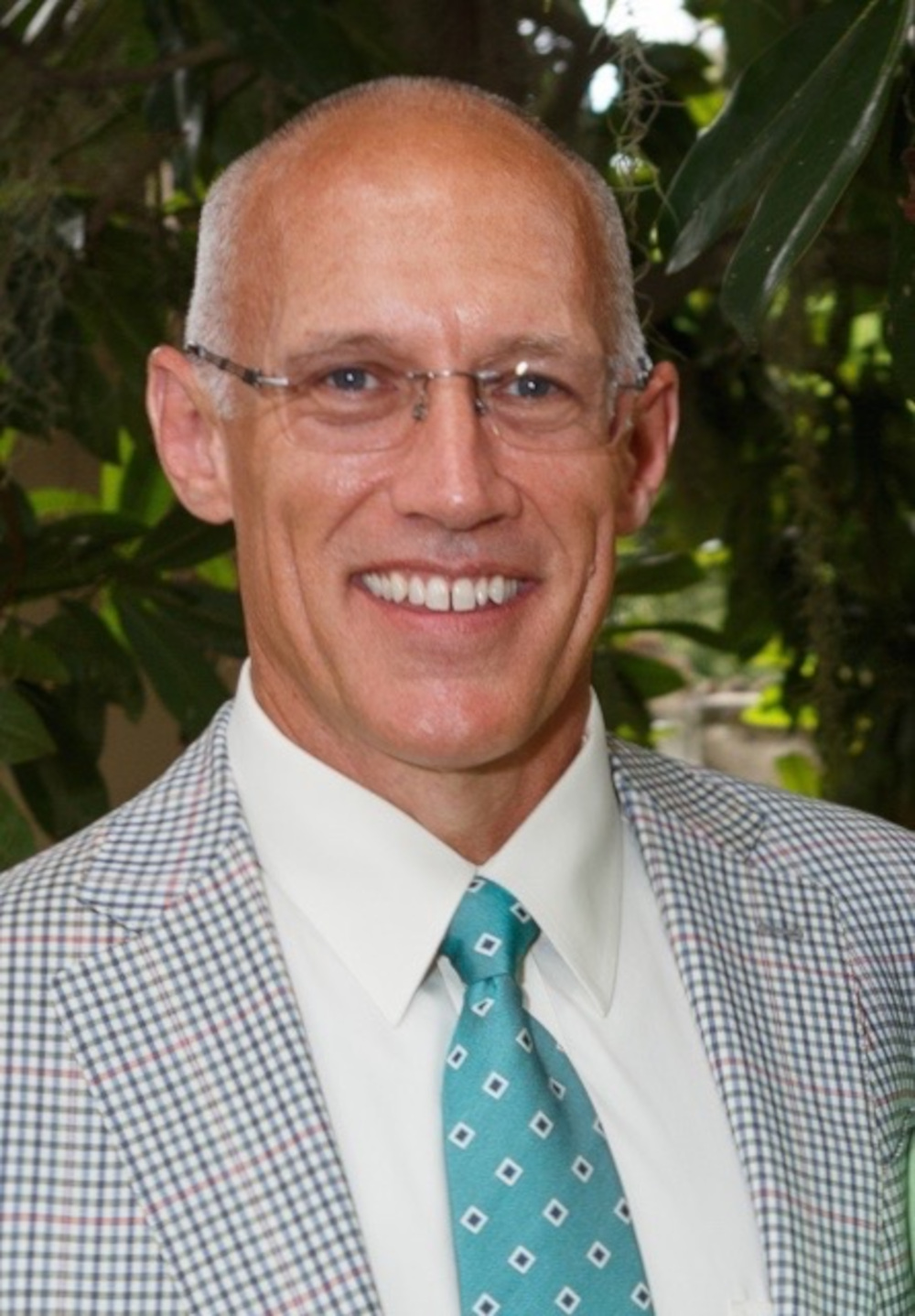
Christopher Borgert, a pharmacologist and consultant in Florida, organized a group of more than 60 toxic chemical and environmental health researchers to push back on the recent retraction of a glyphosate paper published in 2000.
Visual: Courtesy of Christopher Borgert
In 2017, a lawsuit claiming that glyphosate causes cancer surfaced documents suggesting that Monsanto scientists had not just helped with the paper, but, as one law firm put it, “substantially drafted the manuscript.” (Bayer, which bought Monsanto in 2018, wrote that Monsanto’s involvement “did not rise to the level of authorship” and “was appropriately disclosed.”)
The paper stayed in the scientific record. Scientists kept citing it. Then, last July, academics Alexander Kaurov and Naomi Oreskes wrote a journal article arguing that the 2000 paper should be retracted. Leaving it untouched, they wrote, “signals tolerance of corporate manipulation of the scientific record.”
The two expanded on that argument in a subsequent essay for Undark, and they formally requested that the journal retract the paper.
It seems to have worked. Last fall, a co-editor-in-chief of the journal where the paper published, Regulatory Toxicology and Pharmacology, retracted it, citing methodological concerns, in addition to concerns about ghostwriting and the financial independence of the authors.
Now a group of more than 60 toxic chemical and environmental health researchers have fired back, arguing in a soon-to-be-published editorial that the journal overstepped in retracting the paper. The scientific pretext for the retraction is thin, they argue, and the evidence that the paper was ghostwritten is not definitive. “Absent substantive rebuttals based on scientific merit rather than speculative claims of inappropriate authorship and data access, this retraction decision sets a dangerous precedent for retroactive censorship,” they write.
The organizer of that response was Christopher Borgert, a pharmacologist and consultant in Florida who has worked with many corporate clients, including Monsanto and Bayer. Toxics research, he told Undark, is beset with another kind of conflict-of-interest: a system that rewards academic scientists when they identify harms from chemicals, incentivizing research that posits big risks on thin evidence. (Borgert posted the full editorial, which has been accepted at Archives of Toxicology, to his LinkedIn profile on April 17 ahead of official publication.)
This perspective is controversial in the field, to put it mildly. Borgert spoke with Undark over Zoom about ghostwriting, toxics research, and whether we’re all hopelessly beset with conflicts. This interview has been edited and condensed from two conversations.
Undark: I want to start with a point of fact. Do you think that the 2000 paper was ghostwritten by Monsanto?
Christopher Borgert: I think that’s a question that that can only be answered with a lot of context.
The standards for what constitutes authorship have not remained static over time. In most fields of science, there was a time when it was not — I won’t say it was a standard practice, but it was not unusual, for example, to find department chairs who got their name on almost every paper that came out of their department.
UD: That’s someone getting their name on something they didn’t write. But I think the question is did someone not have their name on something they did write.
CB: I’m getting to that. That’s just an example of one extreme.
There’s a whole paragraph of disclosure listing Monsanto employees who assisted in the development of this manuscript. Now I wasn’t in the room, and I don’t know exactly how that paper came about, but just rhetorically, if we could know exactly how that paper was produced, might there be an argument that those Monsanto scientists should have moved up to the author line instead of just being disclosed? That’s possible.
But you know, EFSA, the European Food Safety Authority, looked at this very issue and said even if it was ghostwritten, it didn’t affect our evaluation because there’s been 20 years of science since then that basically has found substantially similar results. But more importantly, they said no reviewer at EFSA was confused as to the relationship between those who were the authors on the paper and the support that Monsanto provided.
You can make a judgment call, should they have been authors? And there are other papers where you say, yeah, these people maybe shouldn’t have been authors, because they just, they did technical work. It could be a difference in judgment. But that’s not a serious ethical concern.
UD: I’ll read a chunk of that fine print at the bottom of the paper: “We thank the toxicologists and other scientists at Monsanto who made significant contributions to the development of exposure assessments and through many other discussions.” The disclosure notes that Monsanto shared data, and it names “key personnel at Monsanto who provided scientific support.” I’m curious, if you took that to a typical reader, would they understand that as meaning that potentially large portions of the report were written by Monsanto staff?
CB: Well, first of all, if you mean your typical reader as a scientist —
UD: There are examples of scientists citing the paper without discussing this connection. And I would say glyphosate research is consumed by the broader public. It comes up in lots of different contexts. I’m imagining trying to explain this to someone who’s not a scientist, who’s saying, “You know, it could seem like there is a difference between ‘made significant contributions’ and potentially wrote large portions of a paper.”
CB: I can’t say because I don’t know. Those who know [paper author Gary Williams] well chuckle at the idea that someone could put words in his mouth in one of his publications. He was not the type of individual who would allow a publication to go forward that he didn’t consider to be his words.
If someone drafted sections of that manuscript describing the studies that were done, etc., etc, that doesn’t — there are only so many ways to describe that. Reading that disclosure, that wouldn’t tell me that those folks didn’t provide draft summaries of all those studies. Having been in many of the roles that I’ve been in, I would expect that. I would expect that the authors — Williams, Kroes, and Munro — were provided all sorts of written summaries of the studies that were composed by Monsanto employees.
The standards for disclosing the roles of various people have changed. Now it’s gotten very specific, and for some journals, they want to know who drafted the paper, all of these more intricate rules. But I don’t think that would necessarily constitute ghostwriting.
The idea that these three authors somehow were not the authors, did not own those interpretations for themselves, I think is a tremendous stretch.
UD: There’s an email from one of the Monsanto staffers who’s named in this 2000 paper as a discussion partner, writing to a colleague, who was also involved in the paper, that “we would be keeping the cost down by us doing the writing, and they would just edit & sign their names, so to speak. Recall, this is how we handled Williams, Kroes and Munro 2000.” Would that level of involvement — if indeed that is what happened — constitute an ethical breach for you?
CB: I don’t know — If what’s described there is actually what happened —
UD: If it was, we did the writing and they would edit and sign their names —
CB: So that’s all they did, is sign the name — now, if it were the Monsanto people that were disclosed in that disclosure, I would not say that’s ghostwriting. I would say what that is — even standards at that time, they probably should have been authors. But they’ve acknowledged the contributions. Is that ghostwriting? I wouldn’t ever write a paper that way. I write my own stuff.
I think that interpretation is basically claiming to know exactly what the writer of that email meant by ghostwriting and placing a certain interpretation on it. I’m not sure you can place that interpretation on it.
UD: There’s a perception, fairly or not, that companies have an interest in minimizing the appearance of involvement, because something looks more credible to the broader public when it comes from, say, professors at a university, as opposed to people who have a very clear and obvious vested financial stake, no matter what their motives. And there’s something about that that can seem a little underhanded.
CB: I understand the argument, and that whole line of reasoning has been carefully crafted over decades.
UD: How so?
CB: Who does not have a financial conflict of interest in what they do?
UD: So this is an argument that we all have stakes in certain outcomes, and our livelihoods are all on the line?
CB: Let me read to you the disclosure that’s in our paper.
UD: Yes, I noticed it. It’s very interesting. [The disclosure notes, in part, that “the authors frankly admit, as should all scientists, that they have myriad potential conflicts of interest rooted in professional, ideological, philosophical, political, financial, sociological, interpersonal, and religious influences that motivate their engagement on all activities and issues.”]
CB: Well, it’s honest. Because most people in Western society — there are a variety of ways to make a living. I would venture to guess that most people are driven not by who writes the check, but by many of those other things that we put in our disclosure.
UD: There’s an argument that universities, public institutions, have some — imperfectly lived out, but still real — sense that they serve the public good, and there’s an openness to publishing a range of possible outcomes, because that is their ultimate interest. As opposed to companies that are fundamentally required to fulfill a bottom line, so there’s a constraint on the kinds of outcomes that are going to be published, or the kinds of outcomes that they’re going to find.
CB: I think you’re living in a pretend world.
UD: How so?
CB: To characterize academic research the way you did, that it’s the variety of interpretations that can be made, etc. etc., is an illusion.
There isn’t an even-handed incentive structure.
Our incentive structure is to report things that haven’t been reported before. That’s how you get a publication, and certainly, to get a grant, you’re not going to get much traction reporting that you did this elaborate, comprehensive study and found nothing.
If you want to succeed as an academician, which means getting papers and getting grants and keeping your graduate students and postdocs funded. You can’t do that. I’m not an academic primarily, but I talk to people who have had marvelously successful academic careers in toxicology, who will tell you exactly what I just told you.
UD: Do you think that glyphosate, at the kind of levels of exposure experienced by farm workers and consumers, is harmful to human health?
CB: Can’t answer the question.
UD: Why not?
CB: I’m sorry. It’s just because I don’t keep track of everything. And it’s too burgeoning a literature for me to keep track of as an amusement.
I don’t see that rigorous evaluation has come to the conclusion that there’s human harm, or even the potential for human harm, but I haven’t looked into it myself, so it wouldn’t be appropriate for me to weigh in one way or another.
UD: One other question, the premise of which you may find annoying: Some of the authors of this comment, including you, have consulted for Monsanto in the past. Did that affect the way that the paper took shape in any way? Was Monsanto involved in pulling it together?
CB: No, Monsanto wasn’t involved. You’ll notice there are no Monsanto scientists on there. Now I work on industry groups that include some of Monsanto’s scientists. So I won’t say that I haven’t heard information about this, but they were scrupulously kept out of this.
(After this interview, Borgert told Undark that he’s hoping Bayer, or another entity, will cover the $6,400-plus fee he paid to make the paper open access.)