











In the 1960s, biophysicist Norman J. “Jeff” Holter commercialized a portable electrocardiogram — now known as a Holter monitor — which allowed patients with heart palpitations, a condition known as syncope (a medical term for fainting), or other cardiac issues to be monitored outside the clinic. It was an early but consequential response to the understanding that our diagnostic devices suffer from sampling bias: An ECG taken during a short visit to the doctor is a snapshot and might not reveal cryptic heart arrythmias. Suddenly, healthcare was in a new era, moving towards a future in which monitoring could occur outside of the walls of a hospital, quietly surfacing findings which may not have been brought to light until the patient suffered a more morbid outcome.

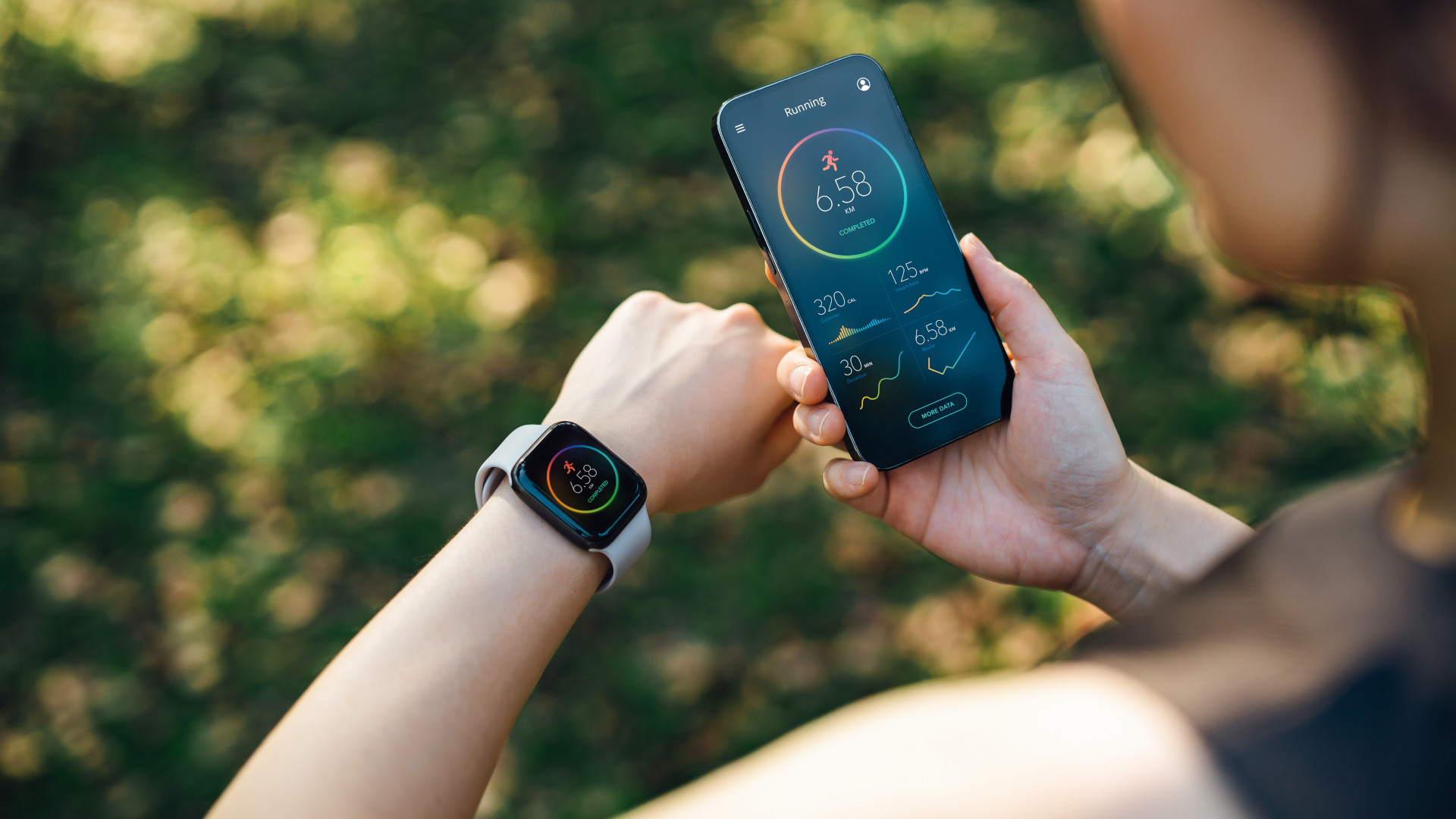
In the 21st century, wearable monitoring has followed two paths: one that includes medical-grade devices, which are designed for clinical use; and another that includes consumer devices made by companies such as Fitbit, Samsung, Garmin, and Oura, which are often marketed as general wellness products. But advances in technology are beginning to blur the line between these categories.
Dexcom’s Stelo, the first over-the-counter continuous glucose monitor cleared by the Food and Drug Administration, brings a traditionally prescription-based device to direct consumer use. Apple’s HealthKit framework aggregates health records, lab results, and wearable data from third-party apps. WHOOP is similarly integrating wearable metrics with clinical blood testing through partnerships with labs such as Quest Diagnostics. As consumer-generated health data begins to resemble clinically measured biomarkers, medicine must develop standards for determining when those signals are accurate, interpretable, and useful enough to guide care. As a physician specializing in laboratory medicine, I think the prognostic value these consumer devices provide is supremely important as they creep into the clinic.
As wearable data begins to look like diagnostic information, it’s worth noting why these signals are not held to the same validation standards that medicine has applied to laboratory tests.
At the Consumer Technology Association’s CES show in January, then FDA Commissioner Marty Makary took the stage and announced that the agency was updating its guidance governing oversight of wearable technologies and AI-enabled devices in order to accelerate their speed to market. The FDA and CMS are also piloting two new programs, ACCESS and TEMPO, to allow insurance reimbursement for wearables designed to improve health for people with conditions such high blood pressure, diabetes, and depression. This will allow select digital health devices to be distributed while companies collect real-world data, rather than moving through the traditional regulatory pathway required for medical-grade devices. In March, the Advanced Research Projects Agency for Health, or ARPA-H, announced Delphi, a program to develop low-cost wearable and ingestible biosensors to continuously track biological signals that are more challenging to measure, including hormones, immune markers, and therapeutic drug levels.
These developments are very encouraging: Wearables can provide a lifeline for patients by making invisible physiology visible in everyday life. Patients have credited Apple Watch alerts with saving their lives after the device prompted them to seek care for previously unrecognized arrythmias. Continuous glucose monitors have also created a similar shift in metabolic health by helping users connect their food intake, sleep, exercise, and stress to real-time glucose patterns, including preliminary evidence for some modest benefits for those without diabetes. More broadly, wearables have been linked to an increase in physical activity. But as wearable data begins to look like diagnostic information, it’s worth noting why these signals are not held to the same validation standards that medicine has applied to laboratory tests.
Historically, diagnostic medicine has been governed by a clear validation framework. Hospital laboratories are regulated under the federal Clinical Laboratory Improvement Amendments, known as CLIA, and many are accredited by the College of American Pathologists. Many laboratory-developed tests are validated in-house and in the clinic before being used in patient care.

This framework is harder to apply to consumer wearables, since many depend on proprietary algorithms and report composite wellness scores rather than levels of conventional clinical biomarkers. For example, “readiness” or “sleep scores” may reflect physiological inputs such as heart-rate variability, body temperature, and sleep duration, but each company can weight these signals differently without tracking them to an independent predictor of a pathologic condition. Sleep trackers are largely reliable for detecting sleeping and for morning wake time, but are less so for determining stages of sleep. Data like heart-rate variability may differ between sleep trackers, and the measure doesn’t correlate to any particular condition, so clinicians can’t use it diagnostically. In a study supported by Apple, researchers enrolled nearly 419,300 adults to use a smartwatch app that could detect an irregular pulse. During the study period, more than 2,000 participants received an irregular pulse notification, but atrial fibrillation was confirmed in only about one-third of those who sought out care.
Artificial intelligence further compounds the problem. Patients are increasingly using AI tools such as chatbots to answer health questions, and physicians are adopting generative AI for documentation, to help make diagnoses, and for clinical support. In theory, large language models could help make sense of the flood of wearable data. In practice, however, they may also confidently interpret poorly standardized signals, magnify false positives, and create additional demand for a health system facing capacity constraints.
On one hand, the results of the Apple smartwatch study show that wearables can identify clinically relevant arrythmias at population scale without requiring every patient to go to the doctor. On the other hand, they highlight the operational challenge of turning alerts into care, since false positives are prevalent due to the large screening population. A wearable signal should not only be a notification but rather a way to identify at-risk patients and create meaningful behavioral change in them. If AI can sit between data and clinical action, then it should function more like a patient sidekick — telling patients proactively if their numbers are trending in the wrong direction and ensuring that they do not fall through the cracks if they are not regularly following up with their physician.
What’s more, the explosion of data from consumer wearables is exciting but also raises urgent privacy concerns. The data collected is largely excluded from protection under the Health Insurance Portability and Accountability Act, or HIPAA, which raises questions around what companies can do with it. Wearable sensor data that is sold to commercial data brokers can be analyzed by an employer, insurer, or even law enforcement to potentially infer sensitive information such as stress level, mood, and behavioral patterns like sleep time and wake time. Previous legislative proposals, such as the SMARTWATCH Data Act, which would have limited the sale or sharing of consumer health information from wearables without consent, and more recent ones including the Health Information Privacy Reform Act, which seeks to extend HIPAA-like protections to health data collected outside of traditional healthcare settings, suggest that policymakers are beginning to recognize this gap.
A wearable signal should not only be a notification but rather a way to identify at-risk patients and create meaningful behavioral change in them.
Still, these concerns should not make physicians retreat from wearables. I am excited about them. They give patients agency and a window into their own physiology, and possibly create new opportunities to intervene before disease becomes obvious in the clinic. Regulatory tailwinds from the FDA, Centers for Medicare and Medicaid Services, and ARPA-H suggest that wearables are moving from consumer wellness to preventative care.
If the laboratory of the future is going to be decentralized and distributed across our bodies, it must be built with the same seriousness that medicine has applied to diagnostic tests — and subject to validation, transparency, privacy, interpretability, and clinical accountability. In doing so, we would honor Jeff Holter’s legacy: As he once said according to a 1983 paper, medicine shouldn’t assess a patient’s physiology from a single snapshot any more than a mining engineer would assay “a mountain of ore by testing one rock.”
Shree Nadkarni is a resident physician in anatomic and clinical pathology at Mount Sinai Hospital who writes about the intersection of medicine, technology, and healthcare innovation. The views expressed in this article do not represent those of his employer.