








American science is facing a looming collaboration crisis. Researchers around the world are deciding not to present at conferences taking place in the United States to avoid immigration issues. The timeline for obtaining student visas is stretching longer and longer for those from countries on unfriendly terms with President Donald Trump’s administration. Uncertainty over funding is causing many universities to act conservatively, prompting them to reduce or even freeze admissions and hiring.
As a computer security researcher, I have experienced these changes firsthand from the decision to seek non-U.S. venues on a project of mine and secondhand from observing the experiences of my colleagues from other countries. And I fear that concerns over national security threaten the long-standing ways in which science has been conducted and shared. The research community will need to work together to understand how to adapt to the world we are entering and how to deal with the end (or at least, a weakening) of the international science era.
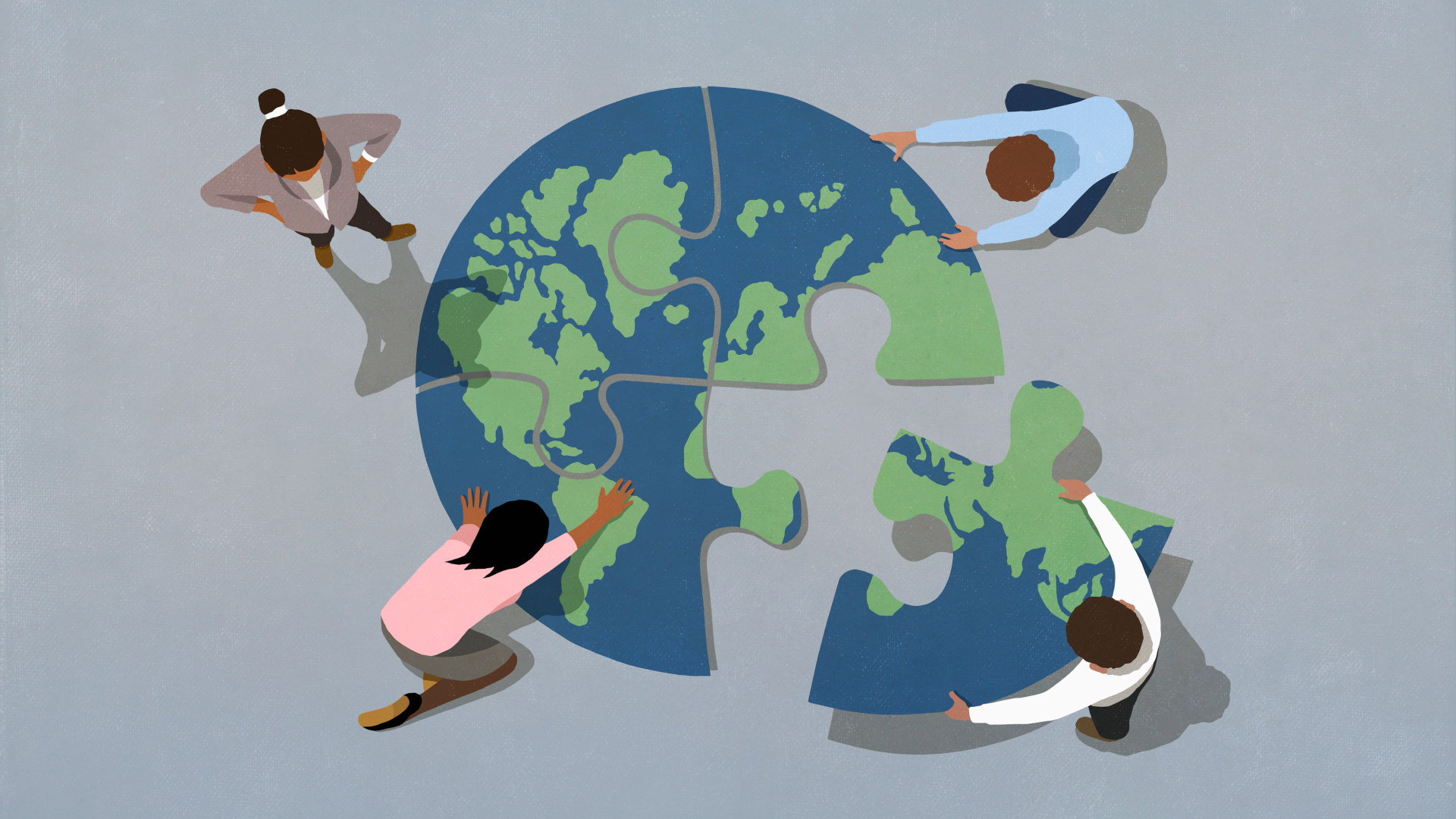
Scientific research has always been an international affair. The need to understand the world around us is shared by people globally, and collaboration across borders can generate new ideas and data. At times in history, these relationships have been exploitative, such as in the collection of animal specimens and cultural artifacts through colonial power. But through scientific collaboration, discoveries, studies, and entire fields have emerged that could not have happened otherwise. The internet — itself the product of international research — has reduced friction further. In my field, many projects are discussed and developed at least partially on videocalling apps with partners in other countries and time zones.
Recently, though, tensions have been rising. For example, at Eurocrypt 2025 — a flagship cryptography conference that was held in Madrid in May, a few months after President Donald Trump’s inauguration — I heard multiple people say that they are now hesitant to travel to the U.S. to do research and attend meetings. This was in the wake of a French scientist being denied entry into the U.S. because of anti-Trump social media posts. That conference’s American counterpart, named simply Crypto, has been held annually at the University of California, Santa Barbara for more than four decades. When I’ve attended the conference the past few years, though, I’ve heard many calls to move it to a country with less restrictive visa processes.
American universities, which form the core of scientific research in the country, are also facing upheavals. Nearly 1.2 million international students attend them. Though not all of these students are scientists, anyone working in a science lab knows how diverse lab groups are. I personally cannot remember a group meeting I’ve attended that did not include someone of another nationality. These people are colleagues and hard workers trying to do best for themselves and for American science. Despite this, though, they have been attacked and subjected to uncertainty about their status. International students have been targeted by immigration enforcement, seemingly for exercising free speech in a number of cases. Student visas, typically processed within a couple months, have taken much longer for students from certain places. Colleagues of mine from Russia, China, and Iran have experienced lengthy delays; one claimed they were delayed by over a year, and another had it impact the start of their Ph.D. program. The Trump administration also wants to restrict the length and leniency of these visas once they are granted, going so far as to threaten cancellation for visas of Chinese students already studying in the U.S., only to later walk back the ban.
If the ability to work freely with scientists regardless of place of origin is under threat, scientists must be united in their efforts against this.
To be clear, rising international tension did not start in 2025, nor is it a problem restricted only to the U.S. Top-of-the-line computer chips have been under export controls by the U.S. and its allies to countries such as China for years. National security concerns have been used by the U.K. and other countries to justify restriction of foreign scientists. Instead, this seems like a worldwide trend, a reflection of tensions and unease over globalism.
And while it’s important for people, including scientists, to push for what they believe in, I also think it’s important to be practical and plan ahead. Unfortunately, this could mean planning ahead for a new age in science.
If the ability to work freely with scientists regardless of place of origin is under threat, scientists must be united in their efforts against this. In particular, scientific communities must commit to promoting open science and to strengthening local bonds.
Open science is usually associated with open-access journals and removing financial barriers to publishing, but it extends far beyond this. Compared with other fields, computer science research is easy to access — free preprint servers like arXiv and even open-access review are common. Other fields face taller barriers to sharing cutting-edge research. However, knowledge and especially training and teaching materials for young scientists can still be spread openly, even in these cases. Educational resources can be just as useful without poking the copyright bear.
Support Undark Magazine
Undark is a non-profit, editorially independent magazine covering the complicated and often fractious intersection of science and society. If you would like to help support our journalism, please consider making a donation. All proceeds go directly to Undark’s editorial fund.
At institutions with fewer resources, qualified mentors and project leads may be in short supply, and those that are around may not have the time to teach all the promising students. Publishing teaching materials online — such as open-access course plans and textbooks — can enrich the quality of science education everywhere. If this is not possible, scientists can also volunteer their time, hosting virtual office hours for any who want to learn. Even in the face of threats to direct collaboration, information should be shared.
Scientists must also commit to developing and maintaining networks with other scientists domestically. While this is not a complete substitute for the variety of perspectives and data that can be collected from an international team, working with others still has merit, and building up bonds can help scientists be resilient in the face of pushback. My community of cryptographers meets regularly for research days, both across New York City and more regionally. These sorts of events are critical for maintaining relationships between researchers working in a particular field, and this will be only more important should international relationships struggle.
The sky is not falling quite yet. Science will live on, and people will still work on important projects with others around the globe. But, as we’ve seen in various other attacks against science in recent years, the scientific community must take the threats against it seriously before it’s too late.
Peter Hall is a science writer and a computer science graduate student at the New York University Courant Institute of Mathematical Sciences. His research is focused on the theoretical foundations of cryptography and technology policy.