


War, Wellness, and Watts: Inside Oak Ridge National Lab

What’s now known as Oak Ridge National Laboratory in Tennessee was established in 1943 as a top-secret part of the Manhattan Project, tasked with piloting the production of plutonium for atomic bombs. A town near the facilities was built in record time and became known as “The Secret City” because only those living there likely knew it existed. The population of Oak Ridge, roughly 25 miles west of Knoxville, eventually ballooned to 75,000, but most residents had no idea they were working on the atomic bomb until it was dropped on Japan in 1945.

After the second world war, ORNL became a leading nuclear and energy research facility. It is currently the largest science and energy national laboratory in the Department of Energy system — and more generally, the nation’s “largest multi-program science and technology laboratory.” Among other notable facilities, ORNL has the world’s second fastest supercomputer, known as Frontier.

But it’s the nuclear expertise for which the laboratory, as well as the community that was built up around it, is most widely known — a reputation that is driving something of a nuclear renaissance in the region today, as private nuclear companies are lured to the area by state support and a knowledgeable, if somewhat smaller, resident workforce.

The boom, stoked in part by President Donald Trump’s goal of expanding nuclear energy generation, is also being nudged by local politicians like U.S. Republican Congressman Chuck Fleischmann, who told the Knoxville News Sentinel earlier this month that Oak Ridge is now poised to become “the unequivocal nuclear capital of the country again.”

But it all began with ORNL, which eventually saw its mid-20th century machinery, originally designed to create bombs that could kill more humans than any previous technology, repurposed in part for the production of medical isotopes used in diagnostics and cancer therapy — arguably saving millions of lives.

Following is a selective photographic peek at the engineering that put this previously sleepy corner of Tennessee on the map, and arguably made ORNL what it is: an emblem for everything that is terrifying, audacious, and contradictory about nuclear science.


ORNL was born in 1943 as a top-secret part of the Manhattan Project, tasked with piloting the production of plutonium for atomic bombs. Pictured is an innocuous laboratory entrance at the facility.
After the second world war, ORNL became home to supercomputers and a leading nuclear and energy research facility. This is The Court of Flags, a tribute to the scientists from around the world who work at Oak Ridge.
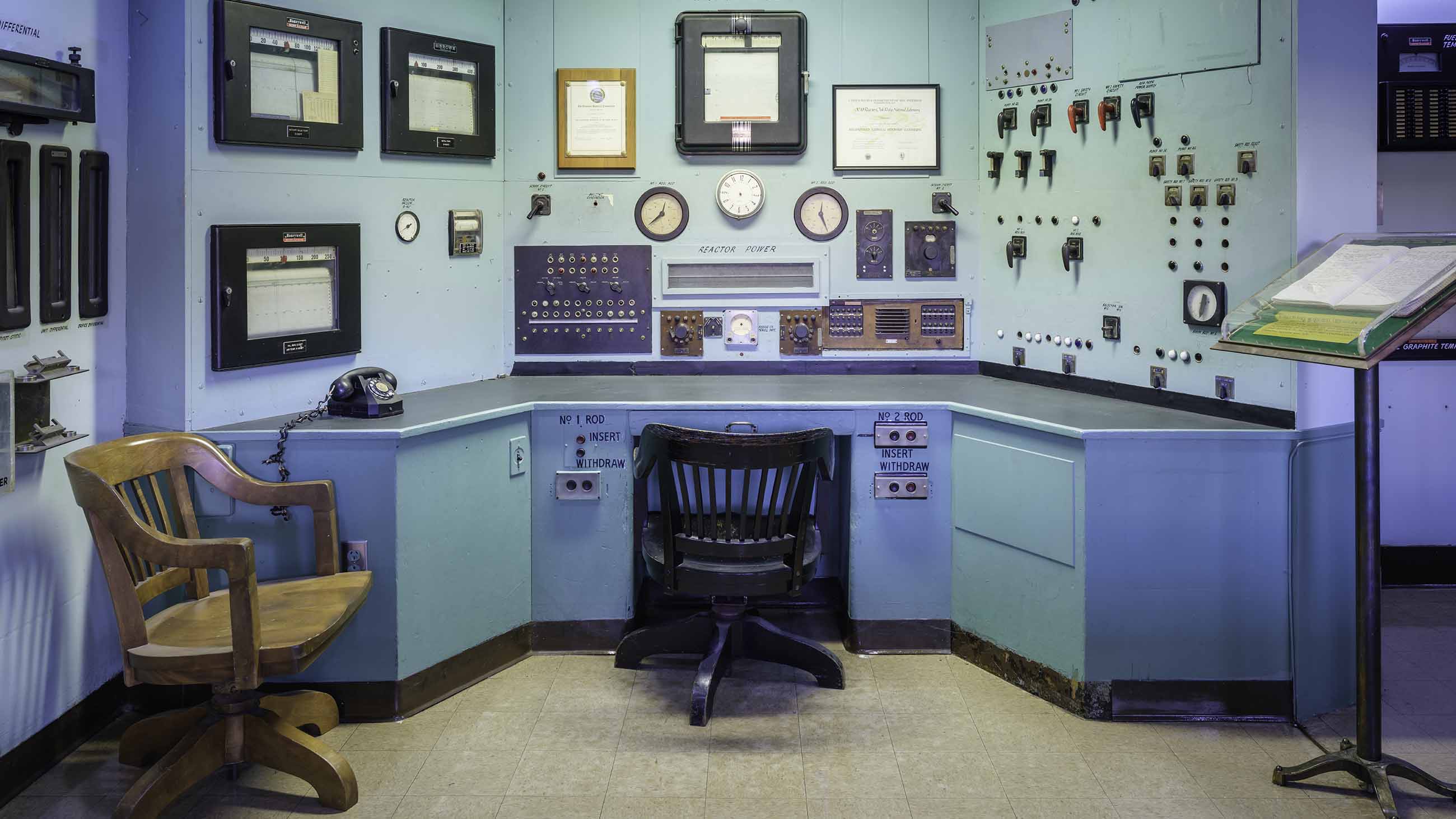
The X-10 Graphite Reactor demonstrated production of weapons-grade plutonium from 1943 to 1963. Technicians, represented here by display mannequins, inserted gas-tight uranium slugs by hand through the loading face, and pushed them into position using long rods.
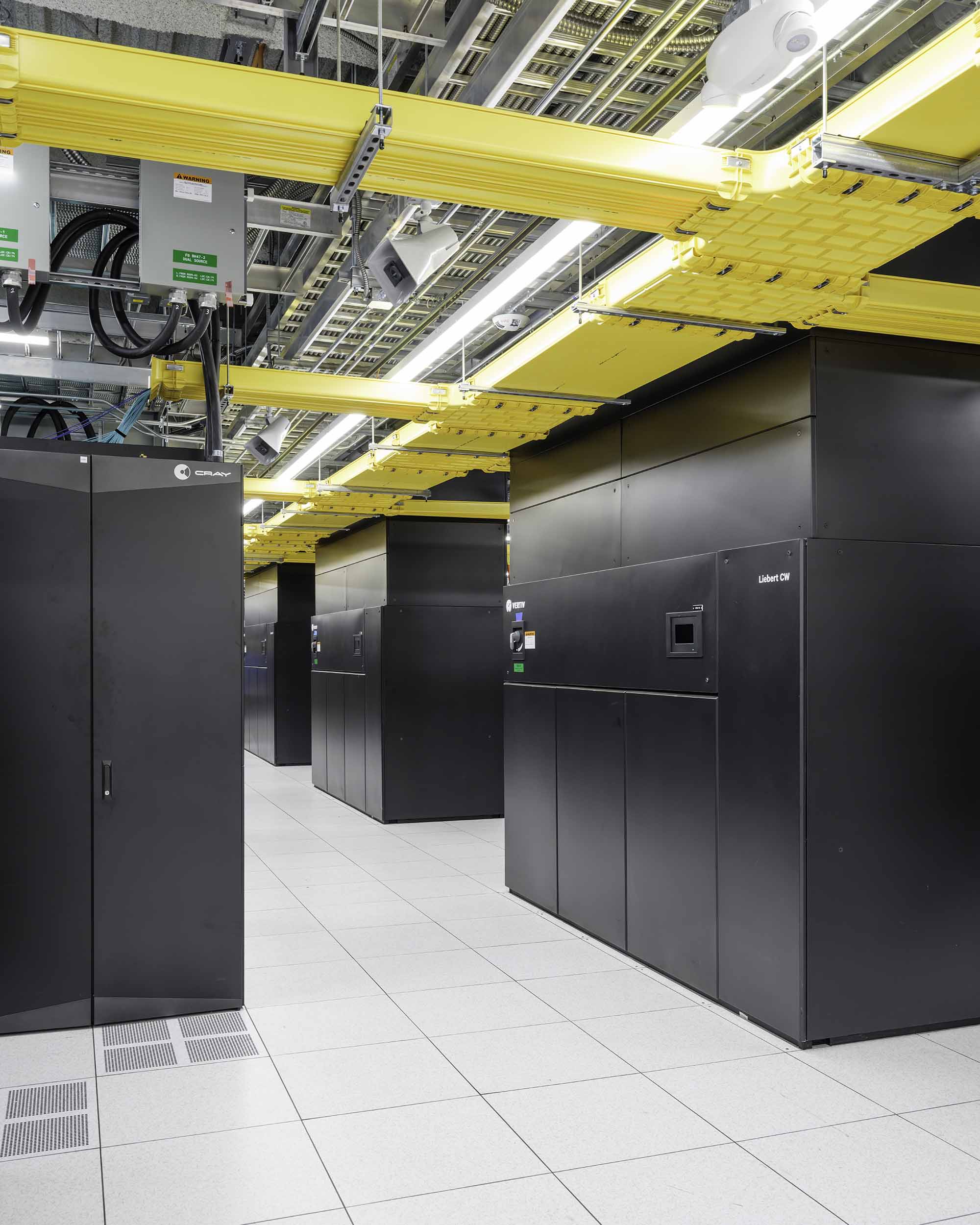
Among the fastest supercomputers in the world, Frontier at ORNL was the first such machine to break the performance barrier known as exascale, a threshold of a quintillion calculations per second.
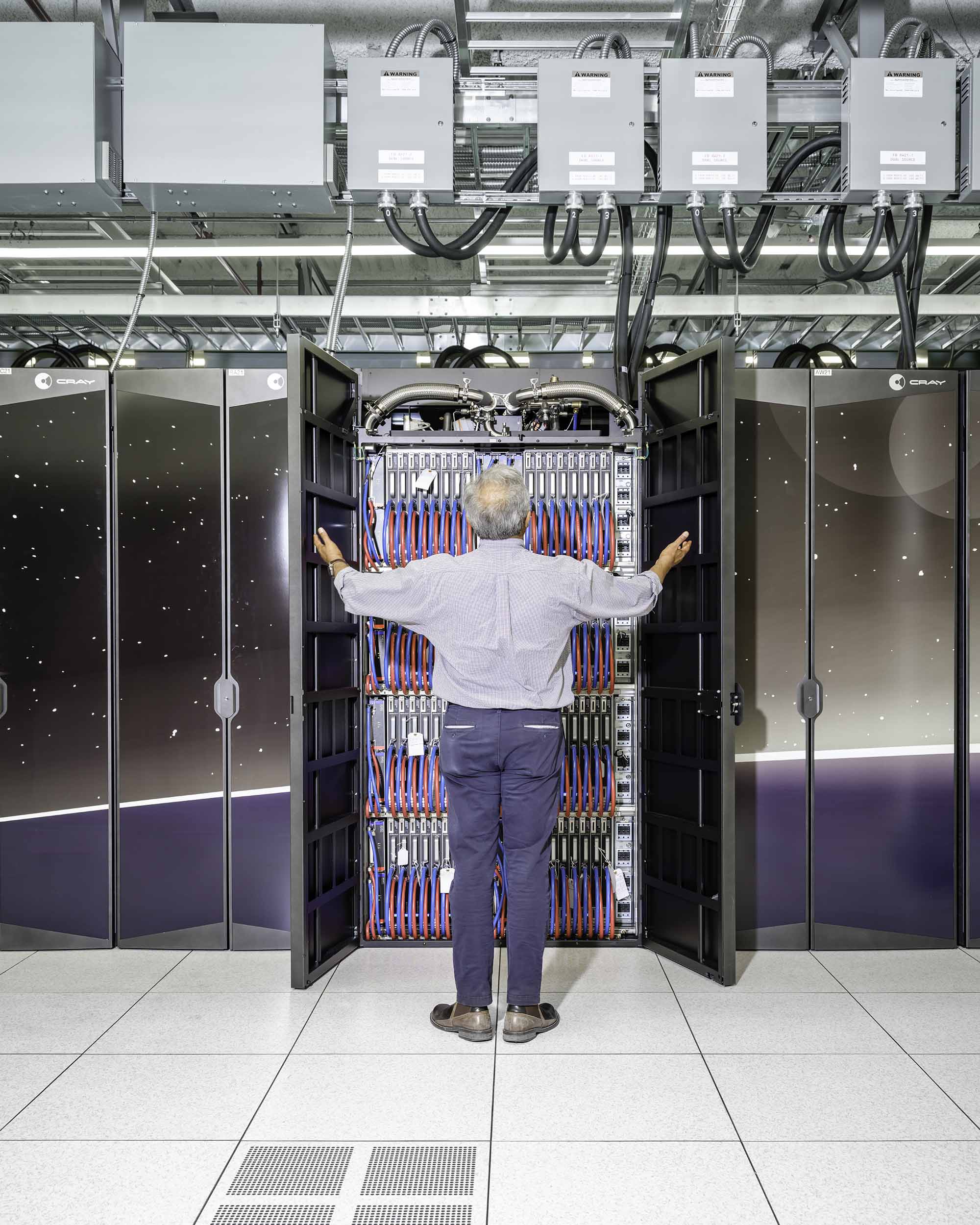
Thomas Zacharia, former director of ORNL, examines the innards of Frontier. The supercomputer consists of 74 cabinets, each holding more than a mile of cable, enabling new scientific discoveries in areas such as climate, energy, and health.
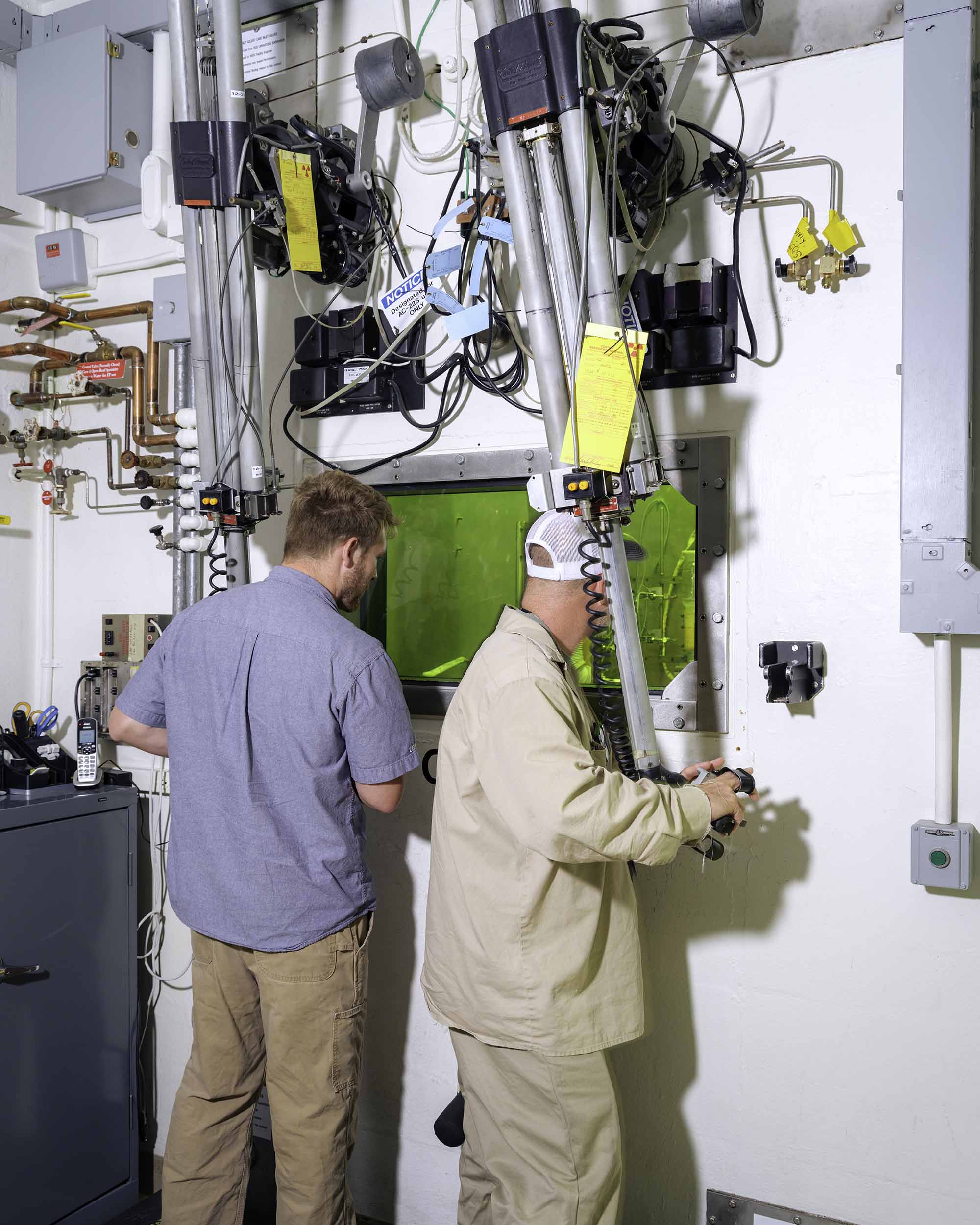
The Radiochemical Engineering Development Center (REDC) at ORNL helps to produce isotopes, nuclear fuels, and other materials.
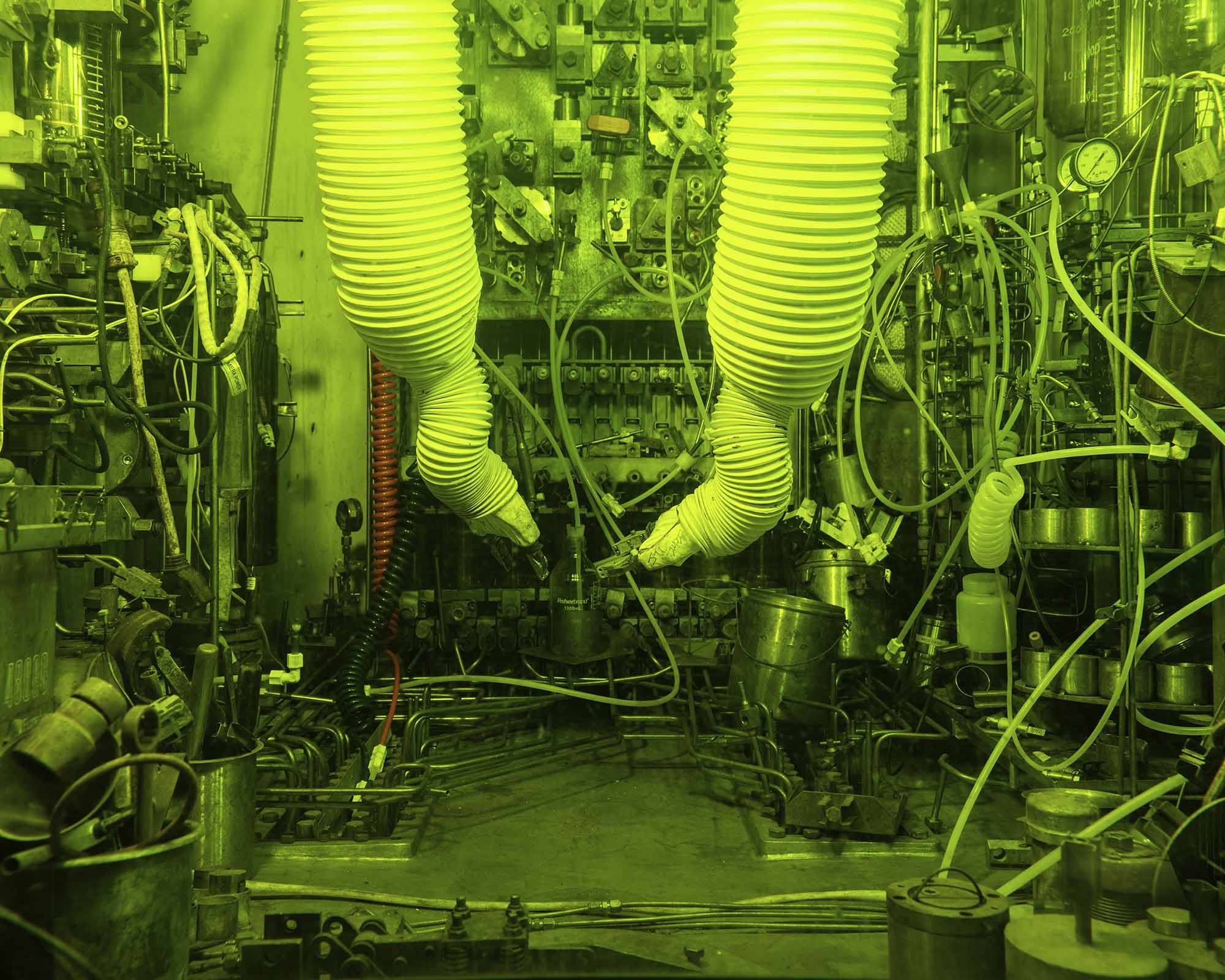
Here, technicians at the REDC remotely manipulate actinium-225, a synthetic isotope that is promising as a possible treatment for leukemia and glioblastoma.
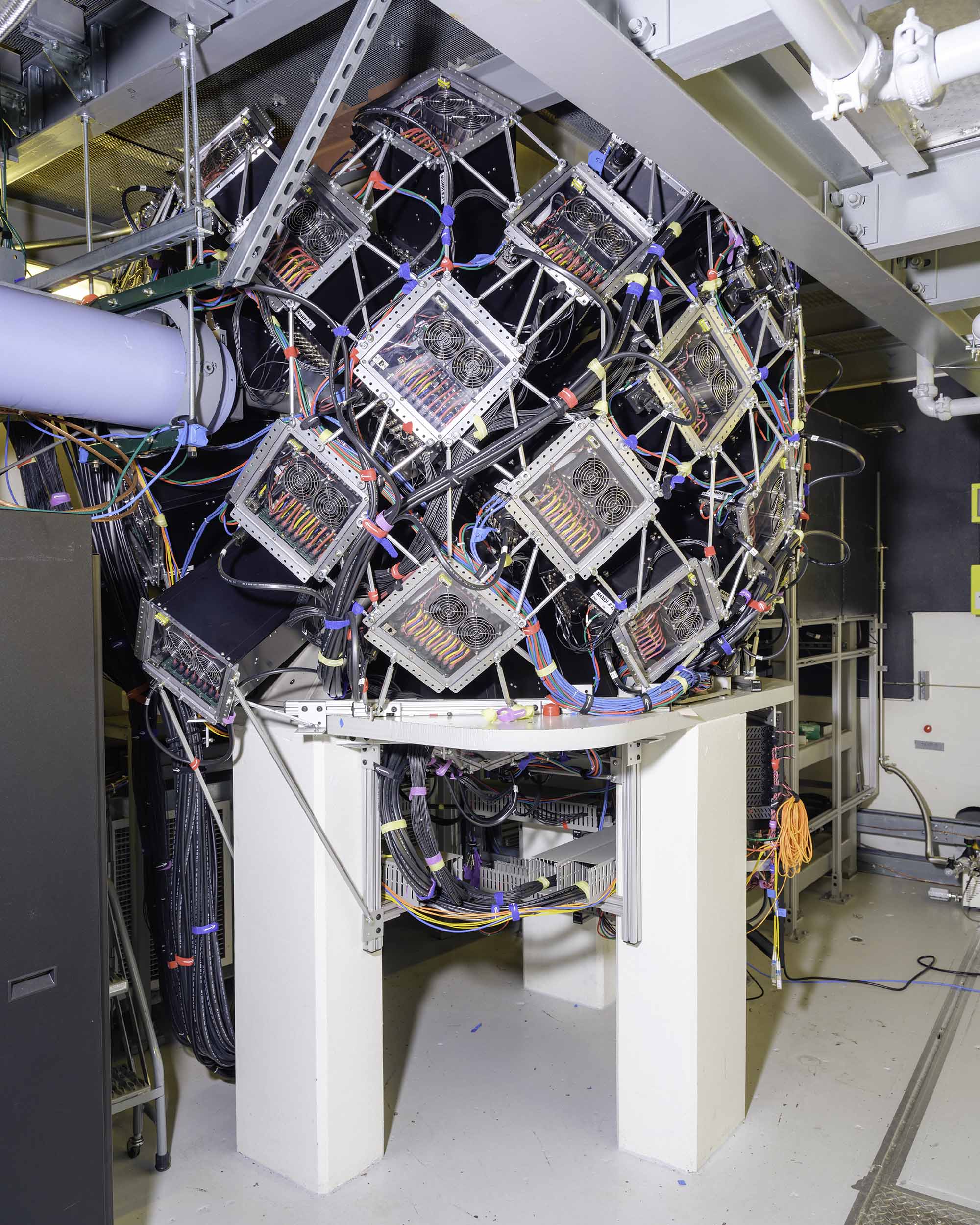
Meanwhile, the macromolecular neutron diffractometer, called MaNDi, is designed to study biological materials such as enzymes, protein drug complexes, and membrane proteins.
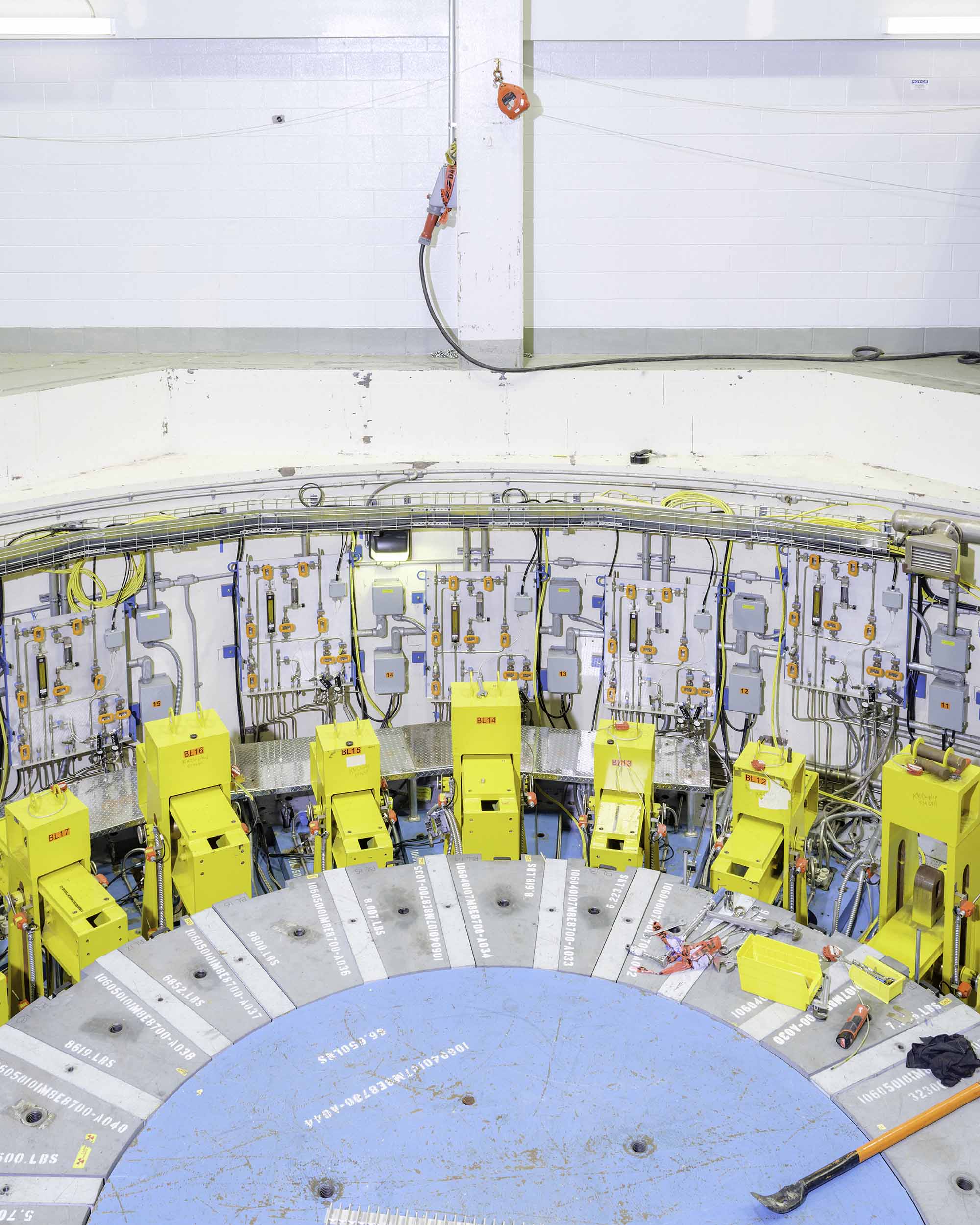
The Spallation Neutron Source (SNS) at the Oak Ridge National Laboratory is a particle accelerator providing intense neutron beams for scientific research and industrial development.
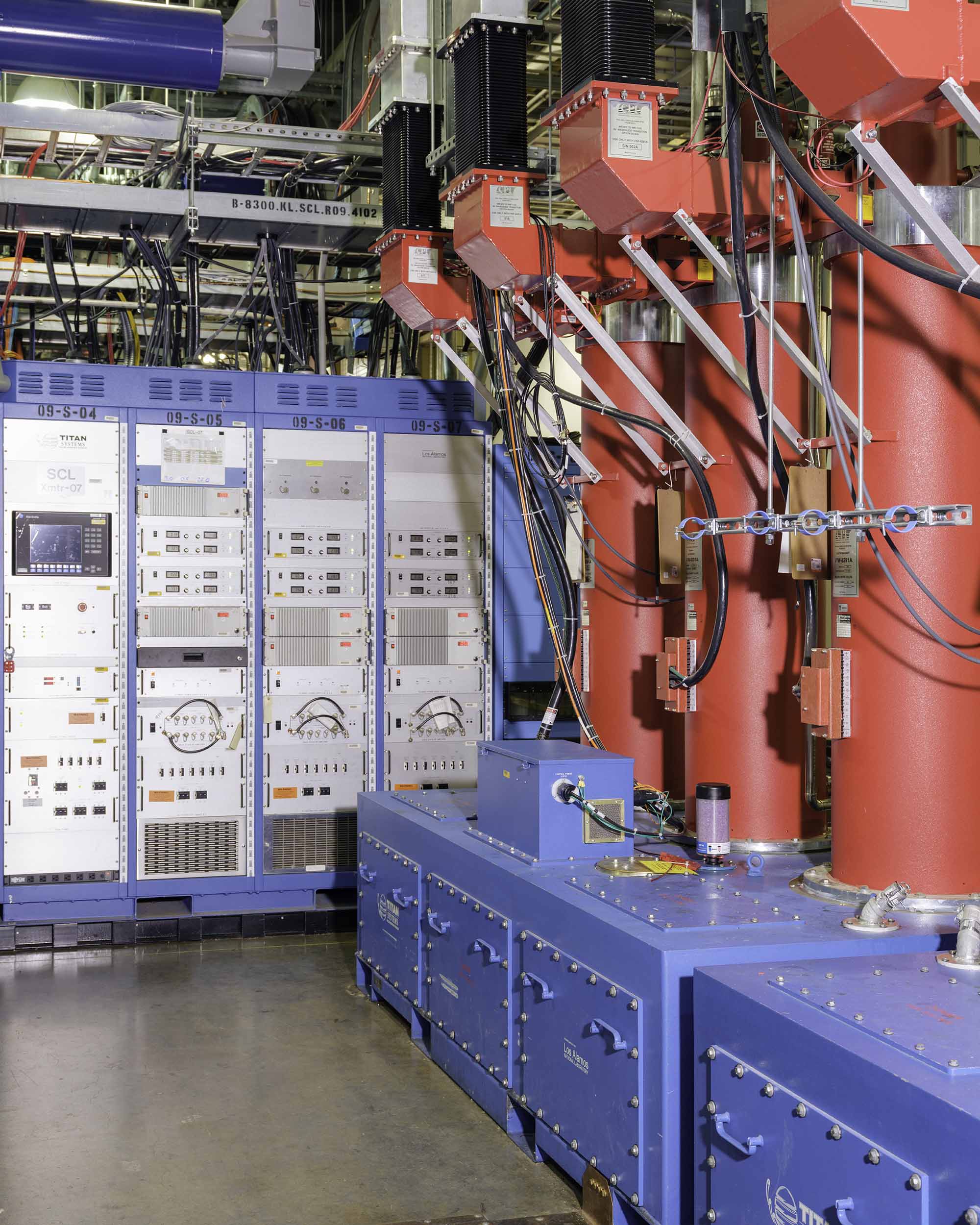
These red, high-powered vacuum tubes, known as klystrons, are housed inside the SNS’s klystron gallery. They supply radio frequency power to the accelerating cavities that form the 1.4 megawatt accelerator.
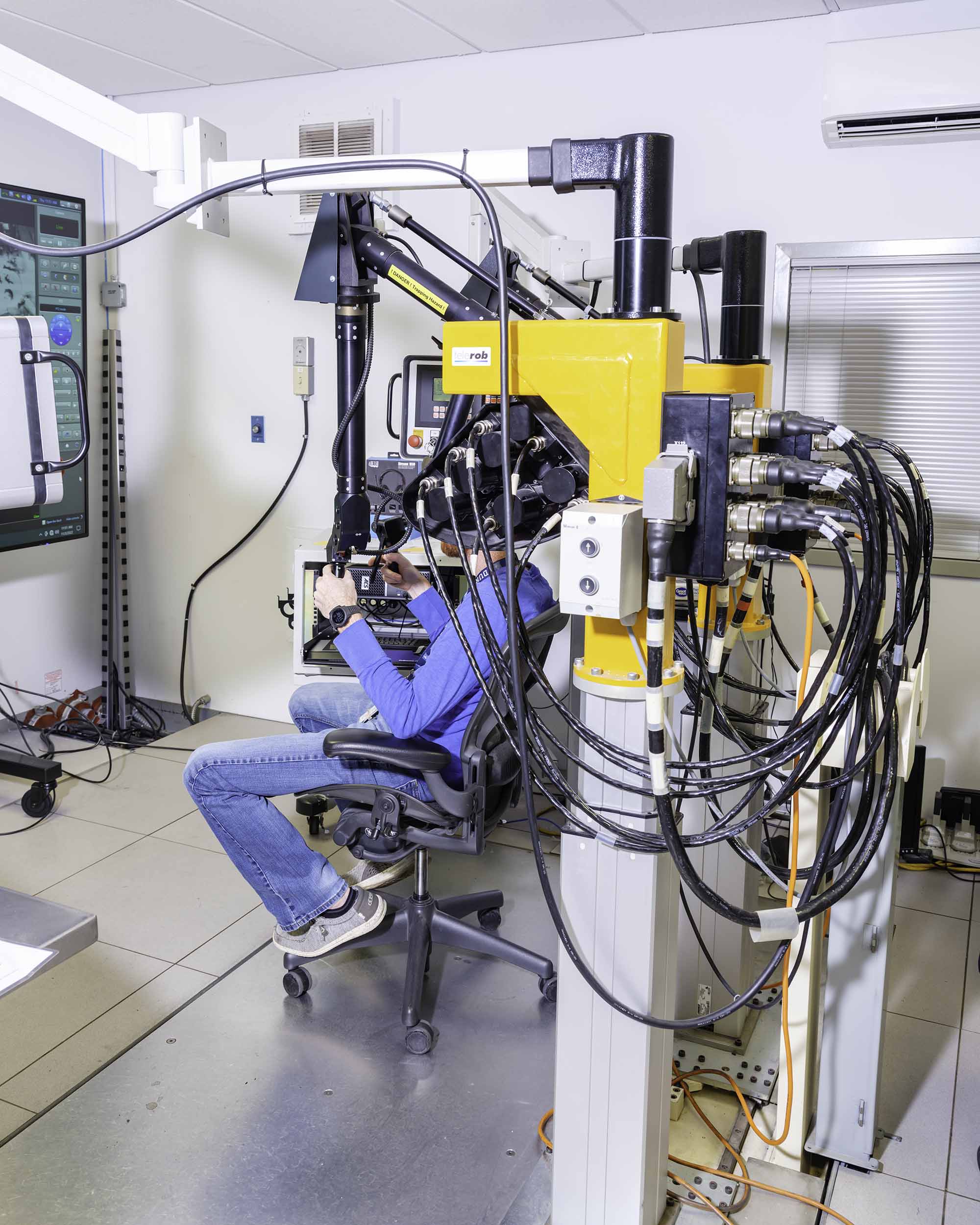
Here, a technician operates fully remote servo-manipulator robotic arms at the SNS. Manipulation of these primary controls is mirrored one to one by a set of secondary arms inside the highly radioactive environment.
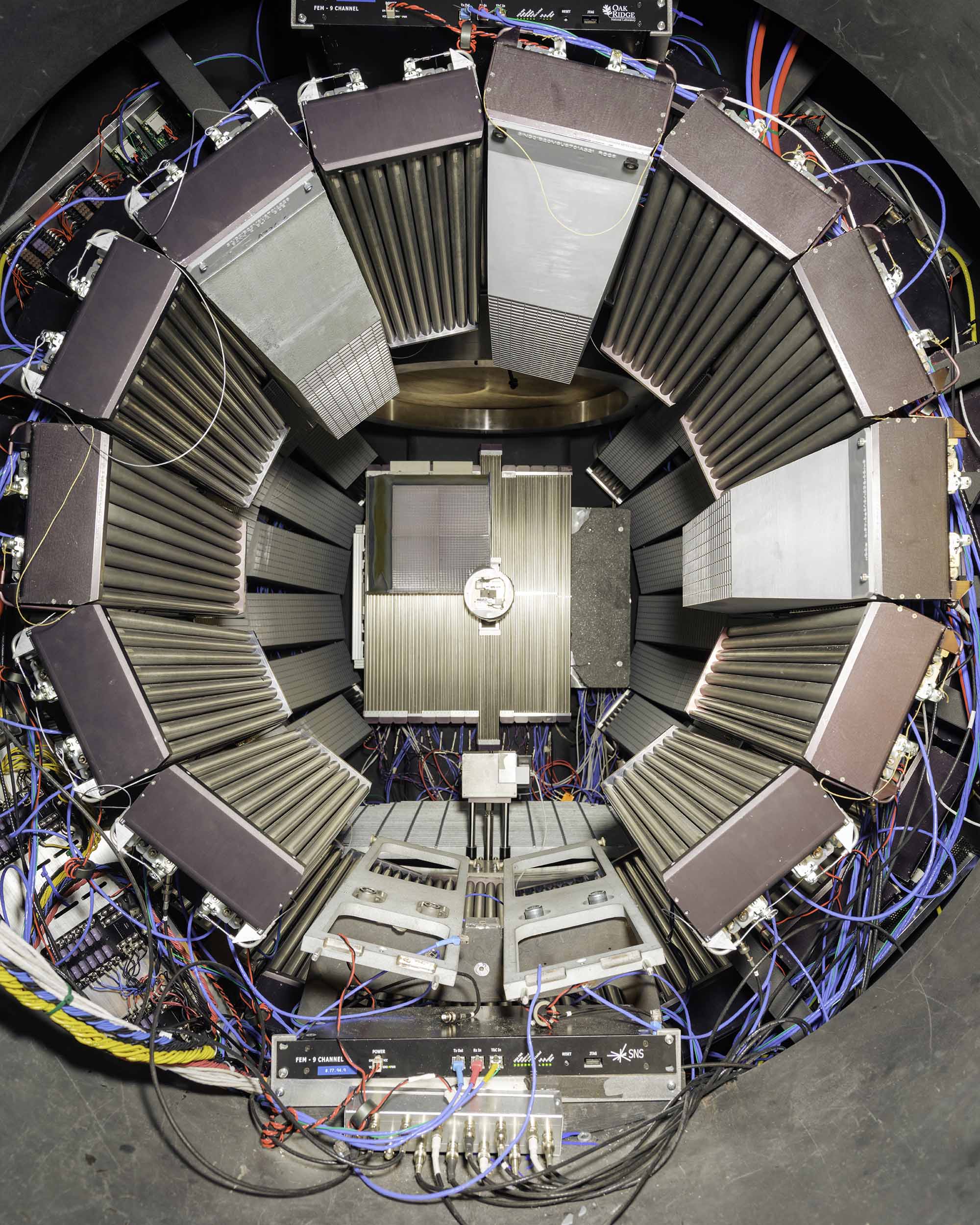
This neutron detector vessel at the SNS includes four rings and two panels containing 83 high pressure, helium-3 detector modules that detect scattered neutrons from materials of interest. The design of this tank allows researchers to gain more information about the atomic structure of their materials.

Alastair Philip Wiper is a photographer and creative director whose work digs into the beauty, logic and absurdity of how humans build. He is based in Copenhagen, Denmark.