










A new anti-sunscreen movement is gaining momentum. It appears to be driven in part by a growing distrust in some circles of conventional expert health advice and federal regulators. Speaking as a private citizen last fall, Robert F. Kennedy Jr. accused the U.S. Food and Drug Administration of waging a “war,” or “aggressive suppression” of sunshine, among other things. Meanwhile, celebrities and influencers, from Kristin Cavallari to Gwyneth Paltrow to Samantha Faiers, have either questioned the safety of ingredients in conventional sunscreens, or extolled the health benefits of sunlight.

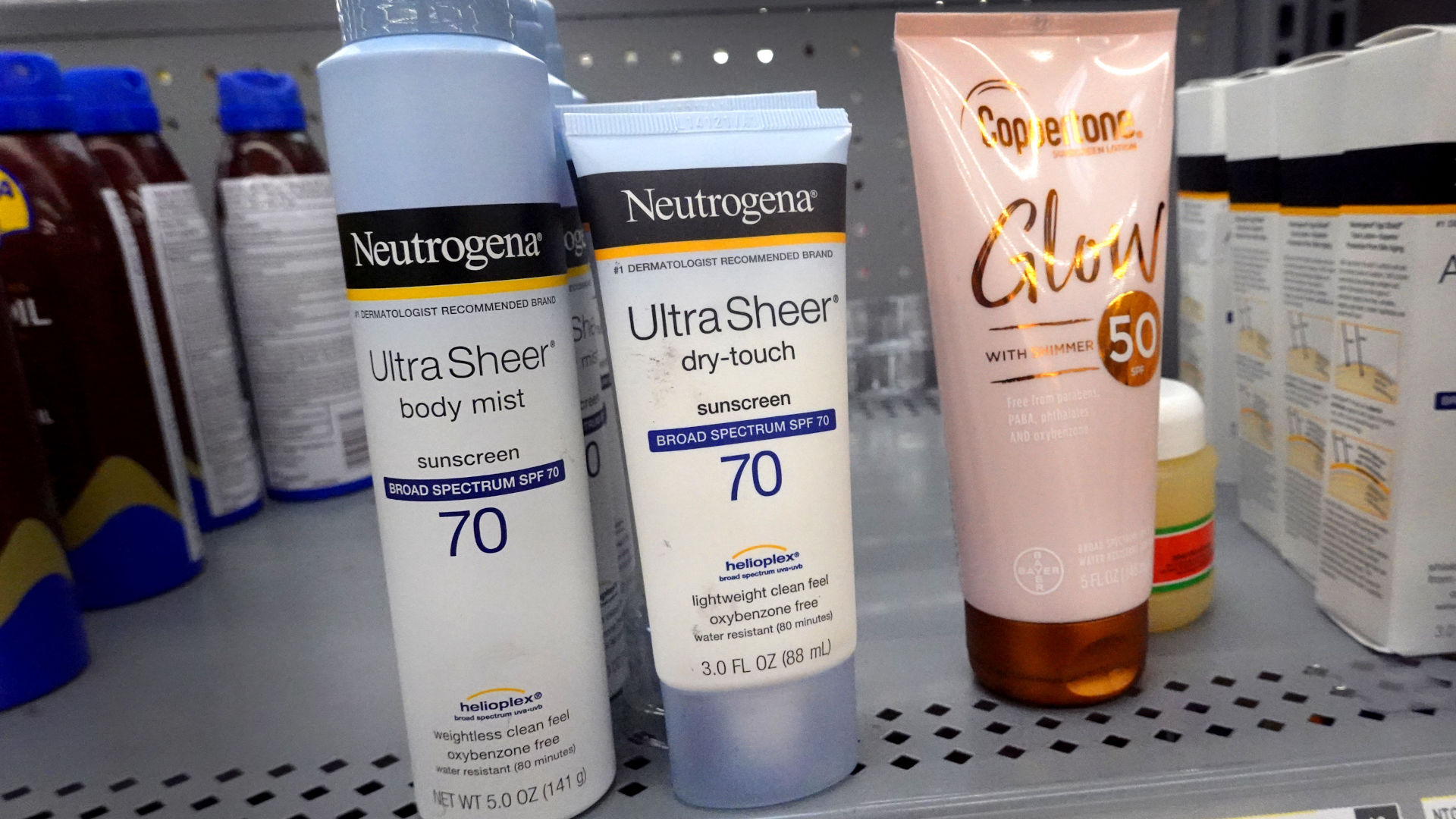
The anti-sunscreen movement’s concerns stem in part from data showing that chemicals in certain sunscreens get absorbed into the bloodstream. Additionally, sunlight boosts production of vitamin D, which has been linked to a range of positive health benefits. Still, there isn’t any evidence showing that sunscreen in the blood actually causes harm. And because sunscreen does prevent skin cancer, dermatologists and FDA officials recommend its use. Ultimately, the best approach may be a personal one that considers a person’s skin tone and seeks to balance the benefits and harms of soaking up the sun.
Five and a half million cases of skin cancer are diagnosed every year in the U.S. The most common skin cancers include basal and squamous cell cancer. Melanoma is the most lethal form of skin cancer, but represents only a small percentage of all cases. This year, more than 8,000 people are expected to die of melanoma, according to the American Cancer Society. And one study in the U.K. found that 86 percent of melanomas were caused by ultraviolet radiation, which is emitted by the sun and artificial sources like tanning beds. Long-term UV exposure from sunlight or artificial sources is a well-established risk factor for skin cancer and premature aging of the skin. Other harms may include inflammatory skin conditions called photodermatoses, and eye conditions, including cataracts.
Notably, there doesn’t appear to be a connection between UV light exposure and melanoma among dark-skinned people, though such a relationship does exist among people of color with lighter skin tones. And according to the Skin Cancer Foundation squamous cell carcinoma in Black patients is highly linked to UV exposure. Overexposure to the sun’s rays can also cause uneven pigmentation and other skin damage to all skin tone types. The American Academy of Dermatology Association advises people to apply sunscreen with a sun protection factor of 30 or higher and other means (hats, coverings, sunglasses, and seeking shade during peak UV periods) to protect themselves from exposure.
Studies suggest, however, that certain ingredients contained in chemical sunscreens can seep into the skin and enter the bloodstream in concentrations higher than the FDA’s threshold for further testing. In 2019, a study led by FDA researchers showed that four active ingredients commonly used in sunscreens — avobenzone, ecamsule, octocrylene, and oxybenzone — were absorbed into the bloodstream at high enough levels to possibly warrant additional studies. A follow-up 2020 study testing three of the four active ingredients, plus an additional three, confirmed the finding that sunscreen active ingredients were systematically absorbed. And in 2022, the FDA noted that three of the four ingredients tested were not granted “generally recognized as safe and effective status” because of the need for additional data.
Nevertheless, in its conclusions from the 2020 study as well as in a 2022 Q&A, the FDA noted that its findings do not imply people should refrain from using sunscreen. And in a separate statement previously published on its website, the agency reiterated that the results “do not mean that the FDA has concluded that any of the ingredients tested are unsafe for use in sunscreens, nor does the FDA seeking further information indicate such.”
The anti-sunscreen movement’s concerns stem in part from data showing that chemicals in certain sunscreens get absorbed into the bloodstream.
So, should people worry about sunscreens’ ingredients entering the bloodstream? One thing to keep in mind is that much of the FDA’s research was conducted under maximal use conditions in which 75 percent of each participant’s body was covered with sunscreen, four times a day for four days. Still, the 2020 study also looked at absorption following a single sunscreen application and found that all of the active ingredients tested were found in the bloodstream at concentrations “that surpassed the FDA threshold for potentially waiving some of the additional safety studies for sunscreens.” While the study noted that these findings don’t mean individuals should avoid wearing sunscreen, those who are concerned about industrial chemicals entering their blood could look for a mineral sunscreen.
Most sunscreen formulas fall into two categories: chemical and mineral. Chemical sunscreens are made up of organic molecules, while mineral sunscreens contain inorganic ingredients — titanium dioxide and zinc oxide. Contrary to popular belief about mineral sunscreens physically reflecting UV light, both types absorb the rays and convert the energy to heat, with mineral sunscreens scattering just a small amount UV light. Titanium dioxide and zinc oxide do not appear to penetrate skin to reach the bloodstream and the FDA has even proposed classifying the two substances as “generally recognized as safe and effective,” and is not requiring further safety testing.
Assessing the evidence as a whole, dermatologists warn that avoiding sunscreen altogether poses a greater risk than concerns about, say, ingredient absorption.
Alan Geller, a skin cancer prevention researcher at Harvard T.H. Chan School of Public Health, suggests that the best evidence for sunscreen as a prevention tool against melanoma is a randomized trial of sunscreen use in Australia. There have been several other randomized controlled trials with long follow-up that showed sunscreen use decreases the risk of squamous cell and melanoma skin cancers. And a large-scale Norwegian observational study found that using an SPF 15 or higher sunscreen was associated with a 33 percent lower risk of melanoma in women compared with those using less than an SPF 15.
While there is strong evidence that sunscreen use significantly reduces the risk of squamous cell carcinoma, evidence on the efficacy of sunscreen to prevent melanoma is relatively scant. Perhaps more importantly, the data that does exist isn’t unequivocal. A meta-analysis from 2018, for example, “does not confirm the expected protective benefits of sunscreen against skin cancer in the general population.” Further, over the past several decades, melanoma rates in the U.S. have been rising, despite the increased use of sunscreen.

Some researchers have offered hypotheses that attempt to explain the apparent contradiction. These run the gamut from a false sense of security as people spend more time in the sun when they use sunscreen, incomplete application, climate change, heightened awareness of the disease, improved diagnostic capabilities, and possible overdiagnosis. In other words, rising melanoma rates could be due to something other than the ineffectiveness of sunscreen.
And they reject the notion that sunscreen increases the risk of cancer. “Social media is full of misinformation,” wrote Zakia Rahman, a clinical professor of dermatology at Stanford University School of Medicine, in an email to Undark. “I suspect people on it haven’t been told that sunscreen and sunprotection are a primary preventative measure recommended by dermatologists to stop the onset of skin cancer. It’s analogous to saying seat belts cause car accidents.”
But what about the possible benefits of sunlight?
In 2020, a group of authors from the U.S., Europe, and Australia published a paper titled “Insufficient Sun Exposure Has Become a Real Public Health Problem.” The authors argued that a growing body of evidence, built up over the previous decade, indicates that lack of sunlight could be responsible for hundreds of thousands of deaths per year.
Over the past several decades, melanoma rates in the U.S. have been rising, despite the increased use of sunscreen.
Sunlight increases a body’s production of vitamin D, which is important for bone health and for supporting the immune system. Beyond vitamin D, other mechanisms may be at play. Longer wavelengths of light, for example, appear to improve mitochondrial function, which can improve vision, for instance.
Public health groups in Australia have issued updated guidelines that recognize both the benefits of sunlight and the need to consider skin tone when making recommendations. People with very pale skin or those with olive or pale brown skin who have other risk factors are still advised to take “an extremely cautious approach,” while people with dark skin, meanwhile, can forgo sun protection all together “unless spending extended time outdoors” when the UV index is moderate or high. Those who fall in the middle are considered to be at intermediate risk for skin cancer and are offered another set to guidelines.
When sunscreen opponents maintain that sunscreen prevents people from experiencing the benefits of the sun’s rays, they are telling an oversimplified story, ignoring the importance of sunscreen as a protectant and eliding safe ways to get benefits from moderate sun exposure. Rahman, for example, said that she’s personally a fan of sunset walks and that she adjusts to new time zones by exposing herself to early morning light, which can help reset circadian rhythms. Activities like these — done before and after peak-UV hours — are a great way to balance the risks and benefits of the sun’s rays.
Comments are automatically closed one year after article publication. Archived comments are below.
Absolutely; human beings need sunlight exposure for vitamins and other physiological reasons. However, lying under the sun for hours in order to “tan” skin, can contribute to skin and other types of cancer. Just like anything else, with perhaps the exception of Arsenic, we homo sapiens require many of the elements listed in the periodic table in order to survive.