









World Bank Reverses Course to Back Mega Dams
After a decade of mostly declining to finance large hydroelectric dams, the World Bank is getting back into the business in a big way.
Throughout the last half of the 20th century, the bank was the world’s leading supporter of big hydro. But over the last two decades, it followed a zigzag pattern as dam supporters and critics inside the institution took turns determining hydro policy. During the last 10 years, the critics — disturbed by big dams’ huge social and environmental costs and their long construction timelines — seemed to dominate, and the bank supported only one new big hydro project.
This story was originally published by Yale Environment 360 and is reproduced here as part of the Climate Desk collaboration.
But last month, the bank’s board of directors approved a scheme to make the bank the lead financier in a $6.3 billion project to finish construction of the Rogun Dam in Tajikistan. The frequently stalled project, launched in 1976, is now about 30 percent complete. If fully built, it would become both the world’s tallest dam, at 1,100 feet, and with its total price tag of $11 billion, one of the world’s most expensive.
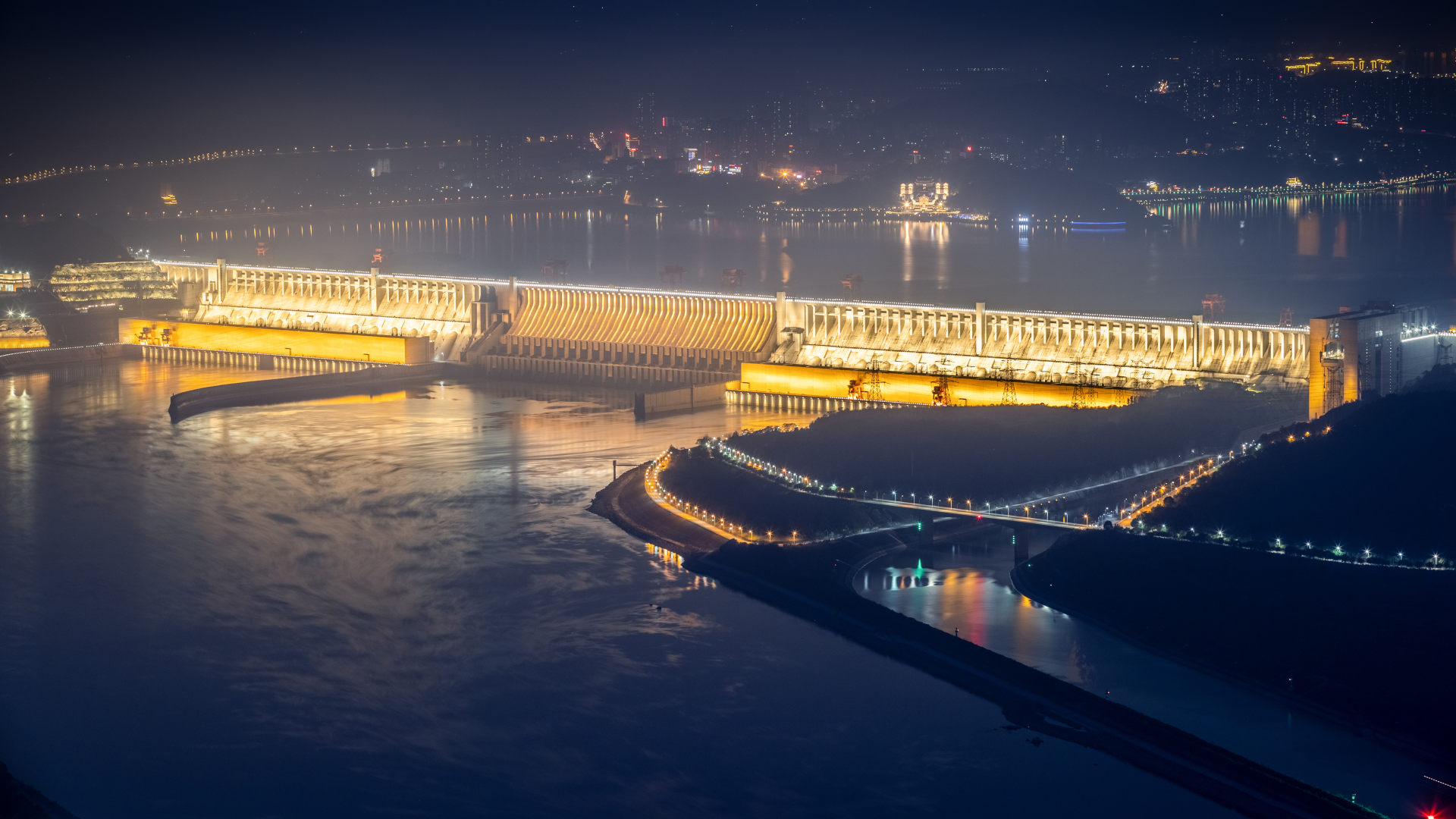
The World Bank and Democratic Republic of Congo officials also have been negotiating the terms of a deal that would include financing Inga 3, the third of eight proposed dams in a megaproject known as Grand Inga. Jaw-dropping in scale, Grand Inga is a $100-billion venture that would be the world’s largest dam scheme, nearly doubling the power output of China’s Three Gorges, currently the world’s largest hydroelectric dam, and potentially bringing electricity to a sizable chunk of the African continent. It would also reconfigure the hydrology of the world’s second-most-powerful river, the Congo, in what opponents consider to be environmentally harmful ways.
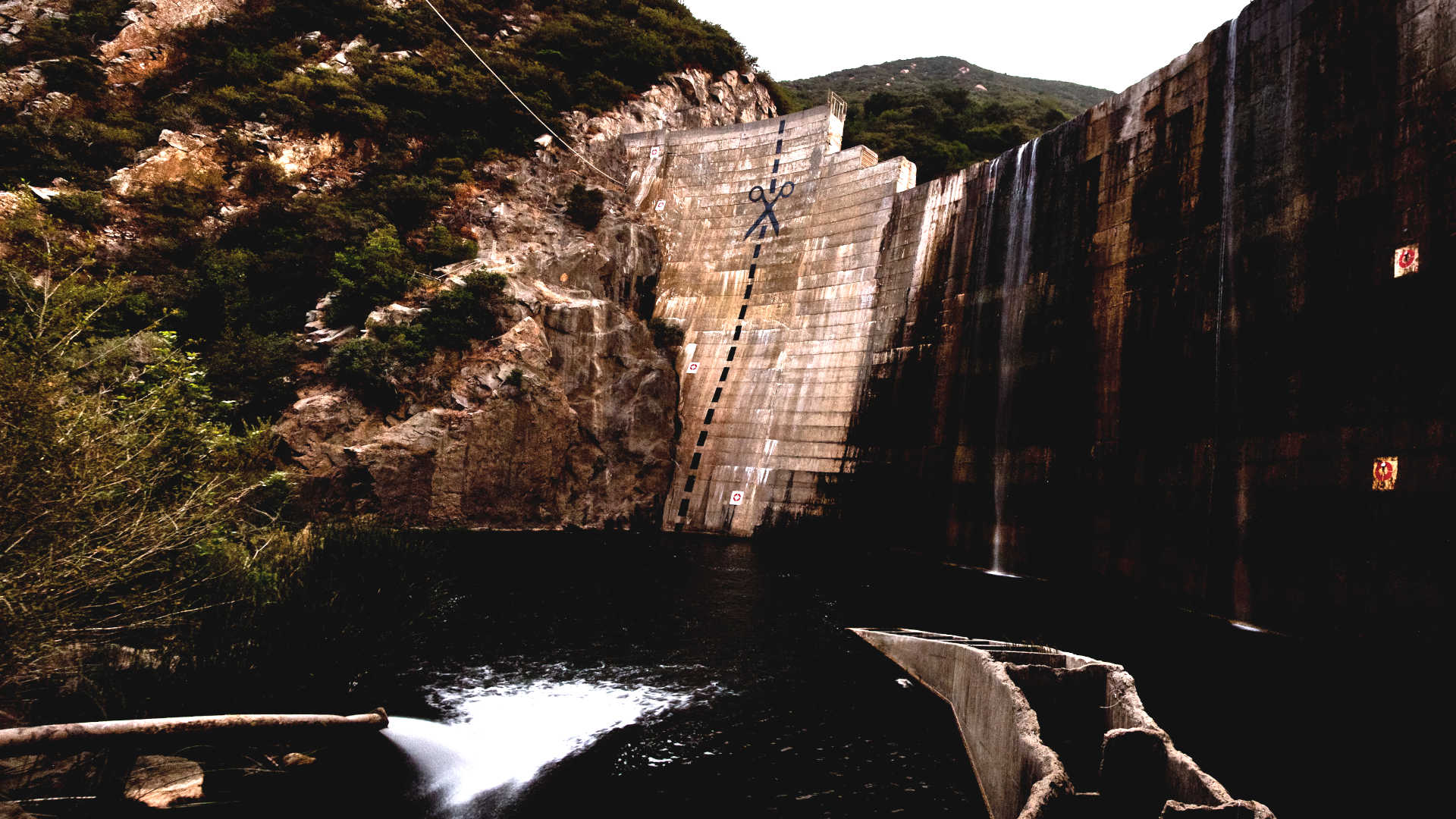
In addition, last April the bank “agreed in principle” to lead a consortium of international and regional banks financing a $1.1 billion dam, one of Nepal’s biggest, on the Arun River. Called the Upper Arun, the dam is backed by Indian companies, and its electricity is intended for export to India. But Nepal is already sated with hydroelectricity, and as My Republica, a Kathmandu newspaper, reported in October, it has for several years been wasting massive amounts of produced electricity because of the inadequacy of its transmission lines. The Upper Arun dam is also being built in a region that’s highly vulnerable to earthquakes and to floods caused by the bursting of ice dams on glacial lakes.
The bank’s role in these projects marks a sharp shift in its approach towards hydroelectric dams. “Rogun and Inga are the biggest dams in the world, on a scale we haven’t seen in decades,” said Josh Klemm, co-executive director of International Rivers, an Oakland, California-based river protection NGO. From 2014 to 2024, the bank supported only one new major hydropower project, Nachtigal in Cameroon. Yet by mid-2025, the bank’s board of directors is likely to approve financing for five major dams, including Rogun and Inga 3.
“We are witnessing a massive move [by the World Bank] to consider financing a range of large projects expected to have huge impacts on river basins, or that have already provoked huge, historic controversies,” said Eugene Simonov, coordinator of the Rivers Without Boundaries International Coalition and a researcher at the University of New South Wales, Canberra, in an interview. “The World Bank is revisiting projects it once dropped because of obvious challenges and risks, but those risks did not go away.”
In response to questions, World Bank officials said in a statement, “There has been no policy change on financing hydropower.” The statement continued, “Nevertheless, it has become increasingly clear that hydropower is an important component of promoting clean energy investments,” citing hydropower’s potential to supplement solar and wind energy.
The World Bank’s support for big hydro has been intermittent since the late 1990s, when social and environmental controversies sparked by its dam-building efforts spurred it to convene an investigative body — called the World Commission on Dams — of 12 independent experts to make recommendations for proper planning, design, and construction procedures for big dams. But the bank found the Commission’s recommendations, issued in 2000, so restrictive that it dismissed them. Instead, it adopted a policy of “High Risk/High Reward” that wholeheartedly embraced big hydro. But the bank backed off when its dams once again triggered controversy. In 2013, the bank tried again to back big hydro, then backed off until 2018, when it softened its social and environmental standards for such projects.
“We believe the bank’s rediscovered fondness for big hydro reflects a desire by Ajay Banga, the bank’s president since June 2023, to kick off his tenure with a splash, even if that involves overlooking environmental and social issues that previously would have ruled the projects out,” said Klemm.
“The World Bank is revisiting projects it once dropped because of obvious challenges and risks, but those risks did not go away.”
Yet bank officials seem to be playing down hydropower’s renewed prominence in their plans, experts say, noting that they may not want to draw attention to the high costs of building dams at a time when President-elect Donald Trump may be considering ending U.S. support for the bank. Project 2025, the compendium of controversial nationalist policies devised by advisors close to Trump, says the new administration “should withdraw from both the World Bank and the International Monetary Fund and terminate its financial contribution to both institutions.” The U.S. is the bank’s largest contributor.
No matter how many of these projects result in completed dams, experts believe the bank’s involvement will not alter the global dam-building industry’s current downward trajectory, for many increasingly obvious reasons. These include dams’ enormous upfront costs followed by waits of as long as a decade or more before electricity revenues begin flowing; their destruction of fisheries and riverine ecosystems; their displacement of a conservatively estimated 80 million people around the world and their damage to the livelihoods of a half-billion more; their substantial emissions of methane from some reservoirs; their steep reductions in energy production when drought — which is increasingly common due to climate change — empties reservoirs, as is currently happening in southern Africa and elsewhere; and the seeming coup de grace, their declining competitiveness with increasingly less costly wind and solar installations.
Get Our Newsletter

Despite all this, hydro advocates argue for the technology’s capacity to generate huge quantities of renewable energy in countries where most people don’t have any electricity at all. Whereas dam industry officials once promoted their projects as critical to the economic development of countries or regions, they now talk up hydro’s potential to complement solar and wind.
River protection NGOs such as International Rivers argue that the bank’s imprimatur lends an unjustified sheen to the industry, encouraging other regional and international banks to support still more dam projects. “We are writing to express our collective alarm at the notable surge in proposed and recent World Bank support for extensive hydropower development,” began a nine-page, October 23 letter to bank leaders signed by more than 100 environmental NGOs around the world. The letter called on the bank to stop investing in virtually all hydropower projects. The bank answered promptly but cursorily, reaffirming its “partnership” with the NGOs, but it did not address the letter’s points.
Rogun and Grand Inga have been magnets for controversy for decades. Tajikistan is a locus of competition in Central Asia, with Western, Arab, Russian, and Chinese interests all competing for political and economic leverage; one way for Europe and the U.S. to gain influence with Tajikistan’s leaders is to help them build the world’s tallest dam there. Supporting Rogun may be a particularly potent tactic as the project is highly popular in Tajikistan and, according to Simonov, the nation’s leaders are “obsessed” with the dam. One of Rogun’s liabilities is that it will displace between 50,000 and 60,000 people, according to a World Bank document. Simonov said engineering firms proposed alternate plans to build a dam that would be at least 115 feet lower and displace up to 30,000 fewer people. Officials rejected those plans, according to Simonov, because their primary interest was in the prestige they believed would come with building the world’s tallest dam.
Between 2033, when Rogun is projected to be completed, and 2039, when its reservoir is slated to be full, the dam will begin generating electricity and, according to an appraisal prepared for the bank’s board of directors, “will bring significant domestic and regional welfare benefits, contribute to the decarbonization of regional power grids in Central Asia, and potentially transform the Tajik economy.” Of more immediate interest to Tajiks, the dam’s output should eliminate the electricity blackouts that disrupt heating during the country’s cold winters. The catch is that the water that will turn the Rogun power plant’s turbines in the winter will be impounded from the Vakhsh River during the summer, which means it will no longer reach farmers and others who depend on it downstream in Afghanistan, Turkmenistan, and Uzbekistan, according to Simonov. Rogun will also severely threaten Tajikistan’s Tigrovaya Balka Nature Reserve, a UNESCO World Heritage site, by permanently eliminating floods crucial for sustaining floodplain forests, environmentalists say. And by the time the dam is finished, according to the October 23 letter from NGOs to the World Bank, other renewable electricity options are projected to be far cheaper.
The World Bank appraisal of Rogun categorized the project’s overall risk as “high.” Among the risks it enumerated were the limited experience of Tajik officials, which has resulted in both design and construction delays and “technical and dam safety issues”; the project’s impact on national debt; the poor performance of Tajikistan’s electricity sector, which could limit revenues from electricity sales; and the project’s location in an active seismic zone.
Whereas dam industry officials once promoted their projects as critical to the economic development of countries or regions, they now talk up hydro’s potential to complement solar and wind.
Like Rogun, Grand Inga, in the Democratic Republic of the Congo, has a convoluted history. Long after the construction of Inga 1 and Inga 2, in 1972 and 1982 respectively, the poorly maintained dams provide electricity to only one in five Congolese, a condition that the proposed Inga 3, at a cost of more than $14 billion, will not change. Of Inga 3’s enormous projected output of up to 11,000 megawatts, 5,000 would be exported to South Africa (after the construction of transmission lines costing another $4 billion); 3,000 would be routed to mining companies in the DRC’s Katanga province 1,700 miles away; and the rest would be used to improve electricity reliability in Kinshasa, the nation’s capital. Rural residents would continue to do without.
A study comparing greener energy alternatives to Inga 3, published in Environmental Research Letters in 2018, suggests that the dam is not financially prudent. It concludes that in most scenarios, “a mix of wind, solar photovoltaics, and some natural gas is more cost-effective than Inga 3.” Since the study appeared, the costs of solar and wind have only declined.
Jacques Leslie is a Los Angeles Times op-ed contributor. His book on dams, “Deep Water: The Epic Struggle Over Dams, Displaced People, and the Environment,” won the J. Anthony Lukas Work-in-Progress Award.