








Interview: Sylvia Fogel on Rethinking Autism Research


In 2010, Sylvia Fogel’s 2-year-old son developed an upper respiratory illness and soon lost his ability to speak, make eye contact, and relate with others. He screamed for long periods of time and could not be consoled. “Within, say, a few days — maybe max, two weeks — the child I knew was gone,” recalls Fogel. She was a psychiatrist on faculty at Columbia University at the time and was able to take her son to multiple specialists. Nobody could explain what had happened, or how to help, she said: “I was told what many parents are told. That this is simply part of autism.”
Now an instructor at Harvard Medical School and a practicing psychiatrist, Fogel was recently named to lead the Interagency Autism Coordinating Committee, a decades-old federal group that meets several times a year and advises the secretary of Health and Human Services on autism-related issues, including how to spend the billions of dollars earmarked by Congress for autism research and social services.
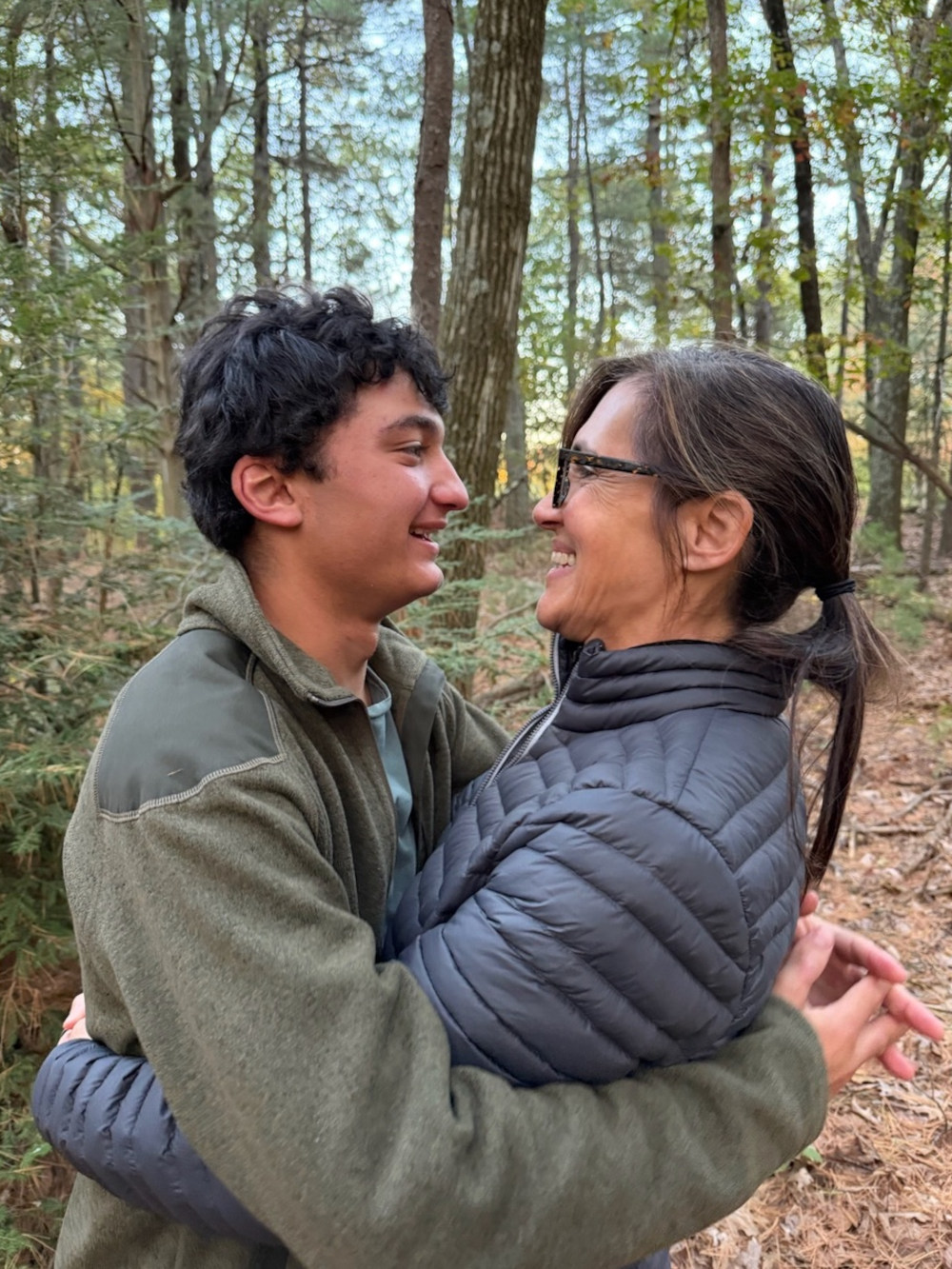
Sylvia Fogel with her son, who has profound autism. Fogel is a practicing psychiatrist, instructor at Harvard Medical School, and the new chair of the federal Interagency Autism Coordinating Committee.
Visual: Courtesy of Sylvia Fogel
The appointment of Fogel and 20 other new public members was announced in late January at a time of heightened government scrutiny of vaccine safety. Much of the news coverage pointed to some of the new members’ vaccine-skeptical views and promotion of unproven treatments. In the wake of the government’s announcement, a rival autism committee sprung up. According to its website, the group plans to “follow the meeting schedule of the Kennedy-appointed IACC” in order to “respond quickly to any recommendations that are not supported by science.”
Both committees were originally slated to hold their first public meetings on March 19, but the federal committee’s meeting has since been postponed.
Undark sat down with Fogel twice, first to discuss her views on rising rates of autism — which some experts attribute in large part to a broadening of diagnostic criteria and awareness — as well as autism research, vaccines, and her vision for the IACC. In a follow-up conversation, Undark asked for her thoughts on the rival group, called the Independent Autism Coordinating Committee.
Fogel is a contributor to the Autism Innovation Coalition, a group of researchers, clinicians, and policy experts who are interested in the role of biological systems like cellular metabolism and the immune system in autism. “My focus as both a parent and a clinician is primarily on whether research has translated into meaningful improvements in day-to-day functioning, or into prevention or medical treatments,” she told Undark. “And honestly, on those fronts, we don’t have much to show yet for the billions of dollars spent on autism research.”
Fogel spoke in her personal capacity, noting that her views do not necessarily represent those of the IACC or any federal agency. Our interviews were conducted over Zoom and email and have been edited for length and clarity.
Undark: In the U.S., autism diagnoses have been rising for years. In your view, this increase isn’t just due to the broadening of diagnostic criteria — the environment is playing a role as well. Can you discuss this?
Sylvia Fogel: Look, I think broader diagnostic criteria and increased awareness have definitely contributed to rising autism prevalence rates globally. Screening practices have evolved and diagnostic definitions have expanded. However, large-scale studies show that these factors explain only part of the increase — and they don’t justify dismissing today’s staggering autism prevalence as a mere artifact of labeling.
We have good data to support what I’m saying. A 2002 study from researchers from UC Davis MIND, which analyzed California Department of [Developmental Services] autism tracking data, found that the observed increase in autism cases could not be explained by a loosening of criteria used to make the diagnosis.
Similarly, there was a 2009 study published in the International Journal of Epidemiology using that California data that suggested that diagnostic changes really could only explain roughly 25 percent of the increase in rates between 1992 and 2005. And then a largescale study from Denmark from 2015, published in JAMA Pediatrics, indicated that 60 percent of cases in their dataset could be explained by diagnostic changes, leaving 40 percent unaccounted for.
But alongside the increase in overall prevalence, cases of profound autism have also risen. I think this is very important. Profound autism is the term for people who are nonverbal, or minimally verbal, and have significant functional disability that leaves them needing 24/7 care.
Clinically, these are individuals who may have self-injury, aggression, and/or life-altering sensory and motor dysregulation, making it difficult to function and participate in the community. These are individuals who need help with the most basic tasks, like dressing and toileting.
CDC data indicates that profound autism roughly doubled from 2000 to 2016, accounting for 26 percent of cases with autism. So the argument that the rise in rates is only driven by kids with mild symptoms is simply not correct.
I want to add that those with level 1 autism — those requiring minimal supports, those who may have been diagnosed, let’s say, with Asperger’s syndrome in years past — they also have significant day-to-day challenges, and in my clinical experience, frank suffering. They want help as well. They often have serious co-occurring neuropsychiatric symptoms, like anxiety or obsessional symptoms, along with sensory processing issues that lead to significant discomfort.
UD: What has autism research done well over the years and where is it falling short?
SF: We’ve gotten better at early identification and screening, which allows children to access services sooner. There have also been important advances in behavioral and educational interventions that can improve trajectories for some children. And genetics research has made enormous strides in identifying risk genes and helping us understand the biological complexity and heterogeneity of autism.
[Also], we now have a substantial body of research suggesting that autism is associated with mitochondrial dysfunction, oxidative stress, along with immune dysregulation, gastrointestinal issues, microbiome differences. In my clinical experience and in discussion with colleagues, many anecdotal clinical improvements in autism are related to interventions which attempt to support or shift redox status, mitochondrial functioning, immune system functioning, or the microbiome.
I hope that the IACC will provide recommendations around this: We need nimble adaptive clinical trials, so that anecdotal treatment successes don’t remain as quote, unquote, unproven anecdotes, but can be tested in appropriate sub-cohorts.
I also want to acknowledge that there is a subset of individuals with autism who feel autism doesn’t need to be treated, that society needs to adapt. They interpret calls for prevention and treatment as eugenics, meant to eliminate their existence.
I fully intend, as chair of IACC, to listen to all voices in the autism community, and I appreciate the importance of inclusion and respect for people with differences. It’s crucial. But I also believe these voices do not represent the bulk of the autism community and have been overrepresented in public autism debates, including at the IACC.
These are individuals with the lowest support needs, who can speak and interact publicly, and are often successful in their chosen fields or pursuits. We can simultaneously respect differences and fight for inclusion while addressing the needs of those who are most marginalized by virtue of their disabling autism symptoms and significant medical conditions, which leads to significant day-to-day suffering and incredible challenges for caregivers.
Another place where we haven’t done a great job in research is focusing on treatments for co-occurring conditions. Research shows that about 75 percent of those with autism have a significant co-occurring medical condition, and in my clinical experience, often multiple conditions. Data shows that those with profound autism, in particular, or high support needs, have more medical comorbidity.
I think we need to actually reframe these medical conditions. “Co-occurring” is an easy way to talk about them, but on a conceptual level they may stem from common underlying changes in cellular and subcellular functioning at the level of mitochondria and oxidative stress and cellular functions.
UD: What is your vision for this committee?
SF: I want to increase the committee’s access to both stakeholder input and researchers from a range of disciplines. I’m hoping that the committee as a whole wants to establish active working groups to do the granular, painstaking evaluation and research that is needed to evaluate federal autism policy.
I’m hoping for active listening sessions so that stakeholders can participate, hopefully by Zoom, to keep costs down and invite participation from across the country, and making it accessible for those with significant caregiving demands who otherwise wouldn’t be able to participate in IACC procedures.
I’m hoping we can also do multiple online workshops involving researchers and academics so we can make research funding recommendations that truly serve the needs of the autism community and prioritize translation of research into treatments and prevention.
I think finally, the IACC should move away from broad consensus reports to robust focus on gaps in autism research and policy. My goal and hope is that our committee will provide HHS with granular, actionable policy recommendations.
UD: A lot of the initial reporting on the new IACC focused on members’ criticism of vaccines. What would you say to people who are worried that this committee is going to recommend researchers go on a wild-goose chase to find a link between vaccines and autism?
SF: Well, our committee has no statutory authority with respect to vaccines or vaccine policy. Our authority rests with autism research, treatment, prevention, safety, and services across the lifespan. What we will be focused on are policy recommendations that will improve the lives of those with autism, such as access to support services, improving safety systems — wandering and drowning are a major morbidity risk for those with autism.
We want to address the inevitable housing crisis that’s already started for those, certainly with high support needs and profound autism, whose needs are simply too great to live at home, along with those with high support needs, who will, in the coming decade or two, outlive their parents and caregivers and need safe supported housing.
We’ll also be focused on investigating or hoping to recommend more research around novel communication methods like typing and spelling for those with minimally verbal or nonverbal autism. We need to address the enormous wait lists facing those who need Medicaid waivers, and also to hopefully come up with policy recommendations that prevent states from cutting Medicaid waiver access, which I think is on the table in some states.
In terms of research, as I’ve mentioned, we desperately need more definitive understanding of the factors which increase the risk of autism and a deeper mechanistic understanding of underlying cellular and subcellular functions that are impacted by a range of potential environmental exposures.
UD: In your view, is it anti-vaccine to ask if specific subpopulations are vulnerable to developing autism from vaccines?
SF: I want to just kind of come back to the phenomenon of neurodevelopmental regression, which I mentioned in connection with my own son. Studies show that roughly 30 to 40 percent of autism parents report acute neurodevelopmental regression, where children like my son lose eye contact, speech, relatedness, cognitive functioning, even their personality.
We have good data that those that had a regression have worse functional outcomes and higher rates of medical comorbidities. We don’t know what triggers regression, and we certainly don’t have good standard of care treatments for what should be an unequivocal medical emergency.
Large-scale population studies have not shown a relationship between the MMR [vaccine] and autism, or the preservative thimerosal and autism. But we don’t have very good data about neurodevelopmental regression or other potential vulnerable subpopulations, which is important because autism is extremely heterogeneous.
This kind of research needs to be focused on mechanistic investigation at the cellular and systems level, so that we can look into a range of biological and environmental factors that may contribute to regression, in particular, and to the risk of autism in general, in certain subsets of people.
UD: A rival autism committee is meeting on March 19. What are your thoughts on this group and its efforts?
SF: The rival group was spearheaded by individuals well-known in the autism research community. I believe all autism stakeholders should follow their passion and beliefs. The autism community needs a variety of voices. However, I believe the community, especially research priorities, will be better served by ongoing, respectful collaboration and dialog. Furthermore, this quote, unquote, independent committee has no statutory authority with respect to autism policy.
UD: Last year, you appeared in a documentary produced by Del Bigtree, a prominent anti-vaccine advocate. Can you talk a bit about your decision to appear in the film?
SF: Vaccines are an important tool for controlling and mitigating infectious illness, and as a physician, I take infectious disease very seriously. The documentary in which I participated referenced an unpublished observational study of over 18,000 children within the Henry Ford Health System in Michigan — a vertically integrated payer-provider system with comprehensive longitudinal data.
The study compared long-term health outcomes among children receiving one or more vaccines with those receiving none during the study period and reported associations between vaccination exposure and an increased risk of a number of chronic health conditions. However, it was observational in design and subject to important limitations, including potential confounding and differences in health care utilization between groups, and therefore cannot establish causality. I became aware of the study several years ago and had assumed it would ultimately undergo peer review and broader scientific scrutiny.
As a clinician working in the autism community, I have longstanding experience with families who have questions about the vaccination schedule, particularly in relation to neurodevelopmental trajectories. I also have an academic interest in the emerging concept of non-specific, or “off-target,” effects of vaccination — namely, the hypothesis that immune interventions may have broader downstream effects on immune function. This remains an area of ongoing investigation, with mixed data, and is not a widely accepted framework.
Large-scale population studies have not found an association between the MMR vaccine or thimerosal-containing vaccines and autism risk. At the same time, there remain acknowledged gaps in the literature regarding vulnerable subpopulations and cumulative exposures, as noted in a 2013 Institute of Medicine report (now the National Academies of Sciences, Engineering, and Medicine). More broadly, some leaders in vaccinology have highlighted the need for stronger investment in post-licensure safety science, including approaches better suited to addressing questions of causality and individual susceptibility, as detailed in a 2024 New England Journal of Medicine viewpoint.
The study referenced in the documentary was not ultimately published. I had no role in the film’s conception, framing, or production; I agreed to be interviewed solely to discuss the scientific questions raised by the study. My view was — and remains — that findings from observational work, particularly when they are unexpected or controversial, are best addressed through transparent peer review, replication, and improved study design rather than remaining unexamined.
I chose to participate because I believe that open scientific questions — particularly those involving complex systems such as immunology and neurodevelopment — should be addressed through rigorous, transparent inquiry. It is reasonable to ask whether current research designs fully capture long-term and heterogeneous effects across populations, even as the overall safety and public health value of vaccines is well established. Because vaccination policies operate at a population level, there is a corresponding responsibility to continue refining the evidence base using methods capable of addressing these more nuanced questions.
This perspective is informed, in part, by my family history. My parents grew up in a totalitarian system where open inquiry was constrained, and that experience has shaped my own commitment to ensuring that complex scientific questions — particularly those that are unsettled — can be examined openly, rigorously, and within appropriate scientific frameworks.