









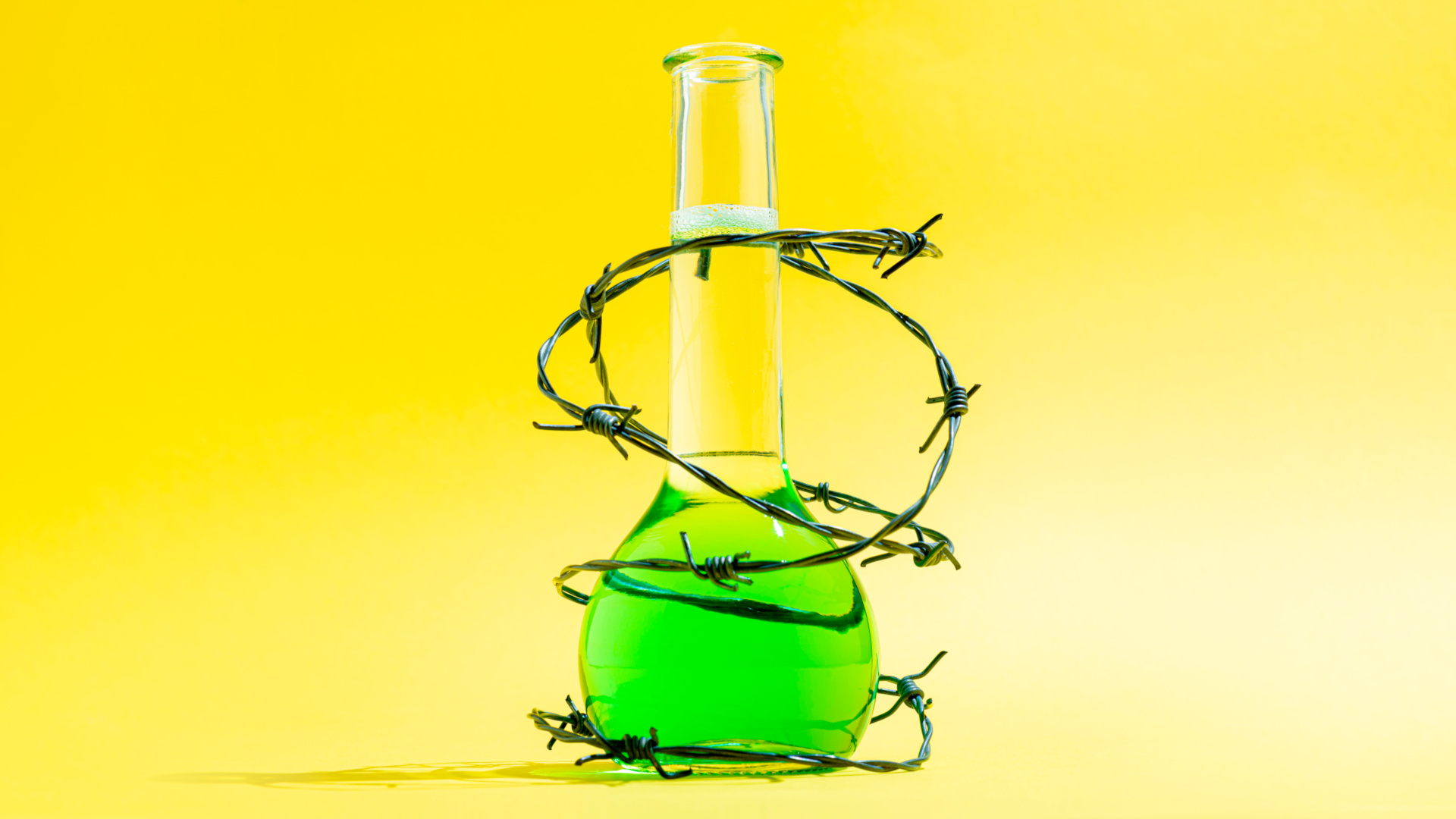
An old adage tells us that pressure can burst a pipe, but pressure can also make a diamond. It’s a soothing creed for life’s tumult. It applied most directly to me during my past life as a sometimes-boxer by suggesting that the fighter with less talent (me in my youth) can win by smothering their opponent, throwing punches in high volume, and making their foe uncomfortable. Pressure, this pugilistic advice goes, is the best way to expose the fragilities of adversaries.

The analogy applies to the current war on science, now a year old. My academic colleagues and I feel overwhelmed by the never-ending subversion from the Make America Healthy Again, or MAHA, movement. We are collectively flummoxed, without a plan of action, and vulnerable to every body blow from an emboldened challenger. The worst consequences of the war on science are not the direct ones, like the funding cuts and the attacks on DEI and free speech. Rather, the most harm comes from the stress imposed by President Donald Trump’s health and science leadership, who have nevertheless revealed enormous flaws in the process of science — ones that we could have fixed many moons ago and must fix today if we want science to survive.
In reflecting on the war on science, we should note that there is no silver lining. We shouldn’t accept the notion that the goals of science’s opponents are anything but to maim our scientific machine. Any appeal to the movement’s desire for improved well-being is delusional at best, and is more likely nonsense. We shouldn’t force ourselves to extract meaning from an ordeal. However crude it may sound, “This sucks” is an appropriate response.
President Trump’s executive order “Restoring Gold Standard Science” was the worst kind of poison: It looks, smells, and tastes exactly like a healthy meal.
But in the midst of our rage, we must confront some major flaws in modern science that have been weaponized against us. And they come to light through the answer to a disquieting question: Why does the public seem largely indifferent to the attacks on science?
In our grant proposals, we argue that our work is for the public good. And for the most part, we’re telling the truth. But while different issues have contributed to Trump’s low approval ratings, there is little evidence that attacks on science are among them. We can illustrate this with a fictional scenario: Take away college football tomorrow and watch college towns descend into chaos. But when they came for our pipettes and microscopes, almost nothing happened. This may be related to the public view that higher education is headed in the wrong direction.
This comparison is not meant to lampoon American voters, or their priorities. Instead, it highlights the naivete of professional scientists who have functioned with bipartisan support until recently, rarely needing to justify our practices to the taxpayers who make our work possible. But this is no longer true: Our flaws are laid bare, and MAHA has identified effective ways to take advantage of them.
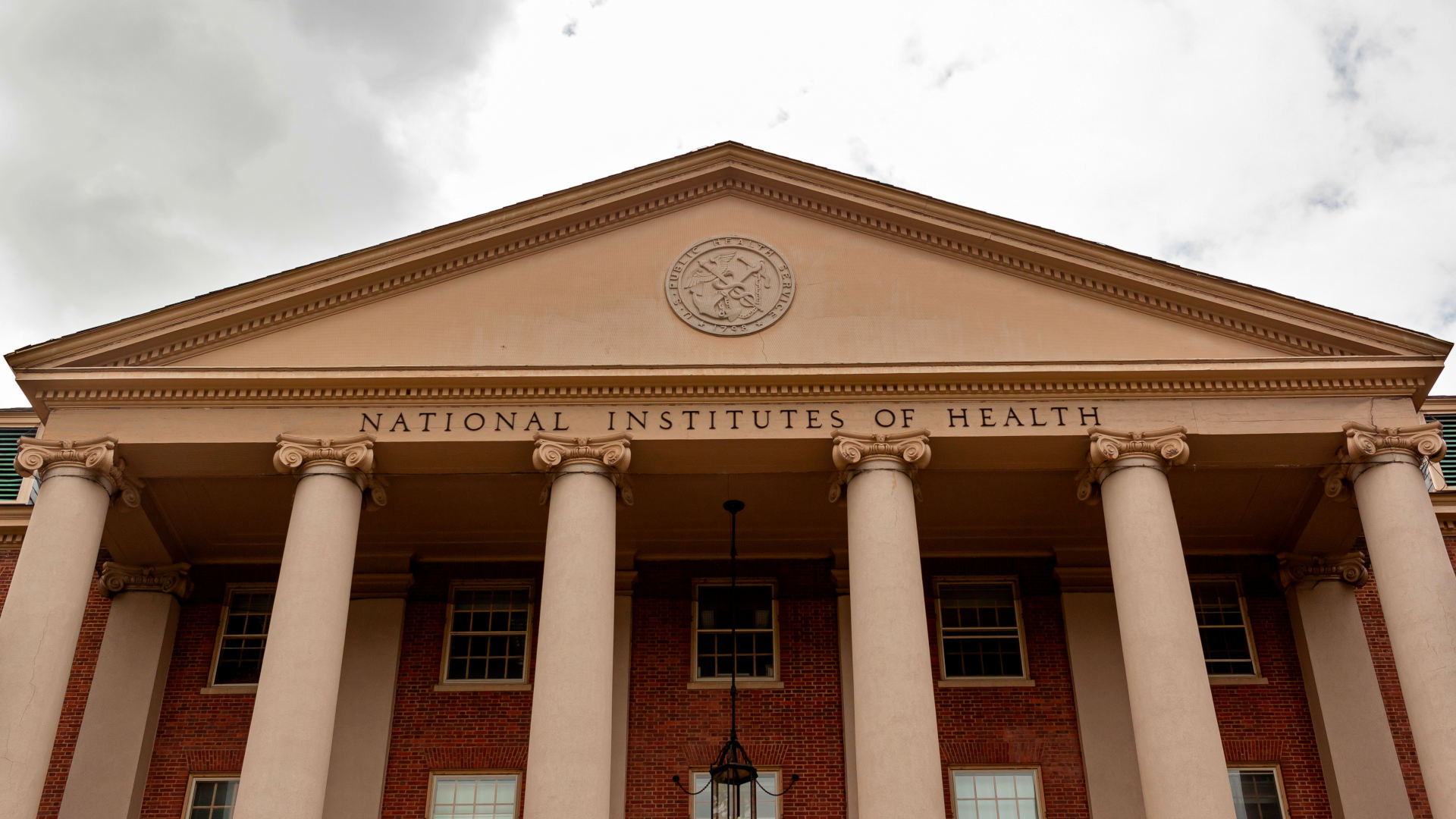
Like many, I believe that the May 2025 White House executive order, “Restoring Gold Standard Science,” was mostly cover for an ideological attack on the scientific establishment. The problem is that many of the order’s central pillars — the need for transparency, an emphasis on reproducibility, and the communication of uncertainty — would exist in a hypothetical policy statement authored by progressive foes of MAHA. That is, the May executive order was the worst kind of poison: It looks, smells, and tastes exactly like a healthy meal.
Consider the often-discussed reproducibility crisis, whereby the results of a large number of studies in certain subfields cannot be replicated using published procedures. Some believe that it has been overblown, or manipulated by enemies of science in order to seed distrust. But the inability to reproduce findings is a major problem. And within the crisis lives very real oddities about the manner in which science has been conducted for many decades. Yes, modern science is enamored with splashy results, often at the expense of methodological rigor or transparency. Yes, the incentive structure in academia encourages the generation of data and manuscripts that secure short-term attention, not longevity and robustness. Even worse, outside of evidence for malfeasance or glaring technical errors, there are few penalties for producing high-impact science that no one else can replicate or build upon. Although publications like Retraction Watch have helped to identify large missteps and instances of fraud, many ways to conduct bad science escape detection.
We say that MAHA should respect the notion of scientific consensus. But privately, we’ve rolled our eyes at the notion for years. Take the recent controversy over the “amyloid mafia” in neurodegenerative disease research, who propose that the buildup of amyloid-beta proteins in the brain are responsible for Alzheimer’s disease, despite evidence that the cause might be more complex. The influence of this group demonstrates that consensus can be dominated by leviathans. Science cabals can push ideas that are flimsy, stifle diversity, and suck the air of innovation out of entire fields for decades. Sure, consensus is important — all ideas are not created equal, and bullshit is a very real, dangerous thing. But quietly, most of us know that consensus can be fraught. And yes, this problem existed long before MAHA.
We say that cuts to federal funding are a problem. And we should shout it louder, because it is true. But during our pre-2025 departmental happy hours, we scientists also shared our frustrations around funding priorities, indirect costs, the reliance on public money for salaries (in the context of “soft money”), and the tendency for scientists to propose safer research questions to funding agencies, rather than lead with our most creative (often risky, and sometimes best) ideas.
Science has gaping holes that have already been exploited by the ill-intentioned. We’ve run out of options, and there is nowhere to hide.
Many scientists have raised these concerns for decades, and too often they are written off as empty complaints. But there are real solutions. Science should consider a formal, organized, widespread re-evaluation of all of its key processes, and be willing to overhaul them. This goes for how we hire and promote, how we share our results, and how our productivity is evaluated. It applies to how we build our research groups, train junior scientists, and fund our research programs. In sum, this might constitute a cultural revolution within science, which may sound hyperbolic but is also necessary. Because the problems with science cannot be fixed with duct tape. Science has gaping holes that have already been exploited by the ill-intentioned. We’ve run out of options, and there is nowhere to hide. It’s time to stop grieving over an imaginary golden age that never existed.
For conundrums like this, the best advice is of the sort uttered to me, not by my boxing instructors, but my late mother: To bullies, she would suggest that I stand and fight. And to difficult circumstances, she would insist that we adapt or die. The adages tell us that the best form of resistance is to show some courage, and rethink everything about our approach, if necessary. When it comes to science, this might mean a willingness to rebuild our suddenly sullen profession from scratch.