










Interview: Lifting the Veil on America’s Addiction Rehab Industry
In her new book, “Rehab: An American Scandal,” journalist Shoshana Walter delves deeply into the nation’s drug treatment industry and finds it sorely lacking. The book traces the journeys of four individuals enmeshed in the system — two people working toward recovery, a physician, and a bereaved mother — and offers insight into just how difficult it can be for vulnerable people and their families to find high-quality treatment for opioid addiction.

“Rehab: An American Scandal,” By Shoshana Walter (Simon & Schuster, 320 pages).
Their firsthand experiences form the beating heart of the book, in which Walter builds a case that the nation’s health care laws and medical policies have had significant negative consequences. Evidence-based medication, including Suboxone, is often difficult for patients to obtain. Physicians who offer addiction treatment may find themselves facing legal scrutiny. And for-profit rehab centers can exploit residents for money.
The book gives considerable space to a nonprofit rehab provider called Cenikor, which Walter reports received millions of dollars in government funding while subjecting residents to brutal rules and routines. “Every week, each person was required to sit in the middle of a group circle while other patients screamed at them,” one former resident told her.
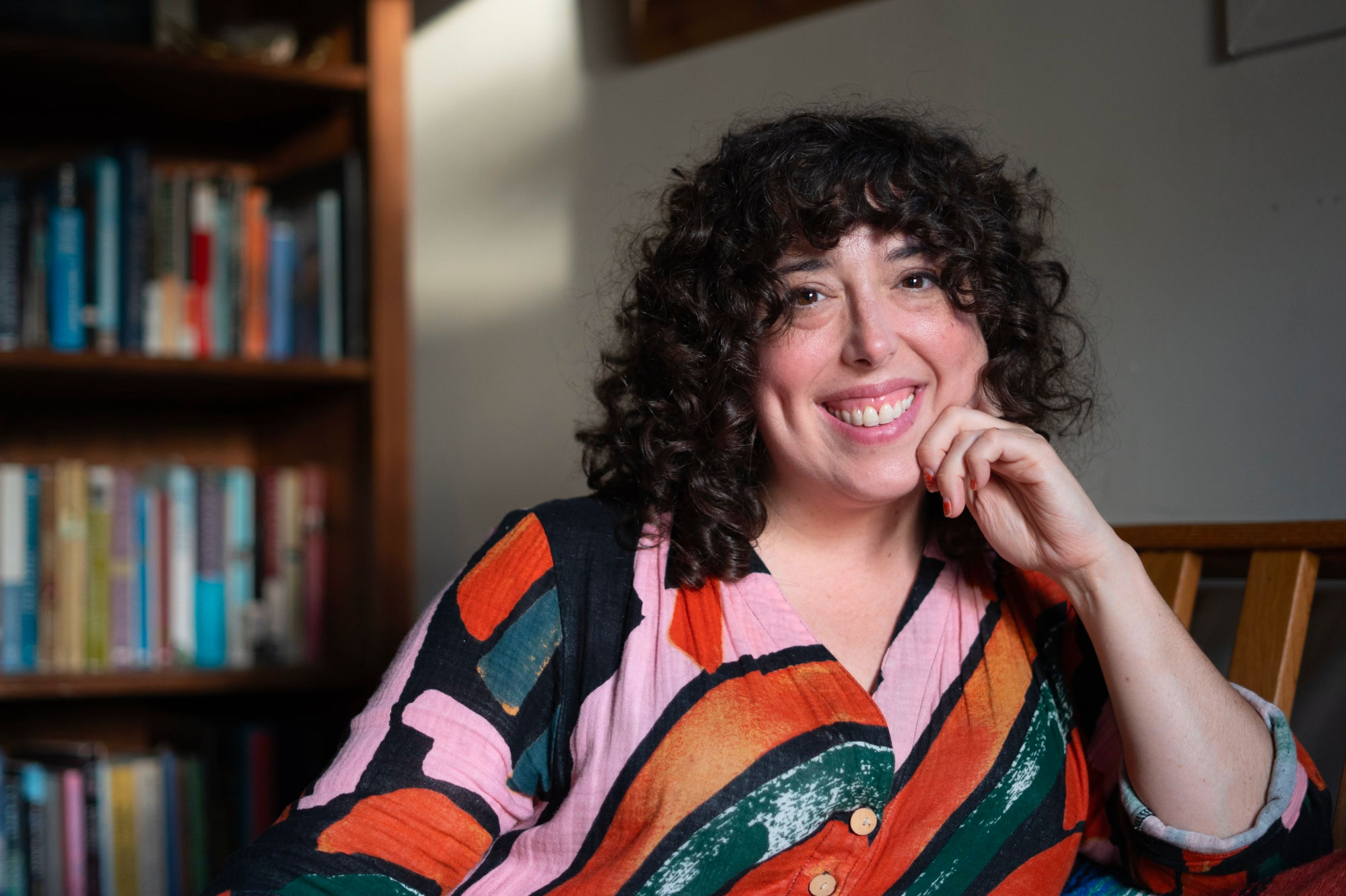
Walter is an investigative journalist for The Marshall Project, and her reporting on addiction treatment was a Pulitzer Prize finalist. Our interview was conducted over Zoom and edited for length and clarity.
UD: Your book describes rehab facilities that operate with a mix of cruelty, incompetence, and recklessness. In your view, what were the most problematic laws or policies that enabled this?
SW: One of the greatest influences over the treatment system that we have today was actually a law passed in the early 20th century called the Harrison Narcotic Act. This was basically our first federal drug law in the United States. One of the things it ended up doing was it essentially barred doctors from prescribing narcotics to people who are known to be addicted.
At that time, you had people who were developing dependencies on drugs like opium, or laudanum, or morphine. Some doctors would basically maintain people on those substances while others would try to treat those people who are addicted to those substances by giving them diminishing doses of those substances. What this law did was basically make it illegal for doctors to do that.
In the aftermath of the law and the Supreme Court rulings that followed it, doctors were arrested in droves. Something like 25,000 doctors were arrested for providing narcotics to people who are known to be addicted. That had the effect of scaring doctors away from providing addiction care and treatment.
Treatment really developed as a silo away from the mainstream medical system.
UD: I was interested in what the book had to say about the Affordable Care Act because it seems that there was a good faith effort to help people with their recovery, but the ACA also had some negative consequences.
SW: It expanded treatment coverage to millions of people, so it was a very important and well-intentioned effort. I think where we’ve gone wrong is that, one, there are still enormous barriers to treatment. People still have trouble entering treatment quickly, or at all. Sometimes those services are simply denied or not covered.
It’s also opened the door to business practices that are not necessarily driven by what’s best for the patient, but what is going to offer the most opportunity for profit. That means that the services that are being offered are often dictated by what insurance companies are willing to cover.
UD: One term I will not soon forget is “body brokering.” Can you talk about what that is?
SW: Basically, there’s this whole industry that has developed around finding patients with the best insurance policies — the highest paying insurance policies — and recruiting them to rehab programs. Rehabs will essentially pay marketing companies, or pay individuals, to go out and find patients with the best insurance and recruit them to that rehab program in exchange for money.
Oftentimes, someone needs treatment — a loved one is looking for treatment for a family member, or you’re struggling with addiction yourself and you’re looking for treatment — you Google a number. You call that number. It may not be an addiction professional who’s going to help you figure out the best program for you. It may be a marketing professional who is working for specific treatment programs, and whose job it is to refer people to that program.
It can be really difficult for patients to navigate the system because there’s so many interests involved. Body brokers are just one of the ways that rehab programs find and recruit patients, even when those patients are really not the best fit for the program, or the program may be exploitative — likely, if they’re using body brokers.
UD: Can you talk a little bit about how Cenikor was able to get away with some of its just blatantly unscrupulous practices?
SW: I don’t know if I fully know.
Cenikor was founded in the ’70s by a formerly incarcerated man. It was a widely accepted practice at the time for rehabs to put participants to work without pay as a way of funding their program. In fact, federal lawmakers were even really excited about this prospect at the time because it meant that “Oh, if the rehab is funding itself through participant labor, then we don’t have to fund treatment at all.” President Ronald Reagan at one point visited Cenikor and actually lauded the program for this model.
But what I found with Cenikor, and it wasn’t just me — I first started reporting on Cenikor when I was a reporter at Reveal and worked with a number of other reporters to look into the program — what I found at Cenikor is that the program was working people to an extreme. They were essentially being hired out as a temporary labor force, but they weren’t being paid any money for their labor. Many of the participants were working up to 80 hours per week. All they would receive in return was a pack of cigarettes per week.
When we were looking into Cenikor, what we found is that this drive for money from this unpaid labor was basically usurping any other feature of the program. Many people I talked to rarely received counseling. Or if they did receive counseling, it was just a brief check-in when they were going to bed at night because they were so exhausted from working. There was really very little time and opportunity to tend to the reason why they were there in the first place.
Chris Koon, one of the people that I followed in the book, he describes just feeling totally powerless and hopeless and exploited. His counselor, who I also talked to for the book, she’s supposed to be providing him with counseling. She would just knock on his door at night and say, “How are you?” And that was it. I think Cenikor shows how this model can really be easily exploited for profit. It really harms the people who are just trying to get care for their addictions.
UD: You interviewed hundreds of people in and out of recovery. The book traces the paths of four. How did you decide whose experiences to focus on?
SW: Chris Koon was someone that I met while working on this podcast series for Reveal called “American Rehab” that was focused solely on this model of treatment and the history of it. Initially, he was pretty hesitant about participating in this because when we first met him, he had just come out of Cenikor and was pretty traumatized still by the experience. But he also really wanted this information out there. He really felt like his civil rights had been violated and that he had been abused.
And then the others I basically found while reporting for the book. Larry Ley was one of the first people that I encountered.
I just happened to stumble across an article about Larry. This was back in 2016, basically announcing the fact that he had been acquitted. Dr. Larry Ley was one of the first Suboxone prescribers in the nation during a time when very few prescribers were open to treating addiction. As a result of what he was doing, he really incurred the scrutiny of local law enforcement and the Drug Enforcement Administration. Eventually, they opened a criminal investigation into him, raided his practice, and arrested Larry and his entire staff. Larry eventually was put on trial and he was acquitted.
His life was pretty much upended by that criminal investigation. After his clinics closed, a lot of his patients really struggled to find another addiction treatment provider because of how difficult it is to find prescribers of this medication. Many of them relapsed. Some of them overdosed.
Larry himself has a history with alcoholism. Larry relapsed as well. So when I met him, he was really desperate for someone to tell his story. I think he wanted an apology, or he wanted an acknowledgment that he had been providing a valuable service to patients who desperately needed addiction treatment at a time when they were really having a very difficult time accessing addiction treatment.
UD: Did these in-depth interviews impact you and on a personal level?
SW: Yes, I think anytime someone opens themselves up to a reporter in such an intimate way, I feel the weight of that responsibility and don’t take that trust lightly. I really took a lot of care in talking to the people who are in this book and really getting to know them. And I wanted to make sure that they weren’t just telling their stories for some book — that their stories are really serving a larger purpose.
UD: Is there anything else you’d like to add?
SW: I went into this book with the intent of investigating our treatment system, but I think one of the things that surprised me about what I learned is that, in fact, it’s oftentimes what happens after treatment that is more important than the treatment itself.
What happens after treatment is so crucial for someone’s long-term recovery. I learned about this concept called “recovery capital,” which is essentially the combination of resources that someone has to draw from to make changes in their life, to sustain changes in their lives. That could be community, social support, housing, transportation, food, economic security. These are all things that people really need in order to leave treatment and really find success in their recovery.
So many people who leave treatment don’t have recovery capital. That is, I think, the key piece that is missing from our treatment system that is preventing a lot of people from getting well.