









Plastic Is Here to Stay. Can It Be Made More Sustainably?
Plastic is a material of possibilities. It can hold groceries and take photographs; it constitutes ski coats and desk chairs and toothbrushes and suitcases. It can do all these things with the same basic building block — polymers, which are hefty strings of molecules. Whether a polymer becomes a rigid suitcase or a thin sheet of Saran wrap depends on the type of polymer, the chemicals that are added, and the way it’s cooked up into the final product.
This story was originally published by Slate and is reproduced here as part of the Climate Desk collaboration.
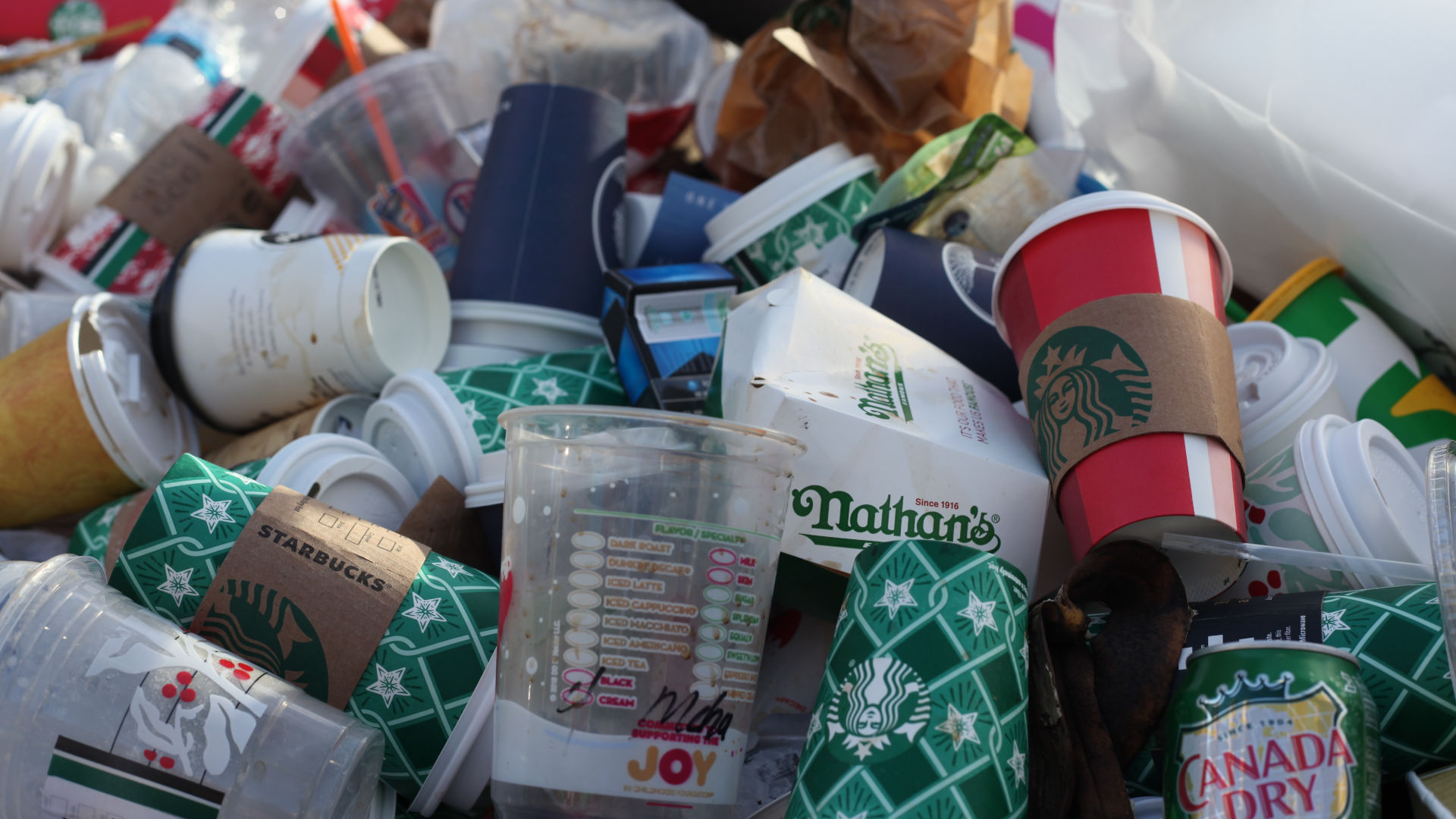
This diversity is what makes plastic so cool and versatile and successful. But that success is one of the reasons we’re now facing a massive plastic pollution crisis. We rely so heavily on plastic that the current amount on the planet weighs more than all land and sea animals put together. Microplastics have been found in human blood and breastmilk, Antarctic snow, and rain. Of the thousands of chemicals added to plastics, about one-third of them remain poorly understood. And the wide range of components in plastic — the diversity that makes it such a useful material — is also what makes it really hard to recycle, contributing to the plastic pollution crisis we’re in today, says Costas Velis, an international expert on the circular economy of plastic.
The plastic problem has gotten so bad that last year more than 170 countries came together to discuss writing a treaty like the Paris climate accords but for plastic. Many experts say that the treaty needs to focus on reducing plastic production. But while this is an important goal, the idea that we’ll just stop needing plastic is “total wishful thinking,” says Velis. “Historically, we’re just producing more and more plastic, because it’s affordable and because it gave us functionalities that we didn’t have.” In fact, plastic production is on track to almost triple by 2060. And the treaty is facing a “coordinated campaign” by the petrochemical industry to slow progress, as seen during the latest negotiations in Nairobi, Kenya, last month.
Since plastic isn’t going anywhere for a while, scientists around the world are working on how to make the plastic we do use less harmful. In the U.S., many of those efforts are focused within a consortium supported by the U.S. Department of Energy, aptly referred to as BOTTLE (bio-optimized technologies to keep thermoplastics out of landfills and the environment). One of the questions the team is trying to answer is: If we have to use plastics, how can we redesign them so they’re sustainable, affordable, safe, and recyclable?
Scientists are exploring a number of different avenues. One obvious answer is to substitute plastic with other materials that serve the same function. After all, people don’t need plastic, points out polymer scientist Brad Olsen at MIT, a member of BOTTLE. “We need things like clothing, health care, shelter. The idea is to provide for those needs with the best materials solution.” That will usually be a polymer, he adds, but it doesn’t always have to be a human-made one. For instance, many naturally occurring polymers are used as materials: cotton, hemp, rubber, birch bark.
But plastic serves a whole bunch of important functions that things like cotton and rubber simply can’t do. So, other research is looking into making polymers that could function like plastic, says Christopher Tassone, lead scientist at SLAC National Accelerator Laboratory in California, which is another member of BOTTLE. One option is to take biomass — like corn or sugar cane — and convert it into small molecules. Those molecules can then be combined into polymers that can function like synthetic polymers. One of the current sustainable polymers, polylactic acid, is made this way, as is green polyethylene, which is starting to be adopted by some major companies in the U.S, says Olsen.
If we have to use plastics, how can we redesign them so they’re sustainable, affordable, safe, and recyclable?
One of the hopes for bio-based plastics is that they could address plastic’s huge contribution to climate change. Right now more than 99 percent of polymers are made from petroleum sources. If polymers were made from biological material instead, this would not only reduce the burning of fossil fuels, but they could actually be carbon-negative, since the material removed CO2 from the atmosphere while it grew. Bio-based polymers can also be biodegradable, which benefits “the health of all animals and plants on the planet” when plastics inevitably end up as litter, says Tassone.
For this approach to take off, though, the cost of bio-based polymers will need to go down, says Olsen. “When you’re producing something that’s identical but charging more, really what you’re charging more for is the fact that it’s made with green carbon.” Consumers will have to either be willing to pay for that, or else scientists will have to figure out how to make these polymers more cheaply. Right now, scientists are busy at work on the latter.
In general, redesigning plastic will require navigating a series of trade-offs between cost, scalability, carbon emissions, toxicity, and more. It’s challenging to develop the perfect plastic that checks all these boxes, but scientists’ goals remain clear, says Tassone: to develop a plastic with a net zero (or even negative) CO2 footprint that is minimally harmful to the environment once it becomes waste.
Another essential question to consider when assessing a material’s sustainability is whether the plastic can be recycled, and how easily. The recycling many folks are familiar with — toss it in the bin, sort it at a facility, and then turn it into something new — is called mechanical recycling. This is always the ideal option, says Tassone.
Get Our Newsletter

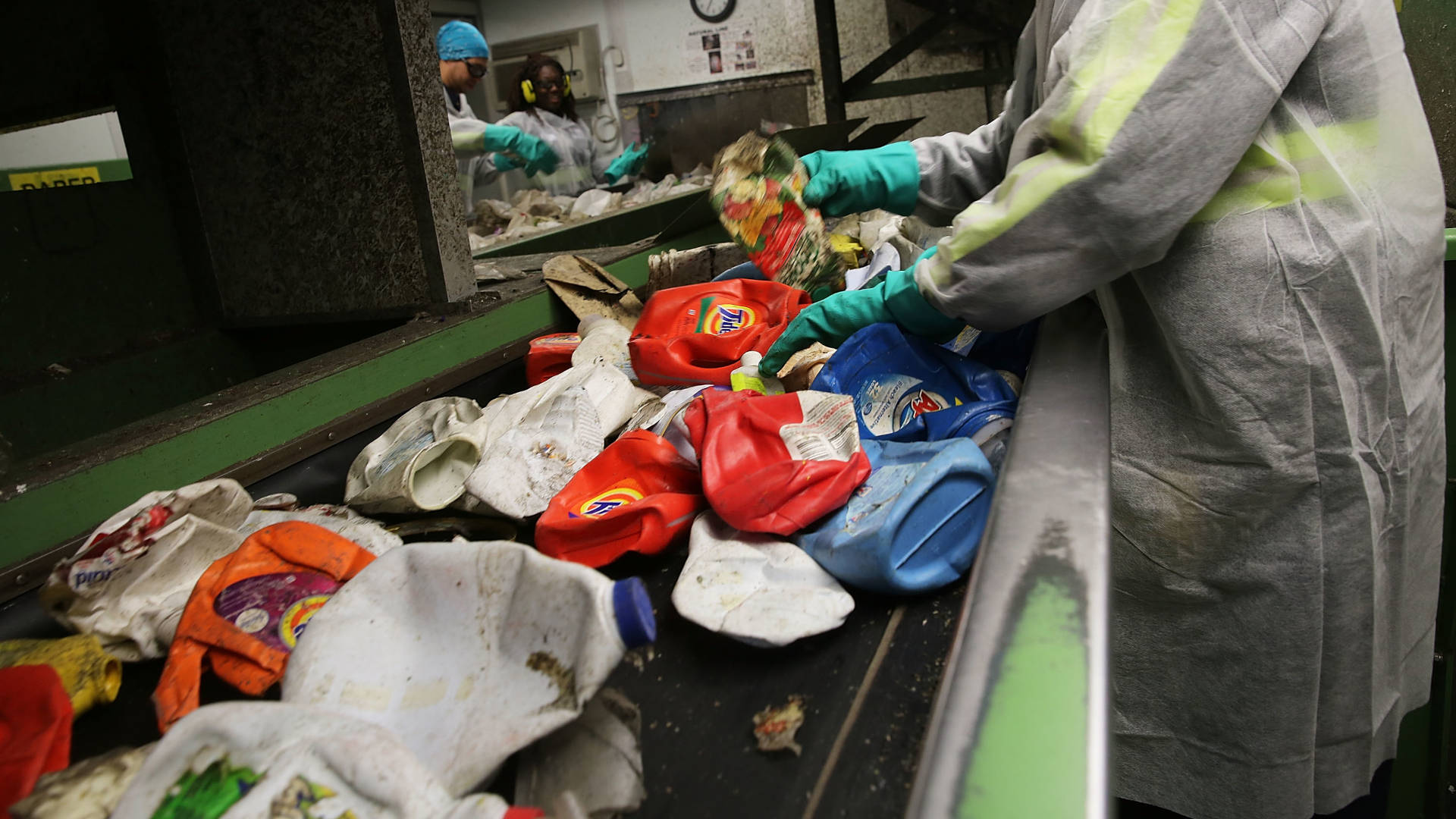
We often hear about all the things that can’t be mechanically recycled, such as single-use plastics. The reality is that a whopping 80 percent of plastics can theoretically be recycled this way, says Velis — and yet less than 10 percent of them actually are. Perhaps the biggest problem, then, is not the science, but the logistics. That’s because, again, plastic’s best trait — its ability to be diverse — is also its worst. Picture this: A factory makes a polymer and sends it to several other factories where they mix it with other stuff. That mixture is then fabricated into a bunch of different parts, which are built into products, and then sold to millions of people. Then you have to recollect all of that original material. It’s nothing like the polymer you started with, and it’s mixed and matched with other plastics in a variety of products across a huge geographic range.
“That’s really hard,” says Olsen. “It’s much easier to spread something out than to recollect it.” And even if it is recollected, mechanical recycling struggles with mixed waste streams. That’s why plastic has those confusing numbers in triangles that are very challenging to make sense of — to ideally sort different types of plastic to make it easier on the recyclers. What makes it even harder is that the waste management capabilities vary depending on where you live. “In principle, a lot is recyclable,” says Olsen. “But the question is: Can you find near you a place that will take it and will actually recycle it?”
Fixing the recycling problem will require simplification, scientists say. That can be done on the product level. For instance, within a plastic bottle, there are multiple different types of plastic: the cap, label, glue attaching the label, and bottle. Printing the label directly on to the bottle would remove the label and glue. Another option is to remove chemical additives. Sprite, for example, has switched from green bottles to clear ones because the dye complicates recycling.

For the materials that simply can’t be mechanically recycled — single-use plastics or plastics that have already been recycled several times — there’s another option: chemical recycling. This process breaks down existing synthetic polymers into their molecules so they can be built into something new. Chemical recycling often gets a bad rap because it requires a lot of energy, which produces a lot of carbon emissions, and it can also produce toxic waste, according to a recent report published by Beyond Plastics. While scientists are working on making the process more energy-efficient, chemical recycling will never be an ideal option, says Olsen.
In fact, there isn’t any one silver bullet when it comes to the plastic problem. There are so many different types and functions of plastic, with financial, environmental, or health trade-offs along the way, that there won’t be a one-size-fits-all solution, says Velis. He has looked at several possible scenarios and found that the best outcome was the one that incorporated all the solutions. So, knowing there is no one straightforward answer to my question, I asked a few plastics scientists anyways: In their dream world, what would an ideal plastic look like?
First and foremost, there’d be less types of plastic. An ideal plastic would be able to fulfill the function of lots of different existing plastics — “One Plastic to Rule Them All,” as Gregg Beckham at BOTTLE-member National Renewable Energy Laboratory describes it. It should be made from nonpetroleum sources. It should require low carbon emissions. And it should be able to be made within existing plastic production facilities.
“In principle, a lot is recyclable. But the question is: Can you find near you a place that will take it and will actually recycle it?”
In the life cycle of that close-to-perfect plastic, the plastic should be reusable, says Olsen. Since even bio-based polymers require the land and water associated with industrial agriculture, we want to limit the use of new plastic. Then, once we couldn’t get any more use out of the product, it should be mechanically recyclable — and not just once, but as many times as possible before degrading. And when it couldn’t be recycled any more, there should be another option — either chemically recyclable, or use the waste to make energy. At the very, very end, the plastic would be compostable. This way, plastic would stay within a closed loop for as long as absolutely possible, helping to reduce the amount of new plastic that needs to be made.
The scientists agreed that the biggest problem is not the recycling technologies, but the collection of the plastic to be recycled. Indeed, in Velis’ analysis, he found that the single most effective action to reduce plastic pollution was to scale up collection. A big part of the challenge with increasing recycling rates is how to make recycling more economically profitable, which would incentivize improved systems of collection. But the other challenge is human behavior.
So, while the science chugs on in the background to improve plastic and the economics around them, we all can still play an important role. Keep recycling your plastic items, says Olsen, and make sure to sort them. Whenever you can, reuse your plastic or use a different material instead. After all, it will take all the solutions working in tandem to have any hope of solving the plastic pollution crisis.
Anna Gibbs is a freelance science journalist and current science intern at Slate. Her work appears in the Atlantic, Popular Science, and Inverse, among others.
Comments are automatically closed one year after article publication. Archived comments are below.
Developing a circular economy for plastics and packaging materials of all kinds, and making producers responsible for the life cycle them is a step in the right direction. Read about some of the innovative things Colorado is doing in the 2023 State of Recycling and Composting Report published by Eco-Cycle and COPirg
Plastic is made from materials from the ground and that’s where it should be put after use. There are countless open cut mines where it can go. Renovating topography to what it was is before being mined, is what waste plastic should be used for, if recycling is not viable.