









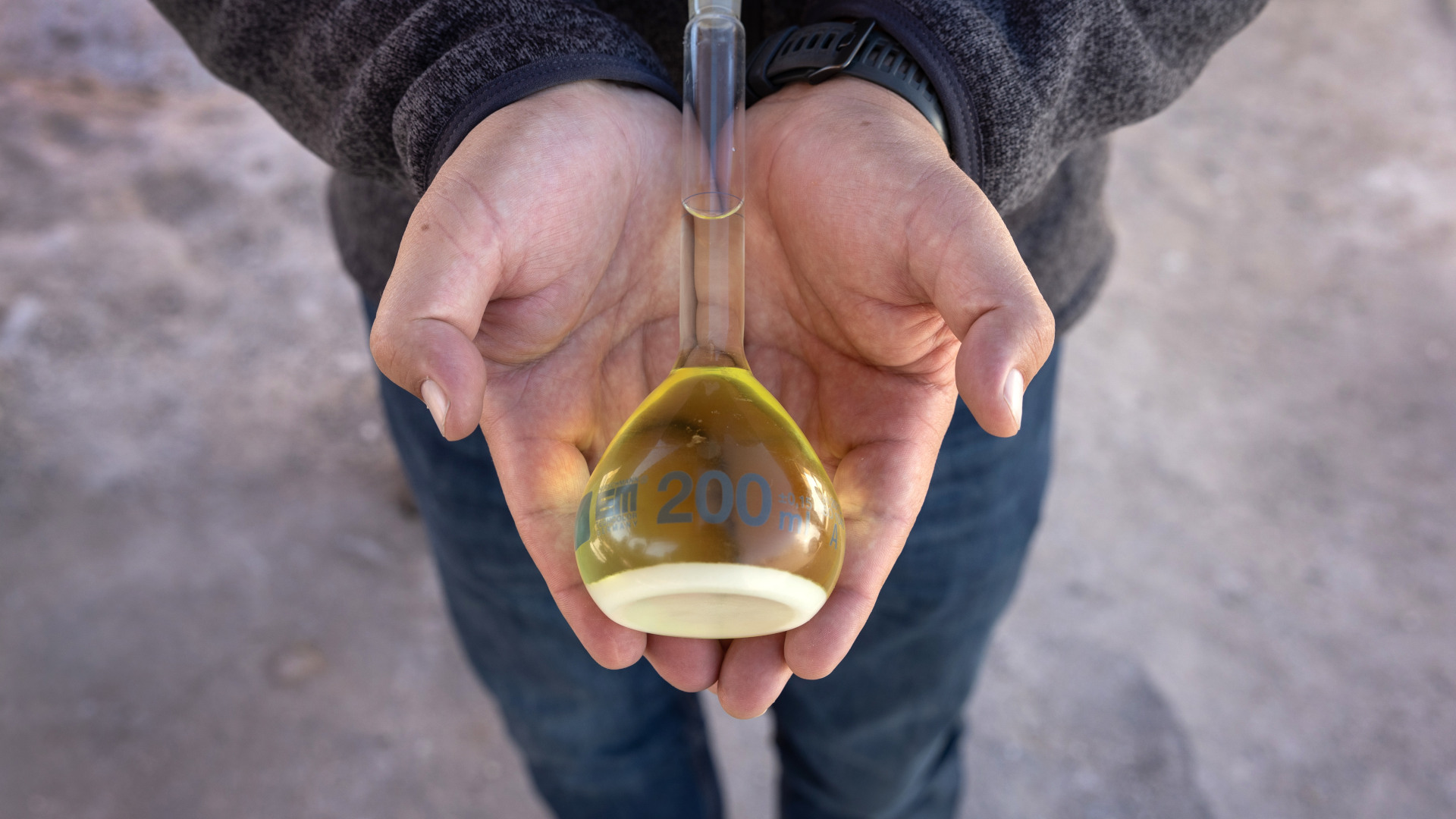
The Clean Energy Transition at the Salton Sea
For decades, a global transition has been underway: The slow, sometimes clumsy shift from fossil fuels to renewable energy. Changing just one industry requires a significant infrastructural makeover. Take cars, for example. In order to change from gas-guzzlers to electric vehicles, communities need electric chargers, which are less accessible in rural and less affluent areas, and industry needs to ramp up production for newly required car parts.

One of those key parts for electric vehicles, or EVs, are batteries. And to build those batteries, companies need a range of critical minerals — including cobalt, graphite, and lithium, with the latter expected to see the fastest growth in demand. (Solar and wind power, which could soon provide a third of the nation’s energy supply, increasingly rely on batteries for energy storage, adding to the lithium demand.)
But lithium isn’t always easy to come by; it’s a finite resource currently only mined in a few places worldwide. In order for the U.S. and other countries to reach their goals and meet mineral demands, some researchers project that they will need as many as 85 new international lithium mines by 2050. And the U.S. federal government intends to allow some of those mines on its own soil.
Some of those future sites aren’t yet determined, but an emerging American hub may be the Salton Sea, a vast human-made lake that lies in the arid agricultural regions of southern California and contains a vast reserve of untapped, underground lithium. The region has so much lithium — millions of tons, one of the largest deposits in the world — that political leaders and industry players are now calling it “Lithium Valley.”
Over the past few years, mining proponents and companies have been working on new technologies to help extract lithium from the Salton Sea. But calls for rapid lithium development have revealed competing views of what that extraction could or should look like. What are the economic costs and benefits? The area, one of the poorest in California, has long been plagued with environmental and public health woes tied to the receding Salton Sea, as well as persistent economic and racial inequality. Much of the Salton Sea region lies in Imperial County, which has a majority Hispanic or Latino population. How might the mines further harm the local environment, or the health of the hundreds of thousands of people who live there?
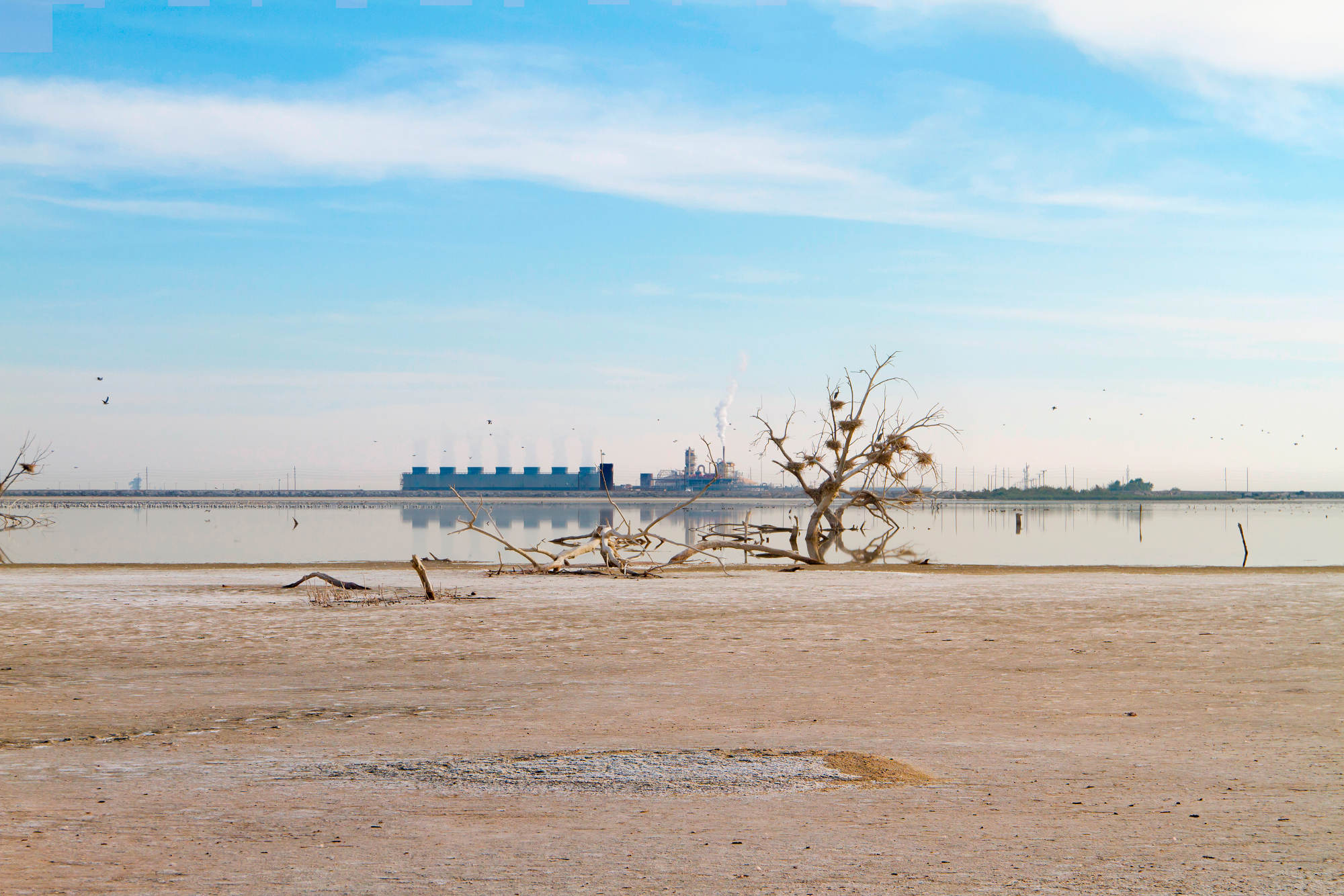
For the relatively impoverished area surrounding the Salton Sea, the rush for lithium comes amid water woes, disputes about labor conditions, and concerns over tribal sovereignty. Community leaders and local organizations debate these contentious issues because they’re ultimately about negotiating and establishing a vision of what society could or should look like in an increasingly climate-threatened region.
And to some observers, the region provides an on-the-ground view of what it might mean for an individual community to contribute to the global energy transition. “What’s happening here matters to the world. That’s the way we see this — California can lead on the clean energy,” said Luis Olmedo, executive director of the local nonprofit and environmental justice group Comite Civico del Valle. “Lithium Valley could define whether decarbonization efforts truly reflect environmental justice principles. If we get it right here, the rest of the country and the world has a model to follow.”
Lithium, a soft silver metal, doesn’t exist in its pure form in nature. Instead, it’s mixed in with salts and compounds found only in certain kinds of rocks, clays, and brines. One way to extract and purify the metal is to split open hard rock that contains lithium-rich deposits, then roast the ore and apply chemical processes with acids. But some lithium mining pulls the mineral from brines, which, typically requires pumping them up from underground, then evaporating the liquid in order to collect the lithium — a process that also requires considerable environmental costs as well as water consumption.
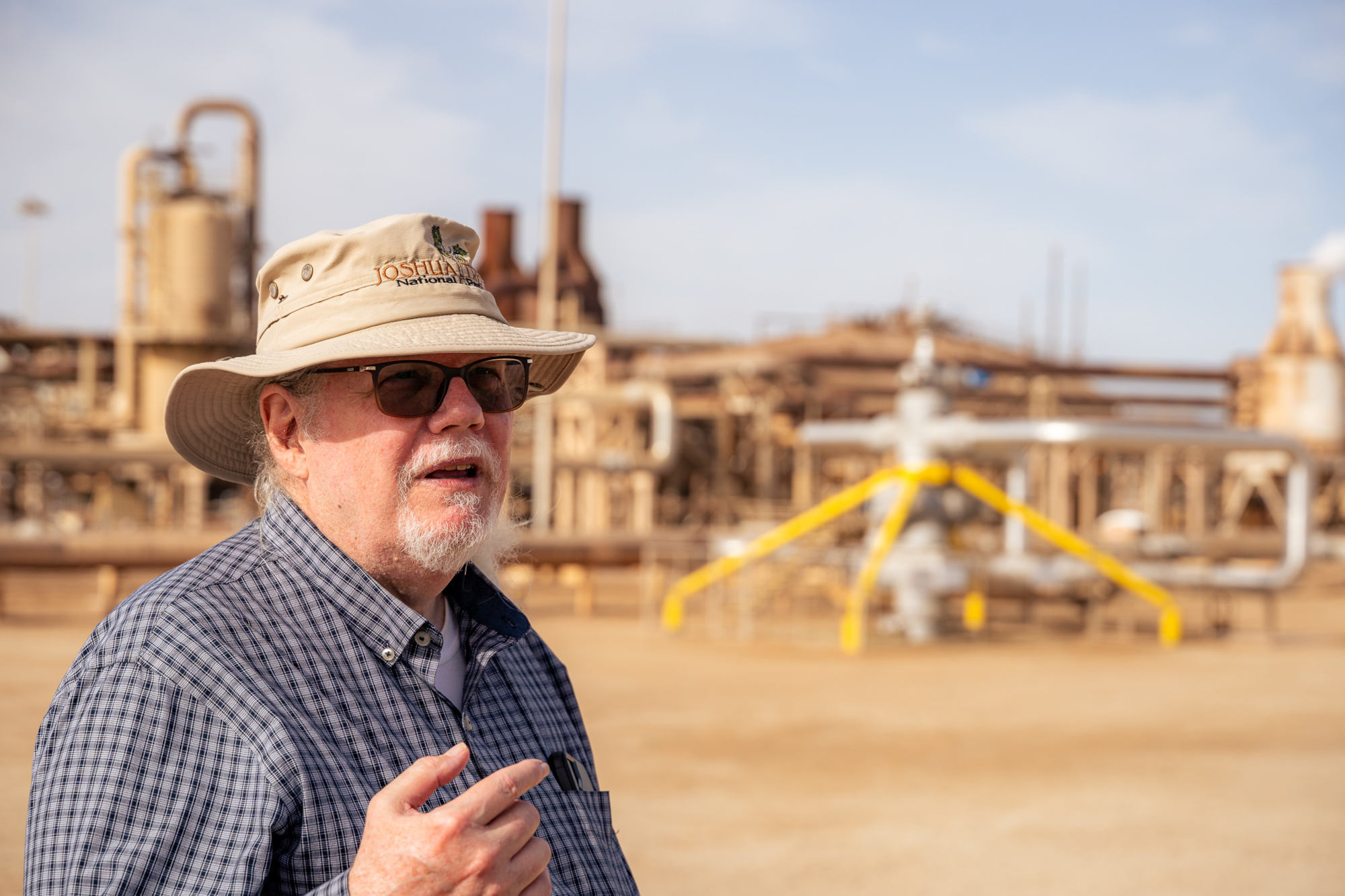
The Salton Sea lies atop a massive reservoir of mineral-rich, salty brines, which have been fed by deposits from the Colorado River and leached from volcanic rocks and other sources over millions of years. Since the 1970s, researchers have studied brines in the region, scoping out the concentrations of various minerals infused within that hot, salty water. It’s been clear for a long time that the area held significant lithium, said Michael McKibben, an emeritus geology professor at the University of California, Riverside. “Nobody was focused on lithium back then because lithium-ion batteries had not yet been invented.” (Such batteries became commercially available in the early 1990s and were popularized with the proliferation of the Sony Walkman and other small electronic devices.)
“If we get it right here, the rest of the country and the world has a model to follow.”
In the ’70s, McKibben began studying the presence of zinc, copper, and other metals in the brines. He has since retired, but researchers from a Department of Energy-backed Lawrence Berkeley National Laboratory project brought him back to reapply those calculations and specifically focus on lithium, culminating in a 2023 report.
The scientists found that the most easily accessible lithium at the Salton Sea is between one half and two miles underground in a geothermal reservoir of about 4.1 million metric tons of brine. That subterranean salty soup, heated by magma from the Earth’s upper mantle, sits at temperatures roughly between 500 and 700 degrees Fahrenheit.
The lithium concentrations vary a bit throughout the briny reservoir, but based on the wells of existing geothermal power plants, McKibben and his colleagues estimated approximately how much lithium could be recovered, and how quickly. At relatively conservative estimates, he said, “it would generate 115,000 metric tons per year of what’s called lithium carbonate equivalent.” That rate likely could be sustained for several decades, he added, and if they tap beyond that reservoir, the total lithium resources add up to some 18 million metric tons. If McKibben and his colleagues’ calculations are right, then at full production the lithium in the area could be extracted at an annual rate of nearly 1 million metric tons, enough to supply the batteries of almost 300 million electric vehicles.
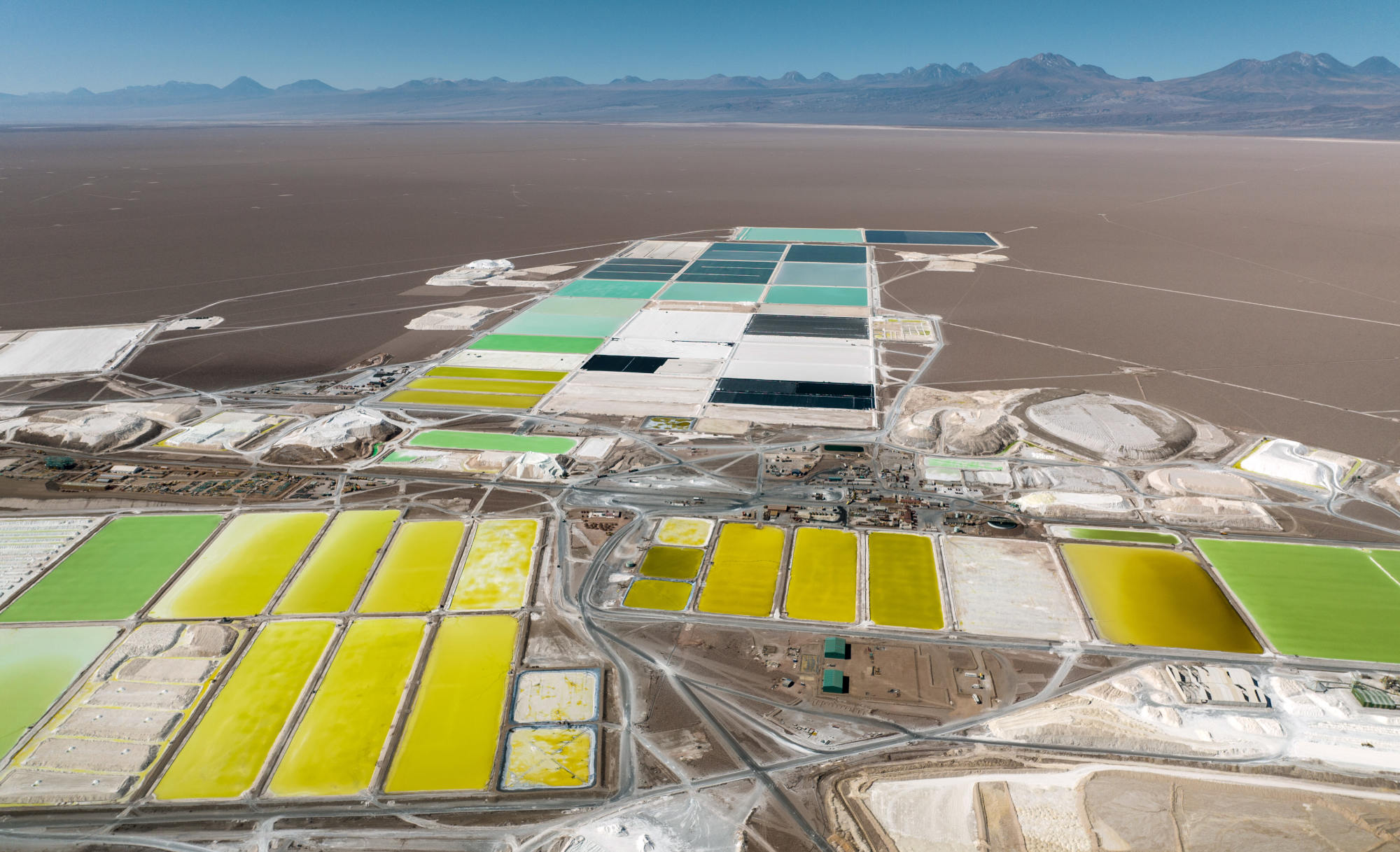
Currently, the most prolific regions for lithium mining are in Australia and Chile, which, respectively, pump out nearly 90,000 and 50,000 metric tons per year, the former using hard-rock mining and the latter evaporation ponds. China, the third-largest global producer, also dominates mineral refining, and battery components and manufacturing. If mining efforts at the Salton Sea work out, that landscape could change. “For the United States, the future of lithium actually looks good,” McKibben said. “Once it gets going, we could become independent of the global market for lithium. In fact, we could probably control the global market.”
In the Salton Sea region, companies plan to use what they say is an innovative mining method called “direct lithium extraction.” The process is akin to treatment methods used to remove metals from water supplies, where the water is pumped through a device called an ion exchange column, said Adam Simon, a University of Michigan geologist who has extensively studied copper and other metal deposits. But in this case it’s being removed from geothermal brines. By Simon’s assessment, he thinks that after the lithium removal most of the water will be returned to subsurface reservoirs. “Direct lithium extraction has the lowest overall environmental footprint because in essence, you are very selectively removing lithium and then returning the water back into the subsurface,” he said, “which to me, I would say, is almost surgical.”
But the existing research on the technique is mixed. A 2025 study in Argentina’s salt flats suggests that direct lithium extraction does not significantly reduce freshwater consumption, while another study finds that direct lithium extraction may require more freshwater than brine evaporation ponds. It may also consume less water from underground aquifers.

What this means for the Imperial Valley is unclear, but any strain to the freshwater there could threaten the region’s limited water supply. Some of the uncertainty, said Meg Slattery, who contributed to the Berkeley Lab report as a researcher at University of California, Davis, is due to some details of companies’ lithium extraction processes being proprietary.
“The companies have all stated in public forums that they’re going to recycle water within their process,” said Slattery, who is now a staff scientist at Earthjustice, an environmental law nonprofit. “But it’s very difficult to know how much, and so there’s a lot of gray area.”
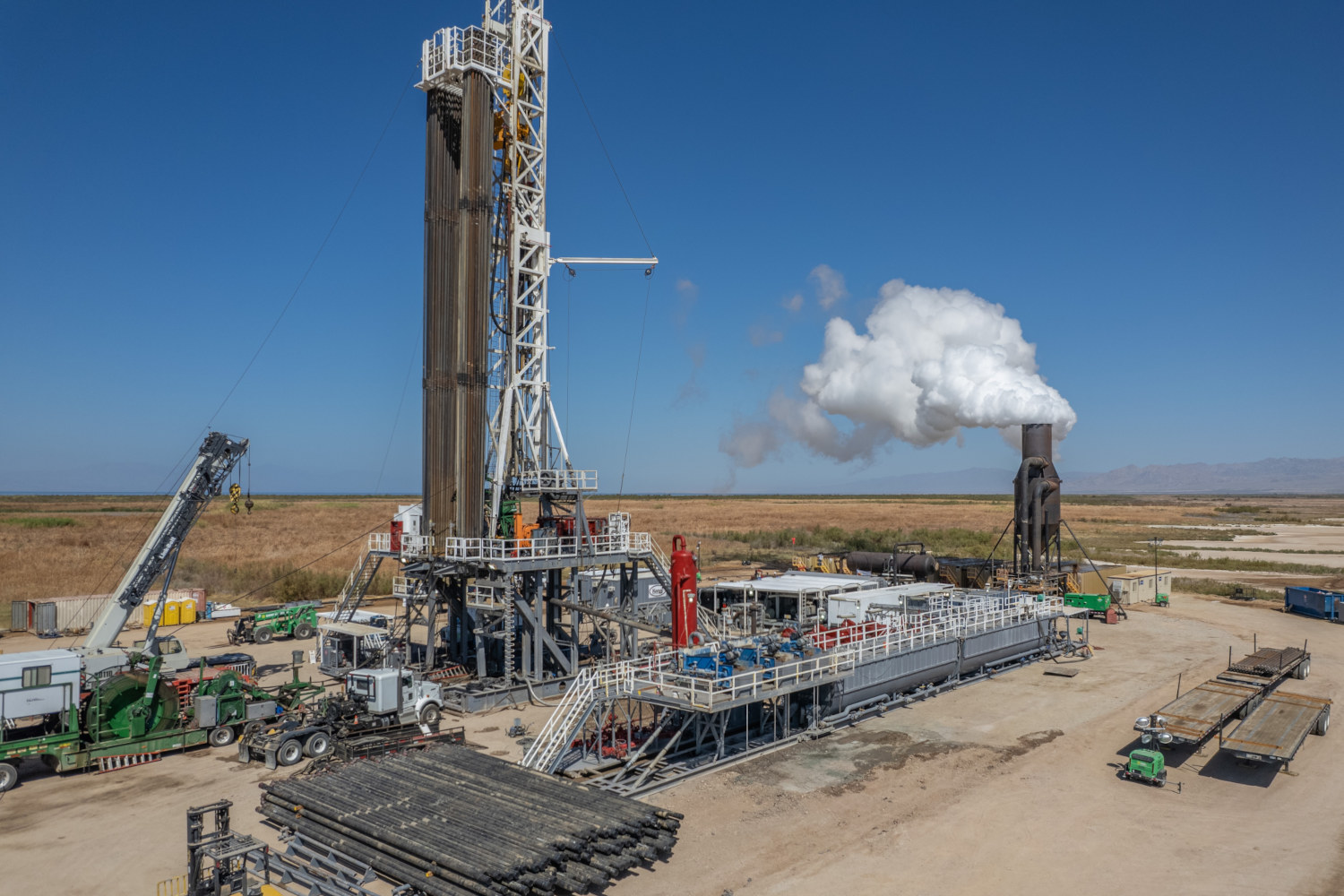
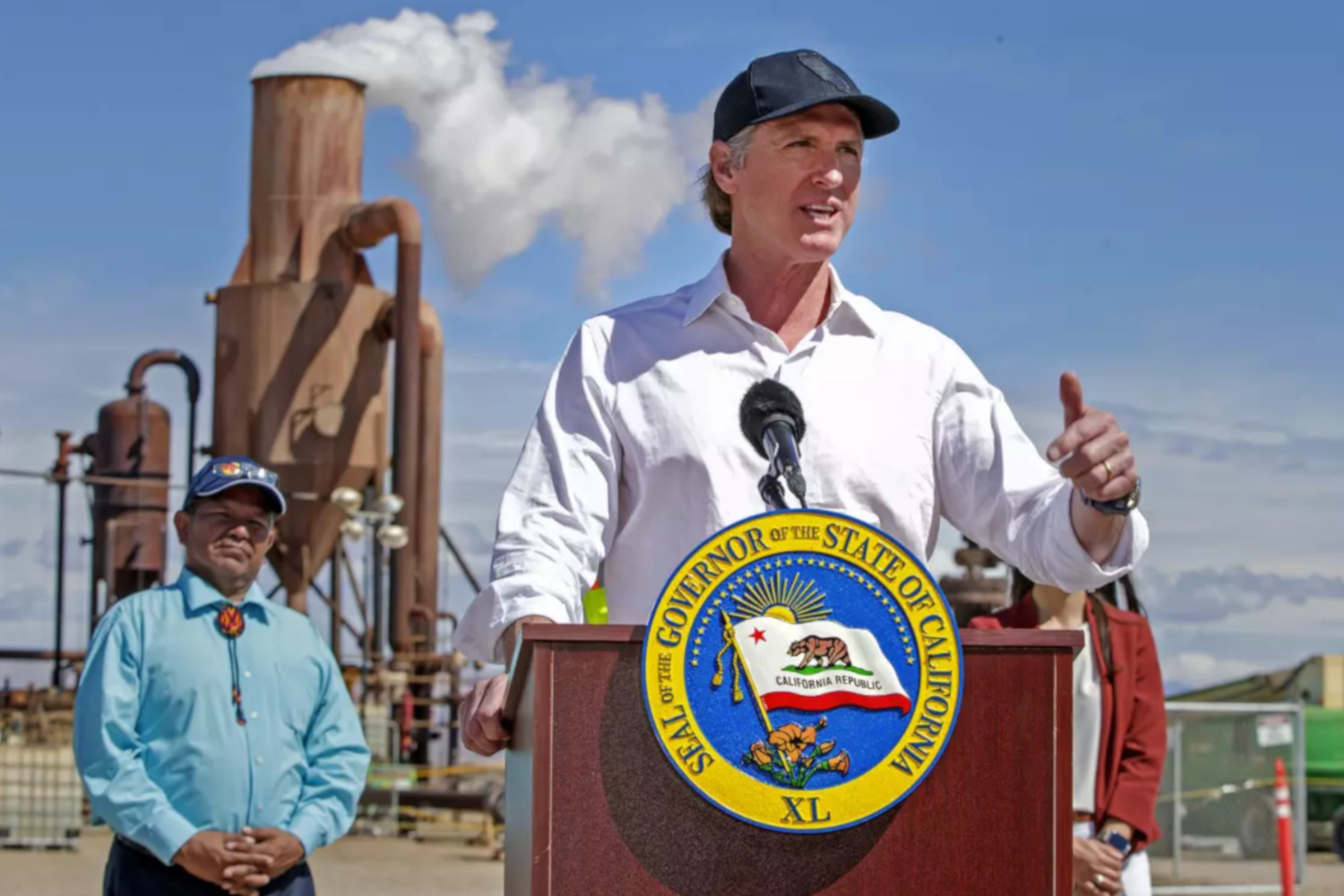
Some of those economic and environmental uncertainties may be clarified as the initial landscape of lithium mining in the Salton Sea region begins to take shape. Over the past few years, the company Controlled Thermal Resources has been operating a demonstration lithium plant near the southeastern shore of the Salton Sea with support from Gov. Gavin Newsom and financial backing from the auto industry titan Stellantis. In 2024, CTR ran tests with the demonstration plant and completed a feasibility study. Now, the company is preparing for the first stage of its full-scale lithium project, dubbed Hell’s Kitchen, though its construction timeline remains uncertain.
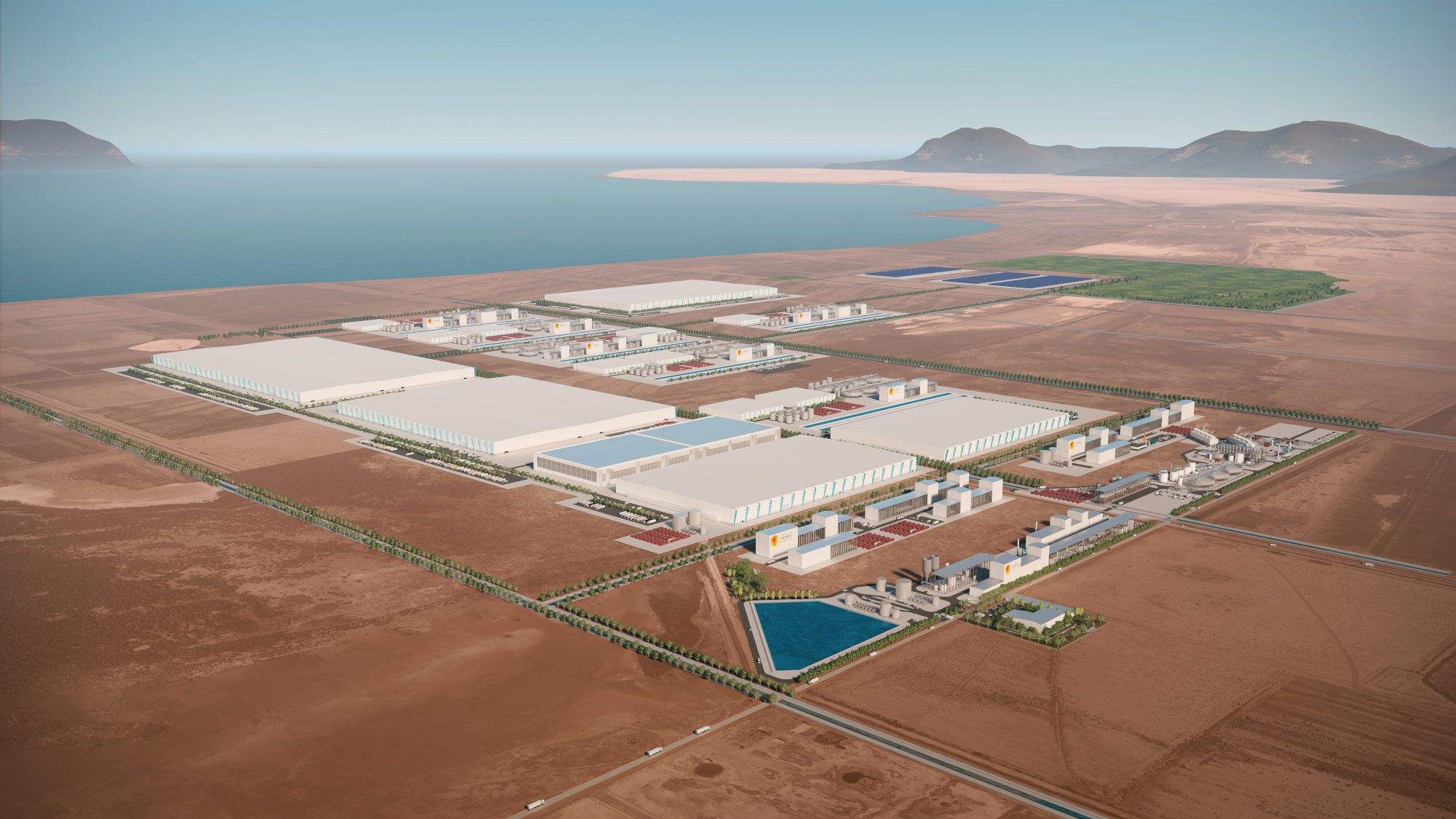
Once it begins producing lithium, CTR expects the plant to extract about 25,000 metric tons of lithium carbonate per year, said Lauren Rose, the company’s spokesperson. The company aims to expand in the 2030s to build a sprawling industrial campus, packed with multiple power plants and lithium extraction facilities that together will produce about 100,000 metric tons of lithium carbonate annually. At current prices, that could be worth some $2 billion every year. It could also provide enough lithium for the batteries of more than 3 million EVs.
“For the United States, the future of lithium actually looks good. Once it gets going, we could become independent of the global market for lithium. In fact, we could probably control the global market.”
Other players are vying for the Salton Sea lithium, too. Near the proposed CTR site, a subsidiary of Warren Buffett’s Berkshire Hathaway Energy, which already owns most of the geothermal plants in the area, has three geothermal projects in the works, although the company paused those in February 2025 to address permitting delays and infrastructure challenges. BHE is also planning to recover lithium from the region. Nearby, Carlsbad-based EnergySource Minerals plans to have its own facility, and the company was set to receive support from the Department of Energy through a conditional loan announced before President Donald Trump returned to the White House (the company did not respond to requests for an update on the loan’s status). Last year, the company said it aimed for lithium production by the end of 2026.
The exact timing of all of this depends on legal, financial, and logistical hurdles, and on designing an effective technology for sifting out lithium from the millions of gallons of hot brine. (Berkshire Hathaway declined an interview with Undark and did not reply to emailed questions. EnergySource Minerals did not respond to a request for an interview.)
But regardless of whether CTR or its competitors come first, Imperial County is preparing for a lithium rush. In February 2025, the county unveiled its 194-page draft Lithium Valley Specific Plan, which lays out an ambitious agenda to transform the Imperial Valley with extraction, manufacturing, and geothermal facilities spanning nearly 52,000 acres of “primarily undeveloped land” adjacent to the Salton Sea. The plan does not refer to individual companies or mines by name, but it describes lofty goals for Lithium Valley, including prioritizing public health, local jobs, and community benefits, while boosting domestic supplies of critical minerals and energy independence. The three companies involved forecast creating 700 permanent jobs after construction, as well as other indirect and ancillary jobs over the course of the industrial expansion, according to a 2025 RAND report.
Support Undark Magazine
Undark is a non-profit, editorially independent magazine covering the complicated and often fractious intersection of science and society. If you would like to help support our journalism, please consider making a donation. All proceeds go directly to Undark’s editorial fund.
“Lithium Valley is a hope for this valley to be able to have opportunities and employment,” said Ryan Kelley, a member of the Imperial County Board of Supervisors. “We’d like to be able to provide clean energy for California and critical minerals for the United States.” He said that a majority of the land marked for Lithium Valley is currently in agricultural production, and lithium extraction would consume just half as much water per acre as those farms.
An updated draft of the Lithium Valley plan makes little reference to how it intends to hold companies to their environmental and economic promises, which could become a sticking point if the plan moves forward. The community has many needs — including stable jobs and better air quality — that should be addressed by any new industry, said Theo Figurasin, the western assistant director for campaigns at the nonprofit Jobs to Move America. His organization advocates for Community Benefits Agreements, legally enforceable contracts made with developers and coalitions of community groups. These agreements should be a mechanism where community needs — like good, high-paying jobs, and mitigations around air pollution and water use — are addressed by developers, Figurasin said. “These commitments need to be made directly with frontline community groups, and not just promises that don’t have any transparency or accountability to them,” he added.
Uncertainty remains in how direct lithium extraction could play out at this scale, including its potential impacts on air quality and dust pollution. Dust from the drying Salton Sea may be contributing to cases of poor lung function, particularly for those with asthma, according to a recent study authored by researchers at several universities, as well as members of Comite Civico del Valle. It’s currently unclear whether these issues will be exacerbated by the proposed lithium mines.
Even just the construction of the mines may cause problems. “You have dirt roads, you have everything leading up to it, so when you do all this massive amount of construction, there will be massive amounts of transportation,” said Eric Reyes, a community organizer and executive director of Los Amigos de la Comunidad, a local nonprofit. “So, there will be contamination. How do we control that?”
In March 2024, in response to some of the lingering concerns over lithium mining in the Imperial Valley, Comite Civico del Valle and Earthworks, an advocacy organization, sued the county, alleging that its approvals of CTR’s Hell’s Kitchen project were improper. They made the case that the environmental review under the California Environmental Quality Act didn’t sufficiently address concerns about industrial water use, air quality impacts, and that tribal consultation requirements were insufficient as well. But last year, a judge ruled that the county had met its requirements, clearing the way for construction to proceed. Those groups haven’t given up, and they recently appealed the decision, while publishing a report titled “The Devil is in the Details.”
CTR has publicly dismissed the lawsuit as “frivolous.” In an emailed statement to Undark, Lauren Rose, CTR’s spokesperson, noted that Comite “has continued their campaign to obstruct the project after the Superior Court’s decision to dismiss their lawsuit.” The statement continued that Comite and Earthworks “are still running serious misinformation campaigns under the guise of ‘reports’ that hold no technical merit or signoff by qualified persons.” Rose added that CTR is investing in training local workers. Some have already received their plant operator and technical certificates through a local community college, she said, though they are now in “a holding pattern” while the lawsuit plays out.
Uncertainty remains in how direct lithium extraction could play out at this scale, including its potential impacts on air quality and dust pollution.
Olmedo, Comite’s executive director, bristles at that characterization of their work as “obstruction.” He said that his organization is not opposed to lithium mining, but that it wants an environmentally sustainable and economically beneficial plan that respects local voices. “This isn’t an effort to stop development,” he told Undark. “It’s about demanding due process and including a full environmental review and community consultation.” In an email, he added that the lead researcher for “The Devil is in the Details” report has published extensively on the impacts of lithium development. “We would welcome technical challenges based in fact instead of an underhanded effort to tarnish a report seeking to bring about accountability and transparency,” Olmedo wrote.
Comite is careful to emphasize that the health and well-being of their community is their top priority. “We’ve seen what happens when projects are rushed without oversight,” Olmedo said. As an example, he referred to utility-scale solar projects, where the industry ultimately didn’t create many permanent jobs, despite initial promises. With Lithium Valley, Olmedo doesn’t want to see just a few short-term jobs materializing, then companies close and relocate, with residents abandoned and left liable for lingering environmental problems.
Ultimately, however, it’s not just a question about jobs, water, and air; it’s about accountability and respect, Olmedo said. Members of some local tribes, like the Kwaaymii Laguna Band of Indians, which are mentioned in Comite’s lawsuit and appeal, feel similarly. Carmen Lucas, an elder of the Kwaaymii Laguna Band, has for years been advocating for her tribe and for protecting tribal cultural resources. Around 2022, she and Courtney Ann Coyle, her lawyer and friend, formally proposed setting aside around 11,000 acres of land as the Southeast Lake Cahuilla Active Volcanic Cultural District. (Long before the current Salton Sea was created, a larger Lake Cahuilla existed in the same spot.) Lucas lives completely off-grid, and she confirmed with Undark that Coyle, who is not a tribal member, was speaking on her behalf. Lucas called for a balanced vision, where tribal cultural resources and a sustainable environment are in harmony with that development, Coyle said.
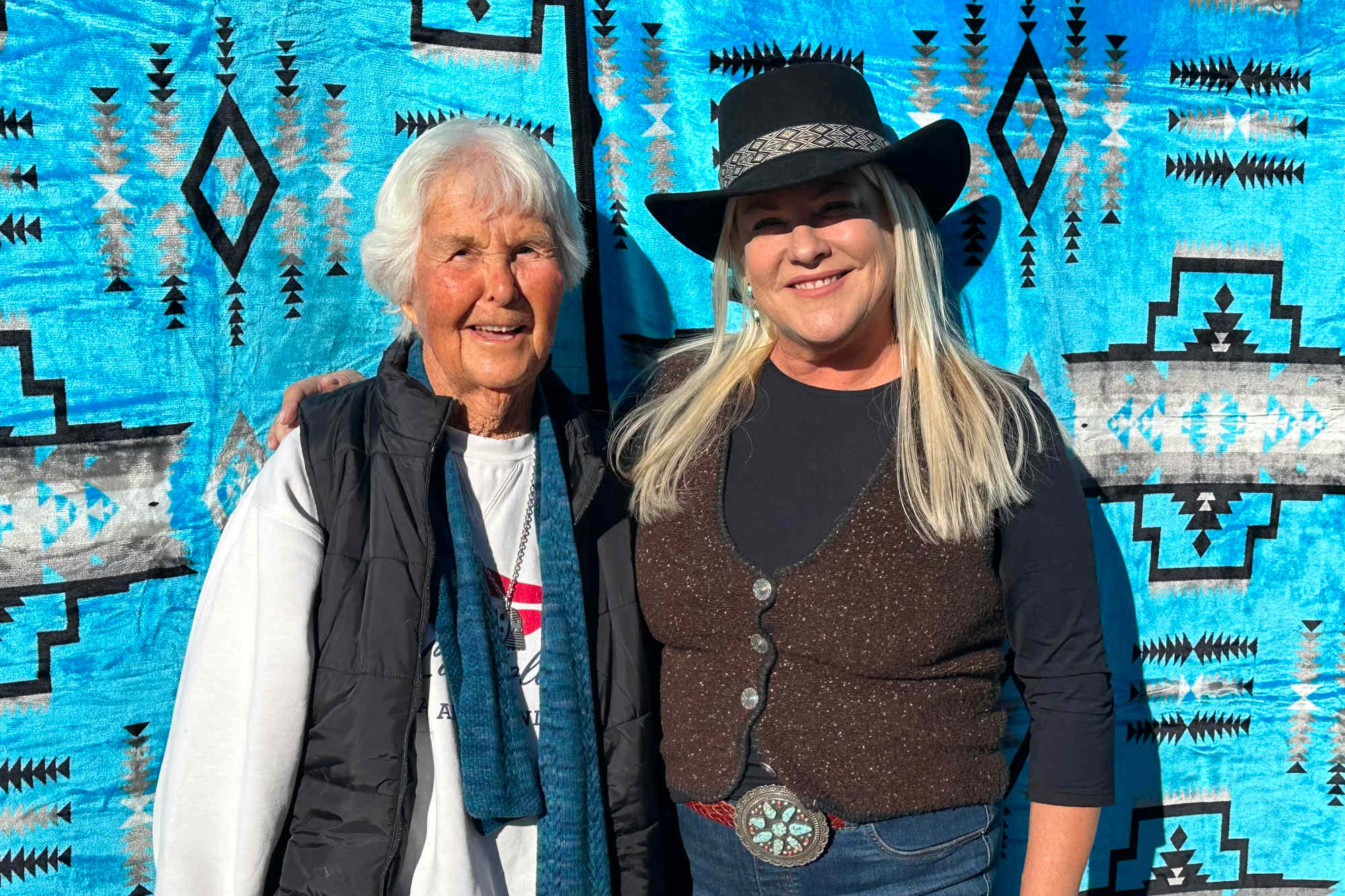
That cultural district centers on five volcanic domes, interconnected features on the landscape that hold sacred value to the Kwaaymii Laguna Band and other tribes. Kelley, the Imperial County official, said that the cultural district would be included among the tribal cultural resources listed in Lithium Valley’s environmental impact report. Although Coyle said that she remains open-minded about the county’s intentions, “the end of that story isn’t written yet, but it doesn’t look so promising.”
Decades ago, when the Salton Sea first underwent development for geothermal facilities, the process lacked tribal consultation, Coyle said. Since then, the tribes have successfully lobbied for regulations that require a meaningful consultation process, such as through the California Environmental Quality Act. Now, as Lithium Valley moves forward, tribal consultation “has been uneven at best,” Coyle said. Among the companies involved, Berkshire Hathaway did meet with her and Lucas and “made some effort,” Coyle said, but Controlled Thermal Resources made no such effort and, she added, appears to have actively worked to withhold consideration of tribal cultural resources in the project documents they provided to the county. (Rose, CTR’s spokesperson, said that the company had spoken with Thomas Tortez, then Tribal Council Chairman of the Torres Martinez Desert Cahuilla Indians.)
All these debates take place in a broader context, as the Salton Sea region has a long history of settler colonialism and Indigenous dispossession, said Traci Brynne Voyles, an environmental historian at North Carolina State University and author of “The Settler Sea,” in which she chronicles the arrival of settlers in the Salton Sea region in the late 19th century and documents how they pushed out Cahuilla and Kumeyaay people from their ancestral homelands, partly for farming.
Voyles is wary of the new lithium extraction plans. “There have been very few examples of mining ventures that have not been both boom and bust and also catastrophic for local people in terms of environment and long-term economic health,” she said. “Does that mean it can’t happen? No,” but she emphasized that mining cycles have only very rarely produced long-term benefits for communities. In response to this, CTR’s spokesperson pointed to the company’s webpage highlighting community benefits, including taxes going to Imperial County and Salton Sea restoration, prioritizing local jobs, and on-the-job training and apprenticeship programs.
Thea Riofrancos, a political scientist at Providence College and author of the book “Extraction: The Frontiers of Green Capitalism,” warns that promises of jobs can be oversold, and the higher-paying jobs, such as for engineers, may involve importing white-collar workers. Projects in poor communities raise difficult questions, she said, about whether the environmental impact is worth the temporary construction jobs a project creates. Mining tends to occur, she added, “in places that are rural hinterlands, or peripheries or low-income areas. And then those places are often desperate for jobs, very understandably — they’ve been neglected, underinvested in, sometimes left behind.”
Whether here in the Imperial Valley or elsewhere, lithium extraction projects will continue to grow as energy demands balloon, especially from the tech industry’s AI data centers, the military, and the transportation sector. Riofrancos said today’s energy and climate picture is more nuanced than it’s often presented. She argues that the notion of energy transition can often be a misnomer. “There’s a general consensus that we’re not really in an ‘energy transition.’ We’re more in a period of ‘energy addition,’ where new energy sources are being added to the energy mix,” she said.
Renewable energy goals in the U.S. and other countries haven’t always come at the expense of fossil fuel development, Riofrancos added. Indonesia, for example, has built new coal-fired power plants that power its nickel mining and refining projects. “With important exceptions, we’re not really seeing fossil fuels being left in the ground; we’re just seeing parallel development of renewable energy.”
When it comes to the lithium plans at the Salton Sea, Riofrancos shares Voyles’ skepticism. On the ground, mining for lithium or other clean energy minerals and mining for fossil fuels both come with dilemmas and environmental harms. But she believes people can imagine a better way forward, an actual energy transition, she said, that’s “good for communities, good for labor, good for the broader ecology, beyond just carbon emissions.”
UPDATE: A previous version of this piece described Thomas Tortez as Tribal Council Chairman of the Torres Martinez Desert Cahuilla Indians. The text has been updated to clarify that he no longer holds that position.