








Moderna’s CEO Stéphane Bancel said in January that the company, known for its Covid-19 vaccine using messenger RNA technology, or mRNA, doesn’t plan to invest in new, late-stage vaccine trials. He attributed the decision to growing opposition to immunizations from U.S. government officials — evident, perhaps, in the Food and Drug Administration’s recent refusal to review Moderna’s application for a new mRNA-based flu vaccine.
That decision baffled health experts, and the FDA promptly reversed course a week later, agreeing to review the vaccine after all. But the FDA’s demonstrably skeptical approach to vaccines under the administration of President Donald Trump remains visible — not least in a clear drop in federal government funding for research and development.

In August of last year, the U.S. Department of Health and Human Services announced the cancellation of nearly $500 million in mRNA research funding through the Biomedical Advanced Research and Development Authority, a program within HHS whose primary mission is to develop vaccines, drugs, and other medical countermeasures to protect against public health threats. The move canceled 22 projects involving development of vaccines for diseases such as influenza and Covid-19. This happened after HHS had already canceled a $766 million contract with Moderna last May. The money would have gone towards bird flu vaccine development and other vaccines.
HHS Secretary Robert F. Kennedy Jr. argued that mRNA technology poses more risks than benefits, and announced a shift toward “safer, broader vaccine platforms that remain effective even as viruses mutate.”

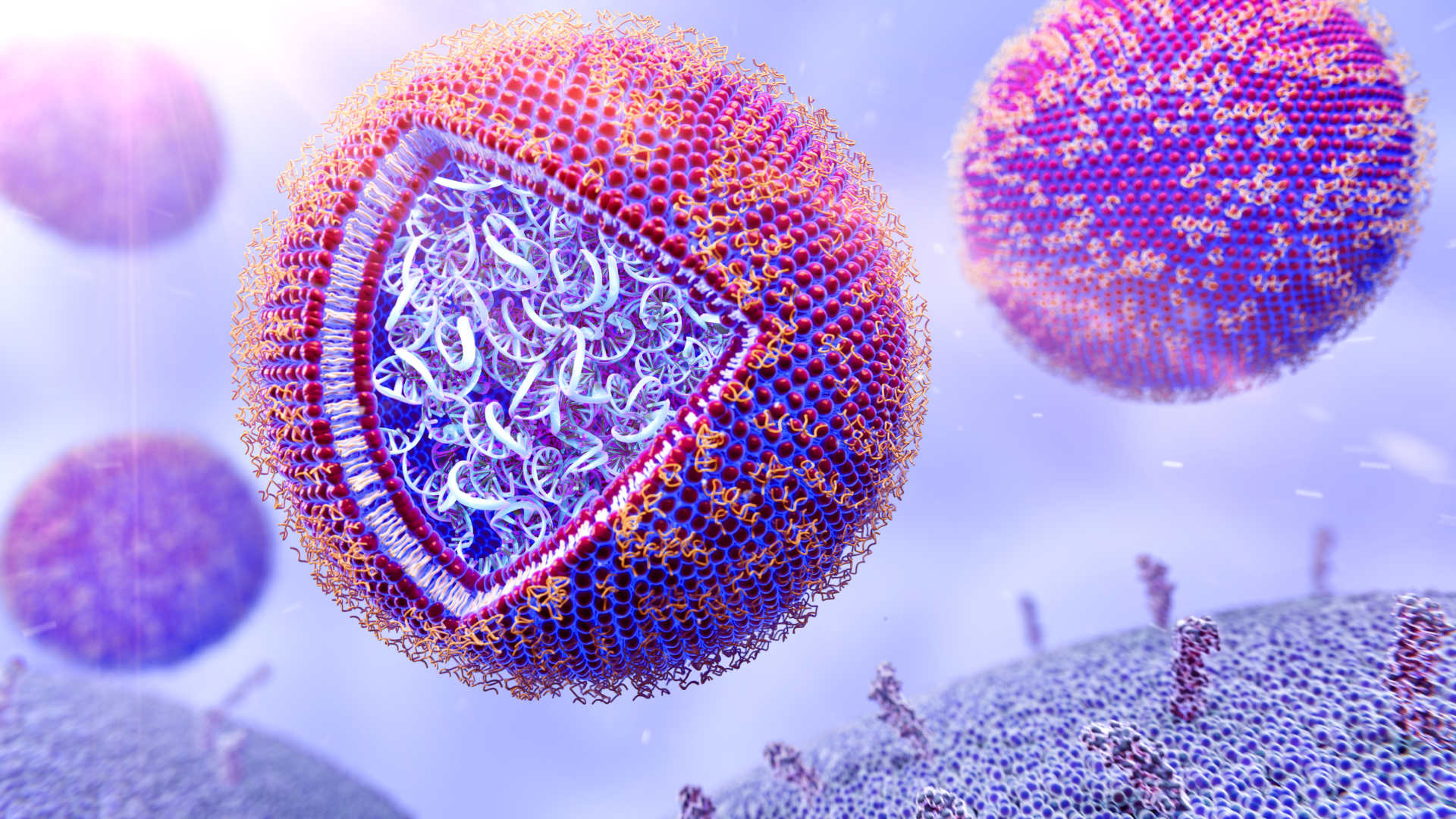
The problem is that mRNA technology has potential utility well beyond respiratory indications. mRNA carries the information required for making proteins that can induce an antibody response to protect against pathogens, to be sure — but it is also being studied as a potential therapeutic avenue for autoimmune conditions, certain genetic disorders, and even cancer. An experimental mRNA cancer therapy being developed by Moderna and Merck, for example, reportedly cut the risk of recurrence or death when administered alongside a prescription immunotherapy.
This isn’t to say that mRNA is uncontroversial, and qualms about the safety of mRNA products persist in some circles. But what attracts researchers to the mRNA platform, according to a recent commentary in The Lancet, is its apparent adaptability to target “novel pathogens, re-emerging threats, or diseases for which existing vaccines remain suboptimal.” Accordingly, mRNA continues to be an important topic of discussion among scientists, as it was at a panel at the World Economic Forum in Davos, Switzerland in January. Speaker and Nobel Prize winner, Thomas Cech, participated in a talk with the title, “RNA: why it is Still a Big Deal.”
Perhaps so, but the long-term impact of halting funds earmarked for mRNA vaccine projects will depend on how quickly alternative private sector financing can be secured. Asked by Undark via email whether the private sector can adequately fill the gaps, Drew Weissman, a professor in vaccine research at the University of Pennsylvania, wrote: “Starting companies and biotech have helped a little for very specific projects. Overall, it is very minor.” (An illustration of others filling the gap is Moderna now receiving $54 million in money from the public-private partnership the Coalition for Epidemic Preparedness Innovations to develop a bird flu vaccine after the U.S. government canceled a more than $760 million contract.)
What attracts researchers to the mRNA platform is its apparent adaptability to target “novel pathogens, re-emerging threats, or diseases for which existing vaccines remain suboptimal.”
And where private funding is available, it’s not considered a substitute for federal research investment as they “serve different functions,” Jeff Coller, a professor of RNA biology and therapeutics at Johns Hopkins University, wrote in an email to Undark. “Venture capital and pharma R&D dollars flow toward applications with clear commercial timelines,” Coller noted. “Federal funding,” by contrast, “supports the foundational research.”
In turn, he added: “We’re already seeing private investors grow cautious, partly because the federal pullback signals political uncertainty around the technology.”
Coller says federal maneuvering on mRNA technology has already disrupted ongoing clinical programs, forcing companies to shelve promising potential therapies. He also believes this is having a “chilling effect on the research ecosystem—graduate students reconsidering career paths, early-stage companies struggling to attract investment, and academic labs losing the bridge funding that allows basic discoveries to move toward clinical application.”
These concerns mirror those expressed in industry-led interviews with more than 100 mRNA senior industry professionals. An analysis derived from those interviews suggested that slashing support for research funding represents a “critical threat to America’s biomedical leadership.”
For its part, HHS has asserted that “other uses of mRNA technology within the department are not impacted.” But Weissman told Undark that the federal government is “selectively cutting and reducing all mRNA research across all indications.”
And while funding cuts don’t appear to directly extend to mRNA cancer research, there could be indirect impacts. Speaking to U.S. News and World Report, Jerome Adams, former surgeon general under President Trump during his first term in office, suggested that by reducing funds and expressing doubts about mRNA regarding infectious diseases, the administration is nurturing wider skepticism towards mRNA therapies writ large. In his view, the administration is creating a “false dichotomy that ignores the interconnected nature of biomedical innovation. The infrastructure, expertise, and manufacturing processes for mRNA vaccines are shared across applications.”
Elizabeth Jaffee, deputy director of the Johns Hopkins Sidney Kimmel Comprehensive Cancer Center, uses mRNA vaccine technology in her own research. Jaffee told Science News that work on mRNA-based Covid-19 jabs advanced cancer research, as scientists had a safe and reliable platform for creating vaccines that could fight cancers. She has also expressed concern to Medscape that she may one day be forced to terminate her own ongoing clinical trials if financial support is withdrawn.
As an upshot of all this, a possible scientific brain drain looms — and some U.S.-based researchers have already exited the country for more receptive environments. France, for example, announced in February that it is awarding funds to 46 scientists as part of a high-profile initiative to recruit talent. Almost all the awardees were previously at U.S. institutions.
It’s unknown how many of the researchers destined for France were involved in mRNA research specifically. But it’s speculated a migration of talent in the mRNA space is already underway. For example, Hu Haitao, a prominent mRNA scientist who trained under Weissman, returned to China in 2025 after having spent two decades in the U.S.. Haitao cited personal and family reasons, but also said that prospects in the U.S. had become more uncertain and unpredictable in the past year, and less supportive of biomedical research — including mRNA development. (It’s possible Haitao may have also been alluding in part to what occurred last spring when researchers said that NIH officials told them to scrub mRNA vaccine technology references from their grant proposals.)
“We’re already seeing private investors grow cautious, partly because the federal pullback signals political uncertainty around the technology.”
While precise data isn’t available on how many scientists have fled the U.S. research ecosystem, what’s known is that the number of U.S.-based scientists applying for jobs internationally increased by 30 percent from 2024 to 2025, with many seeking employment in Canada, Europe, and China. The European Research Council says early-career grant and senior researcher applications from the U.S. increased in 2025. Additionally, the European Union and France pledged a half-billion euros in grants in 2025 to attract scientists.
It’s unclear what percentage of the money would be dedicated to mRNA research, but there are indications the U.K. and China are angling to fill a perceived mRNA void left by the U.S. pullback. In the U.K., BioNTech announced plans in May 2025 to invest up to £1 billion ($1.34 billion) over the next 10 years to expand its “research and development activities for innovative medicines.” At the same time, the U.K. government pledged £129 million (about $170 million) in grant funding over 10 years to support BioNTech’s investment Moreover, the government invested £29.6 million ($39.6 million) in an RNA Centre of Excellence to develop mRNA therapies. And just prior to recent HHS cuts, BioNTech — a pioneer in mRNA product development and co-developer with Pfizer of a Covid-19 vaccine — spent $1 billion to acquire a Chinese firm to pursue research in cancer indications.

Not surprisingly, China has emerged as a hub for drug development — including mRNA research. The country still trails the U.S. and Europe, but that might not always be true, given that Chinese R&D investment in mRNA is rapidly increasing. According to Weissman, China now “far outspends the U.S.” in terms of mRNA research and drug development.
It’s hard to tell with certainty whether the future of U.S.-based mRNA research is in as much doubt as some critics now speculate. But a growing number of warning signs suggest trouble lies ahead — particularly given the signals being issued by the Trump administration.